Understanding Elastomeric Bridge Bearings: A Comprehensive Guide for Modern Infrastructure
Article content and related resources
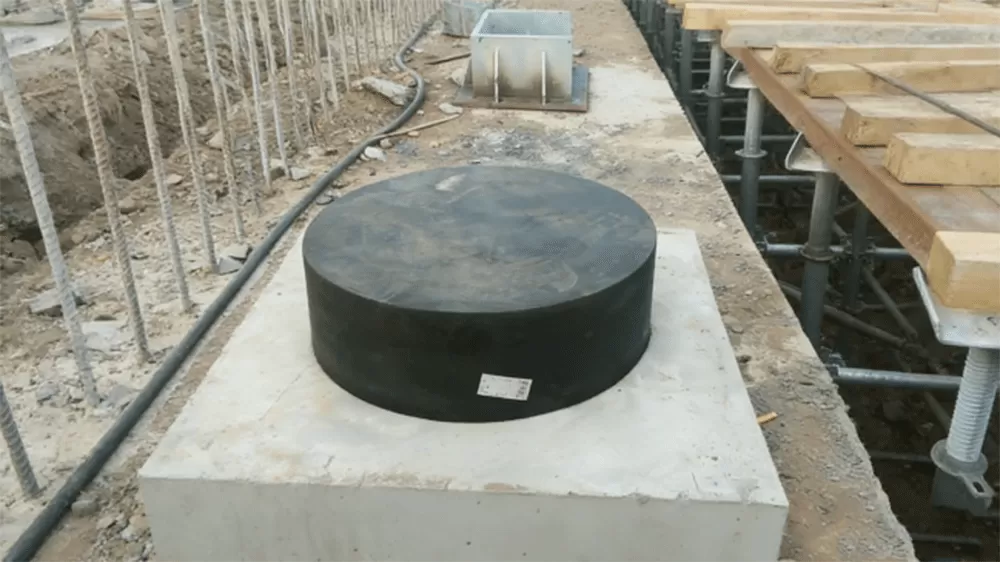
Modern highway bridges and viaducts endure continuous mechanical stress and environmental exposure. Traffic loads, thermal expansion, concrete shrinkage, and seismic tremors exert complex forces on bridge superstructures. Without dedicated isolation components, these dynamic forces cause structural cracking, fatigue, and catastrophic foundation failures.
Engineers solve this challenge by installing elastomeric bridge bearings at critical support points. These flexible devices distribute loads, absorb movements, and protect both the superstructure and the substructure.
At KINGWORK, we produce structural bearing systems designed to meet demanding infrastructure requirements worldwide. If your civil engineering project requires certified, high-durability bridge bearing pads, contact our technical sales team today to request a quote or project-specific technical review.
Working Principle: How Elastomeric Bridge Bearings Function
Bridge bearings act as elastic buffers between bridge girders and supporting piers or abutments. They transfer loads while accommodating structural movements in multiple directions.
1. Vertical Load Transmission
The primary job of an elastomeric bearing is to transfer the heavy dead load of the deck and the live load of passing vehicles down into the substructure. The rubber compounds support substantial compressive forces without breaking or collapsing.
2. Horizontal Movement Accommodation
Temperature swings cause bridge decks to expand in the summer and contract in the winter. Concrete creep and traffic braking forces also induce horizontal movement. Elastomeric bridge bearings accommodate these horizontal displacements through shear deformation, allowing the elastomer layers to deflect horizontally without losing structural stability.
3. Rotational Flexibility
When heavy trucks cross a bridge span, bridge girders deflect downward, creating small angles of rotation at the beam ends. Elastomeric bearings absorb these angular changes through uneven compression across their surface, preventing edge stress concentrations on concrete piers.
4. Vibration Damping and Seismic Isolation
Elastomer exhibits high viscoelastic damping properties. When dynamic traffic shocks or seismic tremors strike the structure, the bearing dissipates energy as low-grade heat, reducing the destructive vibration transferred into concrete support pillars.
Key Types of Elastomeric Bridge Bearings
Engineers specify different bearing configurations based on span lengths, load profiles, and anticipated structural movements.
Plain Elastomeric Pads (PEP)
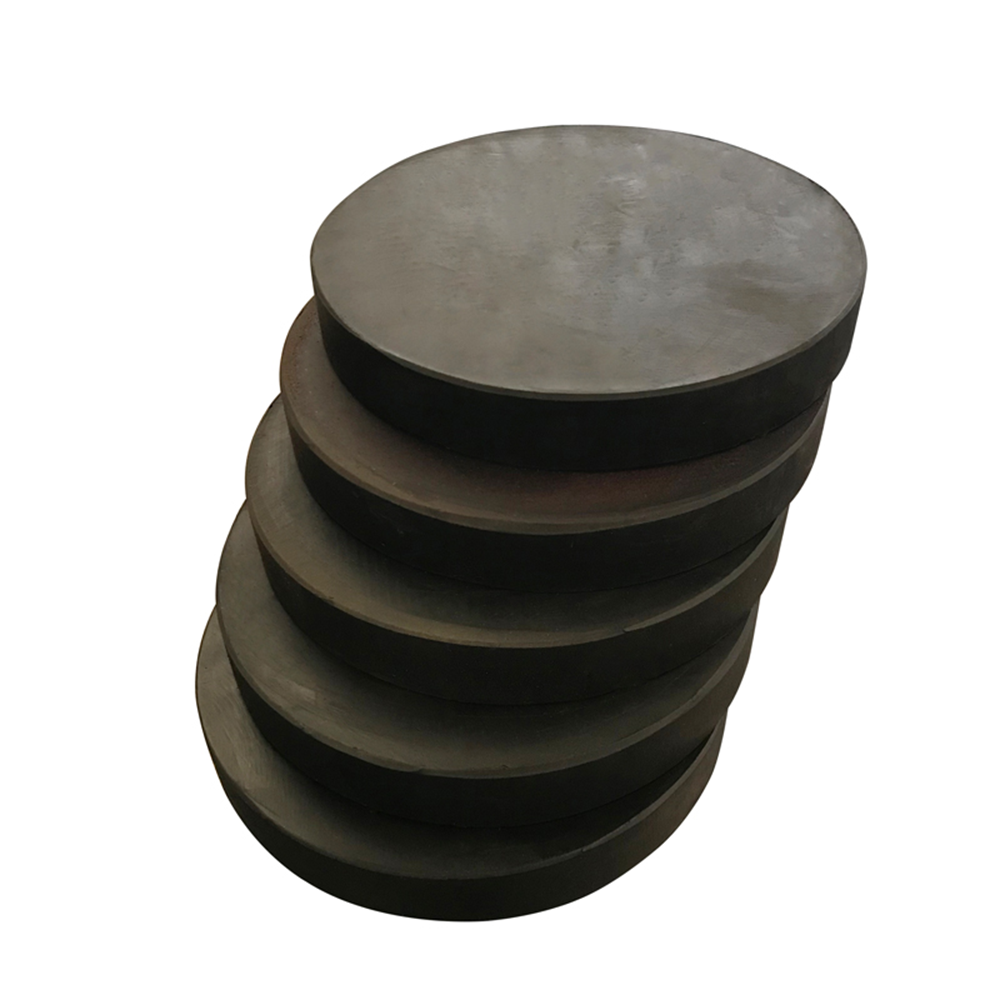
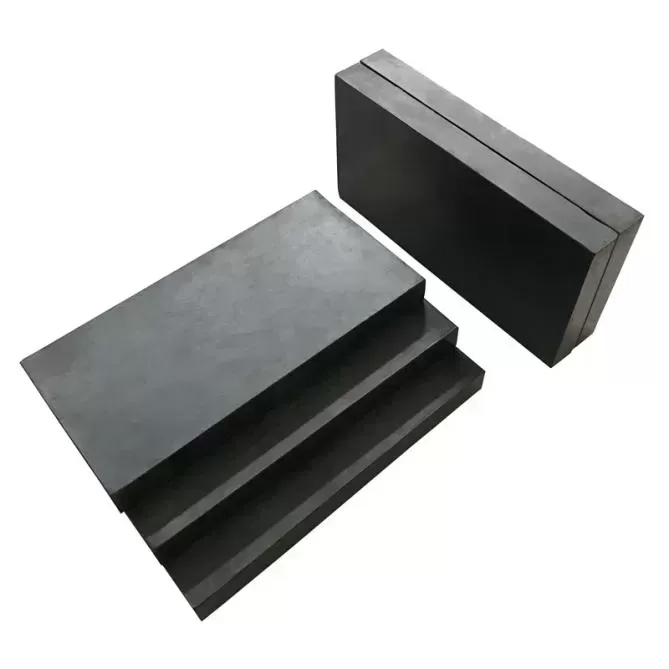
Plain elastomeric pads are solid rubber blocks without internal steel plates. They suit light loads and short spans, such as precast concrete slab bridges, culverts, and pedestrian walkways.
- Simple construction and economical manufacturing.
- Suitable for modest vertical loads and low rotation demands.
- Under heavy loads, plain pads bulge laterally, which reduces their overall vertical load capacity.
Laminated Elastomeric Bridge Bearings
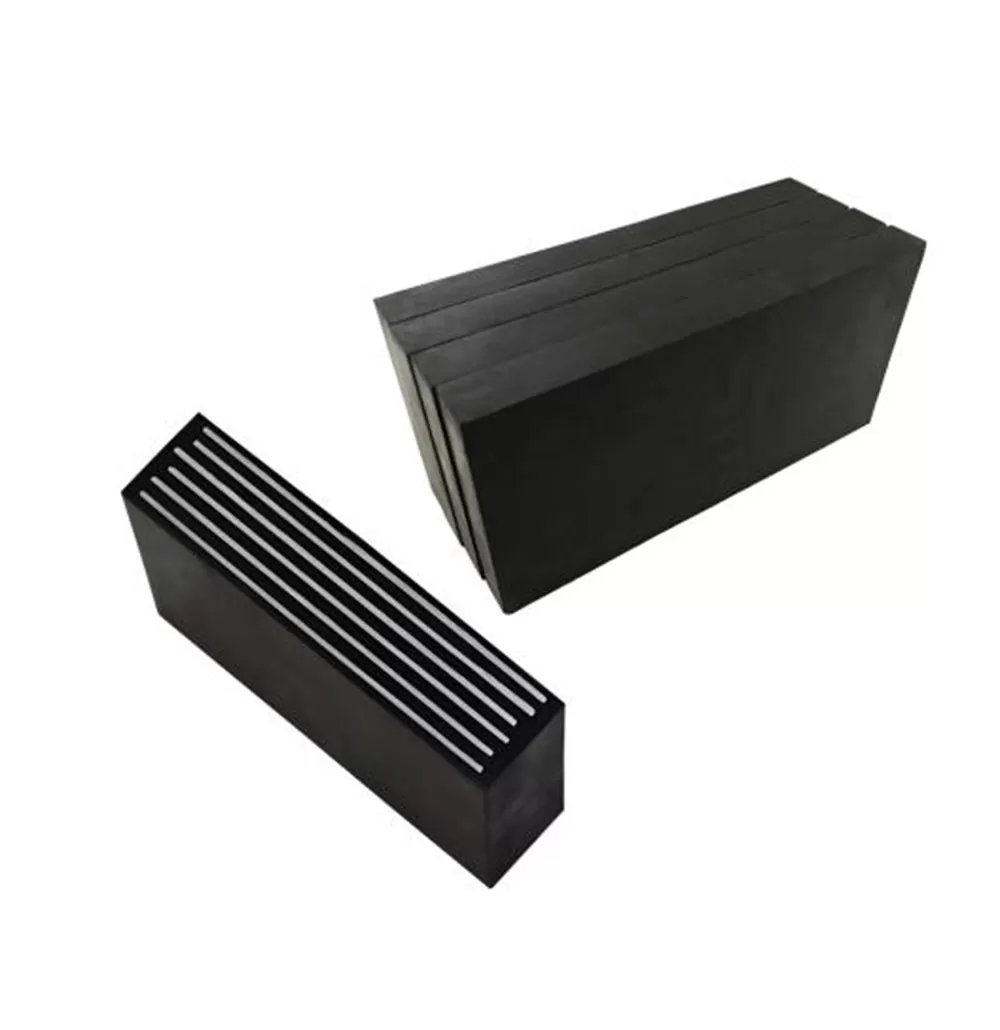
Laminated elastomeric bridge bearings—also known as steel-reinforced elastomeric bearings—consist of alternating layers of elastomer and thin carbon steel plates bonded through high-pressure vulcanization.
- Internal steel plates restrict lateral bulging of the rubber under high compressive loads.
- Significantly increases vertical load capacity without altering the pad's horizontal shear flexibility.
- The standard choice for medium-to-long span roadway and railway bridges.
PTFE Top / Sliding Elastomeric Bearings
When bridges experience large horizontal movements that exceed standard rubber shear limits, designers add a low-friction sliding mechanism on top of the bearing. This design bonds a polytetrafluoroethylene (PTFE) sheet to the top of the rubber pad, which slides against a mirror-polished stainless steel plate embedded in the girder.
- Accommodates large multi-directional longitudinal and transverse displacements.
- Maintains a very low coefficient of friction, often below 0.03.
- Commonly used on continuous girder bridges and structures with long expansion lengths.
Lead Rubber Bearings (LRB)
Lead rubber bearings incorporate a solid cylindrical lead plug pressed into the center of a laminated elastomeric bearing. Under seismic excitation, the surrounding rubber provides elastic restoring force, while the lead core deforms plastically, absorbing earthquake shock energy.
- High energy dissipation capacity for seismic zones.
- Returns the bridge to its original position after seismic events.
- Proven performance for critical highway overpasses and emergency transport routes.
Material Selection: Natural Rubber vs. Neoprene
Specifying the proper elastomer determines how long the bearing pad will perform in field conditions. The two most common materials used in manufacturing are Natural Rubber (NR) and Polychloroprene (Neoprene / CR).
Natural Rubber (Polyisoprene)
Natural rubber provides excellent low-temperature elasticity and superior tear resistance. It retains flexibility in sub-zero environments, making it ideal for northern and alpine regions where temperatures drop well below freezing for extended periods.
Neoprene (Polychloroprene)
Reinforced neoprene bridge bearings deliver superior resistance to environmental hazards, including:
- Atmospheric ozone and ultraviolet (UV) radiation.
- Chemicals, vehicle fuels, and hydraulic oils.
- Saltwater spray in marine and coastal installations.
While neoprene stiffens slightly more than natural rubber at sub-zero temperatures, its environmental resistance makes it the preferred material for temperate, coastal, and industrial applications.
Engineering Design and International Standards
Bridge engineers calculate elastomeric bearing dimensions using structural loading, thermal movements, and construction tolerances.
The Shape Factor
The shape factor ($S$) is a critical metric in elastomeric bearing design. It represents the ratio of the loaded plan area to the lateral perimeter area free to bulge:
$S = \frac{\text{Loaded Area}}{\text{Force-Free Bulging Area}}$
A higher shape factor indicates thinner elastomer layers, which limits lateral bulging and yields higher compressive stiffness.
AASHTO LRFD Bridge Design Specifications
In North America, highway agencies follow the AASHTO elastomeric bearing design criteria outlined in Section 14 of the AASHTO LRFD specifications, along with the AASHTO M 251 material specification.
- Method A: A simplified, conservative design approach for bearings with lower vertical stress levels.
- Method B: A detailed calculation method that allows higher vertical stress allowances based on precise strain evaluations and shear deformations.
European Standard EN 1337-3
European and many international infrastructure projects adhere to EN 1337-3 (Structural Bearings - Elastomeric Bearings). This code outlines strict requirements for shear modulus testing, cold crystallization checks, and bonding adhesion between rubber layers and steel plates.
At KINGWORK, we produce elastomeric bridge bearings in strict accordance with AASHTO M 251, EN 1337-3, and custom project specifications. Our facility subjects raw elastomers and finished laminated pads to compressive proof tests, shear stiffness tests, and peel-adhesion verifications before shipment.
Installation Best Practices and Failure Analysis
Proper installation ensures elastomeric bearings reach their full design service life. Incorrect installation practices remain the leading cause of premature bearing degradation.
Installation Best Practices
- Surface Preparation: Concrete bearing seats must be smooth, level, and clean. Surface irregularities create localized pressure spikes that can tear internal elastomers.
- Alignment: Align bearings parallel to the bridge's anticipated thermal expansion axis. Misalignment induces unwanted torsional and transverse strains.
- Direct Contact: Avoid placing loose mortar or unapproved elastomeric sheets beneath the bearing pad. Use non-shrink high-strength epoxy grout when leveling pedestals.
Common Failure Modes
- Severe Edge Bulging and Splitting: Occurs when compressive loads exceed design limits, or when the shape factor was incorrectly calculated.
- Internal Delamination: Separation between the internal steel laminates and rubber layers, typically caused by substandard vulcanization or moisture entering unsealed edges.
- Excessive Shear Deformation: When horizontal displacement pushes the bearing beyond the allowable 50% shear strain limit, often caused by a jammed bridge expansion joint.
- Walking or Walking-out: Bearings shift out of position due to inadequate minimum compressive loads combined with dynamic live-load vibration.
Inspection, Jacking, and Replacement
Inspect bridge bearing pads during regular maintenance cycles for cracks, ozone checking, and excessive shear tilt. When a bearing reaches the end of its service life, maintenance crews use synchronized hydraulic jacks placed under the bridge superstructure to lift girders a few millimeters, allowing for safe elastomeric bearing replacement without disrupting surrounding traffic networks.
Frequently Asked Questions
Q1: What is the typical design service life of elastomeric bridge bearings?
A1: When manufactured to standards like AASHTO M 251 or EN 1337-3 and installed correctly, high-quality elastomeric bridge bearings typically achieve a service life of 30 to 50 years. Routine inspections help identify wear before it affects adjacent structural elements.
Q2: How can an engineer determine when an elastomeric bearing pad requires immediate replacement?
A2: Immediate replacement is necessary if inspections uncover internal steel plates cutting through outer rubber layers, rubber-to-steel delamination, permanent shear strain exceeding 50%, or complete loss of elastomer contact along one edge due to girder tilt.
Q3: What is the primary difference between elastomeric bearings and pot bearings?
A3: Elastomeric bearings accommodate movement through internal rubber shear and flexure. Pot bearings confine an elastomeric disc inside a machined steel cylinder (pot), acting like a hydraulic fluid pad to support significantly higher vertical loads while relying on an external PTFE slider for horizontal displacement.
Q4: How do sub-zero temperatures affect reinforced neoprene bridge bearings?
A4: Extended exposure to sub-zero temperatures can cause thermal stiffening and cold crystallization in standard neoprene compounds, which increases shear resistance and transfers higher forces to bridge piers. For regions with persistent sub-zero winters, engineers generally specify natural rubber or low-temperature-grade neoprene.
Q5: Can elastomeric bridge bearings accommodate vertical uplift forces?
A5: Standard elastomeric bridge bearings only carry compressive loads and cannot resist uplift forces. For bridge spans subject to aerodynamic suction, overturning moments, or seismic uplift, engineers must specify tied-down elastomeric bearing assemblies fitted with internal anchor bolts and restraint brackets.
Selecting, designing, and installing the right elastomeric bridge bearings safeguards long-term structural integrity across highway, railway, and municipal networks. These resilient components isolate thermal, live-load, and seismic forces, preventing costly structural repairs and premature bridge deck deterioration.
KINGWORK manufactures dependable bridge bearing systems for bridge builders and structural engineering contractors worldwide. Whether you need standard plain pads, steel-laminated elastomeric bearings, or PTFE sliding bearings, our engineering team is here to assist. Contact KINGWORK today to review your project plans, request material data sheets, and receive a competitive manufacturing estimate.