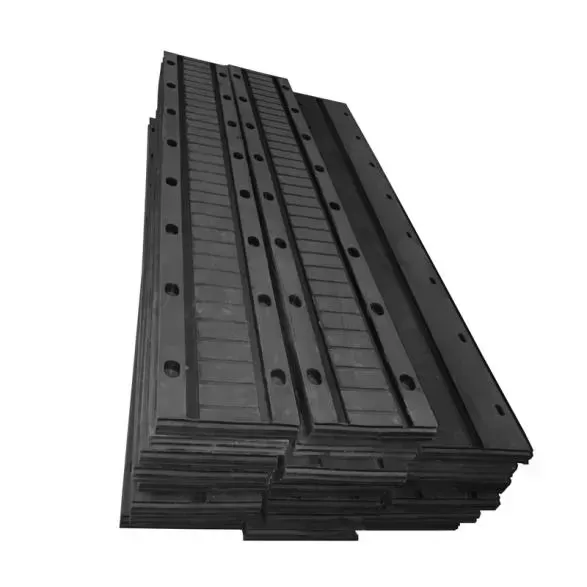
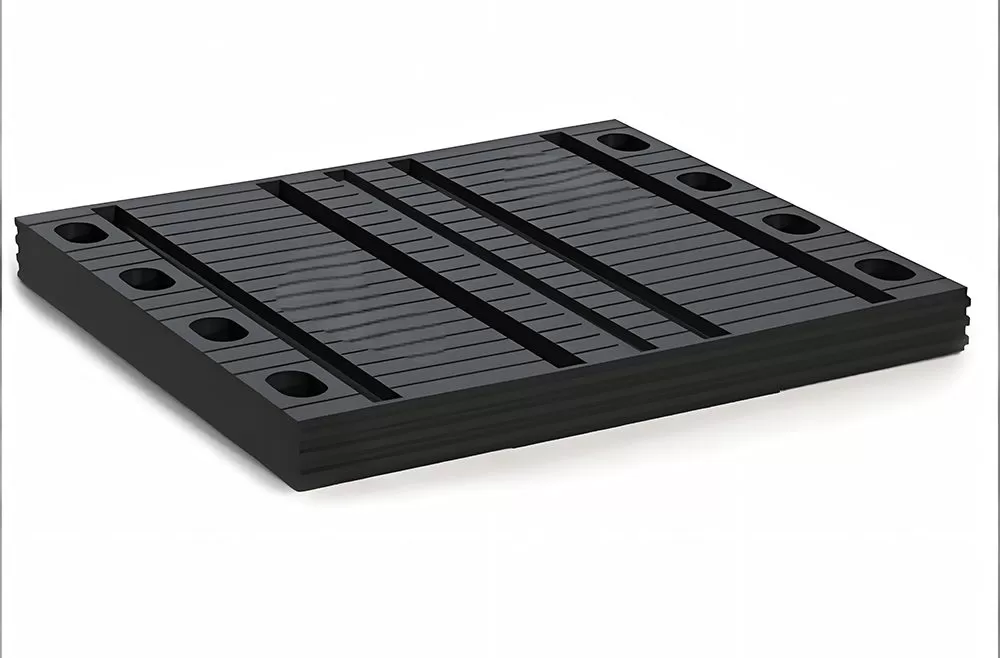
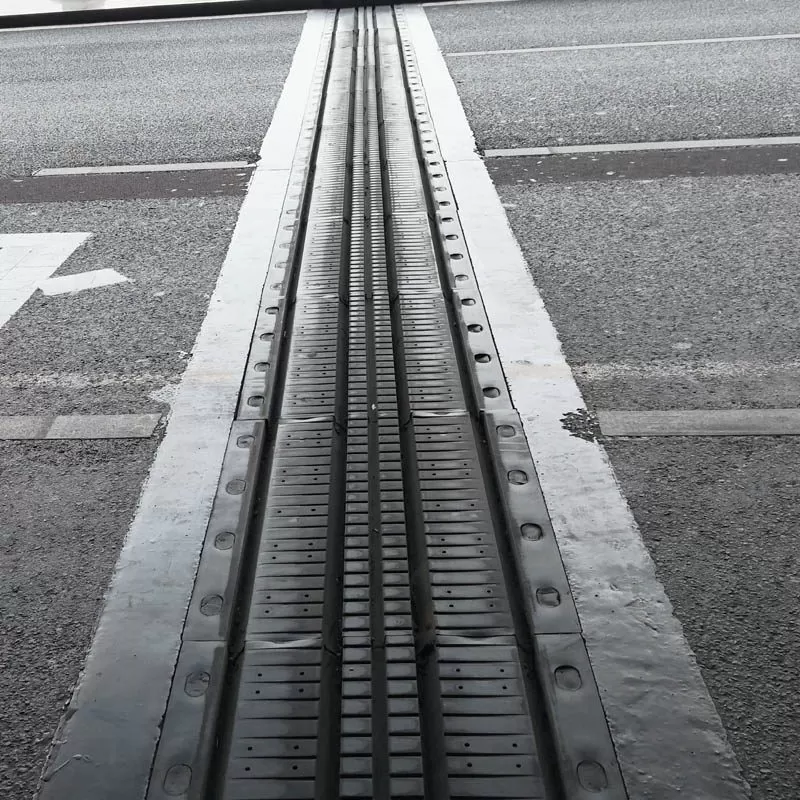
Elastomeric Expansion Joint: Key Advantages — The Engineered Seal for Predictable Bridge Performance
The Elastomeric Expansion Joint transcends the category of a simple sealing component; it is a sophisticated, engineered interface system that leverages advanced polymer science to deliver unmatched performance in its domain. Its advantages are rooted in a fundamental commitment to material integrity, lifecycle efficiency, and predictable, maintenance-free operation, directly addressing the paramount concerns of engineers and asset managers responsible for safe, durable, and cost-effective infrastructure.
1. Engineered Material Superiority for Controlled Structural Response
The system’s core advantage lies in its ability to transform dynamic energy into controlled, harmless deformation, protecting the structure at a molecular level.
Dynamic Stress Absorption and Vibration Damping: Unlike rigid mechanical joints that transfer forces, elastomeric compounds are engineered to absorb and dissipate energy. They act as a dynamic buffer, efficiently mitigating the stress concentrations caused by thermal movement, live load deflection, and braking forces. This inherent damping property significantly reduces noise transmission and protects the bridge deck and bearings from impact-related fatigue, extending the overall structural service life.
Uncompromising, Monolithic Waterproofing Integrity: The system provides a continuous, homogeneous seal across the entire joint width. There are no mechanical gaps, interlocking parts, or secondary seals that can fail. This impermeable barrier is the most effective defense against water and chloride ingress, the primary cause of substructure corrosion. By guaranteeing this performance, the joint functions as a critical capital asset preservation component, safeguarding the bridge's most valuable and costly-to-repair elements.
2. Lifecycle Efficiency and Operational Reliability
The design philosophy prioritizes long-term value over initial cost, focusing on decades of trouble-free service.
Durability Through Advanced Material Science: Utilizing formulation-specific elastomers (Neoprene for general durability, EPDM for extreme weather resistance, Natural Rubber for superior dynamic damping), the joint is engineered to withstand aggressive environmental stressors: UV radiation, ozone, temperature extremes (-40°C to +70°C), and de-icing salts. This results in a proven design life of 25+ years with minimal property degradation.
Ultra-Low Maintenance and Total Cost of Ownership (TCO): The system's simplicity is its strength. With no moving parts to lubricate, adjust, or replace, and no seals that require periodic renewal, maintenance is typically limited to visual inspection. This translates into near-zero unplanned maintenance costs and eliminates the traffic disruptions associated with joint repairs. The resulting TCO is exceptionally favorable, providing owners with long-term budget certainty and operational peace of mind.
3. Tailored Solutions and Global Partnership Assurance
We provide more than a standard product; we deliver a custom-formulated, application-optimized solution backed by end-to-end support.
Precision OEM Customization and Collaborative Engineering: We engage in deep technical collaboration to tailor the solution. This goes beyond dimensions to include custom elastomer formulations optimized for specific project conditions—whether for a railway's high-frequency vibrations, a marine environment's salinity, or a region's unique thermal cycle. Every joint is a bespoke element of your bridge's performance system.
Guaranteed Compliance and Predictable Supply: Manufactured in our controlled facilities, every joint meets or exceeds international standards (AASHTO, EN, BS). Our integrated production process ensures rigorous quality control, batch consistency, and reliable lead times, de-risking your project schedule and ensuring compliance documentation is seamlessly provided.
Global Service Expertise and Holistic Support: Our experience spans diverse climates and regulatory environments worldwide. We offer comprehensive, lifecycle-oriented support: from initial material selection consultation and installation supervision to long-term performance monitoring. For export projects, we expertly manage all logistics, certification, and on-site technical liaison, serving as a single, accountable partner.
Conclusion: The Foundation of Trust for Reliable Infrastructure
In summary, the key advantages of the Elastomeric Expansion Joint converge on a single promise: predictable, long-term performance with minimal lifecycle burden. It offers:
Material Intelligence to safely manage dynamic forces and environmental attack.
Lifecycle Certainty through inherent durability and ultra-low maintenance.
Partnership Confidence through customization and global execution capability.
Specifying this system is a decisive choice for risk reduction and value optimization. It is the unequivocal selection for engineers and owners who prioritize watertight integrity, ride quality, long-term economy, and absolute trust in a component that silently and reliably protects the bridge for generations.
Elastomeric Expansion Joint: Installation & Construction — Precision Integration for Guaranteed Performance
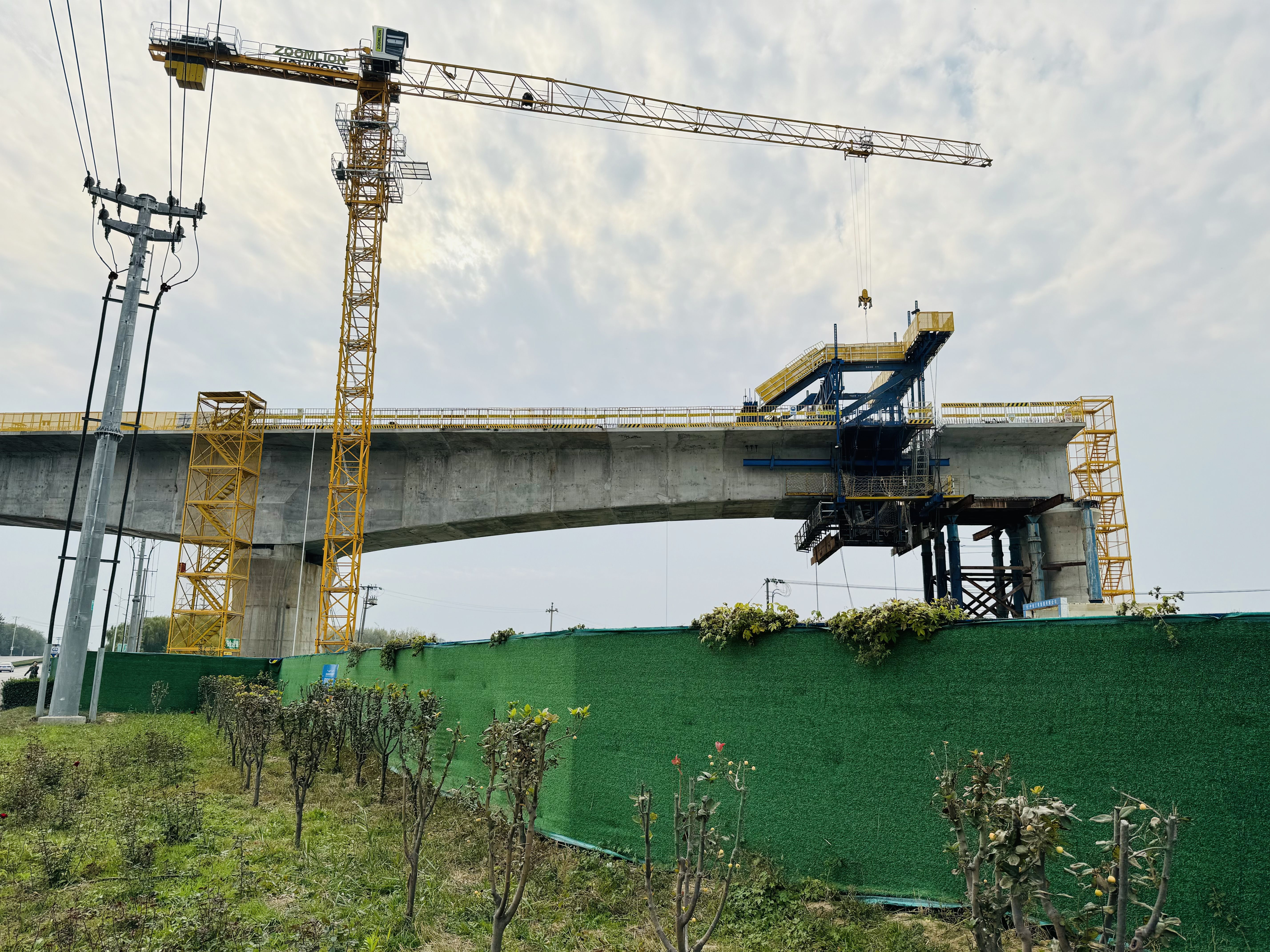
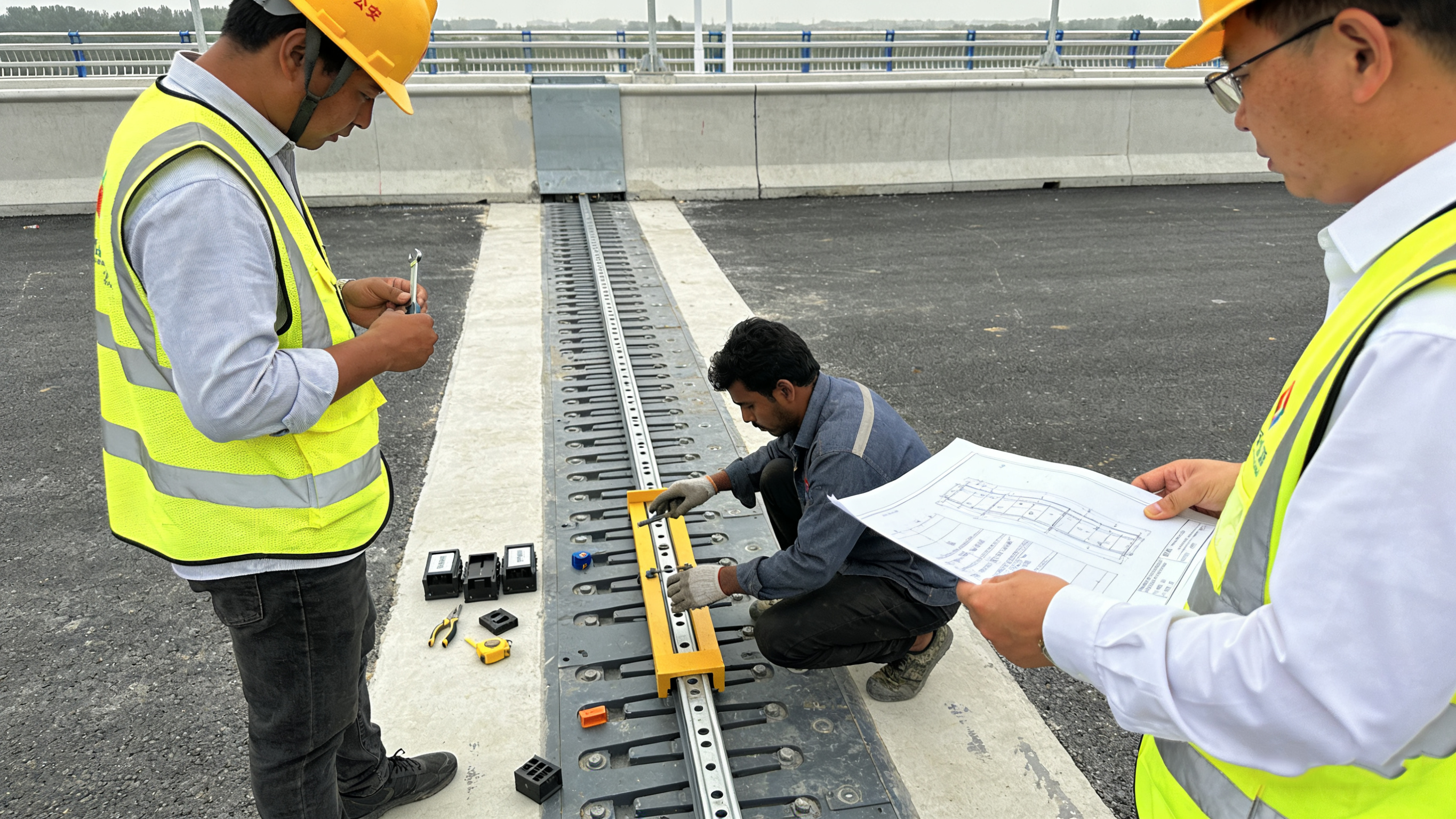
The installation of an Elastomeric Expansion Joint is the critical process where its engineered material advantages are permanently integrated into the bridge structure. While conceptually straightforward, its long-term success—particularly its waterproofing integrity—hinges on meticulous surface preparation, precise alignment, and strict adherence to installation temperature protocols. Our methodology transforms this process from a simple construction task into a verifiable, quality-controlled procedure, ensuring the product's inherent durability and performance are fully realized, thereby building client trust through demonstrable on-site discipline and support.
Core Installation Philosophy: Foundation, Precision, and Environmental Awareness
Our approach is governed by three non-negotiable principles that ensure the elastomeric seal functions as designed for decades.
Imperative of Immaculate Substrate Preparation: The bond between the joint's steel edge beams and the bridge concrete is fundamental. We mandate a surgically clean, sound, and profiled concrete surface. This is not mere cleaning; it involves verifying concrete strength, removing laitance, and ensuring a positive mechanical key, creating the foundation for a monolithic, load-transferring connection that prevents water infiltration behind the joint.
Temperature-Driven Installation & Gap Setting: Unlike rigid joints, elastomeric systems are thermally active components. The installation gap width is not a fixed value but is precisely calculated based on the ambient temperature at the time of installation relative to the bridge's expected median temperature. Our technical support provides project-specific temperature-gap correlation charts and on-site guidance to set this "neutral position" correctly, preventing pre-stress (compression or tension) that can drastically reduce service life.
Staged, Inspection-Centric Workflow: Installation follows a locked sequence with formal checkpoints. Each phase—from substrate acceptance and beam placement to elastomer installation—requires verification before proceeding. This "inspect as you build" philosophy catches errors immediately and builds quality into the final product systematically.
Step-by-Step Construction Methodology: A Framework for Success
The following sequence details the critical stages, highlighting how our technical support ensures each step achieves its engineered intent.
Phase 1: Substrate Verification & Preparation (The Critical Foundation)
Activity: Detailed inspection and preparation of the concrete bridge deck ends. This includes mechanical abrasion to expose aggregate, high-pressure washing, and verification of elevation and planarity.
Technical Support & Advantage: We provide substrate acceptance criteria and profiling specifications. Our field technicians can perform or verify pull-off tests to ensure concrete tensile strength meets requirements. This rigorous start, often overlooked, is the single most important factor in preventing future debonding and water ingress behind the joint.
Phase 2: Steel Edge Beam Positioning and Fixing (Establishing the Framework)
Activity: Precise placement, alignment, and secure fixing of the pre-fabricated steel edge beams using high-strength anchor bolts or welding to embedded plates.
Technical Support & Advantage: We supply laser-alignment guidelines, custom setting templates, and certified torque values for anchor bolts. The focus is on achieving perfect line, level, and the critical installation gap width as per the temperature chart. Our support ensures the structural "frame" is positioned with the precision required for the elastomer to perform.
Phase 3: Elastomeric Seal Installation (Activating the System)
Activity: Installing the preformed elastomeric sealing element into the channels of the secured steel beams. This may involve lubricating the channel and using specialized tools to seat the seal properly without twisting or stretching.
Technical Support & Advantage: This is where our product and process shine. We provide proprietary installation tools and detailed techniques to ensure the seal is seated fully and uniformly along its entire length. For large or complex joints, our technicians are trained in specialized methods like "zipper" or "rolling" installation to prevent damage, ensuring a perfect, continuous seal from day one.
Phase 4: Final Commissioning and Documentation (Verification of Performance)
Activity: Removal of all temporary spacers, a final visual and tactile inspection of the seal, and documentation of the as-built installation conditions (notably the ambient temperature and final gap width).
Technical Support & Advantage: We provide a project-specific commissioning checklist. The final step is not just an inspection but the creation of a handover dossier that includes installation records, temperature logs, and photographic evidence. This provides the owner with a verified baseline for all future inspections and underscores our commitment to accountability.
The Technical Support Ecosystem: Ensuring Predictable Outcomes
Our commitment turns installation plans into guaranteed results.
Pre-Installation Review: We review the contractor's method statement and provide a Project-Specific Installation Guide.
On-Site Expertise: Availability of certified installation supervisors for critical phases, especially substrate preparation, beam alignment/gap setting, and seal installation.
Troubleshooting & Adaptation: Our team provides real-time solutions for unforeseen site conditions, such as minor deviations in concrete elevation, ensuring the installation proceeds correctly without compromising design intent.
Conclusion: Building Trust Through Executed Simplicity
The installation of an Elastomeric Expansion Joint demonstrates that for high-performance sealing systems, simplicity demands rigorous procedure. Our structured, support-rich approach ensures that this advanced product's core advantages—superior waterproofing, dynamic stress absorption, and long-term durability—are not just promised but validated upon completion. We deliver not just a product, but a fully commissioned, performance-ready installation. This turnkey approach minimizes owner risk, delivers immediate value, and establishes our partnership as the assured choice for projects where leak-free, low-maintenance performance is the definitive measure of quality.