Finger Expansion Joint: Key Advantages — The Definitive Mechanical Solution for Extreme Bridge Articulation
The Finger Expansion Joint is not merely a product; it is a robust, time-proven mechanical philosophy applied to the most demanding bridge movement challenges. Its advantages stem from a fundamental commitment to mechanical integrity, material endurance, and long-term operational simplicity, directly addressing the core concerns of engineers and asset owners responsible for infrastructure where failure is inconceivable.
1. Unmatched Mechanical Superiority for Critical Demands
The system’s core advantage lies in its elegant, brute-force approach to solving large-scale movement problems.
Unparalleled Load-Bearing Capacity and Direct Force Transfer: The interlocking steel comb plate design creates a continuous, high-strength load path across the expansion gap. Unlike systems that rely on seals or smaller bearings, this direct steel-to-steel interface is engineered to handle extreme axle loads (often exceeding 400 kN) and resist fatigue from decades of heavy traffic. For bridges on heavy-haul corridors or critical freight routes, this provides an unequaled margin of safety and durability.
Engineered for Mega-Scale and Multi-Directional Movement: Designed from the outset for massive displacements (100mm to 3000mm+), it is the go-to solution where thermal and dynamic movements surpass the limits of other systems. Furthermore, through bespoke engineering of finger tip geometry and integration with specialized sliding or rocker bearings, the joint can be configured to accommodate not just longitudinal movement but also controlled transverse shifts and rotations. This makes it adaptable for complex applications in curved bridges or zones with specific seismic demands, offering a different kind of multi-directional solution compared to sealed modular types.
2. Inherent Durability and Lifecycle Resilience
The design eliminates complexity where it matters most, focusing on longevity and reduced lifetime intervention.
Durability by Simplicity and Superior Material Science: The system’s open-architecture design is a key durability feature. It is inherently resistant to failure from debris clogging or seal degradation. Constructed from high-strength, low-alloy steels (e.g., ASTM A709) and protected by advanced corrosion defense systems—from hot-dip galvanizing to specialized marine-grade coatings—it is built to withstand the harshest environments, including coastal salt spray and industrial pollution, ensuring a 25+ year design life.
Low Lifetime Cost and Operational Reliability: The simplicity translates into minimal and predictable maintenance. There are no elastomeric seals to replace periodically. Primary maintenance involves inspection and clearing of drainage systems, leading to exceptionally low total cost of ownership (TCO). For asset managers, this means decades of reliable service with minimal operational disruption or unplanned expenditures, a cornerstone of fiscally responsible infrastructure stewardship.
3. Tailored Partnership from Conception to Legacy
We provide more than a standard catalog item; we deliver a custom-engineered mechanical component backed by global execution prowess.
Precision OEM Customization and Collaborative Engineering: Every finger joint is a tailored solution. We engage in direct collaboration to customize all critical parameters: movement capacity, load rating, geometric layout (skew, curvature), and material specifications to meet exact project calculations and site conditions. This ensures perfect integration and performance optimization.
Guaranteed Compliance and Supply Chain Certainty: Our manufacturing is disciplined and scale-ready. Products are engineered to comply with international standards (AASHTO, EN, JIS), with full certification. Our controlled production facilities ensure rigorous quality control, consistent output, and reliable lead times, eliminating supply chain risk for your project’s critical path.
Global Service Expertise and End-to-End Support: Our experience spans global projects, giving us insight into diverse regional standards and construction practices. We provide comprehensive support: from initial design consultation and installation supervision to long-term maintenance planning and spare parts provision. For international projects, we expertly manage logistics, export documentation, and on-site technical liaison, serving as a single point of responsibility.
Conclusion: The Foundation of Trust for Monumental Bridges
The advantages of the Finger Expansion Joint coalesce into a powerful value proposition: It is the most mechanically reliable and economically sensible solution for bridges where movement is measured in meters, not millimeters. It offers:
Mechanical Supremacy for the largest loads and displacements.
Lifecycle Certainty through inherent durability and low maintenance.
Partnership Confidence through customization and global support.
Specifying this system is a decisive choice for risk mitigation and legacy creation. It is the unequivocal selection for engineers and owners who prioritize unyielding mechanical performance, long-term cost control, and absolute trust in the infrastructure that defines the limits of modern engineering.
Finger Expansion Joint: Installation & Construction — Precision Execution of a Robust Mechanical System
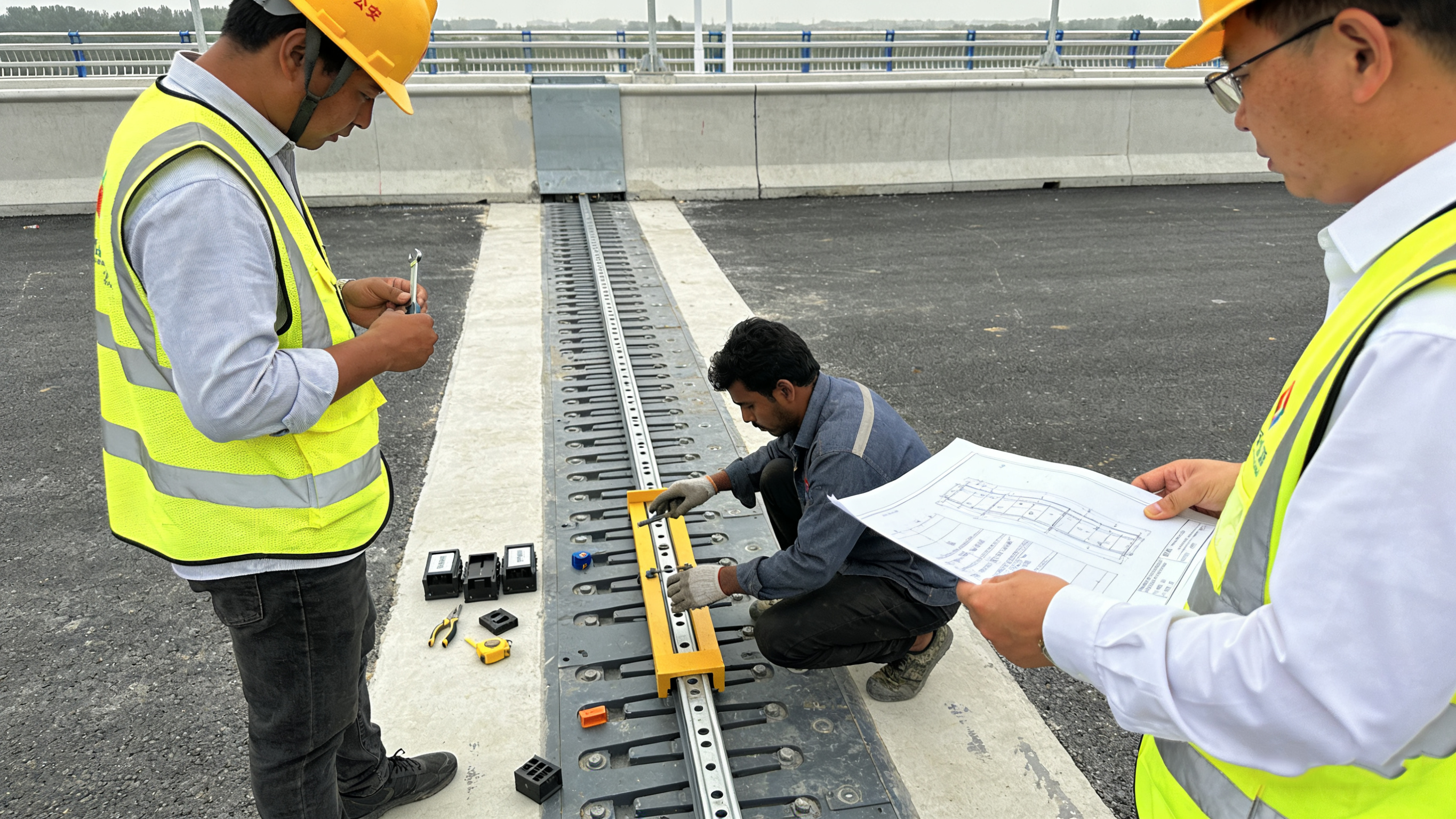
The installation of a Finger Expansion Joint is the critical process where its engineered robustness is translated into reliable, long-term performance. While mechanically simpler than sealed modular systems, its success hinges on precision alignment, secure fixing, and meticulous adjustment to ensure the massive steel components function as a single, coherent unit. Our methodology emphasizes a controlled, sequenced approach backed by comprehensive support, transforming installation from a construction task into a verifiable quality assurance process, thereby building client trust through demonstrable on-site expertise and certainty.
Core Installation Philosophy: Precision Alignment for Decades of Service
Our approach is governed by the principle that the joint's load-transfer efficiency and smooth articulation depend entirely on perfect initial positioning and fixing. Even minor misalignments can lead to binding, excessive wear, or point loading.
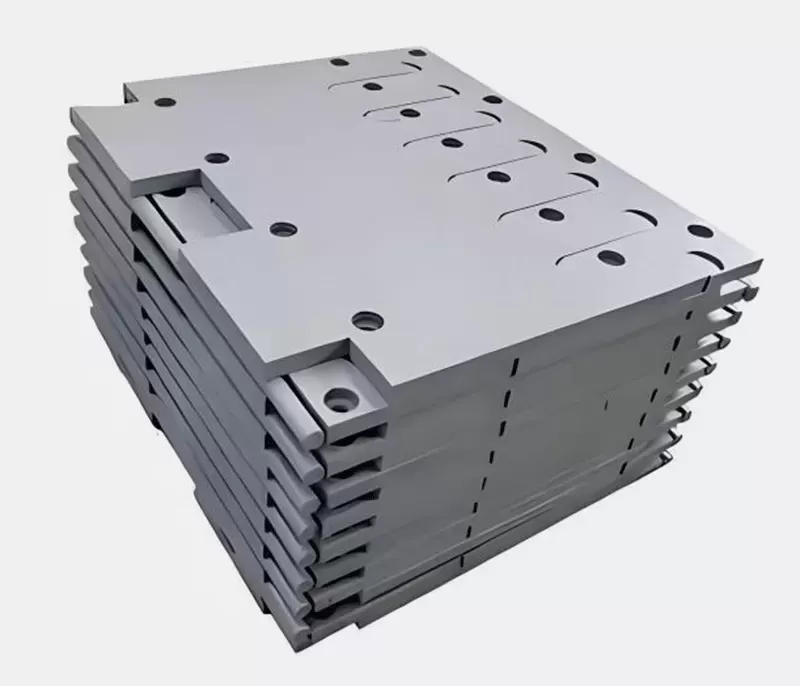
Precision Component Pre-Assembly and Templating: Critical to efficiency is off-site preparation. Finger plate assemblies are pre-fabricated, trial-assembled, and match-marked in our controlled factory. We provide custom installation templates and detailed setting-out drawings specific to the bridge's geometry, which account for installation temperature and the required pre-set gap. This eliminates guesswork and ensures all parts fit together perfectly on-site.
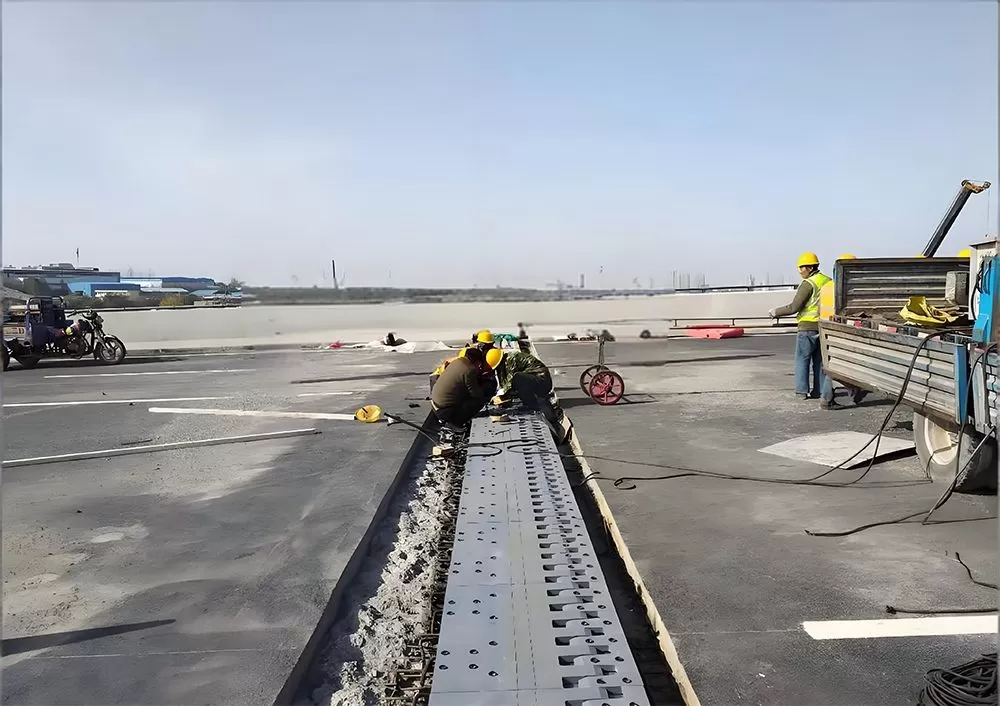
Staged, Verified Assembly Sequence: Installation follows a strict, non-negotiable sequence. Each stage—from base preparation and support setting to final plate interlocking—has defined tolerances and verification checkpoints. This structured, inspect-as-you-go process ensures quality is built in at every step, preventing errors from compounding.
Integrated Technical Support as Standard: We treat installation as a collaborative phase. Support is not an add-on but an integral part of the delivery, ranging from detailed method statements to optional on-site supervision by our engineers.
Step-by-Step Construction Methodology: A Framework for Success
The following sequence details the critical stages, highlighting how our support ensures each step achieves its intended outcome.
Phase 1: Foundation Preparation & Verification
Activity: Thorough cleaning and level verification of the bridge deck ends at the joint location. Inspection of pre-set anchor bolts or embedded plates for position and condition.
Technical Support & Advantage: We provide tolerance checklists and leveling protocols. Our drawings specify the exact required condition of the substrate. This foundational step, often overlooked, is critical for ensuring the entire superstructure is seated correctly. Our guidance prevents future problems stemming from an uneven base.
Phase 2: Support System Installation & Primary Alignment
Activity: Installing and securely fixing the support beams or sole plates to the bridge structure. This is the "foundation" for the finger plates. Initial gross alignment of the support system to the bridge axis and design elevation is performed.
Technical Support & Advantage: We supply pre-drilled support components and detailed bolting/torquing specifications. Using our setting-out templates, crews achieve primary alignment within coarse tolerances efficiently. This step establishes the correct kinematic plane for all subsequent components.
Phase 3: Finger Plate Placement & Precision Interlocking
Activity: Lifting the pre-assembled finger plate units onto the supports. The critical interlocking adjustment begins, where the gap and overlap between opposing fingers are meticulously set according to the installation temperature and design drawings.
Technical Support & Advantage: This is the most technically sensitive stage. We provide temperature-gap correlation charts and specialized gauging tools. Our engineers are trained to make these adjustments, ensuring the joint is set in its neutral, stress-free position for the ambient conditions, guaranteeing free movement in both expansion and contraction.
Phase 4: Final Fixing, Ancillary System Integration, & Commissioning
Activity: Final welding or high-strength bolting of plates to supports. Installation of drip trays, drainage systems, and protective covers below the open gap. Removal of all temporary braces and a full-range manual function test.
Technical Support & Advantage: We provide welding procedure specifications (WPS) and final bolt torque values. The importance of the ancillary drainage systems is emphasized and detailed in our manuals, as protecting the substructure is vital for the open-gap design. The final hands-on function test—physically checking the smooth sliding of the fingers—provides immediate, tangible proof of correct installation.
The Technical Support Ecosystem: Ensuring Predictable Outcomes
Our commitment ensures the installation is a success, not a risk.
Pre-Installation Planning: Submission of a comprehensive Project-Specific Installation Method Statement (IMS) for review by the site engineer.
On-Site Expertise: Availability of certified installation supervisors to oversee critical phases, particularly the interlocking adjustment and final fixing.
Documentation & Handover: Provision of a complete installation record and as-built dossier, including torque logs, alignment verification reports, and commissioning certificates.
Conclusion: Building Trust Through Executed Simplicity
The installation of a Finger Expansion Joint demonstrates that for large-scale mechanical systems, simplicity demands precision. Our structured approach and embedded technical support ensure that this robust product's inherent advantages—massive load capacity, extreme movement range, and long-term durability—are fully realized in the completed structure. We deliver not just a product, but a verified, performance-ready installation. This turnkey approach minimizes owner risk, validates the engineering investment, and establishes our partnership as the assured choice for projects where mechanical reliability over decades is the ultimate measure of success.

.webp)
.webp)