Aluminium Alloy Expansion Joint: Key Advantages — The Engineered Solution for Corrosion and Weight-Critical Challenges
The Aluminium Alloy Expansion Joint is a targeted, engineered response to specific, high-stakes infrastructure problems, primarily within railway networks and corrosive environments. Its advantages are not about being a universally superior joint, but about delivering unmatched performance and lifecycle value in its defined domain, directly addressing the core concerns of railway engineers and asset managers facing relentless environmental and operational degradation.
1. Engineered Material Superiority for Targeted Environments
The system’s core advantage is its ability to leverage advanced aluminum metallurgy to solve problems that traditional materials cannot.
Unrivaled Corrosion Resistance and Durability in Aggressive Settings: The primary and most compelling advantage. High-strength aluminum alloys (e.g., 6005) form a passive, self-renewing oxide layer that provides inherent, maintenance-free protection against corrosion. This makes it the definitive choice for coastal bridges, marine environments, railway corridors (exposed to brake dust and moisture), and industrial atmospheres. It eliminates the lifecycle cost and failure risk associated with the painting, re-painting, and corrosion repair of steel components, offering a 25+ year service life with near-zero corrosion maintenance.
Optimized Strength-to-Weight Ratio for Specific Applications: The material delivers high strength at approximately 65% lower density than steel. While not intended to replace heavy-duty highway joints, this is a critical advantage for railway dynamics, where reducing inertial mass benefits long-term performance, and for installation and retrofit projects where handling ease and weight restrictions on existing structures are significant considerations. It provides sufficient strength for the dynamic loads of rail traffic within a much lighter package.
2. Lifecycle Efficiency and Operational Reliability
The design philosophy is centered on reducing total cost of ownership through durability and simplicity.
Significant Reduction in Lifecycle Costs: The economic argument is won on Total Cost of Ownership (TCO). The higher initial material cost is decisively offset by the elimination of recurring expenses: no protective coating systems, no scheduled corrosion inspections or remediation, and reduced need for access and traffic management for maintenance. For asset owners in corrosive regions, this translates into decades of predictable, low-intervention operation and protected capital investment.
Enhanced Performance in Specialized Contexts: Beyond corrosion, the alloy offers non-magnetic properties, which is a critical safety and performance feature in electrified railway zones, preventing issues with induced currents. Its natural metallic finish can also be an aesthetic or functional benefit in architectural or specific industrial applications.
3. Tailored Partnership and Global Execution Assurance
We provide more than a niche product; we deliver a precision-engineered component backed by specialized manufacturing and support.
Precision OEM Customization for Railway Integration: Recognizing that railway projects have unique geometric and interface requirements, we engage in collaborative engineering to customize dimensions, movement parameters (up to ~160mm), and connection details. This ensures the joint integrates seamlessly with specific track systems, deck designs, and drainage requirements.
Guaranteed Supply from Dedicated Production: Utilizing our dedicated aluminum processing lines, we ensure material consistency, precise extrusion/fabrication tolerances, and reliable lead times for both standard and custom configurations. This specialized production control is essential for delivering the high-quality alloy components required for long-term performance.
Global Compliance and Specialized Support: Our products are engineered to meet relevant international standards for railway and bridge components. For global projects, we provide comprehensive support encompassing export logistics, customs documentation, and on-site technical liaison familiar with the unique challenges of railway bridge construction and maintenance, serving as a single-point expert partner.
Conclusion: The Foundation of Trust for Niche, High-Value Applications
In summary, the key advantages of the Aluminium Alloy Expansion Joint coalesce into a powerful, focused value proposition: It is the most durable and cost-effective solution for infrastructure besieged by corrosion or where lightweight, non-magnetic properties are paramount. It offers:
Material Excellence to conquer specific environmental and operational challenges.
Lifecycle Economy through inherent durability and eliminated maintenance.
Partnership Precision through customization and specialized supply-chain expertise.
Specifying this system is a strategic decision for risk elimination and long-term value preservation in highly demanding settings. It is the unequivocal choice for engineers and owners who must ensure decades of reliable performance in environments where conventional steel joints are a liability, thereby building absolute trust in the resilience of critical rail and coastal infrastructure.
Aluminium Alloy Expansion Joint: Installation & Construction — Precision Execution for Lasting Performance
The installation of an Aluminium Alloy Expansion Joint is a critical process where its engineered material advantages are translated into real-world, long-term reliability. While the components are lighter and more corrosion-resistant than steel, the installation demands equivalent precision, correct sequencing, and strict adherence to material-specific protocols to prevent galvanic corrosion and ensure optimal function. Our methodology transforms the installation from a simple assembly task into a controlled, quality-assured procedure, leveraging the product’s inherent advantages while mitigating risks unique to aluminum in a bridge environment.
Core Installation Philosophy: Precision, Isolation, and Environmental Control
Our approach is governed by principles that ensure the joint’s longevity and performance, addressing both mechanical and electrochemical considerations.
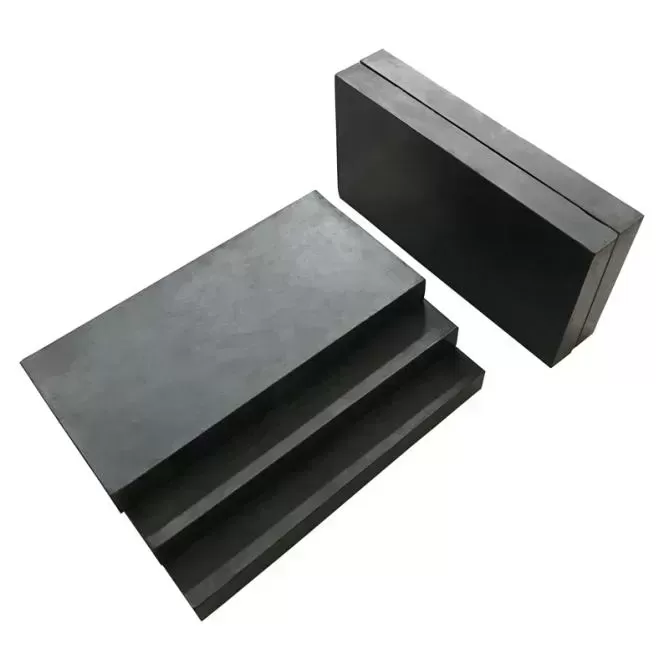
Galvanic Isolation as a Mandate: The most critical, non-negotiable principle is preventing galvanic (dissimilar metal) corrosion. Where aluminum components directly contact embedded steel or carbon concrete, we mandate the use of non-conductive, compressive isolation pads or bushings (e.g., neoprene or specialized polymers). This step is as crucial as bolt tightening itself and is a key differentiator of a professional installation.
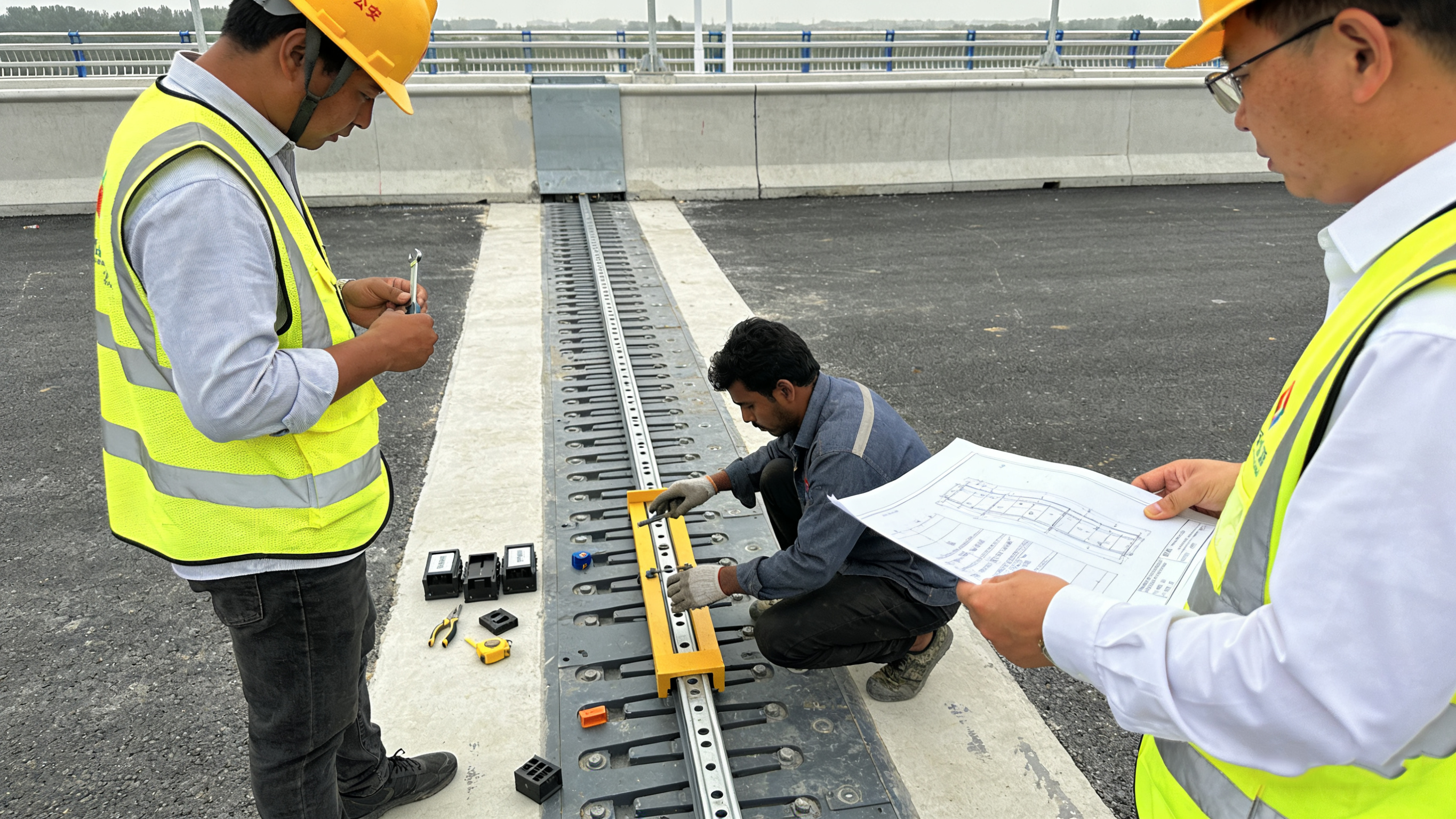
Precision Templating and Lightweight Advantage: The lighter weight of components is leveraged for easier handling and more precise positioning. We provide custom, project-specific setting templates that account for the installation temperature and required gap. This allows crews to achieve accurate alignment with less heavy equipment, reducing setup time and improving safety, particularly in overhead or constrained railway environments.
Sequenced, Verified Assembly: Installation follows a strict, stepwise sequence with verification checkpoints after each major operation—substrate preparation, support placement, component alignment, and final fixing. This “inspect as you build” approach ensures errors are caught immediately and that the corrosion protection measures are correctly implemented before proceeding.
Step-by-Step Construction Methodology: A Framework for Success
The following sequence details the critical stages, highlighting how our technical support ensures each step aligns with best practices for aluminum structures.
Phase 1: Substrate Preparation & Embedded Part Inspection
Activity: Thorough cleaning of concrete surfaces and meticulous inspection of all embedded steel anchor plates or bolts. Verification of their position, level, and, critically, their condition and coating.
Technical Support & Advantage: We provide inspection criteria for embedded parts. Our focus is on identifying any corrosion on steel elements that could later migrate, and ensuring the isolation interface will be effective. This proactive step prevents future galvanic issues at the connection, which is the system’s most vulnerable point.
Phase 2: Installation of Isolation Layers & Primary Support
Activity: Installing non-conductive isolation pads on all steel contact surfaces. Precise placement and temporary fixing of the primary aluminum support beams or frames onto these pads.
Technical Support & Advantage: We supply pre-cut or pre-formed isolation materials specific to the connection design. Our manuals and on-site guidance emphasize the absolute necessity of complete separation, ensuring crews understand that electrical isolation is a primary structural requirement for longevity, not an optional accessory.
Phase 3: Component Alignment & Thermal Gap Setting
Activity: Positioning the main aluminum alloy joint components (e.g., finger plates, edge beams). Performing the critical thermal gap adjustment using precision spacers or gauges according to the provided temperature-gap chart.
Technical Support & Advantage: This is where the lightweight advantage shines. We provide specialized, lightweight alignment tools and clear temperature-gap correlation data. Our technicians can oversee this adjustment to ensure the joint is set in its neutral, stress-free position for the ambient temperature, guaranteeing free movement without binding.
Phase 4: Final Fixing with Isolation Fasteners & Sealing
Activity: Final bolting using stainless steel bolts (typically A4/AISI 316 grade) with non-conductive sleeves and washers to maintain isolation. Application of neutral-cure, high-modulus silicone sealant at all interfaces between aluminum and concrete or other materials.
Technical Support & Advantage: We supply or specify the correct isolation fastener kits. The sealant selection is critical—it must be compatible with aluminum and remain flexible. Our procedures prevent the use of alkaline or acidic compounds that could attack the aluminum, ensuring long-term sealing integrity without material degradation.
Phase 5: Commissioning, Documentation & Protection
Activity: Removal of all temporary spacers, functional movement test, and application of protective tape or coating on exposed aluminum surfaces to prevent staining from concrete splatter or grout during subsequent construction phases.
Technical Support & Advantage: We provide a final commissioning checklist. The post-installation protection step is often overlooked but vital for preserving the aesthetic and surface condition of the aluminum. The handover dossier includes records of isolation materials used, torque values, and as-built gap measurements.
The Technical Support Ecosystem: Ensuring Material-Specific Best Practices
Our support is tailored to the unique nature of the product:
Pre-Installation Review: We conduct a galvanic compatibility review of the contractor’s installation drawings.
On-Site Specialist Guidance: Availability of technicians trained in aluminum-specific bridge installation practices, focusing on isolation techniques and material handling to prevent surface damage.
Material Compatibility Assurance: Provision of approved lists of sealants, greases, and cleaning agents that are safe for use with the specific aluminum alloy.
Conclusion: Building Trust Through Meticulous Execution
The installation of the Aluminium Alloy Expansion Joint demonstrates that advanced materials require advanced installation protocols. Our structured, support-rich approach ensures that the product’s core advantages—superior corrosion resistance and lightweight durability—are not compromised during construction. We deliver a fully commissioned system where every detail, from bolt isolation to sealant chemistry, is verified, providing the owner with confidence that this specialized solution will deliver its promised decades of low-maintenance service. This turnkey, expert-led installation is the final, critical step in realizing the full lifecycle value of the investment.

.webp)