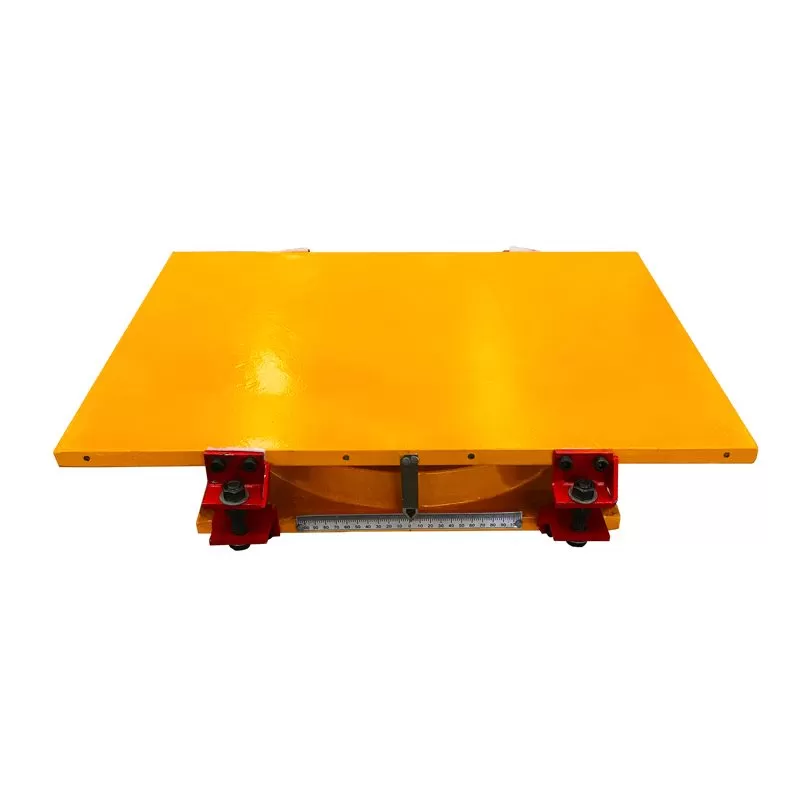
LRB Isolator - Key Product Advantages
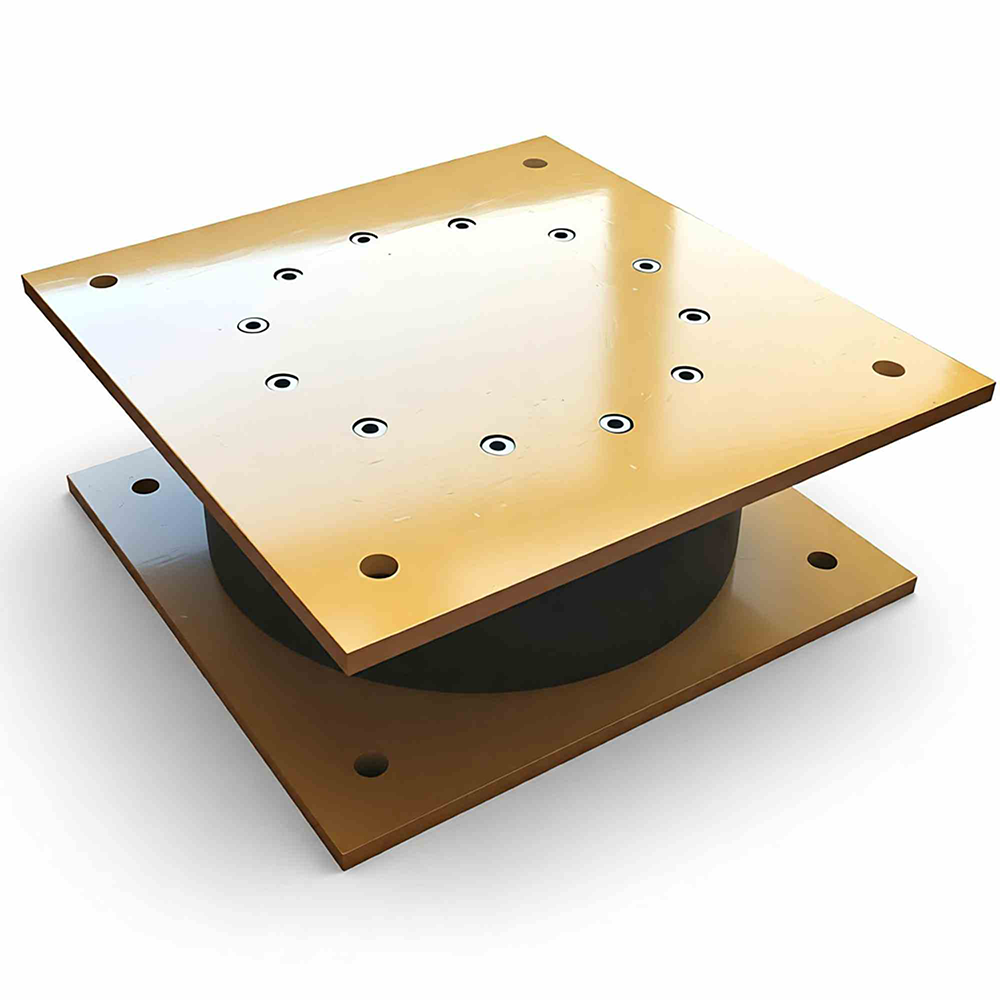
The selection of a Lead Rubber Bearing (LRB) Isolator is a strategic decision that delivers unparalleled value through a combination of passive seismic technology, proven performance, and lifecycle efficiency. Our LRB isolators are engineered to meet the most critical demands of modern infrastructure, providing not just a component, but a comprehensive risk mitigation and resilience solution.
1. Core Technological Superiority: The Synergy of Flexibility and Damping
Unlike simple elastomeric isolators or complex active systems, the LRB's genius lies in its integrated, self-contained design.
Dual-Function Core: The lead plug within laminated rubber uniquely combines two essential functions: low horizontal stiffness for period lengthening and high, stable hysteretic damping for energy dissipation. This synergy provides superior seismic isolation in a single, reliable device.
Predictable & Stable Hysteresis: The force-displacement behavior is highly predictable, repeatable, and velocity-independent. The lead core yields consistently, creating a stable, fat hysteresis loop that provides significant damping (typically 20-25%) across multiple cycles without degradation.
2. Unmatched Seismic Performance & Life Safety Assurance
The primary advantage is quantifiable risk reduction for both structures and occupants.
Dramatic Force Reduction: By decoupling the superstructure from ground motion and dissipating energy, LRBs can reduce seismic forces transmitted to the structure by 70-80% or more compared to a fixed-base condition.
Protection of Non-Structural Elements: By controlling inter-story drift, LRBs protect critical building contents (medical equipment, servers, fragile architectural features) and ensure the continued operability of essential facilities like hospitals and emergency centers post-earthquake.
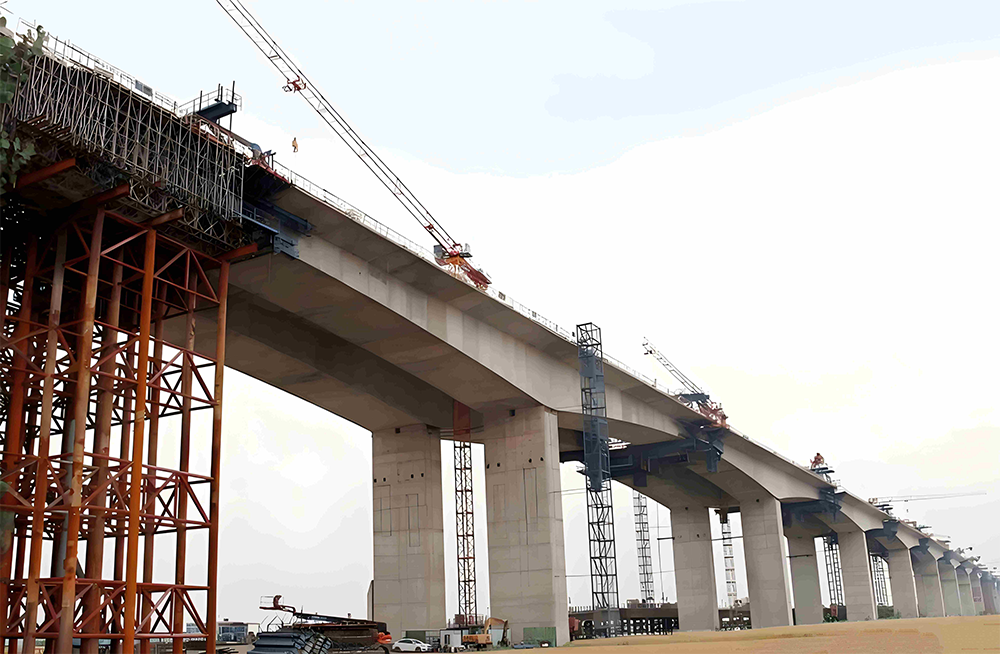
Application-Specific Optimization: We engineer isolators with different shear moduli (0.3-0.7 MPa for buildings, 0.7-1.2 MPa for bridges) to perfectly match the dynamic requirements and load characteristics of the specific structure.
3. Long-Term Reliability and Minimal Lifecycle Cost
Our LRBs are an investment in decades of worry-free performance.
Maintenance-Free Design: The system is hermetically sealed—the lead core is fully encapsulated, and rubber compounds include anti-oxidants and anti-ozonants. This results in zero routine maintenance requirements for the core isolation function over its 25-50+ year design life.
Durability Under Extreme Conditions: Designed to withstand multiple Design Basis Earthquakes (DBE) and Maximum Considered Earthquakes (MCE) without performance loss. The lead core possesses a unique self-annealing property, recrystallizing at room temperature to restore its properties after yielding.
Corrosion & Environmental Resistance: External steel components are protected by high-specification coatings (hot-dip galvanizing or advanced paint systems per ISO 12944), ensuring durability even in harsh marine or industrial environments.
4. Design & Construction Efficiency
The benefits extend into the design and construction phases, saving time and cost.
Simplified Structural Design: By drastically reducing seismic forces, LRBs allow for more economical superstructure design—potentially lighter framing, smaller structural members, and less reinforcement.
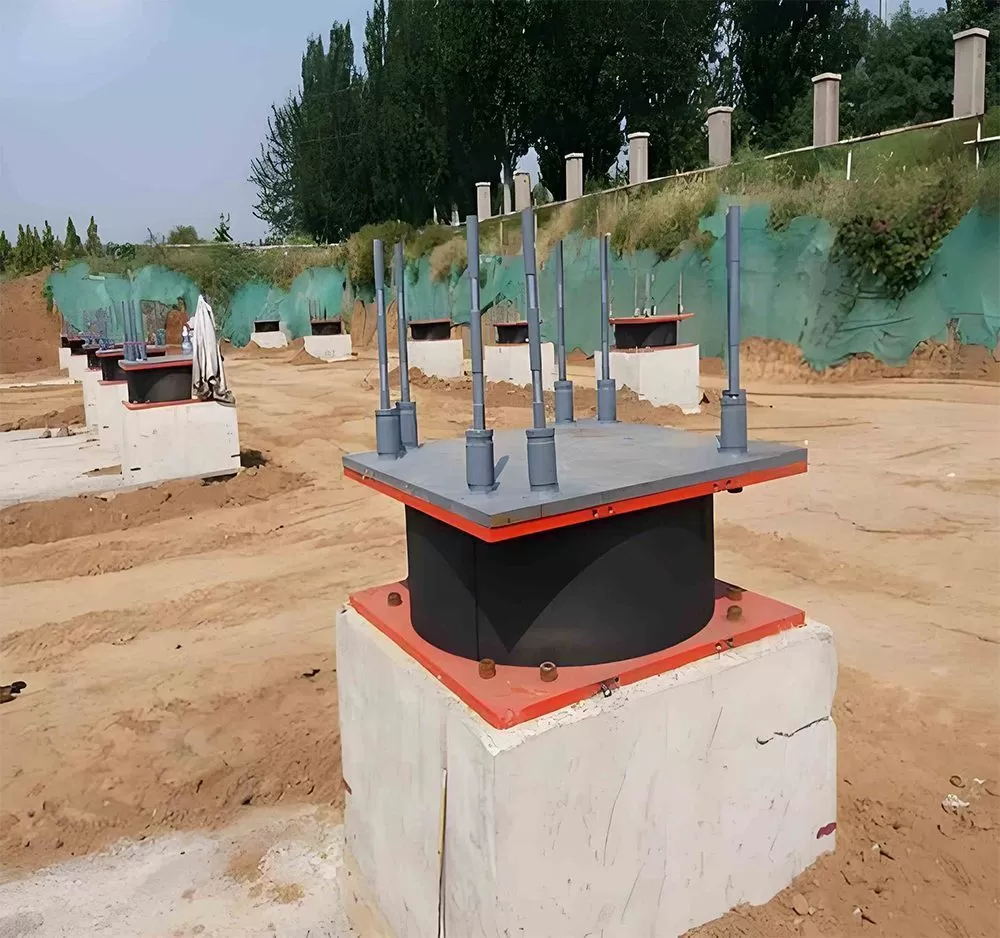
Straightforward Installation: Supplied as pre-fabricated, ready-to-install units with clear connection details (bolted or grouted). No complex on-site assembly or calibration is required, minimizing field labor and schedule risk.
Proven Compliance & Easy Validation: Manufactured in full compliance with all major international codes (AASHTO, ASCE 7, EN 15129). We provide comprehensive prototype test reports from accredited labs, simplifying the approval process for engineers and authorities.
5. Tangible Value for All Stakeholders
The advantages translate into concrete benefits for every party in the project chain:
For Owners & Operators: Protection of capital investment, assurance of business continuity, dramatically reduced insurance premiums in seismic zones, and a lower total cost of ownership through minimal maintenance.
For Engineers & Specifiers: A proven, code-compliant technology that provides a clear, defensible path to meeting stringent life-safety performance objectives. It enables innovative architectural forms by removing seismic design constraints.
For Contractors & Project Managers: A logistically simple, schedule-friendly product with reliable lead times and robust packaging. It reduces construction complexity and associated risks.
Competitive Differentiation: Why Our LRB Stands Apart
Our specific engineering and manufacturing approach elevates the standard LRB concept:
Material Science Excellence: We use specially formulated, high-stability Natural Rubber (NR) and 99.9% pure lead, ensuring consistent, long-term mechanical properties.
Precision Manufacturing: ISO 9001-certified processes guarantee dimensional accuracy, perfect bonding between rubber and steel laminates, and the integrity of the lead encapsulation.
Full Technical Partnership: We provide more than a product—we offer complete technical support, from preliminary system design and modeling assistance to installation supervision and lifecycle documentation.
In essence, choosing our LRB Isolator is not merely purchasing seismic hardware; it is adopting a philosophy of resilient design. It delivers a passive, robust, and cost-effective shield against seismic risk, transforming a severe threat into a managed event and providing peace of mind for the lifetime of the structure.
LRB Isolator - Installation & Construction Philosophy
The installation of a Lead Rubber Bearing (LRB) isolator transcends standard construction placement. It represents the critical juncture where engineered design theory transitions into physical, long-term seismic performance. Our approach is founded on treating installation not as a singular task, but as a comprehensive, precision-driven system. This philosophy ensures the inherent reliability of the LRB is fully realized and preserved for the structure's entire lifecycle, delivering on the promise of seismic resilience from the moment the first anchor is set.
Precision Execution: A Phased Methodology for Guaranteed Outcomes
We achieve faultless installation through a meticulously controlled, three-phase methodology that prioritizes preparation, precision, and verification.
Phase 1: Collaborative Design & Meticulous Preparation
Success is engineered before reaching the site. We initiate every project with a collaborative design review, providing or refining detailed connection drawings, anchor bolt schematics, and sequencing plans that integrate seamlessly with the overall structural and architectural designs. Concurrently, every LRB unit destined for your project undergoes final factory verification against its specific performance certificate. It is then prepared for shipment with protective packaging and clear, unique identification, ensuring full traceability and perfect condition upon arrival. This phase eliminates ambiguity, pre-empts field conflicts, and establishes a unified execution plan for all stakeholders.
Phase 2: Calibrated Installation & Real-Time Process Control
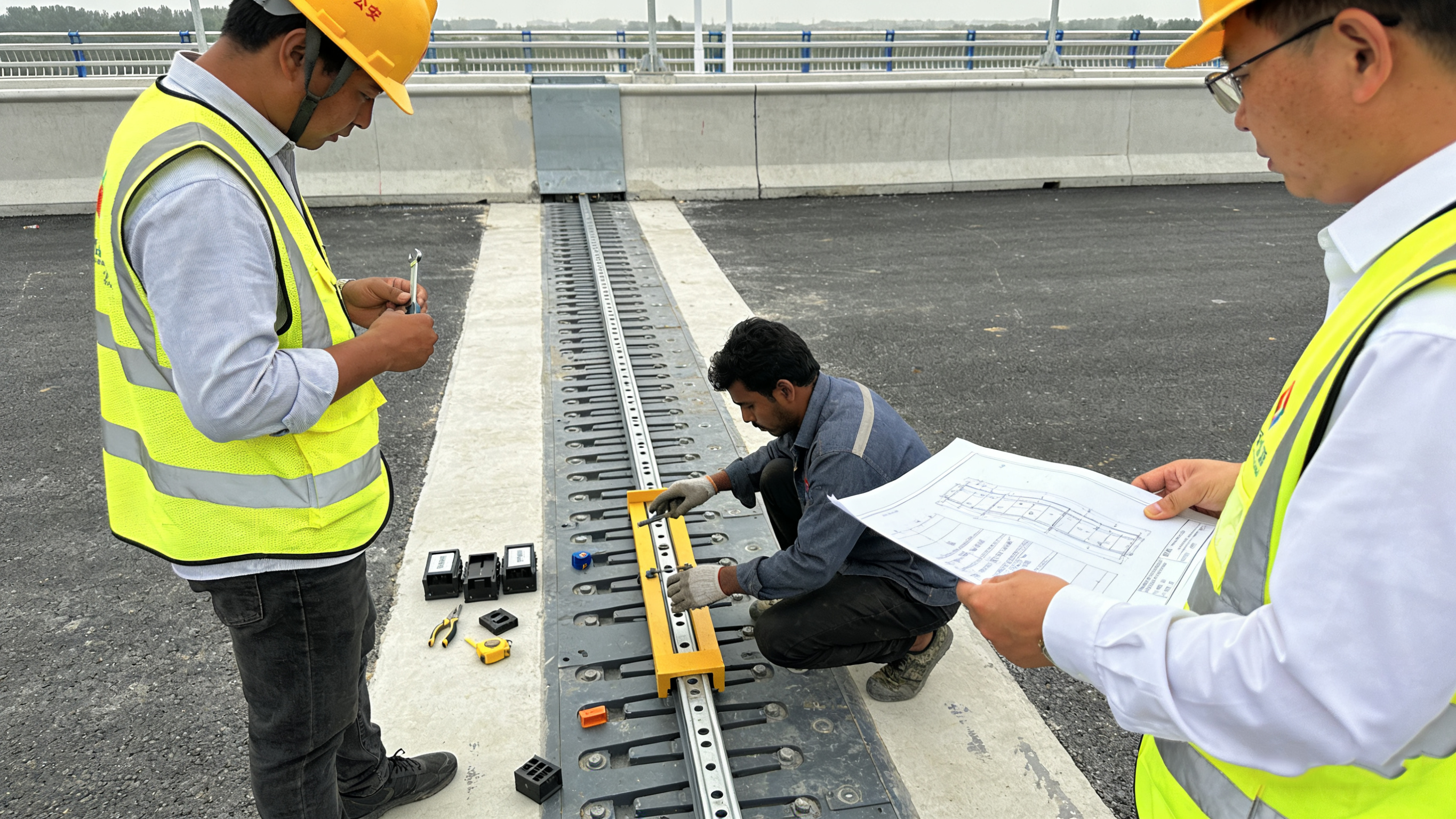
This is the stage of transformative precision. Guided by our pre-agreed method statements, site teams utilize calibrated instrumentation—such as laser levels and total stations—for millimeter-accurate positioning. The connection process, especially the torquing of high-strength anchor bolts, follows a strict sequential, cross-pattern protocol using calibrated wrenches to guarantee uniform, specification-compliant preload without inducing parasitic stresses. Throughout this hands-on phase, the isolator’s integrity is protected; temporary seals or covers guard against contamination from grout, weld spatter, or debris, preserving its ready-to-function state.
Phase 3: Systematic Verification & Knowledge Handover
Installation is only complete after rigorous validation. We conduct a final multi-point inspection, verifying plan location, elevation, levelness, and the integrity of all connections. Crucially, we ensure all temporary shipping restraints and protective measures are removed, confirming the isolator is in its intended free, unobstructed state to accommodate design movements. The process culminates in a formal handover, where we provide the client with a complete “as-built” dossier. This includes final certified drawings, installation records, torque reports, and most importantly, clear guidance for future visual inspection and maintenance, thereby closing the loop on quality assurance.
Comprehensive Technical Partnership: Embedded Support Across the Project Lifecycle
Our role extends beyond supplying a component; we function as an integrated technical partner from conception through to long-term operation. This partnership is delivered through proactive, phase-specific engagement.
During the Design & Procurement Phase, our engineers work directly with your design team. We provide expert consultation on optimal isolator positioning, interface detailing, and sequencing to avoid construction clashes. This early collaboration ensures the design is not only theoretically sound but also practically executable, optimizing both performance and buildability.
Throughout the critical On-Site Installation Phase, support becomes direct and immediate. We provide access to dedicated technical specialists, available for on-site supervision or remote consultation. Their role is to guide construction crews through critical procedures, offer real-time problem-solving for unforeseen site conditions, and serve as the authoritative source for ensuring the installation strictly adheres to the approved method statements and performance specifications. This presence safeguards quality, bolsters crew confidence, and protects the project timeline.
Finally, our partnership extends into the Commissioning & Operational Phase. We ensure a smooth transition by providing structured training for the owner’s facility management or maintenance teams. This knowledge transfer focuses on practical, routine visual inspection protocols, understanding normal versus atypical conditions, and documenting baseline data for the asset’s life. By empowering the end-user with clear operational knowledge, we ensure the LRB system is not only installed correctly but also understood and managed effectively for decades to come.
In essence, our service transforms a complex engineering challenge into a managed, low-risk, and predictable process. We deliver not just an isolator, but certified performance, assured through precision installation and sustained by enduring technical partnership. This integrated approach is the definitive method to secure the full seismic resilience and lifecycle value engineered into every LRB isolator.