Elastomeric Bearings vs. Pot Bearings: Which Is Right for Your Bridge Project?
Article content and related resources
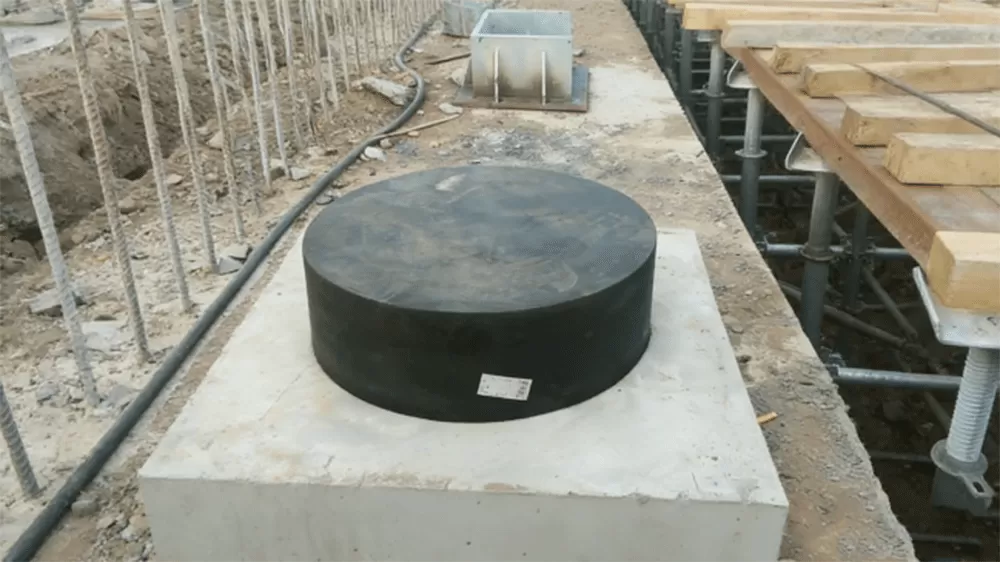
Bridge bearings act as quiet workhorses beneath highway spans and railway corridors. They transfer massive vertical loads from the superstructure down to the substructure. At the same time, they accommodate thermal expansion, concrete shrinkage, and dynamic traffic movements without overstressing the piers.
Choosing the wrong bearing leads to costly structural distress, cracked substructures, or premature replacement. Bridge engineers and contractors usually narrow their selection down to two primary systems: an elastomeric bearing or a pot bearing.
Both types perform critical support functions, but their mechanical behaviors, capacities, and lifecycle costs differ significantly. At KINGWORK, we engineer and supply high-performance bridge bearings tailored to international standards. If you are currently finalizing your bridge design or preparing a bid tender, send our engineering team your project specifications today for a detailed technical review and competitive quote.
What Is an Elastomeric Bearing? Working Principle and Advantages
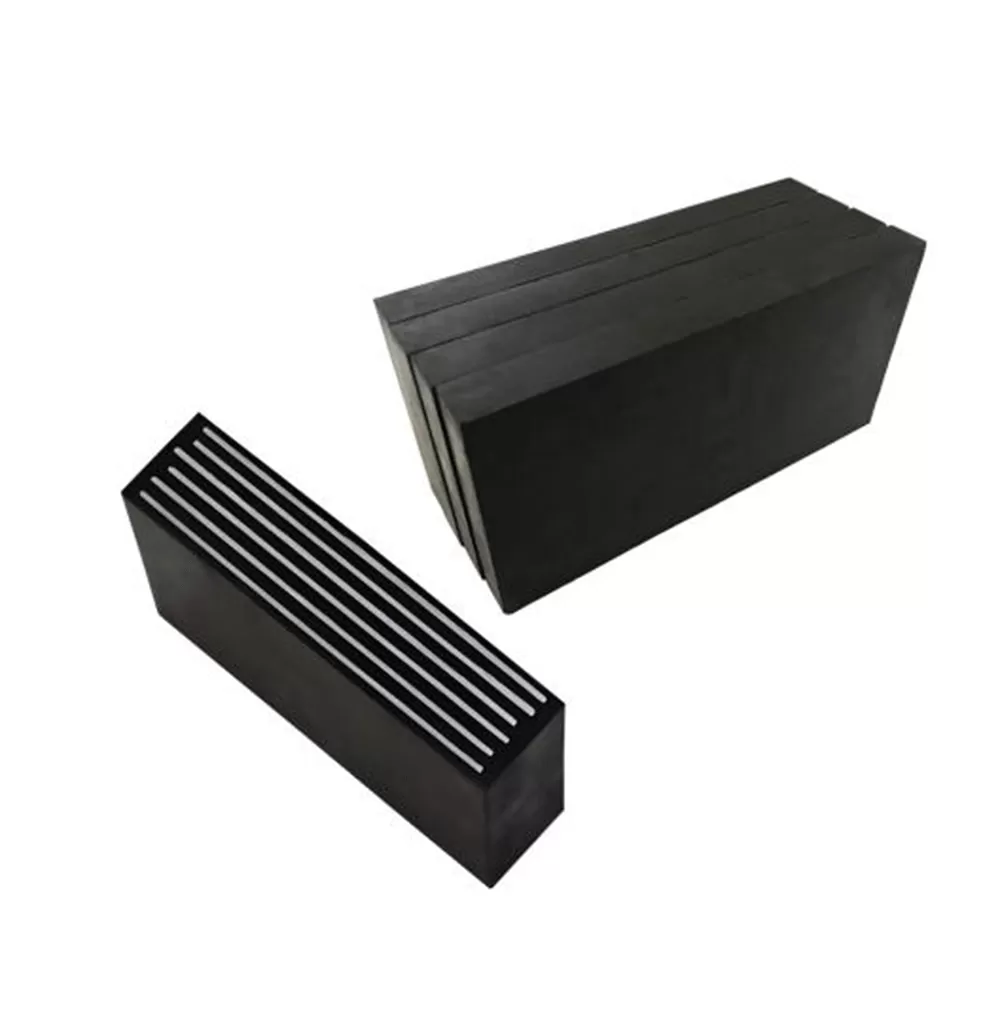
An elastomeric bearing accommodates structural movements through shear deformation of an elastic rubber block. Unlike mechanical hinge bearings, it contains no moving pins, rollers, or mechanical joints.
Structure and Working Principle
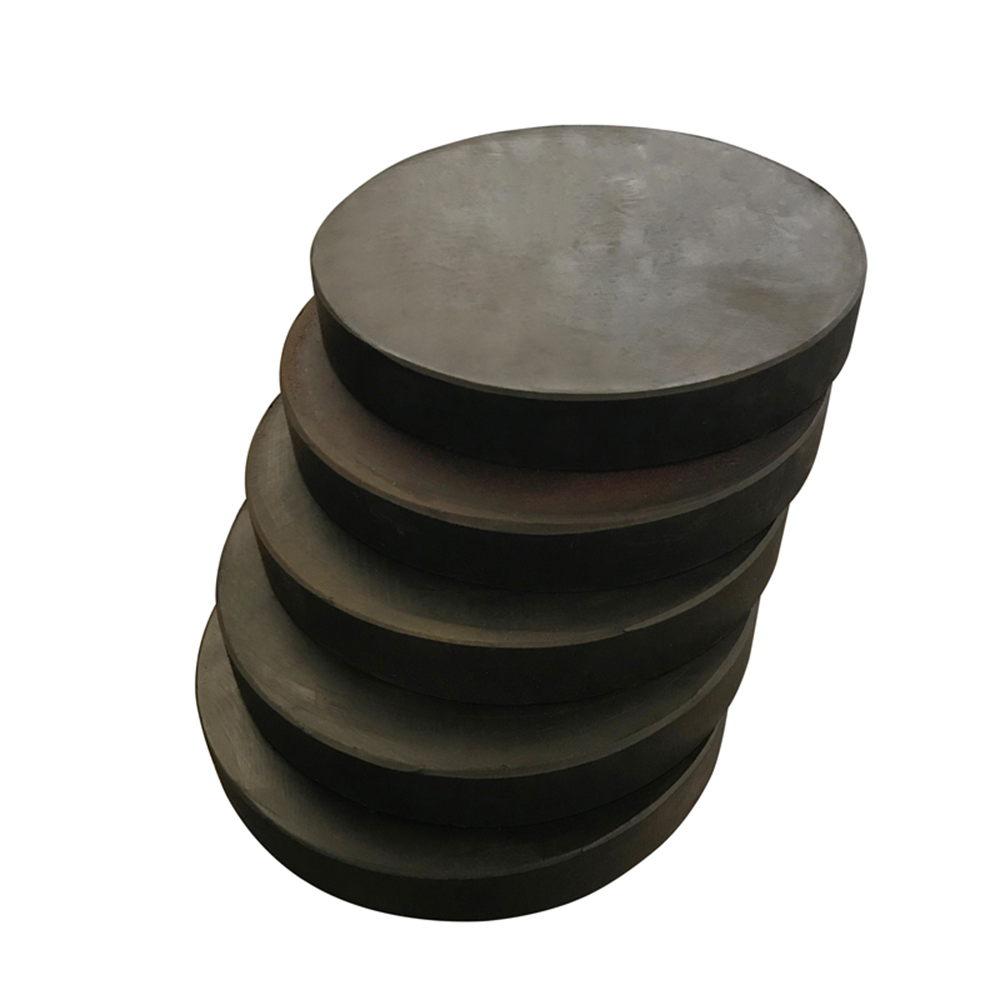
Modern elastomeric bridge bearings come in two primary forms: plain elastomer pads and laminated elastomeric bearings. Plain pads suit light loads and minimal translation. For heavier bridge decks, manufacturers produce laminated elastomeric bearings by vulcanizing alternating layers of elastomer and high-tensile steel shims.
The internal steel shims restrain lateral bulging under heavy vertical loads. This restraint provides high vertical stiffness while preserving the elastomer's flexibility in shear. When the bridge deck expands or contracts, the bearing shears horizontally. When the beam deflects under live loads, the elastomer compresses unevenly to provide rotation without lifting off the seat.
Material Selection: Neoprene vs. Natural Rubber
Engineers specify two primary polymer compounds for elastomeric bearing pads:
- Chloroprene (Neoprene): Neoprene bearing pads offer exceptional resistance to ozone, chemical runoff, UV radiation, and oil splatter. They perform reliably across varied climates and resist environmental aging.
- Natural Rubber (NR / Polyisoprene): Natural rubber provides superior flexibility in sub-zero environments and exhibits lower shear stiffness at freezing temperatures. Engineers often specify it for cold-weather infrastructure.
Core Benefits of Elastomeric Bearings
- Zero Routine Maintenance: Because they have no mechanical components, sliding plates, or grease ports, elastomeric bearings require no scheduled lubrication.
- Cost Efficiency: Manufacturing laminated rubber pads requires less steel fabrication and machining, keeping upfront purchasing costs low.
- Multidirectional Accommodation: The elastic core responds simultaneously to longitudinal movement, transverse displacement, and multi-axis rotation.
- Damping and Shock Absorption: Rubber naturally absorbs vibration, impact loads, and acoustic noise from high-speed traffic and seismic events.
What Is a Pot Bearing? Working Principle and Advantages
A pot bearing is a structural bearing designed to support exceptionally high vertical loads within a compact physical footprint. It uses the physical behavior of a confined elastomer under pressure.
Mechanical Structure and Working Principle
A pot bearing consists of a shallow steel cylinder (the "pot"), a closely fitted elastomeric disk, internal brass sealing rings, and a structural steel piston. The piston sits directly on top of the elastomeric pad inside the cylinder.
When vertical loads compress the elastomer inside the sealed metal pot, the rubber cannot bulge outward. Under these high triaxial pressures, the rubber behaves mechanically like a hydraulic fluid. It deforms to allow the piston to tilt, providing smooth bridge rotation while supporting thousands of kilonewtons.
To provide horizontal translation, manufacturers mount a polytetrafluoroethylene (PTFE) or ultra-high-molecular-weight polyethylene (UHMWPE) sheet on top of the piston, pairing it with a polished stainless steel slider plate.
Core Benefits of Pot Bearings
- Massive Load Capacity: Pot bearings support extreme vertical loads exceeding 50,000 kN, making them ideal for long-span structures.
- Compact Dimensions: Confined elastomer carries much higher compressive stresses than an unconfined elastomeric bearing, saving pier cap space.
- Controlled Kinematics: By adding external steel guide bars, engineers can configure pot bearings as fixed, guided-sliding (unidirectional), or free-sliding (multidirectional).
Elastomeric Bearings vs. Pot Bearings: Head-to-Head Comparison
Selecting between an elastomeric bearing and a pot bearing requires evaluating mechanical capacity against lifecycle costs. Use this direct comparison table to assess their key parameters:
| Design Parameter | Elastomeric Bearing | Pot Bearing |
|---|---|---|
| Vertical Load Capacity | Low to Medium (Typically up to 10,000 kN) | High to Extreme (Up to 50,000+ kN) |
| Rotational Capacity | Moderate (0.010 to 0.025 radians) | High (0.020 to 0.050 radians) |
| Displacement Capacity | Limited by rubber thickness and shear strain | Large (Up to ±500 mm with PTFE sliding plates) |
| Initial Capital Cost (CAPEX) | Low | Medium to High |
| Maintenance Requirements | Minimal (Visual inspections only) | Regular inspection of seals, sliding surfaces, and paint |
| Seismic Performance | High natural damping and energy dissipation | Rigid; requires separate shear keys or dampers |
| Service Lifespan | 30 to 50 years (Environment dependent) | 25 to 50 years (Wear component dependent) |
Load Capacity and Footprint
Laminated elastomeric bearings experience unconfined lateral bulging. Design codes enforce strict compressive stress limits (usually 7 to 15 MPa) to prevent internal steel shim rupture. As vertical loads increase, the elastomeric bearing must expand in surface area. Eventually, it becomes too large for standard pier caps.
Pot bearings place the elastomer under complete hydraulic confinement, permitting working stresses of 25 to 35 MPa. For loads above 5,000 kN, pot bearings offer a much smaller footprint than a standard elastomeric bearing.
Movement and Bridge Rotation Mechanisms
An elastomeric bridge bearing absorbs translation strictly through shear strain. If a long bridge expands 100 mm, the elastomeric bearing requires a substantial total rubber thickness to avoid shear failure. Adding PTFE sliding tops creates a sliding elastomeric bearing, but thick pads still encounter stability limits under severe tilt.
Pot bearings separate horizontal movement from rotation. The confined elastomeric disk handles rotation through internal hydrostatic pressure, while the PTFE-stainless steel interface handles horizontal translation. This makes pot bearings better suited for long-span bridges with high movement requirements.
CAPEX vs. OPEX: Initial Cost vs. Long-Term Maintenance
Budget decisions must account for both initial purchase prices and ongoing maintenance costs throughout the asset's design life:
- Capital Expenditure (CAPEX): Elastomeric bearings cost significantly less to fabricate. They require no precision machining or specialty stainless steel mirror finishes. Pot bearings involve tight manufacturing tolerances, specialized sealing rings, and protective metal coatings.
- Operational Expenditure (OPEX): Elastomeric units are solid-state devices. They do not corrode, require no grease replacement, and eliminate mechanical wear points. Pot bearings require periodic checks for slider debris, PTFE wear, seal extrusion, and steel corrosion.
KINGWORK manufactures both systems using advanced vulcanization and precision CNC machining. Our technical team works alongside project consultants to balance budget constraints against long-term operational costs.
Engineering Selection Guide: Which Bearing Suits Your Project?
Field conditions and structural framing dictate your choice. Use these criteria during the preliminary design stage.
When to Specify Elastomeric Bearings
- Short-to-Medium Spans: Precast prestressed concrete girder bridges, slab bridges, and standard overpasses under 45 meters.
- Budget-Constrained Projects: Rural infrastructure, municipal overpasses, and regional highways that require minimal long-term maintenance.
- Moderate Vertical Loads: Reactions resting below 5,000 to 7,000 kN per support location.
- Seismic Zones: Locations where natural rubber flexibility can isolate the substructure from ground motion shocks.
When Pot Bearings Are Essential
- Long-Span Structures: Cable-stayed bridges, continuous steel trusses, balanced cantilever bridges, and long-span box girders.
- Heavy Rail Infrastructure: Railway bridges subjected to severe braking forces and heavy axle loads exceeding 10,000 kN.
- Curved and Skewed Alignments: Geometries generating complex torsional rotations and high directional shear forces.
- Restricted Pier Geometry: Narrow pier caps that lack the
physical space for large, wide elastomeric pads.
International Design Codes and Compliance
Structural reliability demands strict adherence to international bridge engineering codes. Both elastomeric bearings and pot bearings must undergo batch testing before delivery to the job site.
- AASHTO LRFD Bridge Design Specifications: Section 14 governs bridge bearing selection. Method A and Method B outline compressive strain, shear modulus, and rotation limits for steel-reinforced elastomeric units.
- EN 1337 (European Standard): EN 1337-3 covers elastomeric bearings, while EN 1337-5 specifies pot bearings. The standard sets rigorous material aging criteria, ozone resistance limits, and horizontal load tests.
- ISO and ASTM Standards: Quality control procedures require compression load tests at 150% rated capacity, alongside short-term shear testing to prove vulcanization integrity.
Frequently Asked Questions (FAQ)
Q1: What is the typical service life of an elastomeric bearing?
A1: High-grade laminated elastomeric bearings last between 30 and 50 years when properly manufactured and installed. Keeping the bearing seats free of ponding water, motor fuels, and deicing salts helps them reach their maximum service life.
Q2: Can an elastomeric bearing replace a pot bearing during structural rehabilitation?
A2: Yes, provided the pier cap has enough physical space. If the bridge load is low enough, engineers often replace old, frozen pot bearings with modern laminated elastomeric bearings to eliminate future maintenance needs.
Q3: Why are steel plates vulcanized inside laminated elastomeric bearings?
A3: Steel plates restrict the rubber from bulging sideways under load. This raises the bearing's vertical load capacity by five to ten times compared to an unreinforced rubber block, while keeping its lateral shear flexibility intact.
Q4: How do you identify failure in an elastomeric bridge bearing?
A4: Common signs include deep ozone cracking, elastomer delamination from internal steel shims, excessive bulging, and permanent shear deformation exceeding design limits.
Q5: Can pot bearings handle uplift forces?
A5: Standard pot bearings only take vertical compressive loads. However, fabricators can customize them with internal holding rings, external brackets, or tie-down bolts to resist dynamic uplift.
Conclusion and Engineering Support
No single bridge bearing fits every project. An elastomeric bearing delivers an affordable, maintenance-free solution for standard highway overpasses and medium-span bridges. Conversely, a pot bearing provides the compact strength and rotational capacity needed for heavy railway crossings and long-span structures.
KINGWORK designs and manufactures custom structural bridge bearings that meet AASHTO, EN 1337, and bespoke project specifications. Our structural engineers can help you assess loads, evaluate rotations, and select the right bearing configuration.
Contact the KINGWORK technical team today to request a quote, submit project drawings for review, or discuss your upcoming bridge construction requirements.