
Rubber Bearing Pads: 3 International Standards (AASHTO/EN) Explained
Article content and related resources
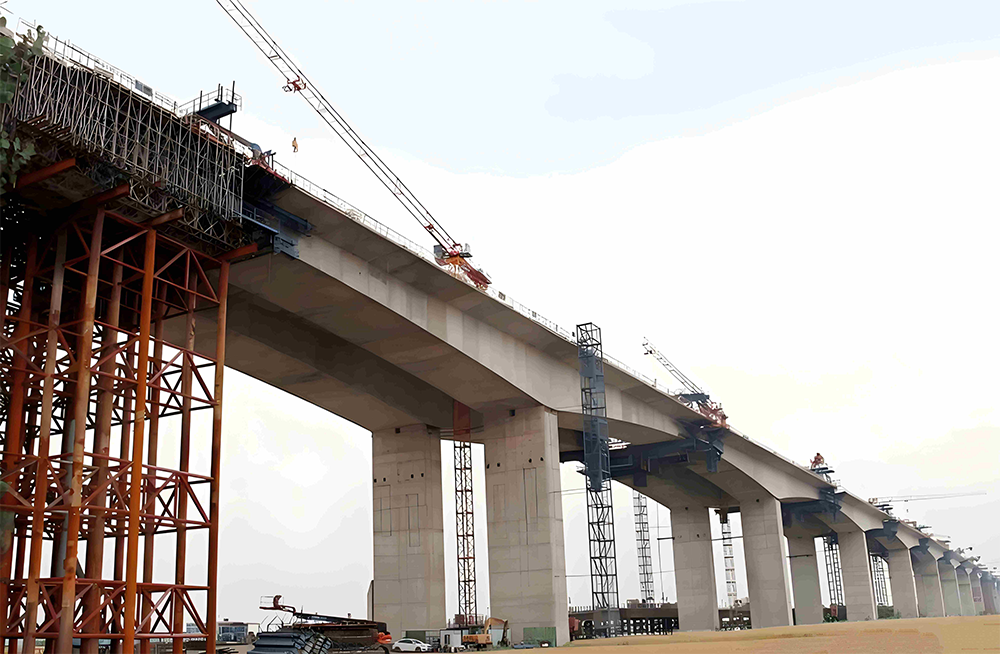
Bridges expand, contract, tilt, and oscillate under constant traffic loads, wind forces, and thermal cycles. Without an engineered interface between the superstructure and substructure, these dynamic forces quickly crack concrete piers and distort steel girders. A rubber bearing pad solves this fundamental challenge by accommodating horizontal displacement, providing rotational flexibility, and distributing vertical reactions smoothly.
Not all bridge projects follow the same engineering philosophy. A highway project in North America relies on different design criteria than a railway viaduct in Europe or an infrastructure project in Asia. Selecting the wrong specification can lead to early bearing failure, costly retrofits, and serious structural safety hazards.
As a global manufacturer supplying certified bridge components to infrastructure projects in over 50 countries, KINGWORK works daily with diverse international engineering codes. This guide examines the three leading design standards for elastomeric bearings—AASHTO, EN 1337, and GB/ISO—highlighting their core testing parameters, material requirements, and practical engineering implications.
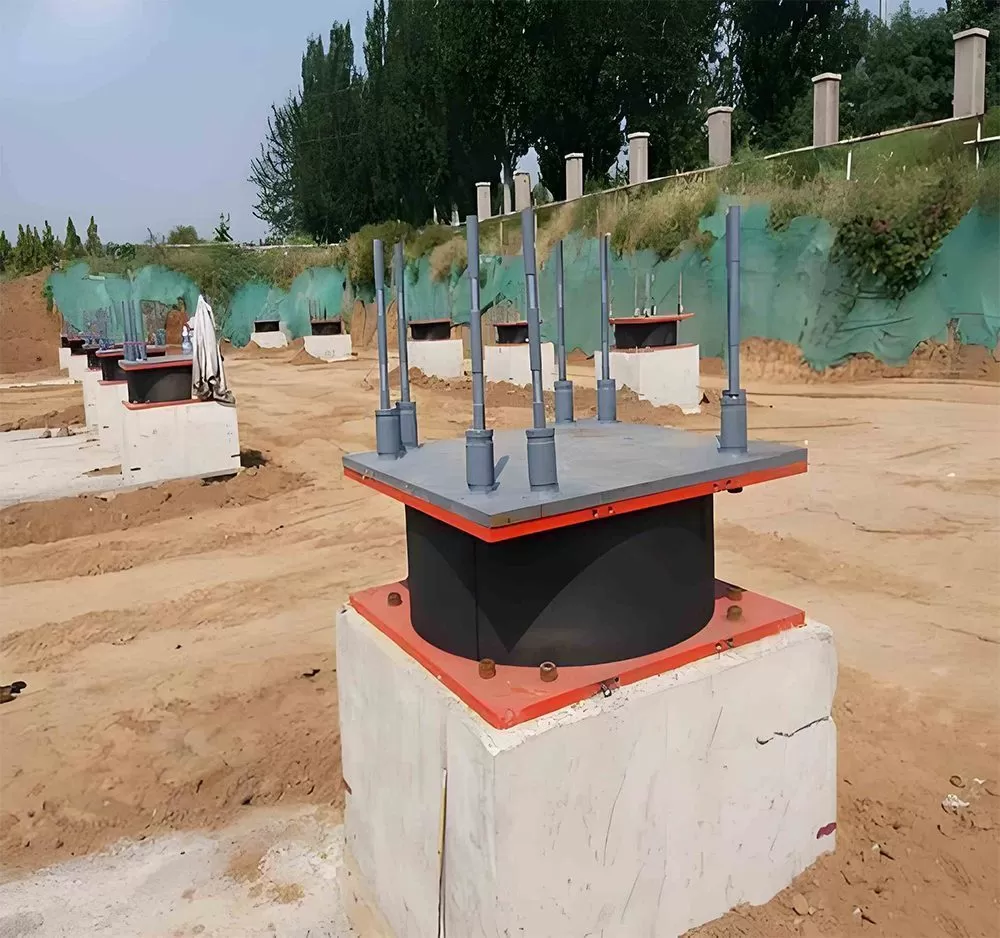
1. What is a Rubber Bearing Pad and Why Do Standards Matter?
A rubber bearing pad is an elastomeric device installed between bridge girders and support piers. Its primary function is to transmit vertical loads while allowing controlled horizontal movements and angular rotations without generating excessive stress concentrations.
These bearings fall into two primary mechanical categories:
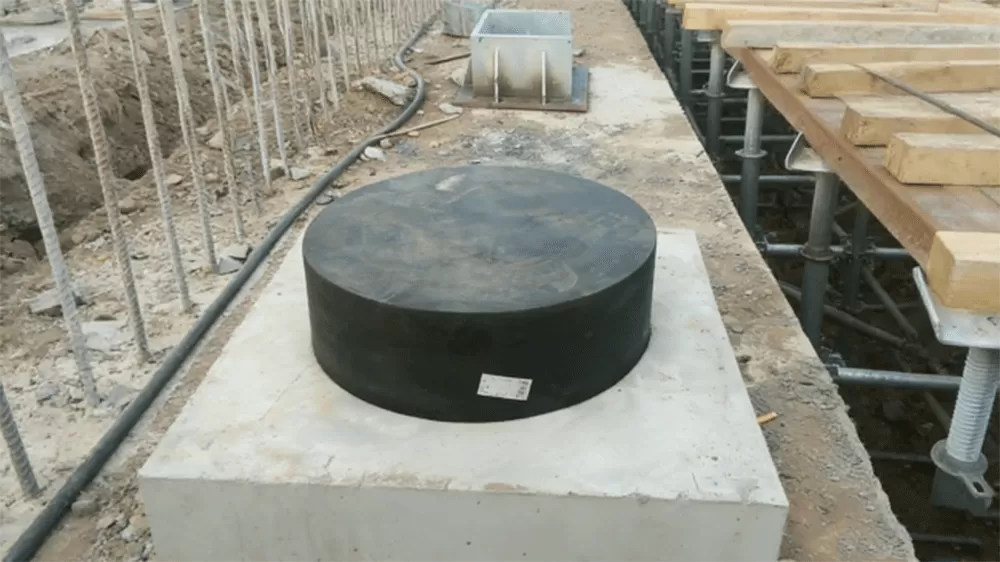
Plain Elastomeric Bearings: Solid rubber pads used under light loads, short spans, or precast building slabs where displacement and rotation demands remain low.
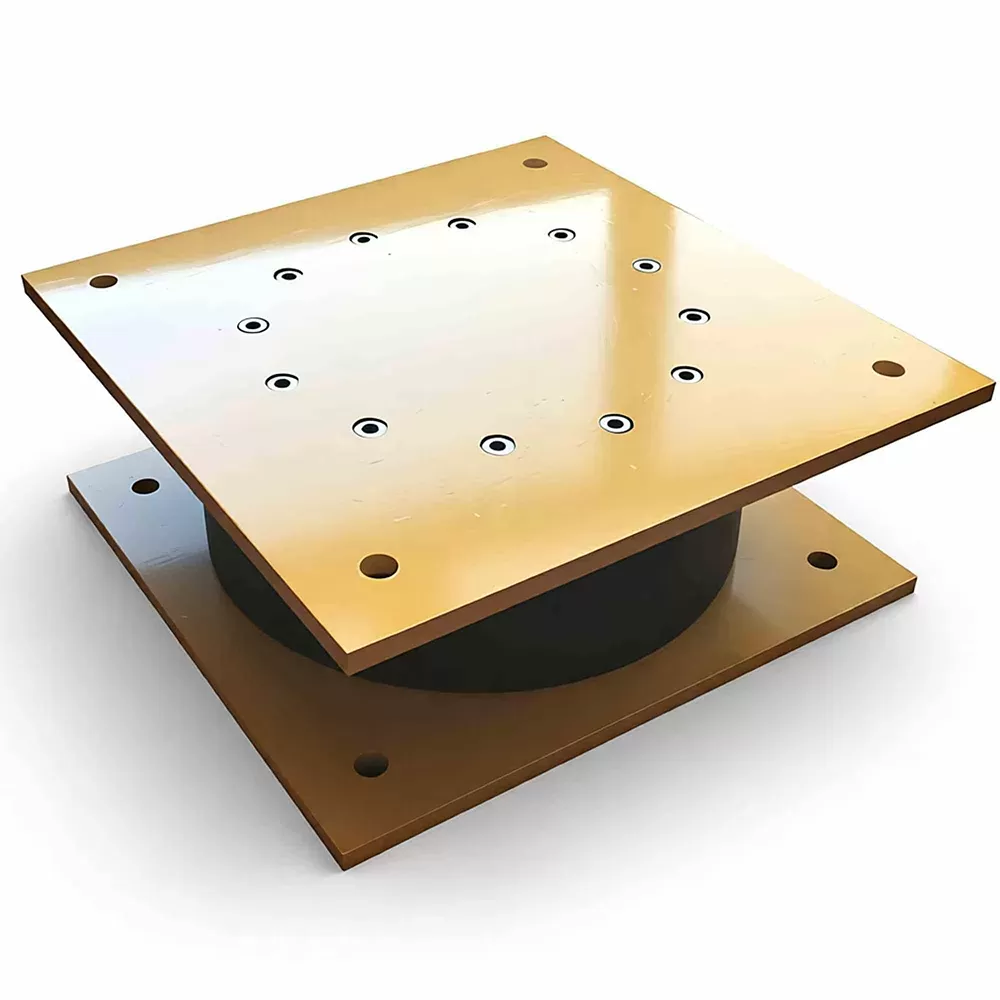
Laminated Rubber Bearing Pads: High-capacity bearings built with alternating layers of elastomer and internal steel reinforcing plates. The vulcanized steel shims restrain lateral expansion under compressive stress, dramatically raising vertical load capacity without compromising horizontal shear flexibility.
When uncertified or low-grade materials enter structural joints, bridge owners face severe structural risks:
Excessive Shear Creep: Substandard polymers undergo irreversible plastic deformation under sustained lateral loads.
Delamination and Debonding: Poor steel-to-rubber bonding during the vulcanization process leads to internal steel plate separation under repetitive shear cycles.
Surface Cracking and Ozone Degradation: Inadequate antioxidant additives cause the polymer matrix to harden, crack, and fail under atmospheric exposure.
International standards establish clear minimum thresholds for shear modulus ($G$), compressive modulus ($E$), ozone resistance, and fatigue performance. Knowing which standard governs your project ensures structural integrity and extends the service life of the bridge deck.
2. AASHTO Standards for Rubber Bearing Pads (Americas & Global Projects)
In the United States, Latin America, parts of the Middle East, and Southeast Asia, civil engineering specifications follow the American Association of State Highway and Transportation Officials (AASHTO). For elastomeric bearings, the relevant documents are the AASHTO LRFD Bridge Design Specifications (Section 14) and AASHTO M251.
Elastomer Formulations: Neoprene vs. Natural Rubber
AASHTO permits two primary elastomers: 100% virgin polychloroprene (Neoprene, CR) and 100% virgin polyisoprene (Natural Rubber, NR). Recycled rubber compounds or reclaimed polymers are strictly prohibited. Neoprene is typically specified for coastal or industrial environments requiring high oil and ozone resistance, while Natural Rubber is favored for extreme cold regions due to its superior flexibility at sub-zero temperatures.
Durometer Hardness and Shear Modulus
AASHTO classifies elastomeric bearings primarily by Shore A durometer hardness, typically 50, 60, or 70 Durometer. The design specifications correlate hardness to an acceptable shear modulus ($G$) range:
50 Durometer: Shear modulus range of 0.66 to 0.90 MPa (95 to 130 psi).
60 Durometer: Shear modulus range of 0.90 to 1.38 MPa (130 to 200 psi).
70 Durometer: Shear modulus range of 1.38 to 2.07 MPa (200 to 300 psi).
Key Testing Protocols under AASHTO M251
AASHTO M251 imposes rigorous quality control protocols on finished bearings, including:
Short-Term Compressive Proof Load Test: Bearings must withstand 150% of the rated maximum design compressive load for at least 5 minutes without showing signs of internal delamination, irregular bulging, or surface rupture.
Bond Strength Test: Full-thickness peel tests verify that the vulcanized bond between the steel shims and the elastomeric layers exceeds standard structural shear limits.
Low-Temperature Brittleness: Bearings destined for cold climate zones must pass ASTM D746 or ASTM D2137 low-temperature impact tests to prevent brittle failure during severe winter freezes.
3. European Standard EN 1337-3 (Europe, Middle East, and Africa)
Across the European Union, the Middle East, and many African nations, bridge construction adheres to the Eurocode framework. EN 1337-3 (Structural Bearings - Part 3: Elastomeric Bearings) governs the design, testing, and CE marking compliance for laminated and plain rubber bearing pads.
Strict Shear Modulus Nominal Values
Unlike AASHTO’s reliance on durometer ranges, EN 1337-3 defines elastomeric material by exact nominal shear modulus ($G$). The standard recognizes two primary nominal grades:
$G = 0.90 \text{ MPa}$ (Standard flexibility grade for most highway structures).
$G = 1.15 \text{ MPa}$ (Higher stiffness grade for rail bridges or compact bearing assemblies).
The actual tested shear modulus of every production lot must fall within tight tolerances ($\pm 0.15 \text{ MPa}$) during physical laboratory verification.
Fatigue and Dynamic Testing Requirements
EN 1337-3 requires dynamic mechanical evaluation to confirm that internal steel shims (conforming to EN 10025 structural steel grades) and rubber layers resist cyclical road traffic without loss of integrity:
Repeated Shear Fatigue Test: Test specimens undergo 2,000,000 cycles of dynamic shear displacement under constant compressive stress to simulate long-term traffic actions.
Peel Adhesion Verification: The mechanical bond between elastomer and steel must achieve a minimum peel strength of $5 \text{ kN/m}$ or show 100% cohesive rubber failure during testing.
Low-Temperature Crystallization: Bearings intended for low-temperature applications undergo long-duration exposure testing at $-25^\circ\text{C}$ to ensure the polymer does not stiffen excessively over extended winters.
At KINGWORK, our elastomeric bearing pads meet all EN 1337-3 criteria, backed by full Factory Production Control (FPC) procedures and independent third-party laboratory certifications required for CE marking.
4. Chinese GB & ISO Standards (GB/T 20688.4 & TB/T 1893)
With massive investments in domestic high-speed rail networks and international Belt and Road infrastructure projects, Chinese standards have gained extensive adoption across Asia, Eastern Europe, Africa, and Latin America. The governing documents are GB/T 20688.4 for road bridges and TB/T 1893 for railway applications (broadly aligned with ISO 22762 international standards).
High Compressive Stress and Rail Rigidity
High-speed railway applications demand minimal track deflection and exceptional shear resilience under high-frequency braking and acceleration forces. TB/T 1893 enforces strict compressive stress limits (regularly exceeding $12 \text{ MPa}$) and tight vertical stiffness thresholds to maintain exact rail alignments under high-speed train passages.
Specialized Formulations for Extreme Environments
GB standards categorise bearings according to operating temperature bands:
Standard Temperature Grade: Utilizing Chloroprene Rubber (CR) for operating conditions ranging from $-25^\circ\text{C}$ to $+60^\circ\text{C}$.
Low-Temperature Grade: Utilizing refined Natural Rubber (NR) compounds for extreme cold regions operating from $-40^\circ\text{C}$ to $+60^\circ\text{C}$.
5. Technical Comparison Matrix: AASHTO vs. EN 1337 vs. GB/T 20688
The table below highlights the key differences across design philosophies, testing protocols, and material requirements among the three major standards.
| Parameter / Feature | AASHTO M251 / LRFD | EN 1337-3 (Eurocode) | GB/T 20688.4 / TB/T 1893 |
|---|---|---|---|
| Primary Geographic Reach | Americas, Middle East, Southeast Asia | Europe, Middle East, Africa, UK | China, Asia-Pacific, Belt & Road Projects |
| Elastomer Material Basis | 100% Virgin Neoprene (CR) or Natural Rubber (NR) | Virgin CR or NR (strictly no reclaim polymer) | CR, NR, or EPDM for special structural pads |
| Shear Modulus ($G$) Definition | Derived from Shore A Hardness ($G \approx 0.66 - 2.07 \text{ MPa}$) | Explicit nominal grades: $G = 0.90 \text{ MPa}$ or $1.15 \text{ MPa}$ | Explicit nominal benchmark: $G = 1.0 \text{ MPa}$ (Highway standard) |
| Internal Steel Reinforcement | ASTM A1011 / ASTM A36 Carbon Steel | EN 10025 (S235 / S355 Structural Steel) | GB/T 700 (Q235 / Q355 Structural Steel) |
| Short-Term Proof Testing | 150% maximum design load held for 5 minutes | Factory production control sampling per batch | Full-scale axial compression testing per production lot |
| Dynamic Fatigue Proofing | Design curve verification via Section 14 | 2,000,000 cycles shear fatigue qualification | Fatigue resistance verification under railway codes |
| Factory Compliance Mark | Material Mill Test Reports & Third-Party Lab Data | CE Marking (System 1 CPR compliance) | National Quality Inspection Certifications |
6. Manufacturing Excellence and Quality Assurance at KINGWORK
Producing a reliable rubber bearing pad requires strict control over raw polymers, precision steel preparation, and high-pressure vulcanization molding. KINGWORK maintains strict quality management systems across every stage of production to guarantee long-term field performance.
Proprietary Polymer Compounds: We formulate all rubber compounds in-house using 100% virgin elastomers. We never dilute compounds with recycled crumb rubber. This ensures exceptional resistance to ozone aging, atmospheric oxidation, and mechanical fatigue across decades of use.
50,000 m² Advanced Manufacturing Facility: Our production center houses automated high-tonnage vulcanizing presses, robotic shot-blasting stations, and CNC cutting machines capable of fabricating bespoke square, rectangular, and circular laminated bearings.
Full-Scale In-House Testing Laboratory: Our testing center features multi-axial load frames capable of applying vertical compression, dynamic cyclic shear, and rotation simulation up to 30,000 kN. We verify shear modulus, compression stiffness, and bond adhesion on actual production bearings before shipping.
Global Project Delivery: We supply bearings built to AASHTO, EN, British Standards (BS 5400), DIN, and GB specifications. With fast production turnarounds (30-60 days standard) and complete technical documentation (calculation sheets, 3D drawings, certified test reports), we ensure zero delays on site.
7. Engineering Guide: How to Select the Right Rubber Bearing Pad
When selecting or specifying a laminated elastomeric bearing, structural engineers must evaluate four core mechanical variables:
Total Vertical Dead and Live Load: Calculate maximum and minimum vertical reactions under serviceability limit state (SLS) and ultimate limit state (ULS). The compressive stress must stay within allowable limits to prevent edge overstress and premature rubber bulging.
Horizontal Displacements: Summate all thermal expansion, concrete shrinkage, creep, and braking displacements. The total design thickness of the internal elastomeric layers must be at least twice the maximum horizontal movement ($\Delta_s \le 0.5 \cdot T_r$) to keep shear strain within safe operational limits.
Rotational Demands: Account for girder camber, live load deflections, and construction installation tolerances. Insufficient rotational flexibility causes edge lift-off, creating extreme localized pressure points.
Environmental Exposure: Specify Chloroprene (CR) for coastal, marine, and oil-exposed environments, or choose formulated Natural Rubber (NR) for regions subject to prolonged winter temperatures below $-20^\circ\text{C}$.
If your project involves unique geometry, non-parallel girder slopes, or high seismic displacement demands, our technical engineering team is available to assist with custom calculations, steel top-plate integration, and sliding PTFE/stainless steel configurations.
Frequently Asked Questions (FAQs)
Q1: What is the typical service life of a high-quality rubber bearing
pad?
A1: When manufactured from 100% virgin
elastomer and designed to AASHTO or EN standards, a bridge elastomeric bearing
typically achieves an operational lifespan of 30 to 50 years under standard
environmental conditions.
Q2: Can KINGWORK manufacture custom-dimensioned bearing pads with
external sole plates?
A2: Yes. We engineer and
manufacture custom laminated bearings with integrated top and bottom steel sole
plates, beveled plates for sloped girders, anchor bolts, and sliding
PTFE/elastomer combinations tailored to your project drawings.
Q3: Which elastomer is better for cold weather regions: Natural
Rubber or Neoprene?
A3: Natural Rubber (NR) is
generally superior for cold climates reaching $-30^\circ\text{C}$ to
$-40^\circ\text{C}$. Natural rubber maintains its flexibility and resists
low-temperature crystallization better than standard polychloroprene
(Neoprene).
Q4: What causes a rubber bearing pad to bulge unevenly on
site?
A4: Uneven bulging typically results from
excessive rotational misalignment during installation, non-uniform girder
seating, or internal steel plate shifting caused by sub-standard vulcanization
molding in low-grade products.
Q5: What inspection reports should contractors request before
approving bearing shipments?
A5: Contractors should
request raw material mill test certificates (for steel and raw polymer),
specific gravity and hardness test reports, shear modulus ($G$) verification
reports, and short-term compressive proof load test records per AASHTO M251 or
EN 1337-3.
Get Certified Bridge Bearings for Your Next Project
Structural reliability starts with proven engineering, precision manufacturing, and uncompromised material quality. Whether you are designing a multi-span highway interchange under AASHTO specifications or constructing a high-speed rail viaduct requiring EN 1337 or GB compliance, KINGWORK provides certified, high-performance elastomeric bearing solutions tailored to your load profiles.
Contact our engineering department today with your bridge drawings, load schedules, and standard requirements. Our team will review your specifications, provide comprehensive calculation sheets, and deliver a competitive commercial proposal for your project.
![Bridge Joint Types: The Complete Engineering Guide [2026 Edition]](https://www.kwbridgebearing.com/storage/non_theme/202606/024.webp)