What is a Bearing Pad in Bridges? Structural Engineering Basics Explained
Article content and related resources
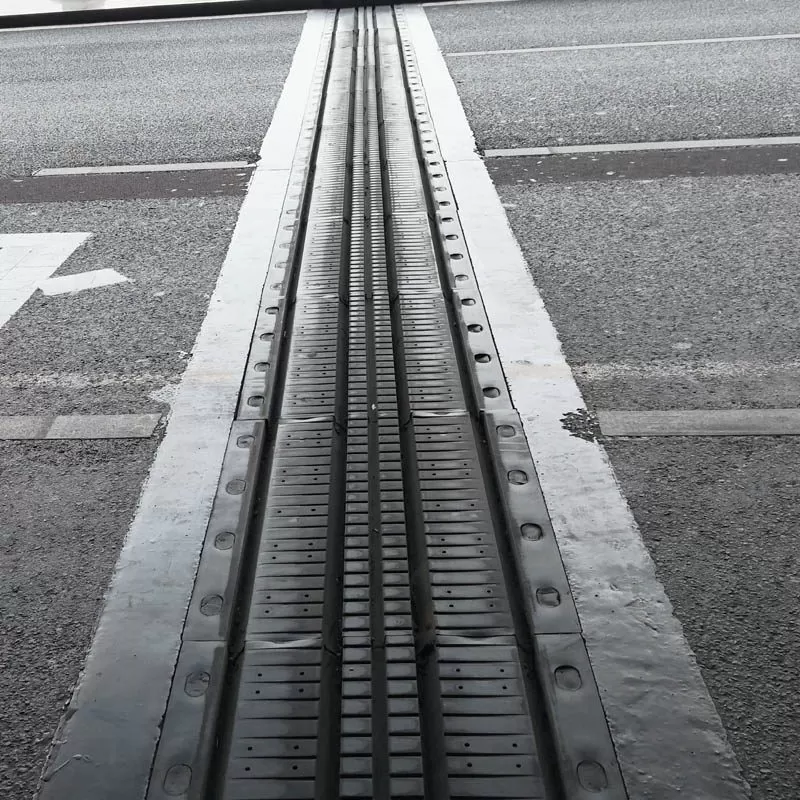
A bridge superstructure never sits directly on its concrete piers or abutments. If it did, daily thermal movement and heavy traffic vibrations would crush the substructure within months. Engineers solve this mechanical challenge with a compact structural interface: the bridge bearing pad.
Though bearing components represent less than 2% of total bridge construction capital, they dictate over 90% of the superstructure's long-term performance. At KINGWORK, our engineering teams see firsthand how a small oversight in bearing pad specification leads to multi-million-dollar rehabilitation projects down the road.
A bearing pad in bridges is an engineered elastomeric or mechanical device installed between the bridge deck (superstructure) and the supporting piers or abutments (substructure). Its primary purpose is to transfer vertical and horizontal loads smoothly while accommodating rotations, thermal expansion, and seismic displacements without overstressing structural members.
For procurement managers and civil engineers, selecting these components requires a full lifecycle cost perspective rather than a race to the lowest unit price.
The Core Mechanical Functions of Bridge Bearing Pads
Every bridge is a dynamic structure. Wind, fluctuating temperatures, heavy truck braking, and ground settlement generate forces that must move safely into the foundation. A high-grade bearing pad performs three critical mechanical functions.
Vertical Load Distribution: The pad transfers massive dead loads (the weight of girders and concrete decks) and live loads (moving vehicular traffic) into the pier cap. It eliminates localized stress concentrations by creating uniform contact surfaces.
Longitudinal and Transverse Movement Accommodation: As ambient temperatures shift between seasons, steel and concrete bridge spans expand and contract. The elastomeric material shears horizontally, letting the superstructure move freely without generating destructive internal stresses.
Rotational Flexibility and Damping: Vehicle loading causes bridge girders to deflect slightly at their ends. An elastomeric bearing pad compresses unevenly to absorb this beam end rotation. In seismic zones, elastomeric and lead-core pads function as base isolators, dissipating ground shock energy before it reaches the deck.
B2B Guide: Types of Bridge Bearings and Applications
Selecting the right bearing pad depends on span length, expected load cycles, thermal movement range, and local environmental exposure. Below is a direct comparison of the major configurations used in civil infrastructure.
| Bearing Type | Load Capacity | Movement Capability | Primary Application |
|---|---|---|---|
| Plain Elastomeric Pad (PEP) | Low to Moderate | Short displacements (shear only) | Precast concrete short spans, pedestrian overpasses |
| Steel-Reinforced Elastomeric | High | Moderate horizontal movement | Highway overpasses, railway viaducts |
| PTFE / Sliding Elastomeric | Moderate to High | Very large longitudinal slide | Continuous girder bridges, long-span viaducts |
| Pot and Spherical Bearings | Extreme (Up to 50,000+ kN) | Multi-directional rotation & sliding | Cable-stayed bridges, curved ramps, heavy rail |
Plain Elastomeric Bearings (PEP)
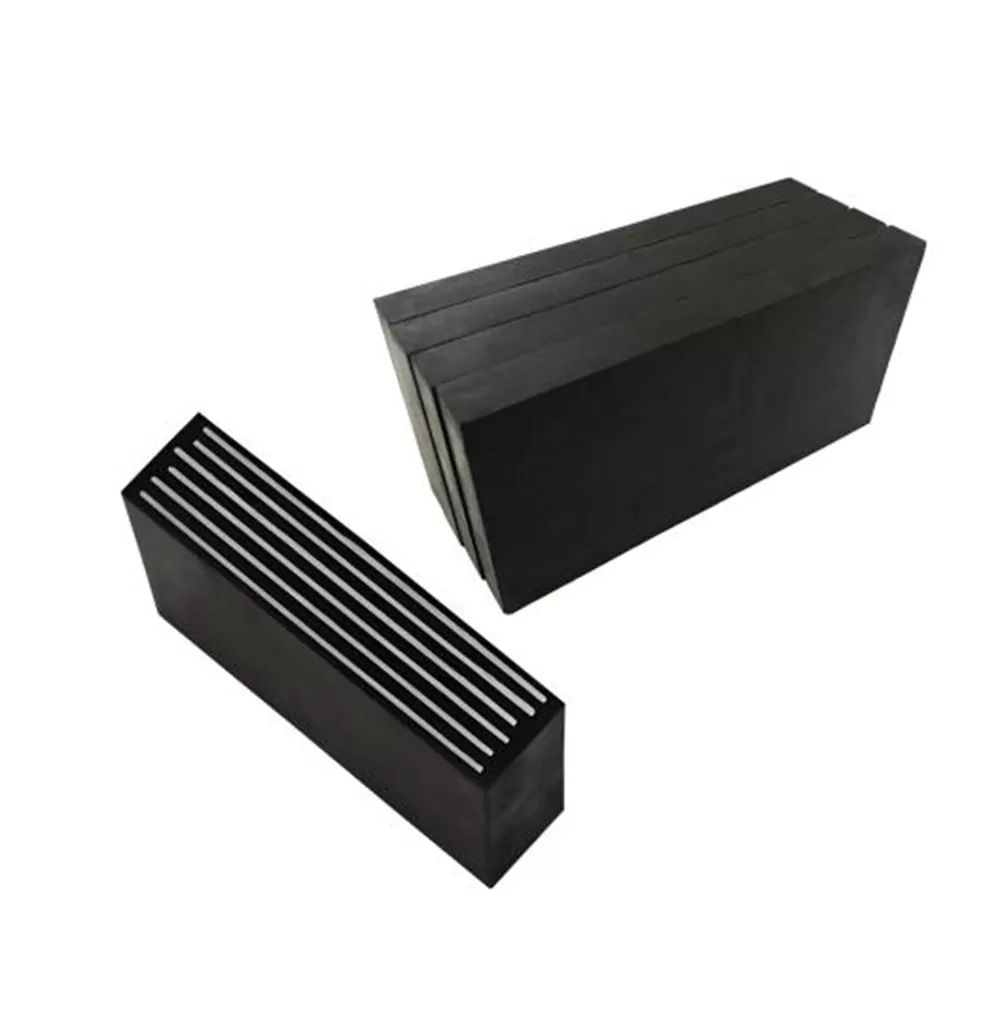
Plain elastomeric pads consist of single solid rubber blocks without embedded steel plates. They accommodate modest vertical loads and low degrees of rotation. Structural engineers specify PEP units for small culverts, short-span precast slab bridges, and pedestrian walkways where movement requirements stay under 15 millimeters.
Steel-Reinforced (Laminated) Elastomeric Bearings
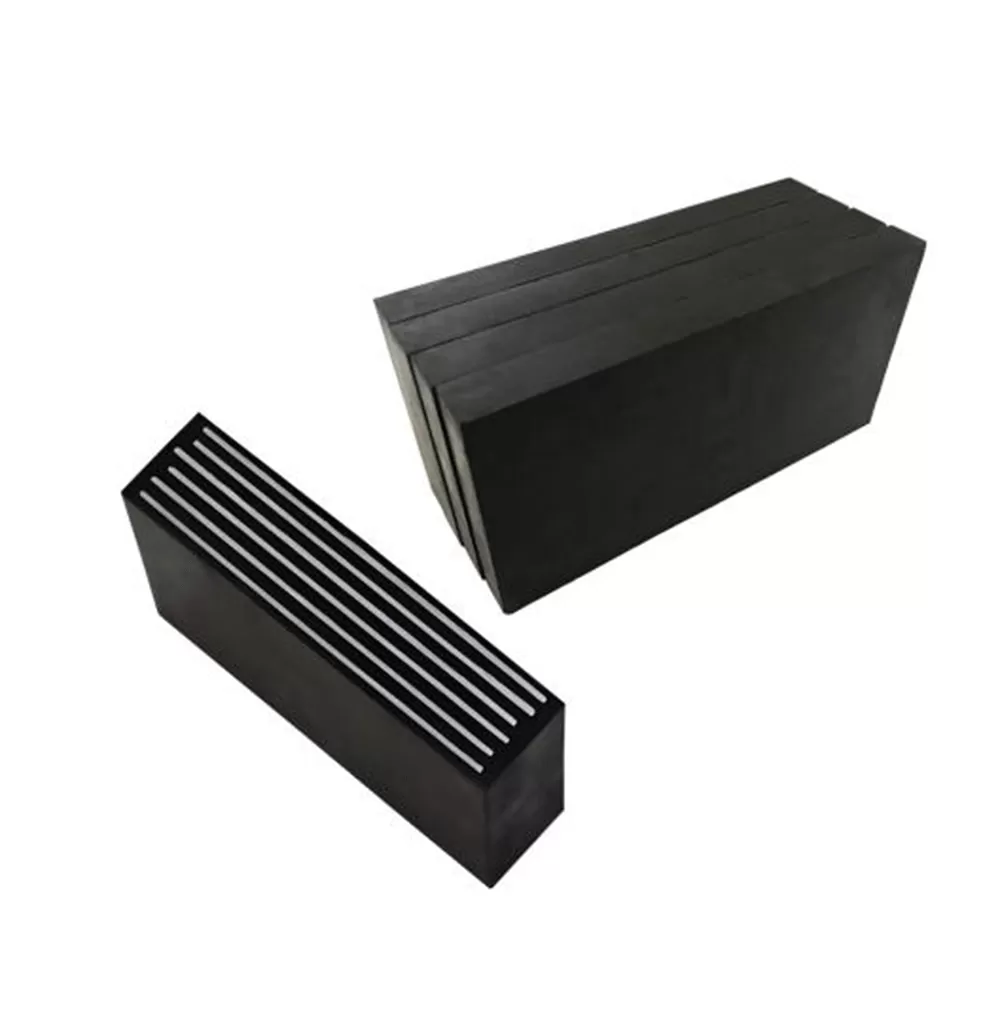
Laminated pads represent the industry workhorse for modern highway construction. They feature alternating layers of elastomer and vulcanized internal steel shims. The steel plates prevent the rubber from bulging excessively under high vertical loads while preserving the rubber's natural horizontal flexibility. This creates an exceptionally stiff vertical spring combined with a flexible horizontal cushion.
PTFE Sliding Elastomeric Bearings
When bridge spans exceed normal thermal movement limits, standard elastomeric shear is not enough. Adding a bonded Polytetrafluoroethylene (PTFE or Teflon) top sheet that slides against a mirror-polished stainless steel plate allows almost unlimited longitudinal travel. These configurations handle extensive thermal expansion cycles in continuous multi-span viaducts.
Pot and Spherical Bearings
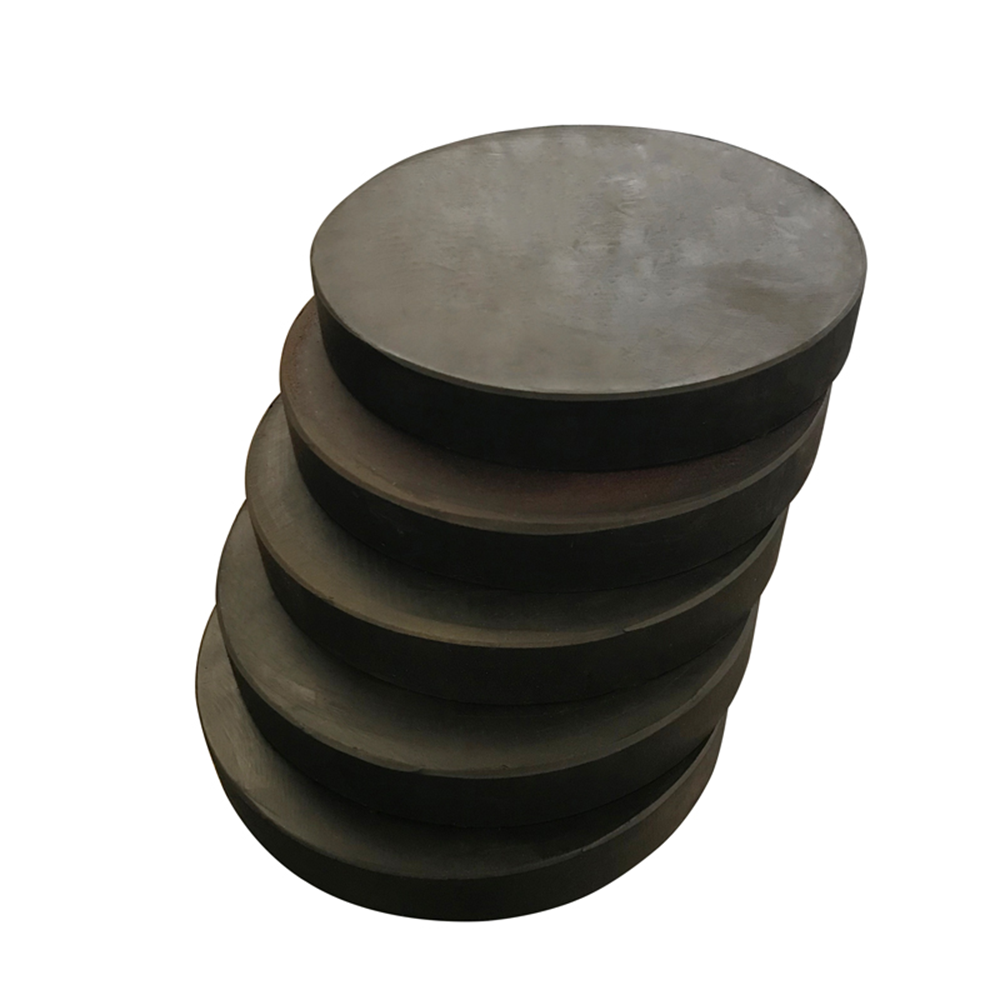
For complex architectural geometries, curved interchanges, and extra-long spans, engineers step up to metallic pot or spherical assemblies. A pot bearing encloses an elastomeric disc inside a steel cylinder, turning the rubber into an incompressible hydraulic fluid that transmits multi-directional rotations under extreme tonnage.
Material Standards & Compliance: What B2B Buyers Must Verify
Sourcing structural components demands meticulous verification of raw compounds. Substandard polymer mixes degrade quickly when exposed to sunlight, road salts, and fuel spills. As a dedicated manufacturer, KINGWORK tests every production batch against internationally accepted engineering standards.
Natural Rubber (NR) vs. Chloroprene (CR / Neoprene)
Engineers generally choose between two primary elastomeric polymers:
Chloroprene (Neoprene): Delivers exceptional resistance to atmospheric ozone, UV radiation, diesel exhaust, and chemical exposure. It remains the preferred material under North American and European highway specifications for severe outdoor climates.
Natural Rubber (Polyisoprene): Offers superior tear strength, dynamic fatigue resistance, and cold-temperature shear performance down to -40 degrees Celsius. It is widely adopted across regions experiencing extreme sub-zero winters.
Global Testing and Quality Standards
When evaluating procurement documentation, EPC contractors should confirm compliance with one of the following primary standards:
North American Code: AASHTO M251 and ASTM D4014. These standards define physical properties, full-scale short-term compression proof loads, and minimum bond strength between internal steel plates and the rubber matrix.
European Code: EN 1337-3. This framework enforces rigorous material durability benchmarks, shear modulus classifications, and strict manufacturing tolerances.
Every certified test certificate should explicitly state the elastomer's shear modulus (typically between 0.8 MPa and 1.2 MPa), tensile strength, elongation at break, and peel resistance between rubber and steel laminates.
Preventing Premature Bearing Failure: Manufacturing Insights
A failed bearing pad in bridges creates concrete spalling, seized expansion joints, and costly structural repairs. Most early failures do not originate on the bridge deck; they originate on the factory floor through rushed manufacturing practices.
Three common failure modes plague low-quality bearing pads:
Internal Delamination: The rubber separates cleanly from the internal steel plates. This happens when the supplier fails to properly sandblast steel shims or applies inferior bonding primers prior to vulcanization.
Surface Ozone Cracking: Deep fissures develop along the outer edges due to low-grade raw compounds cut with non-compliant filler oils.
Uneven Bulging: Distorted side profiles indicate internal steel plate slippage during the high-pressure molding cycle.
High-standard facilities eliminate these risks through grit-blasting internal shims to a SA 2.5 white-metal finish, applying proprietary two-coat adhesive systems, and running computer-controlled vulcanization presses with uniform temperature monitoring across the entire platen surface.
B2B Sourcing Checklist: How to Vet a Bridge Bearing Pad Supplier
Before issuing a purchase order for highway or rail bearings, procurement managers and project QA/QC inspectors should cross-examine prospective fabricators against this checklist:
Custom Engineering Capabilities: Can the supplier adapt mold dimensions, steel plate thicknesses, and internal elastomer layers to match the exact shear ratings on your project drawings?
In-House Testing Infrastructure: Does the factory house certified testing machinery to execute full-scale compressive proof load tests, axial shear assessments, and ozone aging tests?
Full Material Traceability: Can the manufacturer deliver Mill Test Reports (MTRs) for raw steel plates, raw polymer certificates, and independent third-party laboratory test summaries?
Project Track Record: Does the company maintain a verifiable history of supplying state DOTs, national rail networks, or major international civil joint ventures?
Frequently Asked Questions (FAQ)
Q1: How long does an elastomeric bearing pad in bridges typically last?
A1: Under standard environmental conditions and correct mechanical installation, a high-quality elastomeric bearing pad lasts between 30 and 50 years. Regular inspection intervals should monitor edge bulging, horizontal alignment, and surface weathering over its operational lifespan.
Q2: What is the primary difference between AASHTO M251 and ASTM D4014?
A2: ASTM D4014 covers both plain and steel-laminated elastomeric bearings, focusing on material specifications and standard design categories. AASHTO M251 acts as an infrastructure construction specification that mandates additional performance-based testing, including 15-minute full-size compressive proof-load testing at 1.5 times the maximum design load.
Q3: Can a bridge bearing pad be replaced without closing the highway?
A3: Yes. Bridge maintenance teams routinely carry out bearing replacement using synchronized hydraulic jacks installed beneath the bridge diaphragms. The superstructure is lifted just a few millimeters, allowing old pads to slide out and new assemblies to enter, often completed overnight with minimal lane closures.
Q4: Why are internal steel plates embedded inside elastomeric bearing pads?
A4: Unreinforced rubber flattens and bulges dramatically under vertical compression. Internal steel shims restrict the lateral expansion of the elastomer, dramatically increasing the pad's vertical load-bearing capacity while maintaining its flexibility to shear horizontally and accommodate bridge deck expansion.
Q5: How does ambient temperature affect bearing pad performance?
A5: Sub-zero temperatures stiffen elastomeric compounds, increasing the material's shear modulus and resisting movement. In regions with severe cold, engineers specify low-temperature elastomer grades (such as AASHTO Grade 3, 4, or 5) to prevent the rubber from crystallizing and over-stressing bridge anchor bolts.
Invest in Structural Longevity
A reliable bearing pad in bridges does far more than separate concrete surfaces. It preserves the alignment, structural balance, and ride quality of transport corridors under punishing conditions. Selecting a validated, code-compliant bearing system protects the broader infrastructure investment for decades to come.
At KINGWORK, we engineer and manufacture certified elastomeric bearings, pot bearings, and structural joints customized to global design specifications. Whether you are running initial load calculations or preparing bids for an upcoming infrastructure tender, our structural team is ready to assist.
Request Technical Support or a Sourcing Quote:
Contact our engineering desk directly at info@kwbridgebearing.com / sales@kwbridgebearing.com or submit your project drawings through our engineering portal to receive a comprehensive technical proposal.