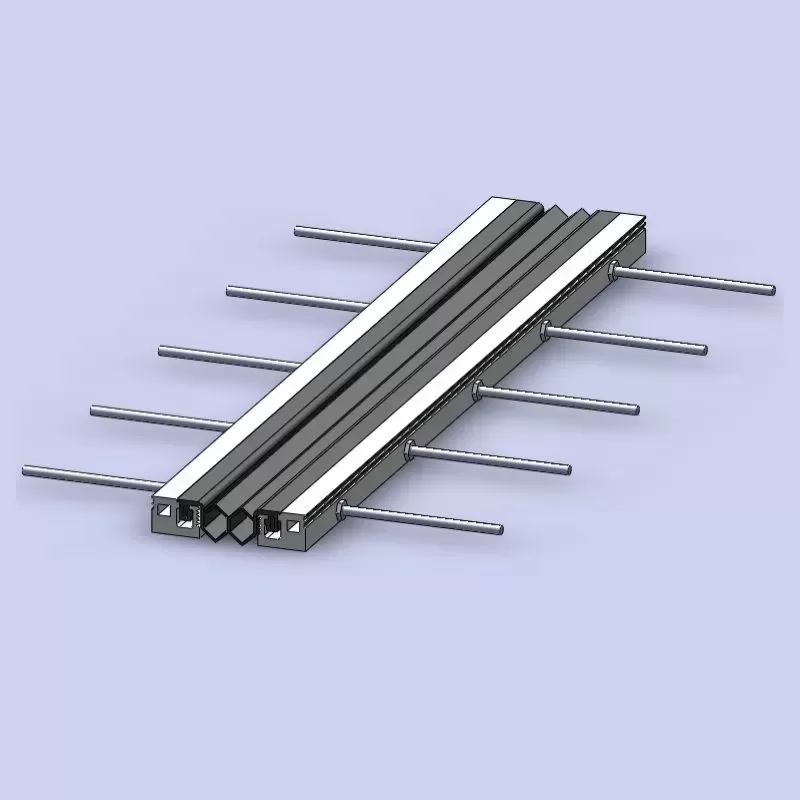
Elastomeric Expansion Joint Systems: Types, Design Principles, and Applications
Article content and related resources
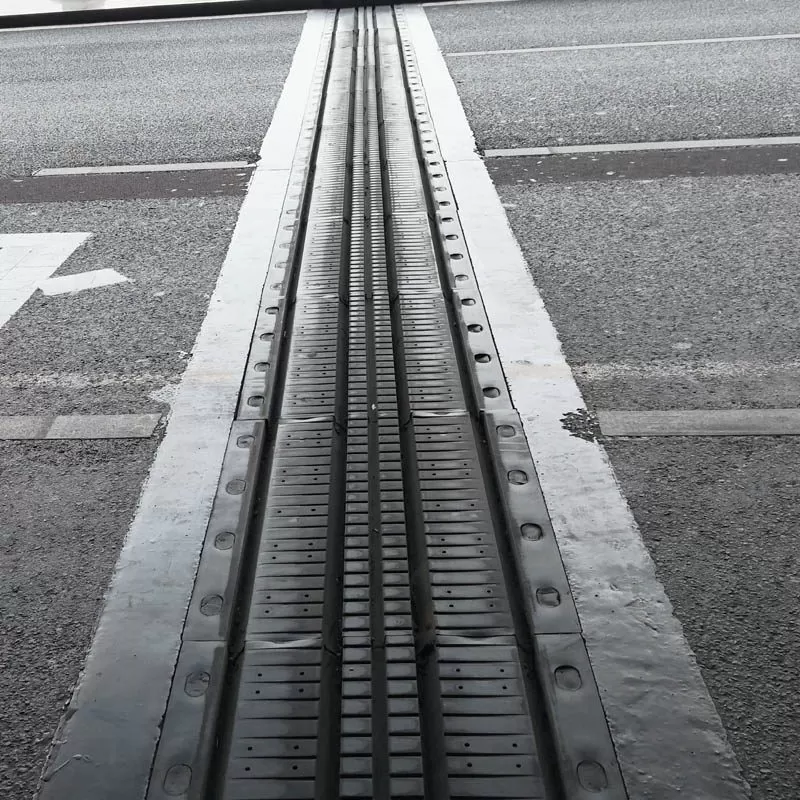
Civil structures never stand completely still. Bridge decks expand under summer heat, contract during harsh winters, deflect under heavy truck axles, and shift during seismic events. Accommodating these complex structural movements while maintaining a flat riding surface and an impermeable moisture barrier remains one of the toughest challenges in bridge engineering.
When joints fail, water and deicing salts leak directly onto substructure elements. This runoff corrodes bearing pads, degrades pier caps, and rots post-tensioned cables. For mid-range movements—typically between 20 mm and 330 mm—an engineered elastomeric expansion joint provides the most reliable balance of waterproofing, load distribution, and wear resistance. Manufacturers like KINGWORK develop these systems using vulcanized rubber and high-strength steel inserts to withstand intense traffic impacts and aggressive weather conditions.
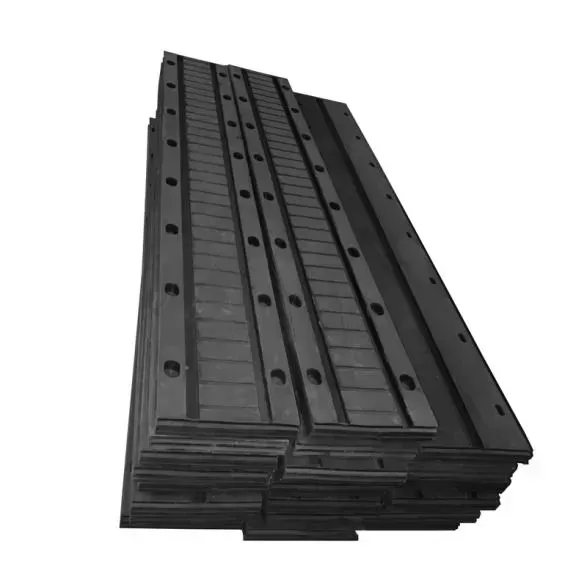
What Is an Elastomeric Expansion Joint?
An elastomeric expansion joint is a flexible structural assembly positioned across the gap between two bridge spans or between a bridge deck and an abutment. The system relies on the low shear modulus of rubber to accommodate structural movement through internal shear deformation rather than mechanical sliding.
Unlike simple open finger joints or complex mechanical roller bearings, elastomeric systems seal the deck surface completely. They cushion vehicle impact, dampen acoustic noise, and protect structural components beneath the roadway from moisture and road chemicals.
Core Classifications of Elastomeric Expansion Joint Systems
Engineers classify elastomeric systems based on their structural reinforcement, installation profile, and total movement capacity. Selecting the wrong profile leads to early anchoring failure or torn rubber membranes.
1. Steel-Reinforced Elastomeric Joints
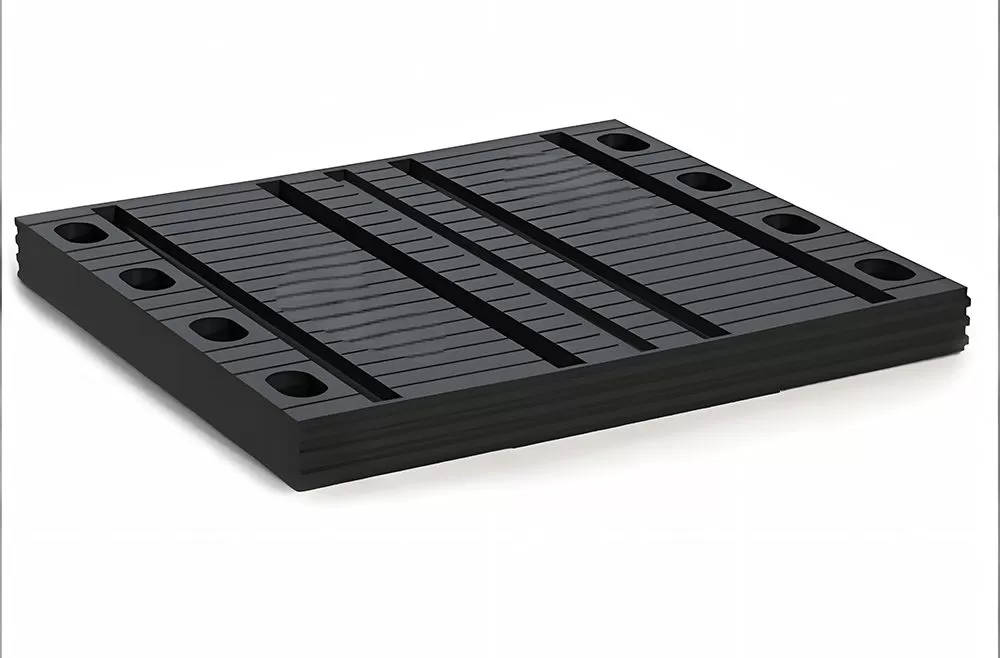
Steel-reinforced elastomeric joints are the primary choice for highway bridges and elevated expressways carrying high-speed, heavy freight traffic. These units feature high-tensile steel plates chemically bonded and fully encapsulated within a vulcanized elastomer matrix during high-pressure molding.
Load Mechanism: The embedded steel bridging plates span the expansion gap, preventing vehicle tires from depressing or tearing the rubber profile under high axle weights.
Movement Range: Typically accommodates total longitudinal movements from 30 mm up to 330 mm, depending on whether a single-cell or multi-cell shear configuration is used.
Benefits: Exceptional resistance to heavy snowplow strikes, dynamic braking forces, and horizontal shear stresses.
2. Non-Reinforced Rubber Cushion Joints
Non-reinforced joints consist entirely of high-grade molded synthetic or natural rubber slabs. Lacking embedded steel bridging plates, they rely strictly on their rubber profile to bridge the structural opening.
Movement Range: Restricted to small movements, generally under 25 mm.
Primary Use: Footbridges, pedestrian walkways, light parking structures, and low-speed internal access roads.
Benefits: Low material cost, swift installation, and high corrosion resistance in non-vehicular environments.
3. Asphaltic Plug Joints (APJ)
An asphaltic plug joint is a flexible, flexible-binder expansion system constructed directly within an excavated deck joint blockout. The system uses aggregate bound with polymer-modified bitumen, supported over the gap by a thin metal bridging plate and a high-temperature backing rod.
Movement Range: Best suited for movements between ±10 mm and ±25 mm.
Benefits: Produces a completely seamless, silent riding surface flush with adjacent asphalt paving. Contractors install it quickly without drilling anchor studs.
Limitations: APJs run the risk of rutting under heavy, slow-moving traffic in hot climates, requiring frequent patching or replacement compared to bolt-down systems.
4. Single-Gap vs. Modular Elastomeric Systems
Single-gap elastomeric systems utilize one continuous elastomeric sealing gland locked into edge beams. They handle moderate deck shifts up to roughly 80 mm to 100 mm. For spans exceeding these tolerances, engineers specify modular expansion joints. These assemblies combine multiple elastomeric seals separated by intermediate steel beam dividers, multiplying movement capacity to 600 mm or more across major cable-stayed and suspension spans.
Engineering Design Principles and Movement Calculations
Designing an elastomeric bridge expansion joint requires precise structural analysis. Undersizing leads to tear-outs at low winter temperatures or bulging and anchoring failure under summer expansion. Structural calculations must account for several structural forces simultaneously.
Deck Movement Capacity Calculation
The total design movement range ($M_{total}$) combines thermal shifts, concrete shrinkage, long-term structural creep, and dynamic braking loads:
Mtotal = ΔLthermal + ΔLcreep + ΔLshrinkage + ΔLdynamic
The thermal component (ΔLthermal) relies on the standard structural formula:
ΔLthermal = L × α × ΔT
L: Effective expansion length of the bridge span.
α: Thermal expansion coefficient of the deck material (concrete or steel).
ΔT: Difference between the maximum/minimum effective deck temperatures and the installation setting temperature.
Engineers must evaluate the bridge skew angle (θ). Skewed bridges introduce transverse shear and rotational displacement across the elastomeric expansion joint. If skew exceeds 30 degrees, designers must verify that the rubber profile's allowable transverse shear strain does not exceed safe operating limits (typically limited to 0.5 to 0.7 shear strain).
Material Science: Choosing the Right Elastomer
The chemical composition of the rubber determines the operating life of an elastomeric expansion joint. Structural engineers choose between three main polymer bases depending on environmental exposure:
Chloroprene (Neoprene): The industry benchmark for highway infrastructure. Neoprene delivers high mechanical strength, excellent resistance to petroleum drops and motor oils, and moderate resistance to ozone and thermal degradation.
Ethylene Propylene Diene Monomer (EPDM): Best for regions exposed to extreme ultraviolet radiation, high ozone levels, and aggressive climate swings (-40°C to +120°C). However, EPDM has lower resistance to hydrocarbon fuels.
Natural Rubber (Polyisoprene - NR): Excellent dynamic fatigue resistance, tear strength, and low-temperature flexibility. Often prioritized in high-strain seismic zones, though it requires specialized chemical anti-ozonants to resist atmospheric cracking.
Technical teams at KINGWORK enforce strict vulcanization and rheometer testing on all polymer compounds, ensuring the physical elastomeric properties remain compliant with international standards like ASTM D4014 and AASHTO LRFD specifications.
Anchorage and Waterproofing Details
An elastomeric joint is only as strong as its connection to the bridge deck. Anchor bolts face high pull-out forces and intense vibrations from moving truck tires. Designers must specify high-tensile hot-dip galvanized or stainless steel anchor rods, secured into pre-formed blockouts using non-shrink, high-early-strength elastomeric concrete or epoxy grouts.
Waterproofing relies on continuous molded sealing ribs compressed along the lateral borders of the joint. Continuous waterstops and drain troughs beneath the structural opening serve as secondary defense systems, catching any runoff if primary seals take mechanical damage over decades of service.
Application Matrix: Matching Joint Systems to Project Requirements
Selecting the optimal joint profile requires matching structural movements, expected axle loads, and environmental demands. The selection matrix below outlines typical real-world recommendations:
| Joint Type | Movement Capacity | Max Axle Load | Key Structural Application | Compliance Standards |
|---|---|---|---|---|
| Asphaltic Plug Joint (APJ) | ±10 to ±25 mm | Medium (Up to 100 kN) | Urban bridges, municipal overpasses, bridge resurfacing | ASTM D6297 |
| Non-Reinforced Rubber Pad | Up to 30 mm | Low / Pedestrian | Footbridges, building parking structures, light rail stations | EN 1337-3 |
| Steel-Reinforced Elastomeric Joint | 30 mm to 330 mm | Heavy (Up to 250 kN+) | Highways, interstates, heavy freight routes, viaducts | AASHTO M297, ASTM D3542 |
| Modular Elastomeric System | 160 mm to 1000+ mm | Heavy (Up to 300 kN) | Long-span suspension, cable-stayed, and continuous steel truss bridges | AASHTO LRFD Bridge Spec |
Installation Pitfalls and Lifecycle Cost Management
A poorly installed elastomeric expansion joint will fail well before its design lifespan, regardless of manufacturing quality. Preventing premature failures requires rigorous site quality control.
Common Installation Errors to Avoid
Inadequate Substrate Preparation: Pouring transition concrete over dirty, wet, or uncured concrete blockouts ruins the mechanical bond. Always abrasive-blast blockout pockets to achieve an open concrete aggregate profile.
Incorrect Temperature Presetting: Installing a joint sized for 20°C during a 38°C heatwave without adjusting the joint width setting leads to severe over-compression and rubber buckling when winter arrives. Always adjust the installation gaps to match ambient deck temperatures at the time of pouring.
Under-Torqued or Over-Torqued Anchors: Improper torque ruins rubber sealing edges or causes anchor studs to shear off under load. Installers must use calibrated torque wrenches following manufacturer schedules.
Uneven Transition Transitions: If the elastomeric joint sits even 3 mm higher than the adjacent asphalt wearing course, snowplow blades will catch and rip the steel reinforcement out of the blockout. The joint must sit 2 mm to 3 mm *below* the asphalt surface.
Long-Term Maintenance and Replacement
Factoring in the total cost of ownership is essential during the procurement phase. A cheap joint that requires frequent bridge lane closures every five years costs vastly more than an AASHTO-certified steel-reinforced elastomeric joint designed to last 15 to 25 years. Routine visual inspections should check for rubber debonding from internal steel plates, tearing along flex zones, loose anchor bolts, and debris packed inside the flex ribs. Washing out road gravel every spring prevents puncture damage during warm-weather expansion cycles.
Frequently Asked Questions (FAQ)
Q1: What causes an elastomeric expansion joint to tear along the flex
groove?
A1: Tearing typically happens for three reasons: the bridge
deck moved beyond the joint's design capacity; hard, non-compressible debris
(such as rocks and construction gravel) jammed into the elastomeric groove
during winter contraction and punctured it during summer expansion; or the
elastomer lacked proper ozone and UV stabilizers, which causes the polymer
chains to turn brittle and crack prematurely.
Q2: How do engineers account for skew angles when specifying an
elastomeric bridge expansion joint?
A2: When bridge decks carry a
skew angle, structural movement is not purely longitudinal. The displacement
splits into normal (longitudinal) and parallel (transverse shear) vectors.
Designers resolve these vectors using trigonometry ($M_n = M \cos\theta$ and
$M_t = M \sin\theta$) and check them against the elastomeric profile's shear
deformation limits. For high skew angles, manufacturers design specialized
steel-reinforced joints to carry lateral shear without debonding.
Q3: How long does a steel-reinforced elastomeric joint last on
high-traffic corridors?
A3: A high-grade steel-reinforced
elastomeric joint typically lasts between 15 and 20 years, provided contractors
install the bedding mortar flush with the road deck and anchor bolts are torqued
properly. Routine clearing of packed dirt and maintaining the deck drainage
system significantly extends service life.
Q4: Can elastomeric bridge expansion joints handle both vertical and
horizontal movement?
A4: Yes. The elastomeric compound provides
natural multiaxial flexibility. While it primarily accommodates longitudinal
expansion and contraction, the rubber matrix also absorbs minor vertical
deflections from live vehicle loading and transverse movements driven by wind or
seismic shifts, dampening vibrations that would otherwise pass straight into the
bridge piers.
Q5: What standard tests confirm an elastomeric expansion joint is fit
for highway use?
A5: Structural compliance requires testing per ASTM
D4014, ASTM D3542, or AASHTO M297. Crucial lab checks include tensile strength
testing, elongation at break, accelerated heat aging, low-temperature
brittleness, ozone resistance chamber checks, and cyclical dynamic shear testing
to confirm the vulcanized bond holds firmly to the internal steel plates.
Choose Engineered Reliability for Your Infrastructure
Prevent deck water damage and avoid unplanned lane repairs on your next infrastructure project. KINGWORK designs, tests, and manufactures high-performance elastomeric expansion joint systems to meet demanding international bridge codes. Contact our civil engineering group today to get CAD/BIM details, download movement calculation guides, or receive a project quote for your exact structural loads.
Email: info@kwbridgebearing.com / sales@kwbridgebearing.com | Inquiries: Contact Technical Sales