
Structural Bearings and Expansion Joints for Bridges: 6 Engineering Imperatives for Long-Span & Seismic Performance
Article content and related resources
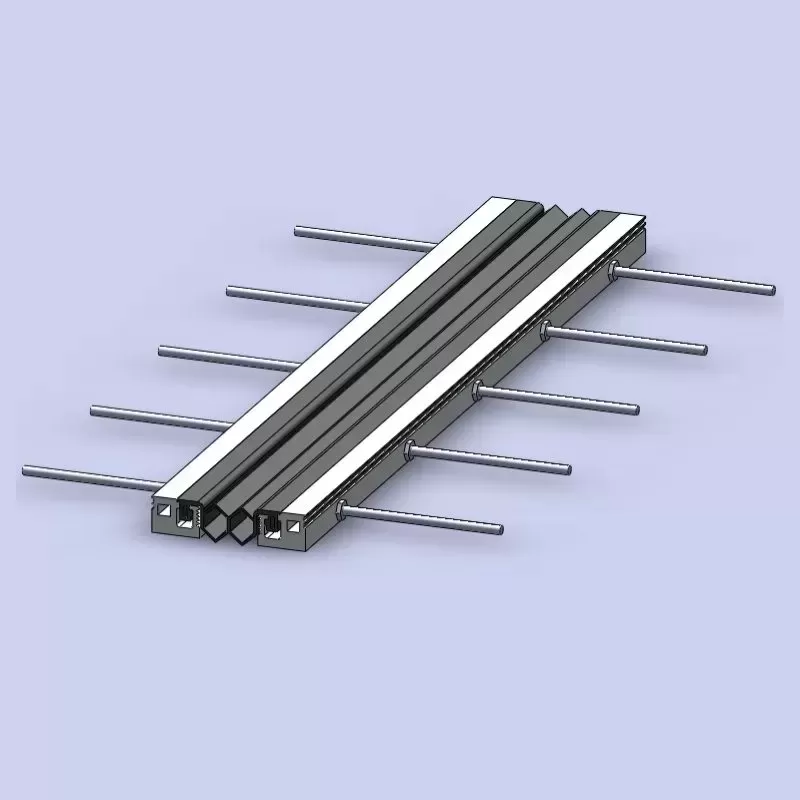
Modern bridges are not monolithic rigid structures. They breathe, shift, rotate, and react to thermal gradients, traffic oscillations, wind pressure, and seismic ground motions. The two component families that enable these controlled movements while preserving structural integrity are structural bearings and expansion joints for bridges. Without precisely engineered bearings and deck joints, concrete would crack, steel girders would buckle, and accumulated stresses would lead to premature failure. This article examines the mechanics, material science, application-specific challenges, and maintenance protocols for these assets, offering field-tested perspectives for bridge owners and design engineers.
1. Load Path Fundamentals: How Bearings Transfer Forces While Permitting Motion
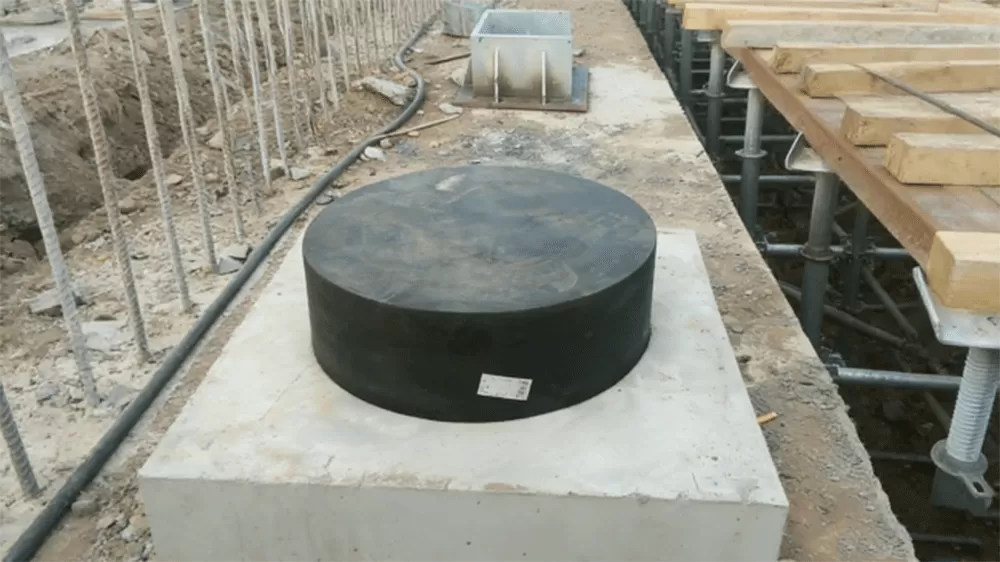
Every bridge bearing must satisfy three often conflicting requirements: vertical load transmission, horizontal restraint or guidance, and rotational or translational freedom. Elastomeric bearings accomplish this through bonded rubber layers and steel shims—the rubber handles shear deformation from thermal expansion, while the shims restrain vertical bulging. Pot bearings use a confined elastomeric disc inside a steel cylinder, enabling larger rotations with compact height. For multi-directional movement, sliding bearings combine a PTFE (polytetrafluoroethylene) surface against a polished stainless-steel plate, achieving friction coefficients below 0.03. Spherical bearings offer controlled rotation around any axis, ideal for curved alignments or skewed supports.
When engineers specify structural bearings and expansion joints for bridges, they must consider the design life (often 75–100 years for major crossings), fatigue load cycles, and environmental aggressors. For example, a highway bridge in a freeze-thaw climate imposes daily expansion cycles that exceed 20,000 over a decade—each cycle demanding consistent shear stiffness from the bearing without cracking or extrusion.
2. Expansion Joints for Bridges: Categories, Movement Ratings, and Deck Continuity
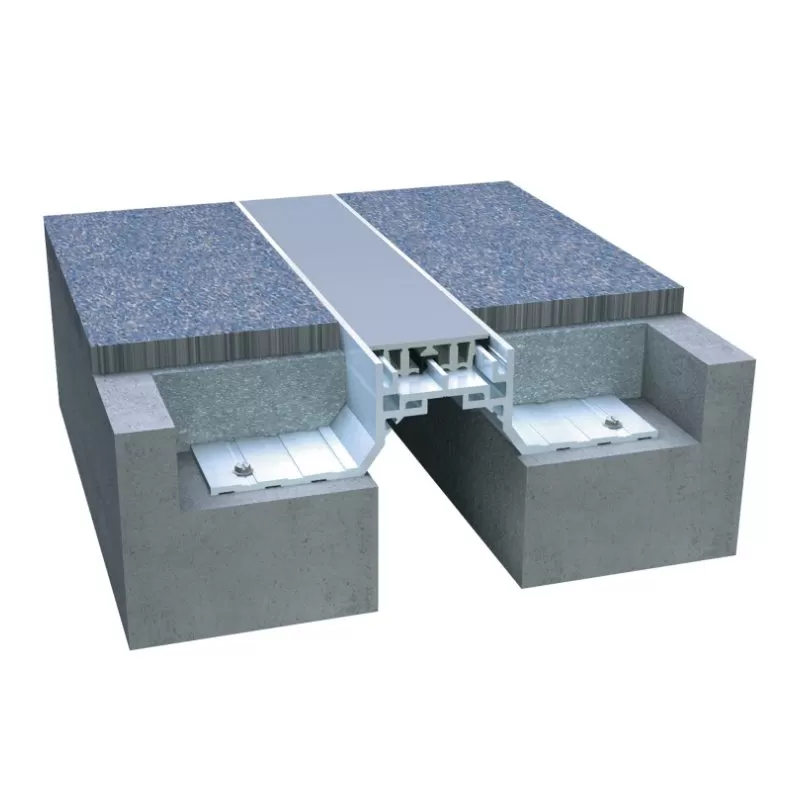
Expansion joints bridge the gap between adjacent spans or between a span and the abutment. Their primary role is accommodating longitudinal, transverse, and sometimes vertical displacements while providing a smooth, watertight riding surface. Classification depends on movement capacity:
Small-movement joints (≤ 50 mm): Compression seals, poured asphalt, or strip seals. Common in slab bridges with moderate thermal variation.
Medium-movement joints (50–300 mm): Single or multiple gap finger joints, modular joints with center beams, and reinforced elastomeric glands.
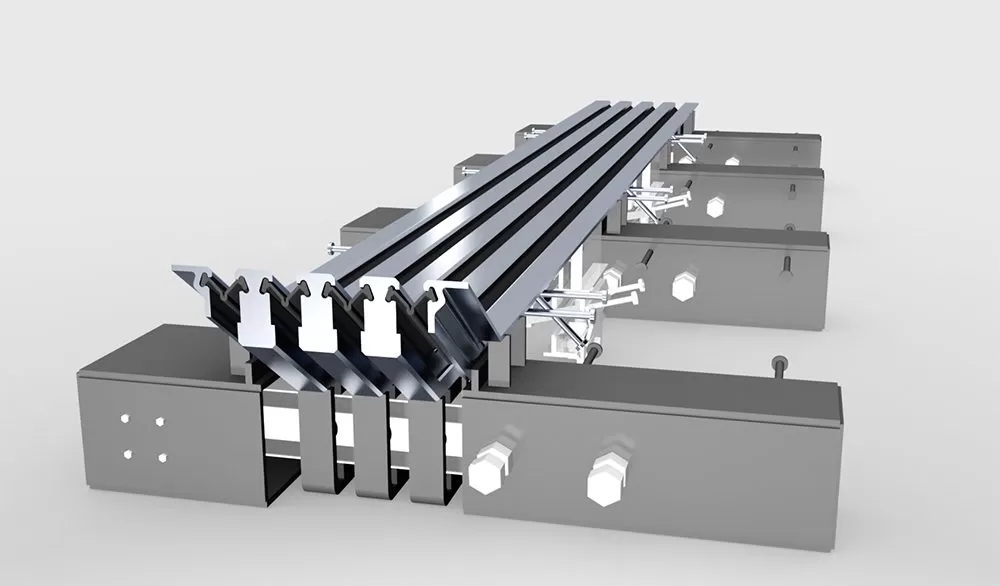
Large-movement joints (> 300 mm): Modular expansion joints with multiple support bars and control systems, used in long-span cable-stayed or segmental concrete bridges.
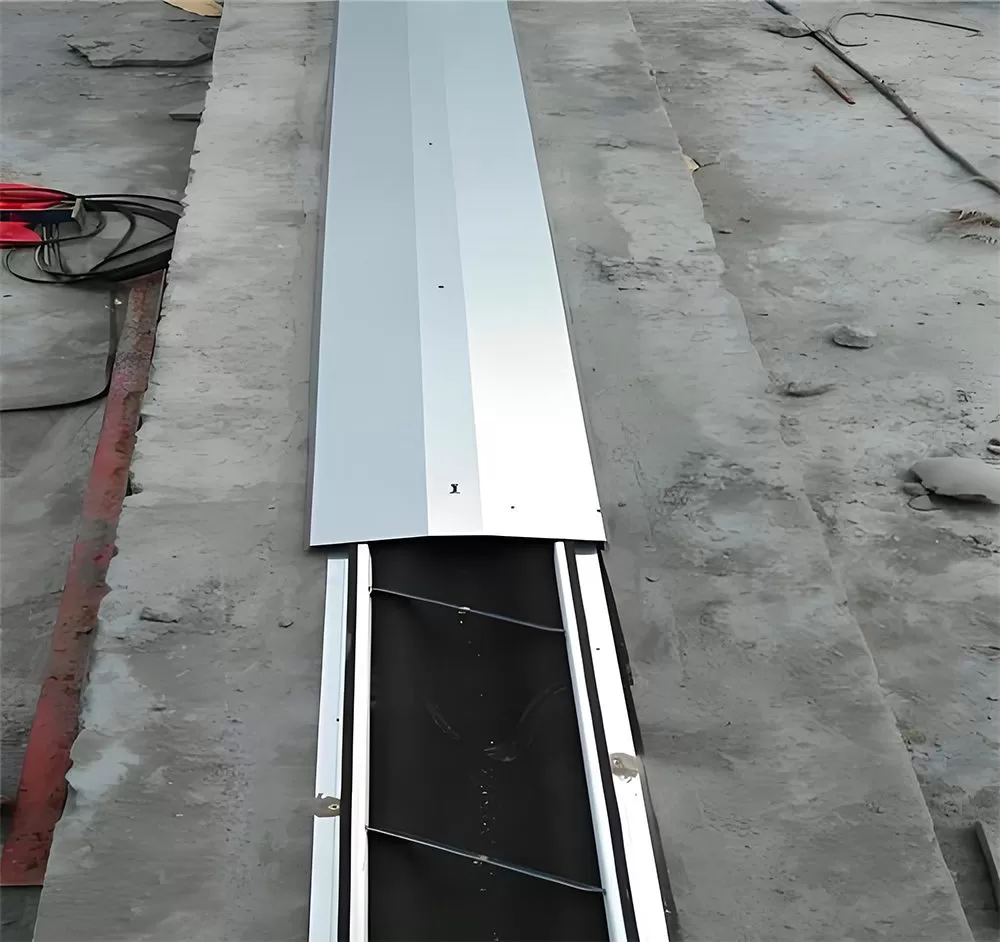
Water and deicing salts ingress through failed joints is a primary cause of substructure corrosion and bearing deterioration. Therefore, modern designs incorporate rubber water stops, edge seal systems, and drainage channels directly into the joint assembly. For steel bridges, comb-tooth joints effectively shed debris but require periodic cleaning to prevent clogging. The synergy between bearing behaviour and joint selection is critical—if a bearing allows more rotation than the joint can tolerate, edge uplift and spalling result.
3. Application Scenarios and Extreme Conditions: Seismic Zones, Heavy Haul, and Thermal Extremes
Each bridge environment imposes a unique set of demands on structural bearings and expansion joints for bridges. Consider three archetypes:
Seismic region (high seismicity): Bearings often incorporate isolation functions using lead-rubber bearings or friction pendulum systems. These devices lengthen the natural period of the bridge, reducing inertial forces. Expansion joints must accommodate residual displacements after a major event—requiring larger movement gaps and ductile anchor plates.
Heavy freight corridors: Railway bridges subject bearings to millions of high-amplitude load cycles. Pot bearings with non-extruding rings and hardened sliding materials (e.g., bronze-PTFE composites) resist wear. Finger joints with robust steel teeth and sacrificial wear pads handle repetitive axle impacts without fatigue cracking.
Desert or arctic environments: Extreme temperature swings (ΔT up to 80°C) induce large longitudinal displacements. Multi-rotational bearings with low-friction materials are mandatory. Joints need materials rated for -40°C without embrittlement, plus expansion slots that do not trap sand or ice.
Modern design codes (AASHTO LRFD, Eurocode 8, and national guidelines) require verified displacement capacities, rotation limits, and shear deformation tests. Finite element analysis of bearing rubber layers helps predict stress concentration and bonding durability.
4. Industry Pain Points: Why Bearing and Joint Systems Fail Prematurely
Even well-designed bridges experience premature distress. Field inspections over two decades reveal recurring failure modes for structural bearings and expansion joints for bridges:
Elastomer aging and ozone cracking: Rubber compounds without adequate antioxidant additives harden, lose elasticity, and develop surface cracks. This reduces shear capacity and leads to delamination from steel shims.
Corrosion of sliding plates and anchor bolts: Inadequate stainless steel grade (e.g., using 304 instead of 316 in coastal bridges) results in pitting and increased friction. Seized anchor bolts prevent free movement, transferring unintended forces to piers.
Debris accumulation and joint clogging: Sand, gravel, and deicing salts fill joint gaps, blocking movement and causing compressive stresses on joint edges. The result is spalled concrete, broken teeth in finger joints, and water ponding.
Incorrect installation rotation or shimming: Field welding distortions or uneven concrete pedestals introduce initial rotations that exceed bearing design limits, causing edge loading and rupture of the pot seal.
Lack of periodic lubrication for mechanical joints: Sliding surfaces of guided bearings and rail expansion joints require scheduled cleaning and solid lubricant application. Neglect leads to stick-slip events and shock loading.
These pain points translate into costly emergency repairs, lane closures, and reduced load ratings. Proactive specification of corrosion-resistant materials (duplex stainless steel, epoxy-coated anchorages) and embedded monitoring sensors mitigates many of these issues.
5. Engineered Solutions: Material Advancements and Precision Manufacturing
Overcoming the limitations of legacy designs requires a combination of improved elastomer formulations, sliding material science, and quality-controlled fabrication. KINGWORK manufactures bearing assemblies and modular joint systems that address the above pain points directly. Key innovations include:
High-damping natural rubber (HDNR) compounds: Provide energy dissipation without lead inserts, suitable for seismic isolation and thermally induced cyclic movement.
PTFE with bronze filler or fiber-reinforced composites: Achieve lower wear rates and higher load capacities (up to 90 MPa) compared to virgin PTFE, while maintaining friction coefficients below 0.02.
Hot-dip galvanizing and advanced fluorocarbon coatings: Applied to all steel components—pot housings, sliding plates, and joint support bars—offering 1000+ hours salt spray resistance per ASTM B117.
Modular expansion joints with replaceable elastomeric seals: Designed for in-situ maintenance without closing the entire bridge width. Watertightness is assured through dual-compression sealing elements.
For engineers specifying structural bearings and expansion joints for bridges, KINGWORK provides project-specific design reports, including friction testing under simulated service loads and rotation stiffness calibration. This eliminates guesswork during procurement and ensures compatibility with pier reinforcement layouts.
6. Inspection, Monitoring, and Lifecycle Extension Strategies
Routine visual inspections (annually for moderate-traffic bridges) must be augmented with quantitative measurements. Key inspection metrics for bearings:
Vertical and horizontal alignment – misalignment exceeding 5 mm indicates potential shifting of the superstructure or settlement.
Elastomer bulging profile – asymmetrical bulging suggests uneven load distribution or trapped rotation.
Corrosion of sliding interfaces – use of ultrasonic thickness gauges on stainless steel sheets to detect thinning beneath PTFE liners.
For expansion joints, inspectors should measure gap width at three reference temperatures (early morning, mid-afternoon, seasonal extremes) to verify that movement remains within design range. Where embedded sensors are installed (linear variable differential transformers, fiber Bragg gratings), real-time data on displacement and temperature gradients can feed into a bridge management system. Long-term trends indicate when joint replacement or bearing recentering is needed.
Lifecycle extension often involves retrofitting: adding external PTFE sheets to stuck sliding bearings, injecting polyurethane grout beneath settled pot bearings, or replacing individual elastomeric seals in modular joints. These interventions, when carried out by specialized crews, restore original performance for 15–20 additional years at a fraction of full replacement cost.
7. Future Directions: Smart Bearings, Low-Maintenance Surfaces, and Integrated Sensors
The next generation of structural bearings and expansion joints for bridges will embed passive RFID temperature sensors and conductive elastomers that change electrical resistance with strain. Such smart bearings allow wireless interrogation from a maintenance vehicle, flagging anomalous movements before they cause secondary damage. Self-lubricating sliding materials—based on sintered bronze with embedded graphite—are already in field trials, reducing the need for re-lubrication intervals from 5 years to the entire design life. For expansion joints, ultra-high-performance concrete (UHPC) edge beams with integrated drainage channels eliminate the traditional steel edge angles that corrode and debond.
As regulatory bodies push for longer warranty periods (25+ years), manufacturers like KINGWORK are investing in accelerated aging tests for complete bearing-joint systems. These tests simulate 100 years of thermal cycles, salt fog exposure, and random traffic loading on a single test rig.
Frequently Asked Questions (FAQs)
Q1: What is the practical difference between elastomeric bearings and
pot bearings for highway bridges?
A1: Elastomeric bearings rely on
bonded rubber layers to accommodate rotation and shear. They are economical for
moderate loads (up to 2,000 kN) and limited rotation (≤0.01 rad). Pot bearings
use an elastomeric disc confined within a steel cylinder, allowing larger
rotations (≤0.03 rad) and higher loads (exceeding 10,000 kN) with a compact
height. Pot bearings also resist uplift better, making them suitable for curved
or skewed bridges.
Q2: How often should expansion joints be inspected in a coastal
environment?
A2: In coastal zones with airborne chlorides,
semi-annual inspections are recommended—before and after winter storms. Key
focus areas: corrosion of anchorage hardware, seal integrity around joint edges,
and debris accumulation in drainage slots. If bearing assemblies are also
subjected to salt spray, annual ultrasonic testing of stainless steel sliding
plates is prudent.
Q3: Can structural bearings accommodate seismic movements beyond
thermal expansion?
A3: Yes, but only if specifically designed as
seismic isolators. Standard pot or elastomeric bearings have limited shear
capacity (usually ±50 mm). Seismic isolators (lead-rubber bearings, friction
pendulum bearings, or high-damping rubber bearings) permit displacements from
±150 mm to ±600 mm while dissipating energy through hysteresis. For such
applications, the expansion joints must also be rated for seismic gap
closure—often requiring wider finger joint gaps or slotted anchorages.
Q4: What causes water leakage through modular expansion joints even
after recent replacement?
A4: Common causes: (1) improper
compression of rubber seals—gaps between centre beams and seal lips; (2) damage
to edge sealant during asphalt overlay operations; (3) torsional misalignment of
adjacent beams under uneven truck loading. A remedial procedure involves dynamic
leak testing using a pressurized water spray while the bridge is loaded with a
test truck. Leaks are sealed with two-component polyurethane injection or by
replacing individual faulty seal strips. KINGWORK offers retrofit sealing
systems with dual-compression profiles that accommodate beam misalignment up to
8 mm.
Q5: Is it feasible to replace a single bearing without jacking the
entire bridge span?
A5: For continuous multi-girder bridges, local
jacking using synchronized hydraulic jacks at adjacent support locations can
lift the span by 3–5 mm, enough to slide out a damaged bearing and insert a new
one. However, this requires detailed analysis of the slab and diaphragm
stresses. Slightly more clearance may be needed for pot bearings with masonry
plates. KINGWORK provides low-height retrofit bearings (50–70 mm total
thickness) that fit into existing restricted spaces, minimizing jacking height
requirements.
Q6: What corrosion protection strategy is most effective for sliding
plates of bridge bearings?
A6: A duplex system: 3 mm thick stainless
steel sheet (316L or 2205 grade) bonded to a carbon steel backing plate with
structural adhesive, followed by a fluoropolymer coating on all non-sliding
edges. This prevents crevice corrosion at the interface and delivers 50+ years
service in marine environments. Avoid plated-only stainless steels (e.g., 304)
which suffer pitting in high-chloride conditions.
Partner with Engineering Experts for Reliable Bridge Assets
Selecting, installing, and maintaining structural bearings and expansion joints for bridges demands a deep understanding of site-specific loads, environmental aggressors, and long-term movement patterns. Generic off-the-shelf components often lead to premature deterioration and unplanned traffic disruptions. KINGWORK combines application engineering, material science, and precision fabrication to deliver bearing and joint systems that align with the actual performance envelope of your bridge—whether it is a new long-span crossing, a seismic retrofit, or an expansion joint replacement in an aging viaduct.
Our team provides load rating reviews, 3D movement simulations, and on-site installation supervision. For bridge owners, consultants, and contractors seeking to extend asset life while reducing maintenance frequency, we invite you to submit your project inquiry. Share your bridge type, design movement capacity, and environmental conditions—receive a customized technical proposal.
Contact KINGWORK today for a consultation or request detailed specifications and test reports. Our engineers are ready to support your next infrastructure project.
![Bridge Joint Types: The Complete Engineering Guide [2026 Edition]](https://www.kwbridgebearing.com/storage/non_theme/202606/024.webp)