
Quality Control for Bridge Elastomeric Bearings: What Design Engineers Must Inspect
Article content and related resources
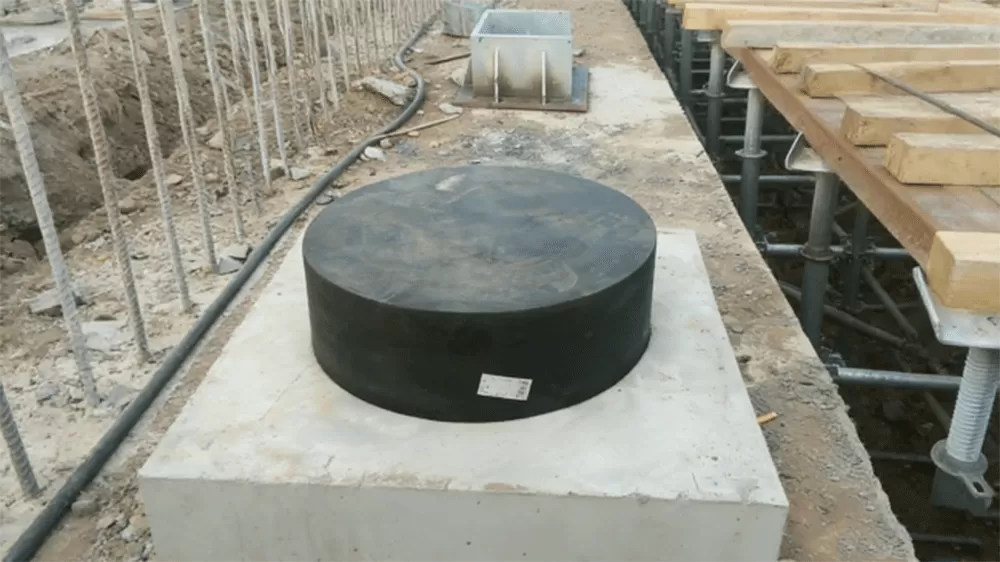
Bridge elastomeric bearings play a critical role in modern bridge design. These compact structural components transfer heavy vertical loads from the superstructure down to the substructure. Simultaneously, they accommodate horizontal translations, thermal expansion, rotation, and seismic movements without introducing excessive stress into the bridge piers.
If a bearing fails due to poor manufacturing or sub-standard materials, the consequences are severe. Structural engineers often observe concrete cracking, beam displacement, uneven load distribution, and severe spalling. Replacing installed bearings requires expensive jacking operations and disruptive traffic closures. For structural engineers and site inspectors, verifying the quality of bridge elastomeric bearings before installation remains essential.
At KINGWORK, we manufacture high-performance elastomeric bridge bearings that meet demanding global standards. This comprehensive guide outlines the vital quality control (QC) parameters that every design engineer and site inspector must review to guarantee long-term structural integrity.
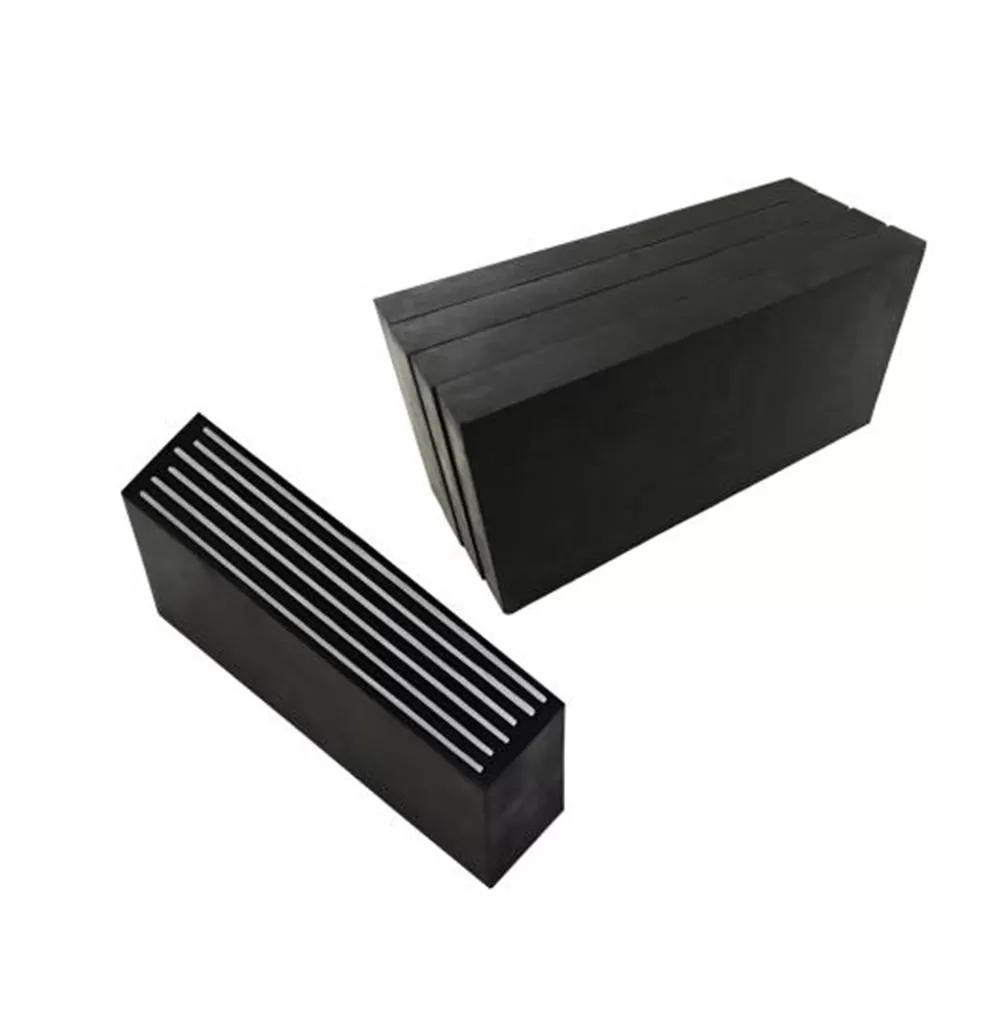
1. Raw Material Verification: Rubber Compound and Steel Plates
The operational lifespan of bridge elastomeric bearings depends on the quality of its raw materials. Engineers must demand and carefully review the manufacturer’s Material Test Report (MTR) for both the elastomer compound and the internal steel reinforcement plates before approving production.
Elastomer Selection: Natural Rubber (NR) vs. Chloroprene Rubber (CR)
Selecting the correct elastomer formula directly affects environmental resistance and low-temperature behavior:
Chloroprene Rubber (CR / Neoprene): Preferred for aggressive environments. CR offers superior resistance to ozone, oil, saltwater, UV radiation, and chemical exposure. It performs exceptionally well in coastal areas and warm climates.
Natural Rubber (NR): Offers outstanding elastic recovery and superior low-temperature flexibility. NR resists crystallization in sub-zero environments, making it ideal for northern cold climates.
KINGWORK utilizes proprietary rubber formulations fortified with high-grade anti-aging agents and optimized vulcanization systems. Our compounds exceed standard thermal aging and ozone resistance requirements, preventing surface cracking over decades of service.
Internal Steel Reinforcement Plates
Internal steel plates provide horizontal confinement to the rubber layers, giving bridge elastomeric bearings high vertical stiffness while preserving lateral flexibility. Quality control steps for steel plates include:
Steel Grade Verification: Ensuring the steel meets structural standards such as Q235, Q355, or ASTM A1011/A36.
Surface Preparation: Steel plates must undergo shot blasting or grit blasting to achieve a clean profile (Sa 2.5 standard) before applying adhesive.
Chemical Bonding: The chemical vulcanization process must bond the elastomer to the steel plates seamlessly. Inferior bonding causes internal delamination under heavy cyclic shear loads.
2. Key Mechanical Performance Tests for Bridge Elastomeric Bearings
Visual checks alone cannot confirm structural performance. Design engineers must review certified third-party laboratory test reports or witness factory acceptance tests (FAT) for critical mechanical properties.
Compressive Elastic Modulus ($E_c$)
The compressive elastic modulus determines how much the bearing deflects vertically under dead and live loads. If the stiffness is too low, excessive vertical deflection occurs, damaging bridge expansion joints. If it is too high, the bearing fails to distribute vertical stresses evenly across the pier cap.
Shear Modulus ($G$)
The shear modulus ($G$) represents the horizontal stiffness of bridge elastomeric bearings. It controls the force transmitted to the bridge substructure during thermal expansion and contraction of the deck. Standard specifications generally require a nominal shear modulus ranging between 0.9 MPa and 1.1 MPa at room temperature.
Engineers must ensure that the shear modulus remains stable across the project's expected temperature range. Low temperatures increase rubber stiffness, which increases horizontal forces on bridge piers.
Ultimate Compressive Strength
Destructive testing on sample bearings verifies the safety margin under extreme overload conditions. Most international standards require bridge elastomeric bearings to withstand ultimate compressive stresses of at least 70 MPa to 80 MPa without structural rupture or steel plate yield.
Shear Bond Strength and Delamination Resistance
Repeated thermal cycles and traffic braking forces create severe shear forces inside the bearing. A shear bond test subjects the bearing to high shear strains (often exceeding 100% to 200%) while maintaining a vertical compressive load. The elastomer must hold firmly to the internal steel plates without peeling or internal tearing.
3. Dimensional Tolerances & Visual Inspection Checklist
Site engineers receiving shipments at the construction site must execute a thorough physical inspection using a structured checklist. Minor geometry errors cause major edge stresses during girder placement.
Visual Surface Inspection Checklist
Surface Defects: Check for deep cracks, voids, chemical contamination, or excessive flash along the parting line. Minor surface blemishes may be acceptable, but cracks reaching the internal steel are cause for rejection.
Exposed Steel: Ensure no internal steel plates protrude through the outer protective elastomer layer. Exposed steel invites moisture, causing rapid corrosion and bond failure.
Uniformity: Inspect side walls for abnormal bulging or wavy profiles, which indicate misplaced internal steel layers.
Dimensional Tolerance Table
Engineers should verify actual product dimensions against design drawings using calibrated tools:
Total Bearing Height ($H$): Standard tolerance is typically within ±2% to ±3% of design thickness. Variations cause height mismatches between adjacent bearings under the same beam.
Plan Dimensions ($A \times B$ or Diameter): Tolerances generally range from 0 mm to +5 mm to maintain the intended contact surface area.
Top and Bottom Parallelism: The upper and lower surfaces must remain parallel within 0.2% to 0.5% of the side length. Out-of-parallel surfaces cause severe stress concentration on one edge of the bearing, leading to premature localized failure.
4. International Standards Compliance
Bridge projects around the globe rely on different structural frameworks. Bridge elastomeric bearings specified for a project must strictly comply with regional structural codes.
AASHTO M251 / LRFD Bridge Design Specifications
Widely used in North America, Latin America, and parts of Asia. AASHTO M251 emphasizes short-duration full-size bearing shear tests, strict elastomer material properties, and rigorous low-temperature testing protocols.
EN 1337-3 (European Standard)
Mandatory across European Union member states and frequently adopted in international projects using Eurocodes. EN 1337-3 outlines rigorous testing for long-term shear behavior, repeated loading degradation, and precise manufacturing tolerances for laminated bearings.
ISO 22762 / National Standards
International standards governing elastomeric isolators and structural bearings ensure uniform performance metrics globally. KINGWORK manufactures bridge elastomeric bearings fully compliant with AASHTO, EN 1337, ISO, and custom national design standards.
Why Global Infrastructure Projects Trust KINGWORK
Choosing the right manufacturing partner removes quality uncertainties from infrastructure development. Global engineering teams partner with KINGWORK for several clear reasons:
Material Science Expertise: We develop customized elastomer compounds optimized for extreme heat, coastal salt spray, or sub-zero mountain environments.
Uncompromising Quality Assurance: Every production batch undergoes comprehensive quality control, including raw material testing, press monitoring, and 100% visual and dimensional checks.
Engineer-to-Order (ETO) Flexibility: We support custom geometric configurations, integrated bevel plates for sloped girders, and flexible minimum order quantities (MOQ).
Proven Track Record: Since 2012, KINGWORK bearings have supported major highway bridges, rail overpasses, and elevated viaducts across more than 50 countries.
Frequently Asked Questions (FAQ)
Q1: What causes abnormal side bulging in bridge elastomeric bearings
after installation?
A1: Bulging usually results from two causes:
unexpected vertical overload or manufacturing defects in the internal steel
plates. If internal steel plates are too thin, unevenly spaced, or poorly
bonded, the elastomer bulges laterally under load. Uniform bulging under design
loads is normal, but wavy or asymmetrical bulging signals internal structural
failure.
Q2: How frequently should engineers perform destructive testing on
bearing samples?
A2: Quality control plans generally specify
sampling rates based on production lot sizes. Typically, one bearing out of
every lot of 50 to 100 pieces (or per project batch) is randomly selected for
destructive mechanical testing, such as ultimate compressive strength and shear
bond evaluation, depending on local code guidelines like AASHTO or EN
standards.
Q3: Can natural rubber (NR) bridge elastomeric bearings replace
chloroprene (CR) in severe cold regions?
A3: Yes. Natural rubber
performs exceptionally well in extremely cold climates because it maintains
elasticity at temperatures well below -30°C without undergoing low-temperature
crystallization. Chloroprene stiffens more quickly in deep sub-zero conditions
unless formulated with specialized low-temperature plasticizers.
Q4: What happens if the top and bottom surfaces of a bearing are not
parallel?
A4: Non-parallel bearing surfaces cause eccentric loading
when the bridge beam settles onto the bearing pad. This creates high stress
concentrations on one edge, which accelerates local fatigue, damages the beam
soffit, and reduces the operational life of the elastomer.
Q5: How does KINGWORK protect internal steel plates from long-term
corrosion?
A5: At KINGWORK, internal steel plates
are completely encased within an outer protective rubber layer during the
vulcanization process. This seamless rubber outer shell isolates the internal
steel from moisture, air, and deicing salts, preventing internal rust formation
for the entire service life of the bearing.
Conclusion & Engineering Support
Rigorous quality control of bridge elastomeric bearings protects major structural investments. By enforcing strict checks on raw material reports, reviewing key mechanical parameters like shear modulus and compressive strength, and verifying dimensional accuracy on site, structural engineers eliminate early bearing failures.
Are you designing a new bridge structure or preparing for project procurement?
Contact the KINGWORK Senior Engineering Team today. Request complete technical data sheets (TDS), CAD drawings, or custom structural design consultation to support your project requirements.
![Bridge Joint Types: The Complete Engineering Guide [2026 Edition]](https://www.kwbridgebearing.com/storage/non_theme/202606/024.webp)