
How Does Elastomeric Shape Factor Influence Neoprene Bearing Pad Performance Under High Compressive Loads?
Article content and related resources
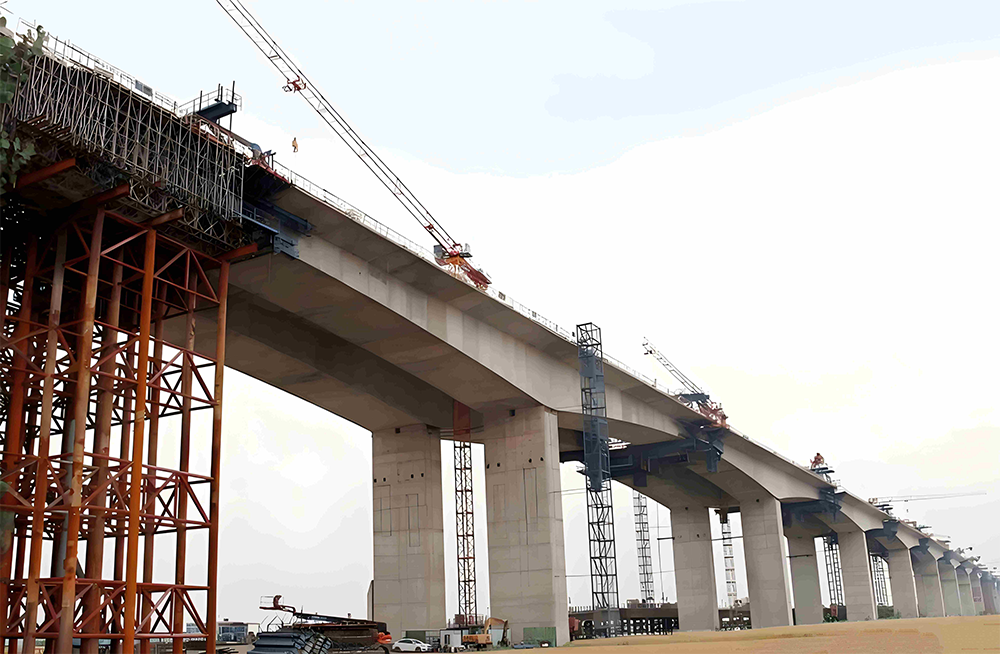
Modern infrastructure design demands component durability capable of withstanding continuous dynamic forces, environmental fluctuations, and structural movements. Within bridge substructures and heavy industrial foundations, managing these forces is paramount to preventing localized stress concentrations and catastrophic material fatigue. Bridges undergo constant thermal expansion, concrete shrinkage, creep, and rotational movements under traffic loads. Without a reliable interface to accommodate these dimensional shifts, the concrete abutments and piers would quickly experience spalling, cracking, and structural failure. In these demanding scenarios, the selection of a high-grade neoprene bearing pad becomes a primary design decision.
As a specialized manufacturer of structural bridge components, KINGWORK engineers elastomer formulations designed to distribute vertical loads uniformly while allowing horizontal displacement and rotation. These elastomeric devices serve as the vital link between the bridge superstructure and its supporting piers. By utilizing chloroprene rubber, also known as neoprene, these systems maintain mechanical stability over decades of continuous exposure to cyclic loads and harsh outdoor weathering.
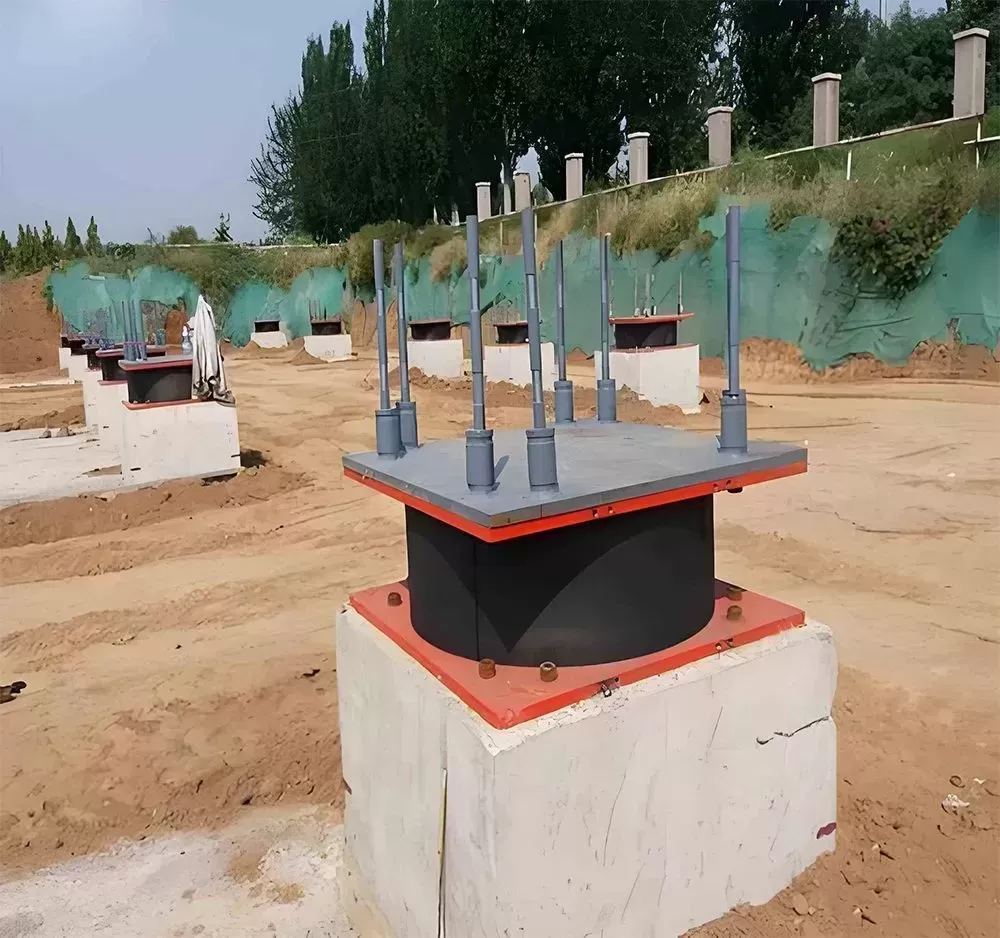
The Physics of Elastomeric Displacement Control
The primary function of an elastomer-based bearing is to balance conflicting structural requirements: it must remain highly rigid in the vertical direction to support massive dead and live loads, yet remain sufficiently flexible in the horizontal plane to minimize the transfer of lateral forces to the substructure. This dual behavior is achieved through precise engineering of the material compounds and internal geometry.
When evaluating the performance of a neoprene bearing pad, the shear modulus is one of the most significant parameters. Unlike steel, which exhibits linear isotropic elasticity under normal operating conditions, elastomeric compounds display complex viscoelastic properties. The shear modulus, typically denoted as G, generally ranges between 0.9 MPa and 1.2 MPa for standard bridge applications. This parameter determines the horizontal stiffness of the pad, directly influencing how much force is transmitted to the concrete columns during thermal contraction or expansion of the bridge deck.
The Geometric Significance of the Shape Factor
To control vertical deflection without increasing the plan dimensions of the bearing, designers rely on the concept of the shape factor. The shape factor (S) is defined as the ratio of the loaded plan area to the total perimeter area free to bulge under compression. Mathematically, for a rectangular bearing pad, this is expressed as:
S = (L × W) / (2 × t × (L + W))
Where:
L is the length of the bearing pad.
W is the width of the bearing pad.
t is the thickness of an individual elastomer layer.
A higher shape factor significantly restricts the lateral bulging of the elastomer, resulting in a marked increase in compressive stiffness. Consequently, modifying the thickness of individual rubber layers allows engineers to adjust the vertical load capacity while maintaining the desired horizontal flexibility.
Shore A Hardness and Stress Distribution
The durometer hardness of the chloroprene compound, measured on the Shore A scale, typically ranges from 50 to 70 durometer for structural applications. A durometer rating of 50 provides greater flexibility and is ideal for lighter structures or regions experiencing significant rotational demands. Conversely, a 60 or 70 durometer compound offers higher load-bearing capacity but exhibits greater resistance to shear deformation. Choosing the appropriate hardness is a balance between accommodating movement and limiting vertical deformation under extreme live loads.
Laminated versus Plain Elastomeric Pads
Elastomeric bearings are classified into plain (unreinforced) and laminated (reinforced) designs. Each type serves distinct structural demands based on load magnitude and displacement requirements.
Plain Elastomeric Pads
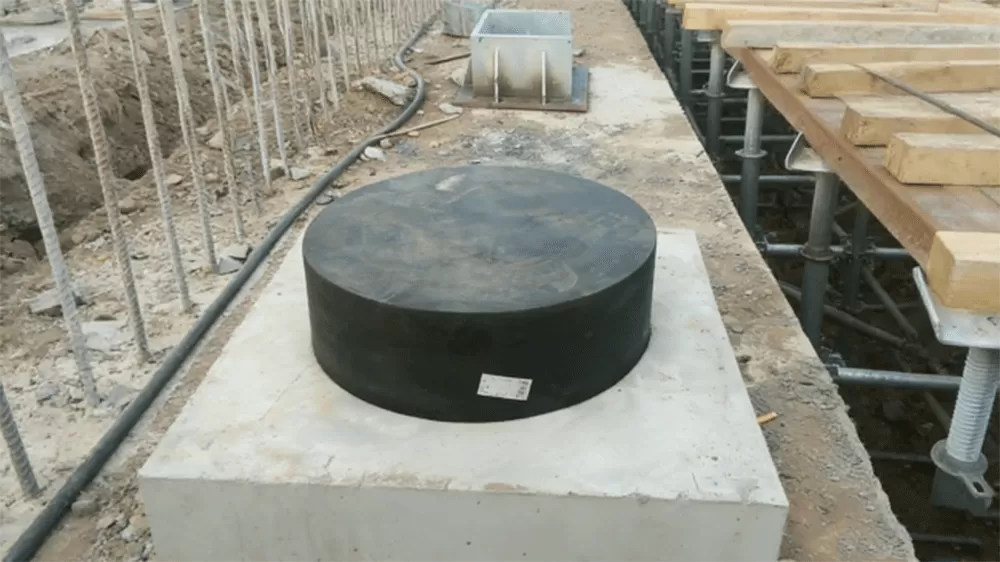
Plain pads consist of a single, homogenous layer of chloroprene rubber without internal reinforcing plates. These units are suitable for low-pressure applications, such as short-span precast concrete bridges, pedestrian overpasses, and structural steel beams in commercial buildings. Because there are no internal layers to restrict lateral bulging, plain pads experience greater vertical deformation under load. Designers must limit the allowable compressive stress on plain pads to prevent excessive bulging, which can accelerate material degradation at the edges.
Laminated Elastomeric Pads
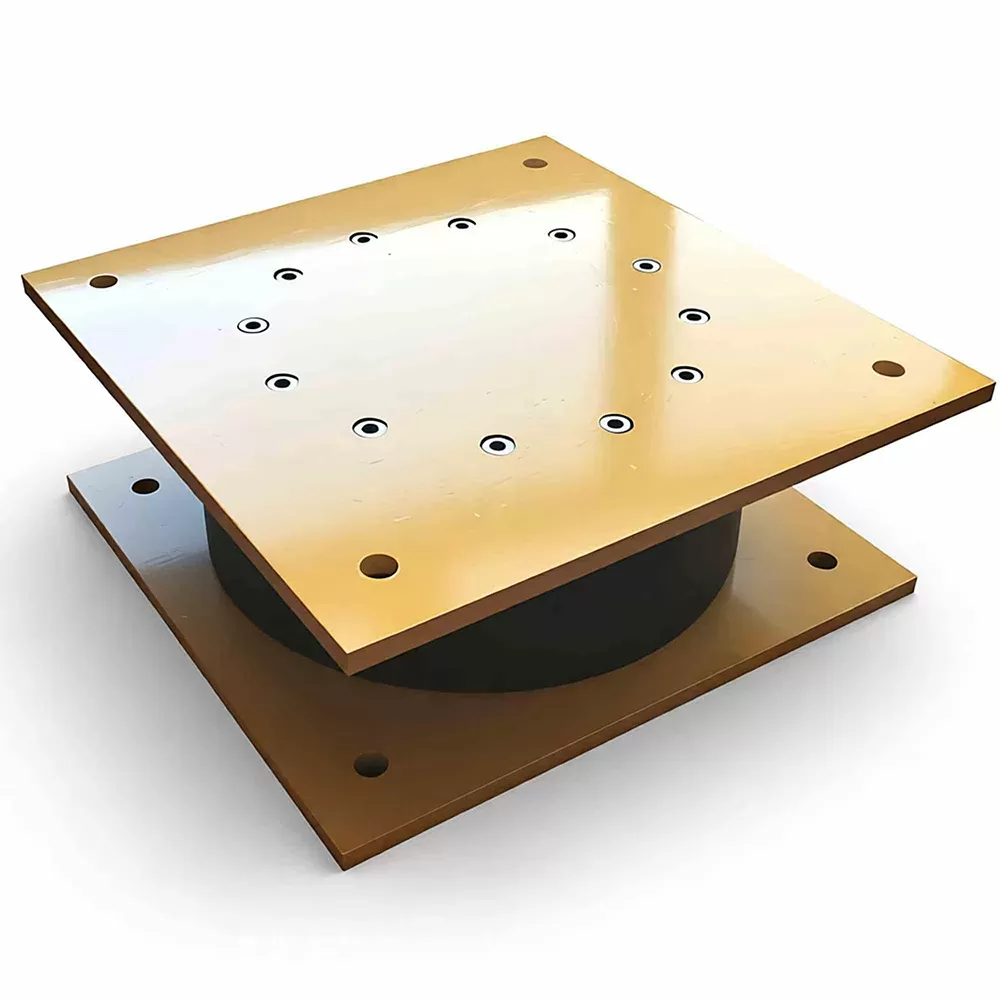
Within a laminated neoprene bearing pad, alternating layers of elastomer and steel shims are vulcanized under high pressure. This internal reinforcement alters the structural behavior of the assembly. The steel plates, typically constructed from structural steel such as ASTM A1011 or equivalent grades, are chemically bonded to the neoprene during the molding process.
Under vertical compressive forces, the elastomer layers attempt to bulge laterally. However, the high-strength steel shims restrain this lateral expansion through friction and chemical adhesion at the interface. This constraint converts the internal stress state of the rubber from simple compression into a triaxial stress state, vastly increasing the compressive strength of the pad. Since the steel plates do not restrict shear deformation, the laminated pad can still freely deform horizontally to accommodate thermal movement. This allows the assembly to support heavy highway and railway traffic while protecting the concrete supports below.
Analyzing Structural Failure Modes and Material Vulnerabilities
While chloroprene bearings are designed for long-term service, improper specifications, manufacturing flaws, or environmental factors can lead to structural deterioration. Understanding these failure mechanisms is key to selecting the appropriate manufacturing partner and installation method.
Interface Delamination
A major vulnerability in laminated bearings is the potential separation of the elastomer from the internal steel shims, a phenomenon known as delamination. This failure occurs when the chemical bond between the rubber and steel degrades. It is often caused by inadequate surface preparation of the steel plates during manufacturing, such as failing to remove mill scale, rust, or oils prior to adhesive application.
To prevent this, structural components manufactured by KINGWORK undergo rigorous grit-blasting to achieve a white-metal finish, followed by the application of specialized vulcanizing primers. This level of surface preparation ensures a cohesive bond that exceeds the tear strength of the rubber itself, preventing delamination under cyclic shear forces.
Excessive Shear Strain and Rollover
Shear strain (γ) is calculated as the lateral displacement divided by the total effective elastomer thickness. Under extreme thermal movements, if the displacement exceeds the design limits, the bearing can experience shear instability or "rollover." Rollover occurs when the edge of the bearing lifts off the masonry plate, creating high localized stress concentrations on the remaining contact area. This uneven loading can crush the concrete abutment seat. To prevent this occurrence, design codes require that the maximum shear strain under serviceability limit states be restricted to a fraction of the elastomer's shear capability, typically not exceeding 50% to 70% of the total elastomer thickness.
Environmental Weathering and Ozone Degradation
Bridges are continuously exposed to atmospheric oxygen, ozone, ultraviolet (UV) radiation, and extreme temperatures. Ozone, in particular, attacks the carbon-to-carbon double bonds in elastomer molecules, leading to surface cracking. If these micro-cracks propagate deep into the pad, they compromise the integrity of the elastomer layers and expose the internal steel shims to moisture, leading to corrosion.
To mitigate this environmental vulnerability, neoprene (polychloroprene) is favored over natural rubber in coastal, humid, or highly industrialized areas. Neoprene exhibits superior resistance to chemical attack, oil exposure, and ozone cracking. Where natural rubber might degrade rapidly without protective chemical additives, neoprene maintains its physical properties, providing a reliable service life often exceeding fifty years.
Engineering Standards and Quality Assurance Testing
Sourcing structural components for public transportation systems and major industrial facilities requires strict adherence to international testing standards. Two primary regulatory frameworks govern the design and testing of elastomeric bearing pads: AASHTO M251 in North America and EN 1337-3 in Europe.
AASHTO M251 Compliance
The American Association of State Highway and Transportation Officials (AASHTO) outlines strict testing regimes under the M251 specification. These include:
Compressive Load Testing: Bearings are subjected to compressive pressures (often up to 1.5 times the design load) to verify that the vertical deflection remains within acceptable parameters and that no surface cracking or bulging irregularities occur.
Shear Modulus Verification: Tests are performed on material specimens to ensure the shear modulus matches the design assumptions, preventing the bearing from being too stiff or too flexible.
Low-Temperature Brittleness: Elastomers stiffen at low temperatures. AASHTO requires low-temperature crystallization testing to ensure the bearing remains flexible during extreme winter conditions without fracturing.
Adhesion Bond Strength: Evaluates the force required to separate the elastomer from the steel reinforcement, ensuring the vulcanized bond remains intact under extreme shear loads.
By conducting these comprehensive tests in-house, KINGWORK ensures that every shipment complies with municipal, state, and federal infrastructure guidelines, reducing the potential for costly field replacements.
Infrastructure Applications and Installation Best Practices
The versatility of elastomeric bearing systems makes them suitable for a wide range of civil and industrial structures.
Highway Overpasses and Viaducts
In standard highway designs, precast concrete girders or structural steel I-beams rest directly on a neoprene bearing pad installed on top of the concrete pier caps. These pads accommodate the daily expansion and contraction caused by solar heating, while also dampening the high-frequency vibrations generated by heavy commercial vehicles. This vibration isolation prevents the concrete pier caps from micro-cracking over time.
Railway Bridges
Railway infrastructure experiences significantly higher dynamic impact loads compared to highway structures. The rapid onset of axle loads requires bearings with high fatigue resistance and excellent energy absorption. Laminated bearings help distribute these sudden vertical forces across the substructure, protecting the ballast bed and concrete piers from concrete fatigue.
Seismic Isolation in Building Foundations
Beyond transportation structures, elastomeric bearings are used in building foundations to isolate structures from ground-borne vibrations caused by nearby subway lines or industrial machinery. In seismically active regions, specially designed elastomeric bearings with lead cores or high-damping rubber formulations are utilized to absorb lateral earthquake energy, protecting both the building occupants and the structural framework.
Crucial Installation Procedures
Even a perfectly manufactured bearing can fail if installed incorrectly. Proper installation requires adherence to several key guidelines:
Surface Flatness: The concrete bedding surface must be perfectly flat and level. Any irregularities can cause uneven loading, leading to localized stress concentrations and premature failure of the pad.
No Direct Welding: Welding steel girders in close proximity to an elastomeric bearing can raise the temperature of the elastomer beyond its vulcanization limits, destroying the chemical bond between the rubber and internal steel shims. Heat shields or mechanical fastening methods must be used.
Parallel Alignment: The top and bottom bearing surfaces must remain parallel under dead loads to prevent eccentric loading and edge pinching.
Frequently Asked Questions
Q1: What factors dictate the load capacity of a neoprene bearing pad?
A1: The load capacity is primarily determined by the plan dimensions (length and width), the shape factor of the individual elastomer layers, the durometer hardness of the rubber compound, and the presence of internal steel reinforcement shims. Laminated designs dramatically increase compressive capacity by restricting lateral bulging of the elastomer under load.
Q2: How does a chloroprene-based neoprene bearing pad compare to natural rubber?
A2: Neoprene (chloroprene) offers superior resistance to ozone, ultraviolet radiation, oils, and chemical pollutants, making it highly suitable for coastal, marine, and urban environments. Natural rubber performs better at extremely low temperatures, as it is less prone to low-temperature crystallization, but it requires protective chemical additives to match neoprene’s environmental durability.
Q3: How do you prevent sliding or walking of a neoprene bearing pad under cyclic loads?
A3: To prevent a bearing pad from shifting out of its designed position, engineers utilize high-friction interfaces, external steel keeper plates, or vulcanize sole plates directly to the bearing. These sole plates are then bolted or welded to the bridge superstructure and substructure, securing the unit in place.
Q4: What is the expected lifespan of a laminated neoprene bearing pad?
A4: When manufactured to strict standards such as AASHTO M251 or EN 1337-3, and installed correctly on a flat, level surface, a high-quality elastomeric bearing pad can achieve a service life of 50 years or more. Regular inspections are recommended to monitor for edge cracks, delamination, or excessive permanent deformation.
Q5: What is the maximum rotational capacity of a standard neoprene bearing pad?
A5: The rotational capacity depends on the thickness of the individual elastomer layers and the overall dimensions of the bearing. Typically, a standard elastomeric bearing can accommodate rotations up to 0.01 to 0.02 radians. For applications requiring greater rotational capacity, spherical or pot bearings are generally specified.
Project Consultation and Engineering Support
Selecting the appropriate bearing configuration requires careful consideration of shear modulus, shape factor, load capacity, and local environmental conditions. Substandard manufacturing or incorrect material specifications can lead to accelerated degradation of both the bearing and the surrounding concrete substructure.
KINGWORK provides comprehensive manufacturing and engineering support for infrastructure projects worldwide. Our production facility is equipped to manufacture both standard and custom-dimensioned elastomeric bearings, ensuring full compliance with international standards such as AASHTO and EN. If your current project requires detailed material specifications, customized shear modulus calculations, or testing documentation, please contact our engineering department to discuss your requirements and receive a comprehensive commercial proposal.
![Bridge Joint Types: The Complete Engineering Guide [2026 Edition]](https://www.kwbridgebearing.com/storage/non_theme/202606/024.webp)