
How Does a Laminated Bridge Bearing Pad Manage Multi-Axial Structural Movements?
Article content and related resources
Bridges are dynamic civil structures subjected to continuous physical changes. Thermal fluctuations, concrete shrinkage, concrete creep, and dynamic traffic loads generate constant displacement and rotation within the bridge superstructure. Without a dedicated mechanism to absorb these movements, the immense forces generated would transfer directly to the supporting substructure, causing severe damage to concrete piers and abutments. A high-quality bridge bearing pad serves as the pivotal interface designed to accommodate these movements safely.
By transferring vertical loads from the bridge deck to the piers while allowing horizontal movement and rotational alignment, these components preserve the structural integrity of transportation infrastructure. At KINGWORK, we manufacture high-performance elastomeric and mechanical bearing systems to meet these demanding specifications, ensuring long-term structural stability under diverse environmental conditions.
Mechanics of Load Distribution and Displacement
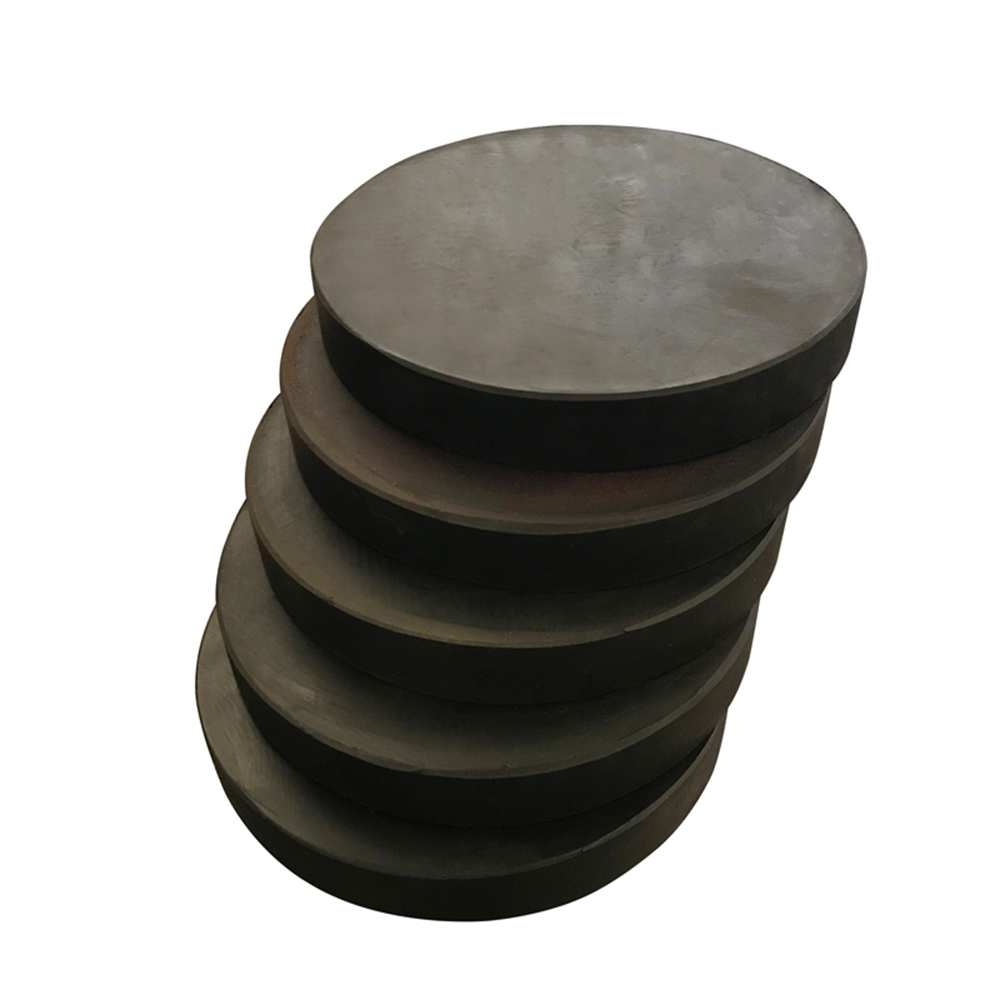
To understand how a bridge bearing pad operates, one must analyze the mechanical behavior of elastomeric compounds under compression and shear forces. Elastomers are nearly incompressible materials that deform by bulging laterally under vertical loads. This physical behavior is quantified by the shape factor, which represents the ratio of the loaded area to the free-to-bulge lateral area of a single elastomer layer.
The shape factor (S) of a rectangular bearing is expressed mathematically as:
S = (W × L) / [2 × t × (W + L)]
Where:
W is the width of the elastomeric layer
L is the length of the elastomeric layer
t is the thickness of an individual elastomeric layer
A higher shape factor indicates a thin elastomer layer relative to its plan dimensions, which restricts lateral bulging and results in high compressive stiffness. Conversely, the shear stiffness of the bearing depends primarily on the total thickness of the elastomer layers rather than the shape factor. This clear separation of compressive and shear characteristics allows design engineers to coordinate vertical load-bearing capacity and horizontal flexibility independently.
Under horizontal forces, such as those caused by thermal expansion of the bridge deck, the bearing experiences shear strain. This shear deformation (γ) is defined as the lateral displacement divided by the total elastomer thickness. Standard structural codes, including AASHTO LRFD and EN 1337-3, mandate strict limits on maximum shear strain to prevent material fatigue and structural instability. By adjusting these dimensional variables, KINGWORK produces structural pads that balance high vertical stiffness with sufficient horizontal flexibility to prevent the transmission of excessive lateral forces to the concrete piers.
Material Dynamics: Neoprene vs. Natural Rubber
The choice of raw compounding materials directly dictates the service life of a bridge bearing pad. The two primary elastomeric compounds used in structural manufacturing are chloroprene (commonly known as neoprene) and natural rubber (polyisoprene). Both materials offer distinct physical advantages depending on the climatic conditions of the installation site.
Neoprene possesses inherent resistance to environmental factors, including ozone degradation, oil exposure, and ultraviolet radiation. This chemical resilience makes neoprene the preferred choice for marine environments, industrial zones, and coastal highway bridges where chemical exposure is expected. Natural rubber, on the other hand, exhibits exceptional low-temperature elasticity. In sub-zero climates, standard elastomers are prone to low-temperature crystallization, which increases their hardness and shear stiffness, potentially overstressing the bridge piers. Natural rubber maintains its physical flexibility at lower temperatures, avoiding this sudden increase in stiffness.
To withstand high vertical loads without excessive bulging, plain elastomeric pads are often reinforced. Laminated elastomeric bearings incorporate internal steel reinforcing plates interleaved between vulcanized rubber layers. These steel plates are chemically bonded to the elastomer during a high-pressure vulcanization process. The steel shims restrict lateral expansion, transforming the stress state of the elastomer from simple compression into a highly confined state. Consequently, the compressive load capacity is multiplied by a factor of ten or more. The manufacturing process at KINGWORK utilizes cold-rolled structural steel shims that undergo thorough surface preparation and double-coat adhesive application, guaranteeing a cohesive bond that prevents internal debonding under cyclical loads.
International Standards and Quality Compliance
Global infrastructure development demands strict compliance with international manufacturing codes. The design and testing of a bridge bearing pad must align with specifications such as AASHTO M251 in the United States, EN 1337-3 in Europe, or AS 5100.4 in Australia. These standards establish baseline values for physical properties and structural performance.
Material testing protocols include checking durometer hardness (typically between 50 and 60 Shore A), tensile strength, and ultimate elongation. Long-term performance is verified through accelerated heat-aging tests, where rubber samples are subjected to elevated temperatures and high ozone concentrations to evaluate resistance to cracking and physical degradation. The physical properties of the elastomer must remain within tight tolerances even after these simulated aging cycles.
Structural testing is performed on full-scale bearing units. The compressive proof load test subjects the finished bridge bearing pad to a specified overload (frequently 150% of the design capacity) to verify the bond integrity between the steel shims and the elastomer. Visually, any uneven bulging patterns or surface cracks indicate a failure in the lamination process. Shear modulus testing measures the horizontal force required to displace the bearing, verifying that the physical shear modulus (G) falls within the design envelope—typically ranging from 0.9 MPa to 1.15 MPa depending on the compound formulation. KINGWORK maintains modern testing facilities to perform these quality control protocols, providing certified compliance documentation for every project shipment.
Tailoring Solutions for Complex Infrastructure Projects
Standard elastomeric bearings are effective for moderate span bridges, but complex structural configurations require specialized adaptations. Long-span bridges, curved flyovers, and continuous precast girder systems introduce multidirectional movements and high rotational demands that exceed standard limits.
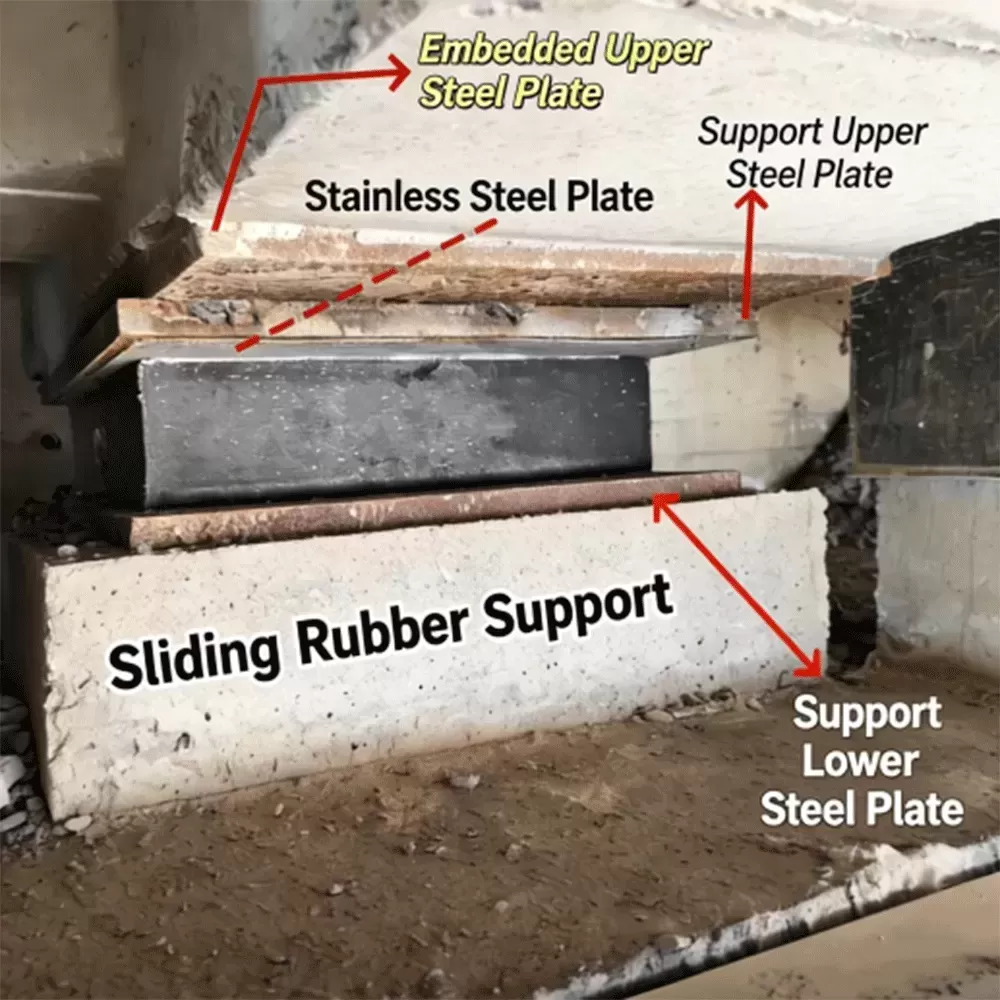
In situations with extensive horizontal displacement, a sliding surface is integrated into the bearing design. This modification involves recessing a sheet of virgin polytetrafluoroethylene (PTFE) into the top elastomer layer of the bearing, which slides against a highly polished stainless steel plate attached to the upper steel sole plate. The self-lubricating property of PTFE, combined with the smooth steel surface, lowers the sliding friction coefficient to less than 0.03. This configuration allows for virtually unlimited thermal movement while keeping the horizontal force transmitted to the pier at a minimum.
For seismically active zones, energy dissipation is a primary design concern. Lead rubber bearings (LRBs) represent a sophisticated adaptation of the laminated elastomeric pad. By inserting a high-purity lead cylinder into a pre-molded central core, the bearing combines the load-bearing capacity and restoring force of the rubber with the energy-absorbing capability of lead. Under seismic forces, the lead core yields plastically at a low shear stress, converting dynamic energy into thermal energy. Once the seismic event subsides, the elastic properties of the laminated elastomer return the bridge structure to its original position, protecting the structural frame from permanent displacement. KINGWORK works closely with bridge designers to engineer custom high-damping rubber formulations and customized dimensions to fit these complex seismic isolation designs.
Identifying and Resolving Common Performance Issues
While high-quality bearings are designed for service lives exceeding 50 years, improper installation or material defects can cause premature performance issues. Understanding these degradation pathways is key for asset managers and structural inspectors.
One common issue is uneven bulging, which typically occurs when the bearing is subjected to eccentric loading not accounted for in the initial design. This eccentricity concentrates stresses on one edge of the pad, leading to localized shear deformation and eventual debonding of the elastomer from the steel shims. To prevent this, structural engineers specify tapered sole plates to compensate for longitudinal slope variations of the girders, ensuring a level load transfer.
Another challenge is structural slippage, where a plain bearing pad without external mechanical anchors shifts from its designed position under cyclic loading. This phenomenon, known as "walking," can lead to unseating of the span or contact with nearby concrete barriers. Implementing steel dowels or external vulcanized sole plates that bolt directly to the masonry plate prevents this shifting. KINGWORK addresses these performance challenges by providing complete engineering packages that include detailed installation guidelines, anchor designs, and slide-prevention systems customized to specific regional environments.

Engineering Consultation and Inquiry Process
Selecting the appropriate structural components requires meticulous attention to engineering detail and material compliance. As a dedicated partner in global infrastructure development, KINGWORK provides comprehensive support throughout the design and specification phases. Our engineering team assists with shape factor calculations, finite element analysis (FEA) modeling, and compliance reviews against AASHTO, EN, and other international standards.
For structural designers, project contractors, and procurement departments looking to acquire customized solutions for highway, railway, or municipal bridge projects, we offer direct technical consultations. Submitting an engineering inquiry allows our team to analyze your specific load profiles, rotation demands, and environmental parameters to deliver a precise manufacturing solution that balances longevity and efficiency. Contact our sales department to submit your inquiry and receive a detailed engineering proposal for your upcoming project.
Frequently Asked Questions
Q1: What is the primary difference between a plain elastomeric bearing pad and a laminated bridge bearing pad?
A1: Plain elastomeric pads consist solely of vulcanized rubber without reinforcing plates and are used for short spans with low vertical loads. Laminated pads contain interleaved steel shims bonded to the elastomer, increasing compressive load capacity while maintaining low shear stiffness.
Q2: How does temperature affect the performance of a bridge bearing pad?
A2: Low temperatures cause elastomers to harden and become more resistant to shear deformation. Natural rubber is less susceptible to this cold crystallization than chloroprene. Conversely, high ambient temperatures can accelerate chemical aging.
Q3: When should a PTFE sliding surface be added to an elastomeric bridge bearing pad?
A3: A sliding surface should be integrated when the expected horizontal displacement of the bridge girder (due to thermal expansion or shrinkage) exceeds the shear deformation capability of a standard elastomeric pad.
Q4: What are the typical causes of bearing "walking" and how can it be prevented?
A4: Bearing "walking" or slippage occurs due to cyclic load imbalances combined with inadequate friction at the contact surfaces. It is prevented by utilizing mechanical keepers, anchoring dowels, or vulcanizing the bearing to external steel plates.
Q5: What quality assurance tests are performed to verify the structural integrity of a bridge bearing pad?
A5: Standard testing protocols include raw material tests (hardness, tensile strength, elongation, ozone aging) and physical bearing tests, such as compressive proof load testing and shear modulus verification according to codes like AASHTO M251 or EN 1337-3.
![Bridge Joint Types: The Complete Engineering Guide [2026 Edition]](https://www.kwbridgebearing.com/storage/non_theme/202606/024.webp)