
How Do Seismic Isolation Bearings Protect Highway Infrastructure Under Dynamic Loads?
Article content and related resources

Modern highway networks and rail corridors span increasingly complex geological zones. Structural engineering must account for both steady-state operational loads and unpredictable, high-amplitude dynamic forces. Conventional design methodologies historically relied on rigid structural connections to resist lateral accelerations. This approach often transfers massive forces directly to the substructure, causing permanent plastic deformation, structural failure, or total collapse. To address these vulnerabilities, modern design practices focus on flexible mitigation strategies that isolate structures from violent ground motions.
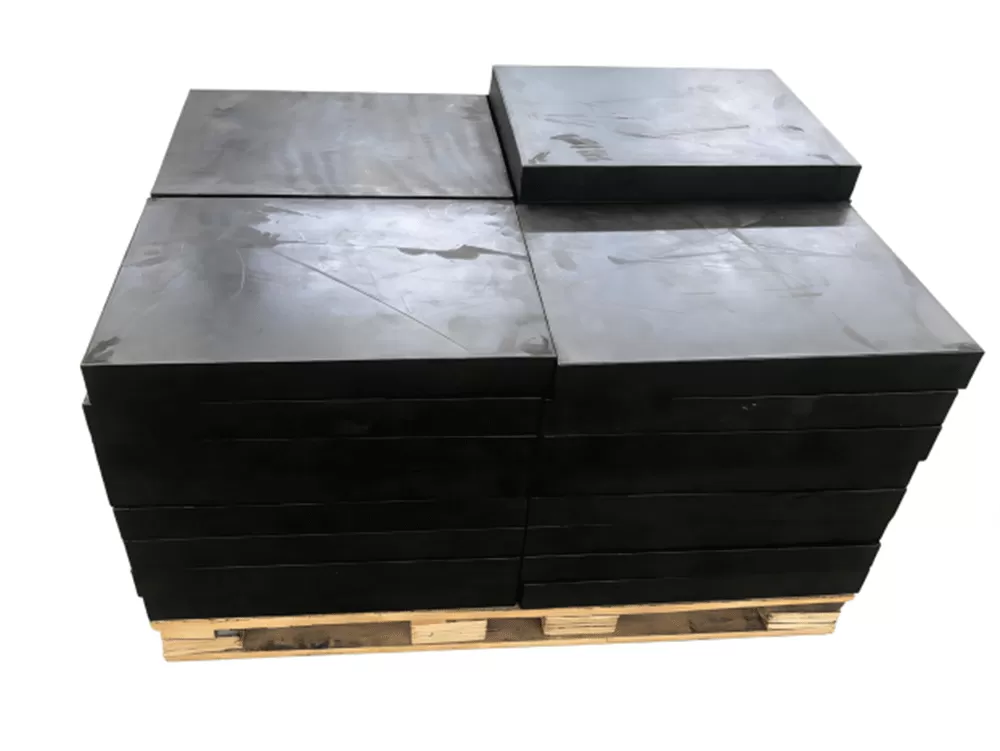
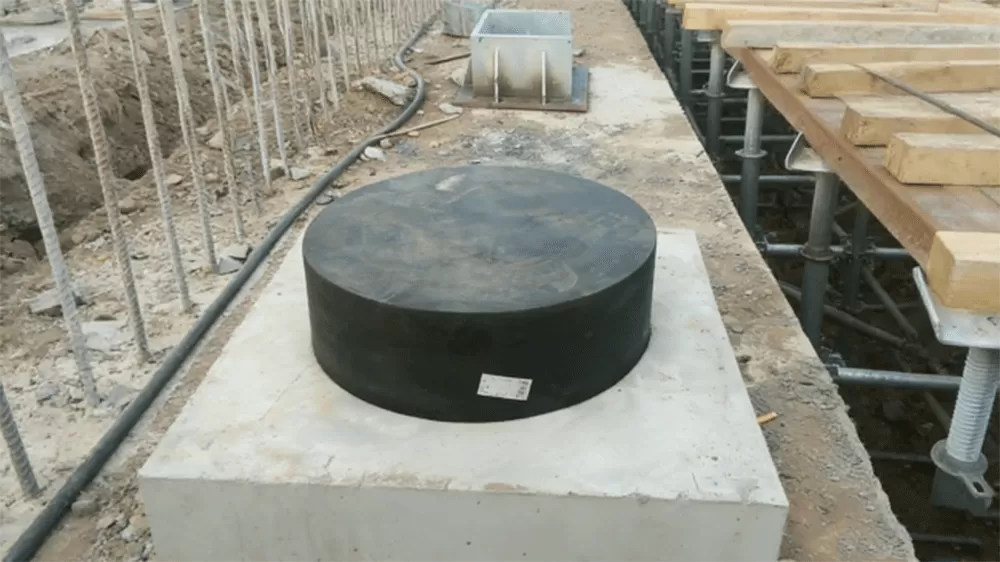
A primary tool for achieving this structural decoupling is the deployment of seismic isolation bearings. These specialized devices are integrated between the bridge superstructure and substructure. By introducing lateral flexibility, they shift the natural vibration period of the overall system, significantly reducing the acceleration forces transmitted to the bridge piers and abutments. Through structural engineering expertise, KINGWORK produces advanced structural components designed to maintain stability under severe dynamic conditions.
The Mechanics of Period Shifting and Energy Dissipation
Decoupling a bridge deck from its supporting piers requires a balance of high vertical stiffness and high lateral flexibility. Vertical stiffness is necessary to support the massive dead load of the concrete and steel superstructure, along with the live loads of heavy traffic, without causing significant vertical deflection. Lateral flexibility allows the bridge substructure to move relatively independently of the deck during a seismic event, reducing the overall acceleration of the structure.
This structural behavior relies on the physical principle of period shifting. Most bridge structures have a relatively short natural period of vibration. When ground motions occur, these short-period structures align closely with the dominant frequencies of earthquake energy, leading to amplification and high inertial forces. By installing seismic isolation bearings, the natural period of the bridge is prolonged into a range where the spectral acceleration is significantly lower. Consequently, the force demand on the piers and foundations is reduced by a substantial margin.
Shifting the period alone is often insufficient, as it can result in excessive lateral displacements of the bridge deck. To manage these displacements, the isolation system must incorporate energy dissipation, typically measured as equivalent hysteretic damping. Damping absorbs and dissipates the kinetic energy transmitted from the ground, converting it into heat and limiting the overall displacement of the superstructure. This combination of stiffness control and energy dissipation protects both structural and non-structural components during seismic events.
Primary Categories of Isolation Systems
Engineers select specific types of seismic isolation bearings based on the bridge's geometry, expected environmental conditions, and calculated seismic demands. The main variations include elastomeric systems and sliding systems.
Lead Rubber Bearings (LRB)
This design consists of alternating layers of vulcanized elastomer and thin steel shims, with one or more high-purity lead cores inserted through the center. The elastomeric layers provide lateral flexibility, while the steel shims offer high vertical stiffness and prevent lateral bulging under heavy vertical loads. Under dynamic lateral shear, the lead core undergoes plastic deformation, absorbing kinetic energy and converting it into thermal energy. Once the seismic event subsides, the elastomeric layers provide the restoring force necessary to return the bridge deck to its original position, minimizing residual displacement.
High Damping Rubber Bearings (HDRB)
Unlike lead-core systems, these bearings utilize specialized elastomeric compounds formulated with extra ingredients like carbon black and synthetic resins to enhance inherent damping properties. High damping rubber bearings operate without a central lead core, relying entirely on the elastomer's physical properties to dissipate energy. This simplifies the manufacturing process and yields a highly linear shear stiffness curve up to moderate shear strains, making them suitable for structures in regions with moderate seismic hazards.
Friction Pendulum Systems (FPS)
These sliding-based isolation systems utilize a heavy articulated slider on a curved concave surface made of stainless steel. During lateral movement, the slider rises along the spherical path, converting kinetic energy into potential energy and generating friction that dissipates the seismic energy. The curvature of the sliding surface determines the natural period of the isolation system, which remains independent of the supported bridge deck's mass. This feature is useful for bridges with variable traffic loads or highly asymmetric mass distributions.
Key Performance Parameters in Structural Design
Specifying the correct isolation device requires careful analysis of several mechanical parameters. Engineers must balance these values to ensure the isolation system performs reliably under both normal service conditions and extreme limit states.
Equivalent Stiffness ($K_{eq}$): This represents the effective stiffness of the bearing at a target lateral displacement. It determines the degree of period shifting and influences the base shear force exerted on the bridge substructure.
Equivalent Damping Ratio ($\beta_{eq}$): This parameter quantifies the system's energy dissipation capacity. Higher damping ratios reduce lateral displacement demands but can increase higher-mode accelerations in some structural configurations.
Shear Modulus ($G$): The shear modulus of the elastomer dictates the initial stiffness of the system. This value must remain stable across different temperatures and loading frequencies to ensure predictable performance.
Displacement Capacity: The maximum horizontal displacement the bearing can sustain without experiencing physical instability, tearing, or P-Delta buckling under vertical loads.
Compression Stiffness ($K_v$): High vertical stiffness is required to control rotational and vertical deformations under live traffic loads, preventing structural misalignment at expansion joints.
Manufacturing structures to meet these precise specifications requires careful material selection and quality control. KINGWORK addresses these requirements by using high-grade vulcanized rubber and precision-machined steel plates, ensuring consistent mechanical behavior across all production runs.
Resolving Industry Pain Points in Bridge Preservation
Selecting and maintaining bridge bearings involves managing several long-term operational challenges. Environmental exposure, slow thermal movements, and structural geometry can impact the performance of isolation components over decades of service.
Mitigating Elastomeric Degradation and Aging Effects
Elastomers are subject to aging caused by atmospheric ozone, ultraviolet radiation, and thermal cycles. Over decades, these factors can increase the elastomer's hardness and shear modulus while reducing its elongation capacity, which can stiffen the isolation system and increase the forces transmitted to the bridge piers during a seismic event. KINGWORK addresses this by using advanced rubber formulations containing specialty antioxidants and antiozonants, protecting the mechanical properties against long-term environmental degradation.
Accommodating Low-Velocity Thermal Movements
Bridges expand and contract daily and seasonally due to temperature variations. These slow displacements must occur without generating high shear forces in the bearings or triggering early wear. Elastomeric systems accommodate these movements through slow, low-shear deformation. For sliding systems, high-durability fluoropolymer interfaces (such as PTFE or modified UHMWPE sliding sheets) are used to maintain low friction coefficients under slow thermal movement, preventing structural stress buildup.
Managing Extreme Temperature Fluctuations
Bridges in cold regions face different challenges, as low temperatures can stiffen rubber compounds and increase the yield strength of lead cores. This change increases the overall lateral stiffness of the isolation system, potentially reducing its effectiveness during winter. To maintain performance, engineers specify low-temperature elastomer compounds designed to resist crystallization and retain flexibility at temperatures down to -40°C.
Manufacturing Standards and Quality Assurance Testing
Given the role of seismic isolation bearings in protecting public infrastructure, quality control during manufacturing is essential. Standardized testing ensures that every produced device matches the design assumptions used in the bridge structural analysis.
Manufacturing must comply with international standards such as EN 15129 (Active and Passive Anti-Seismic Devices), AASHTO Guide Specifications for Seismic Isolation Design, and ASTM D4014. These standards define the raw material requirements and the specific testing protocols each bearing must undergo before installation.
Quality control testing is divided into type testing and factory production control testing:
Type Testing: Performed on prototype bearings to validate the overall design, check the dynamic properties, measure the maximum displacement capacity, and assess the system's fatigue resistance under cyclic loading.
Factory Production Control (FPC) Testing: Conducted on production bearings before shipment. This includes compression tests to check vertical stiffness and combined compression-shear tests to verify that the shear modulus and damping capacity remain within design tolerances.
By conducting these tests in certified facilities, KINGWORK ensures that each component meets project specifications and exhibits consistent performance across all structural units.
Integrating Bearings into Complex Bridge Configurations
Modern highway designs often include curved alignments, skewed spans, and varying pier heights. Implementing isolation devices on these structures requires a detailed understanding of load distribution and structural movement.
On skewed bridges, seismic forces can cause coupled lateral and torsional rotations. Unbalanced rotations can lead to uneven deformation across the bearing array, overloading edge components. To mitigate this, engineers use detailed 3D finite element analysis to position the bearings in configurations that decouple the translational and rotational modes of the bridge deck.
For bridges with unequal pier heights, the shorter piers are naturally stiffer and attract higher lateral forces. Installing seismic isolation bearings with varying stiffness properties across different piers helps balance the lateral force distribution. This approach prevents localized structural damage and ensures the entire substructure works together to resist seismic forces.
Engineering Support and Project Consultations
Selecting the appropriate isolation system requires balancing structural performance, manufacturing tolerances, and long-term maintenance needs. Every bridge project presents unique geological conditions, structural loads, and environmental demands that must be evaluated during the design phase.
KINGWORK provides technical support throughout this process, assisting engineering teams with component selection, structural modeling parameters, and custom manufacturing. For detailed product specifications, custom design options, or to discuss upcoming project requirements, please contact our engineering department to submit an inquiry.
Frequently Asked Questions
Q1: What is the typical design lifespan of seismic isolation bearings under standard operating conditions?
A1: High-quality seismic isolation bearings are designed to match the service life of the bridge superstructure, typically ranging from 50 to 60 years. Achieving this lifespan requires using high-grade elastomeric compounds, corrosion-resistant steel components, and robust protective covers to prevent premature aging and environmental degradation.
Q2: How do temperature variations affect the shear modulus of elastomeric bearings?
A2: Lower temperatures increase the stiffness of elastomeric materials, raising the shear modulus and shifting the isolation system's lateral response. Specialized rubber compounds are formulated to limit this low-temperature stiffening, ensuring the bearings remain flexible and perform reliably even in cold climates.
Q3: Can these bearings be inspected and replaced after installation?
A3: Yes, modern bridge design codes require that isolation bearings be accessible for regular inspection and potential replacement. Bridge abutments and piers are typically designed with dedicated jacking points, allowing maintenance teams to slightly lift the superstructure and replace worn or damaged bearings with minimal disruption to traffic.
Q4: How do lead rubber bearings handle residual displacement after a seismic event?
A4: Lead rubber bearings utilize the elasticity of the vulcanized rubber layers surrounding the lead core. While the lead core deforms to dissipate energy during ground motion, the elastic recovery force of the rubber layers helps return the bridge deck to its original alignment, minimizing post-event offset.
Q5: What is the difference between type testing and routine factory testing?
A5: Type testing is performed on prototype designs to validate the overall engineering performance, fatigue limits, and extreme displacement capacities. Routine factory testing is conducted on actual production units before shipping to confirm that their vertical stiffness, shear modulus, and bonding quality meet the specified project tolerances.
![Bridge Joint Types: The Complete Engineering Guide [2026 Edition]](https://www.kwbridgebearing.com/storage/non_theme/202606/024.webp)