
How Do Elastomeric Bearing Pads Support Structural Movement in Modern Bridges?
Article content and related resources
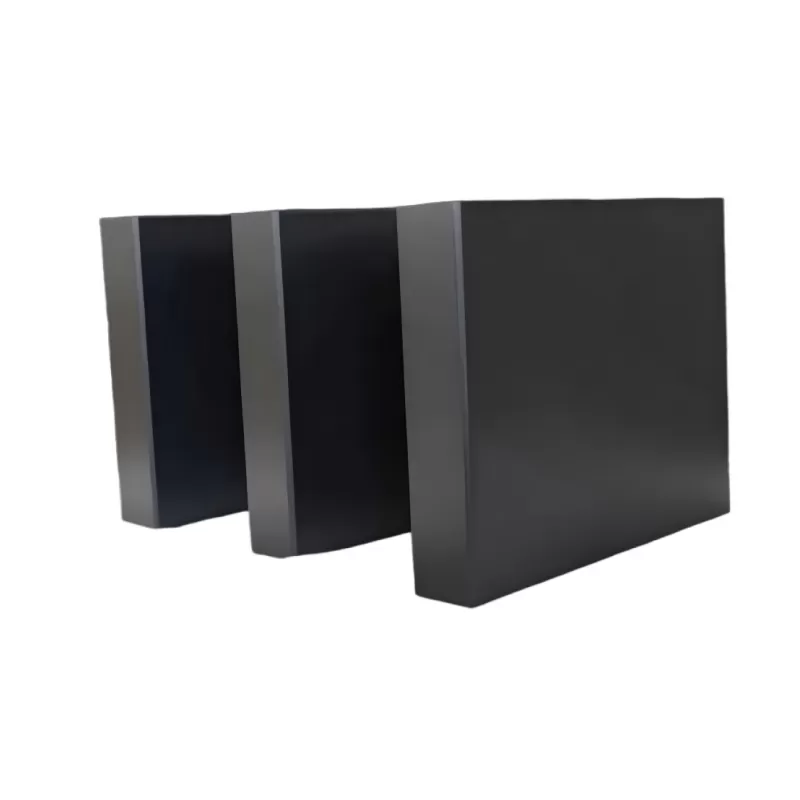
Civil engineering structures, particularly bridges and large-scale buildings, are subjected to continuous environmental and physical forces. Thermal expansion and contraction, seismic events, wind loads, and dynamic traffic displacements generate complex stresses within a structure. If these movements are restricted, the resulting internal forces can lead to structural cracking, concrete spalling, or catastrophic structural failure. To prevent these outcomes, engineers utilize specialized interfaces to transfer loads safely while permitting controlled displacements.
Among the primary components used for this purpose is the elastomeric bearing pad. Positioned between the bridge superstructure and the supporting substructure, these components serve as a flexible connection that accommodates multidirectional translation and rotation. As a dedicated manufacturer of structural rubber products, KINGWORK designs and produces these components to meet rigorous international design standards, ensuring long-term durability under demanding service conditions.
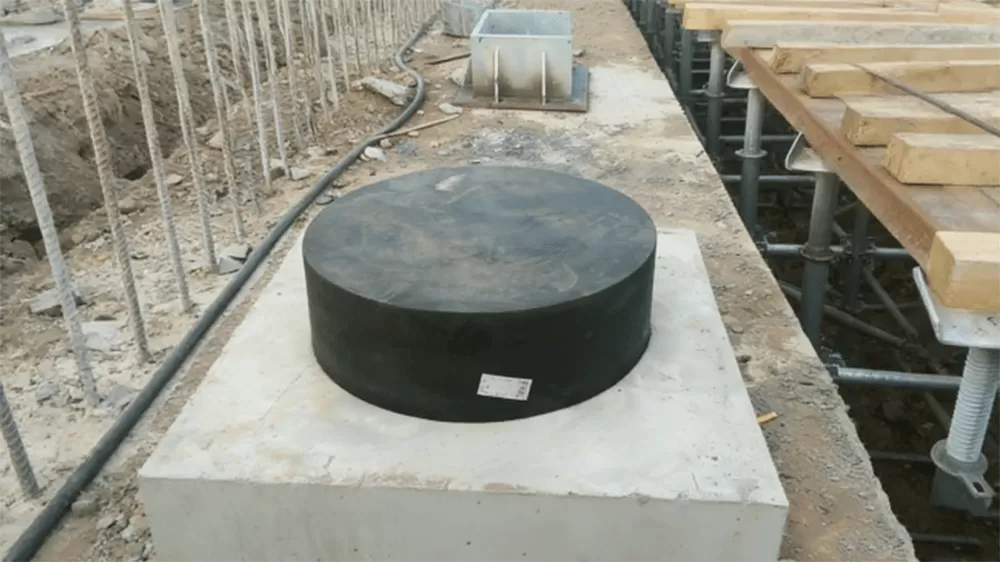
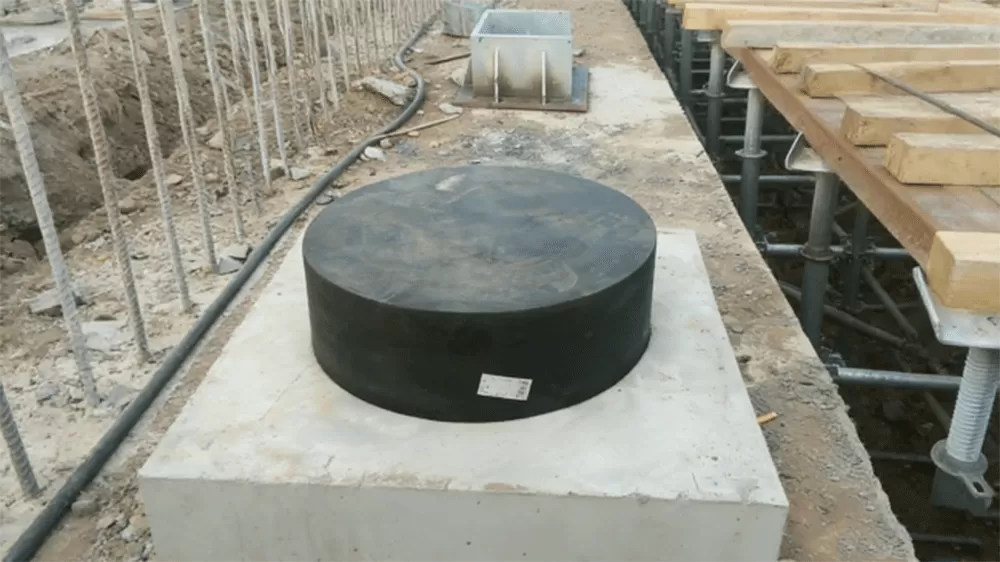
Understanding the Load-Bearing Mechanics of Elastomeric Bearings
The operational performance of an elastomeric bearing pad relies on the inherent viscoelastic properties of its raw materials. Elastomers exhibit high volume compressibility combined with low shear stiffness. This allows the material to deform under load and recover its original shape once the load is removed. Understanding how these forces interact is fundamental to selecting the appropriate bearing configuration for any project.
Compressive Deformation and Shear Strain
Under vertical gravity loads, a bearing pad undergoes compressive deformation. Because the elastomer is virtually incompressible in terms of volume, vertical compression causes the lateral sides of the pad to bulge outward. The extent of this bulging is directly related to the shape factor of the bearing.
Simultaneously, horizontal forces caused by thermal expansion, contraction, or concrete creep generate shear deformation. The elastomer accommodates this horizontal displacement by shearing across its thickness. The relationship between the applied horizontal force and the resulting displacement is governed by the shear modulus of the compound, typically measured in Megapascals (MPa). A lower shear modulus allows for greater displacement with less force transmitted to the supporting concrete piers, which is highly beneficial for minimizing structural fatigue.
The Role of Steel Shims in Laminated Elastomeric Bearings
Plain elastomeric pads are suitable for structures with lower load requirements because they bulge easily under vertical compression, which leads to higher vertical settlement. For infrastructure projects with high load profiles, laminated configurations are mandatory.
Laminated bearings feature alternating layers of elastomer and thin steel reinforcement plates, also known as steel shims. These components are chemically bonded under high pressure and temperature during the vulcanization process. The steel plates restrict the lateral bulging of the elastomer layers without affecting their ability to shear horizontally. This reinforcement alters the mechanical behavior of the pad by:
Increasing vertical compressive stiffness, allowing the pad to support much higher dead and live loads.
Minimizing vertical settlement under maximum load conditions.
Preserving horizontal flexibility, ensuring the bridge can still expand and contract with minimal resistance.
Distributing local stress concentrations uniformly across the concrete bridge seat.
Material Composition: Neoprene vs. Natural Rubber
Selecting the correct elastomer compound is a key factor in determining the performance and lifespan of an elastomeric bearing pad. The two primary materials approved by most global transit authorities are polychloroprene (commonly known as Neoprene) and polyisoprene (Natural Rubber). Each material displays distinct physical characteristics under different environmental conditions.
Natural Rubber exhibits excellent physical resilience, high tensile strength, and superior performance in low-temperature environments. In colder regions, elastomers can undergo crystallization, which increases their stiffness and reduces their ability to accommodate movements. Natural rubber maintains its flexibility at lower temperatures compared to standard neoprene compounds, making it the preferred choice for projects located in cold climates.
Neoprene, on the other hand, provides superior resistance to environmental degradation. It performs exceptionally well when exposed to atmospheric ozone, ultraviolet radiation, oil, and chemical pollutants. This makes neoprene bearings highly suitable for coastal bridges, industrial zones, and urban overpasses where exposure to chemicals and harsh sunlight is common. The manufacturing division at KINGWORK formulates both compounds to match the precise environmental exposures of the installation site.
Engineering Design Standards and Manufacturing Compliance
Infrastructure components must adhere to strict regulatory frameworks to guarantee public safety and structural longevity. Different regions utilize specific design methodologies to evaluate the capacity of elastomeric bearings.
AASHTO LRFD Bridge Design Specifications
In North America and many international markets, the American Association of State Highway and Transportation Officials (AASHTO) set the benchmark for bearing design. AASHTO outlines two design procedures:
Method A: A simplified design method applicable to bearings with lower stress limits. It utilizes conservative safety factors and is generally applied to smaller, standard-span bridges.
Method B: A more complex analysis method that allows for higher design stresses. It requires more rigorous testing of the physical properties of the elastomer, including elastomer-to-metal bond testing and long-term compression testing.
Both methods regulate parameters such as maximum compressive stress, combined shear and rotation limits, and minimum compressive load to prevent slippage during service.
European Standard EN 1337-3 Requirements
For projects adhering to European standards, EN 1337-3 specifies the design rules, manufacturing tolerances, and testing protocols for structural elastomeric bearings. This standard classifies bearings based on their internal structure (such as Type B for laminated bearings) and mandates specific quality control checks. These include evaluating the shear modulus ($G$), assessing the ozone resistance of the compound, and verifying the minimum elongation at break of the elastomer after accelerated aging protocols.
To support compliance with these international standards, KINGWORK implements systematic quality control measures, subjecting production batches to physical and mechanical testing prior to dispatch.
Common Structural Challenges and Prevention Strategies
Even high-quality materials can experience performance issues if installation or design parameters are not correctly managed. Understanding these challenges allows engineers to prevent them during the planning phase.
Preventing Pad Displacement and "Walking"
A common issue in lightweight bridge spans is bearing displacement, often referred to as "walking." This occurs when the vertical load on the bearing is too low to generate sufficient frictional force between the elastomer and the concrete substructure. When the bridge undergoes thermal contraction, the shear force exceeds the frictional resistance, causing the pad to slip out of its original position.
To prevent walking, design engineers can implement several physical restraint mechanisms:
Utilizing external keeper bars or steel shear keys anchored to the concrete pier.
Specifying vulcanized sole plates with dowels that anchor directly into the concrete beam and pier cap.
Applying a textured or high-friction surface treatment to the bearing interface, provided it does not damage the elastomer.
Ensuring minimum dead load requirements are satisfied during the initial structural calculations.
Controlling Edge Bulging and Splitting
Excessive edge bulging or splitting of the elastomer is typically a symptom of overloading, poor shape factor design, or inadequate vulcanization bonding. When the adhesive bond between the steel shim and the rubber fails, delamination occurs. This reduces the compressive stiffness of the pad and can lead to uneven settlement. Avoiding this requires high-grade adhesive application, precise temperature control during curing, and rigorous surface preparation of the steel shims, including shot-blasting to remove mill scale and oxidation.

Procurement and Quality Verification Guidelines
Sourcing structural components for public infrastructure demands rigorous verification of manufacturing quality. Procurement teams must look beyond initial pricing to ensure that the supplied bearings will achieve their intended design life, which often exceeds fifty years.
When evaluating manufacturers, purchasing authorities should demand full material traceability. This includes steel mill test reports for the internal shims and physical test reports for the elastomer compound. Key test parameters that must be documented include tensile strength, durometer hardness, compression set under constant deflection, and low-temperature brittleness. KINGWORK provides comprehensive documentation packages with every shipment, ensuring that all structural components are fully traceable and compliant with project specifications.
Frequently Asked Questions
Q1: What is the typical service life of an elastomeric bearing pad under standard operating conditions?
A1: A properly designed and manufactured bearing pad generally achieves a service life of 30 to 50 years. This longevity depends heavily on the environmental exposure of the bridge site, the accuracy of the initial load calculations, and the quality of the raw elastomer used during production.
Q2: Can elastomeric bearing pads be customized for unique structural dimensions?
A2: Yes. While standard sizes exist for common bridge configurations, custom dimensions, plate configurations, and shape factors can be engineered to meet specific vertical load capacities, rotation angles, and horizontal translation requirements of unique civil projects.
Q3: How does temperature affect the physical performance of the elastomer?
A3: Low temperatures cause elastomers to stiffen, which increases their shear modulus. If the temperature drops below the material's crystallization point, the pad becomes less flexible and transmits higher horizontal forces to the piers. High temperatures, conversely, can accelerate the aging and oxidation of the polymer matrix, which gradually reduces its elasticity over time.
Q4: What is the difference between a plain bearing pad and a laminated bearing pad?
A4: A plain bearing pad consists of a single solid piece of elastomer without any internal reinforcement. It is used for low-load applications because it bulges easily under pressure. A laminated bearing pad contains internal steel plates bonded between elastomer layers, which increases vertical load-bearing capacity while maintaining horizontal shear flexibility.
Q5: How do engineers verify that a bearing pad has been manufactured correctly?
A5: Verification involves physical testing of production samples. These tests include visual inspections for surface defects, dimensional tolerance measurements, compression stiffness tests to verify the shape factor performance, and shear modulus tests to confirm the lateral flexibility of the elastomer compound.
Project Engineering Support and Inquiries
Selecting the appropriate structural bearing configuration requires careful calculation of mechanical loads, environmental conditions, and structural movements. The engineering department at KINGWORK is available to assist design firms, contractors, and municipal authorities in evaluating material formulations and structural configurations for upcoming infrastructure projects.
For custom inquiries, standard product data sheets, or to request a detailed quotation for your project, please contact our technical sales team directly with your load, rotation, and displacement specifications.
![Bridge Joint Types: The Complete Engineering Guide [2026 Edition]](https://www.kwbridgebearing.com/storage/non_theme/202606/024.webp)