
4 Design Standards for Selecting a Pot Bearing in Highway Infrastructure
Article content and related resources
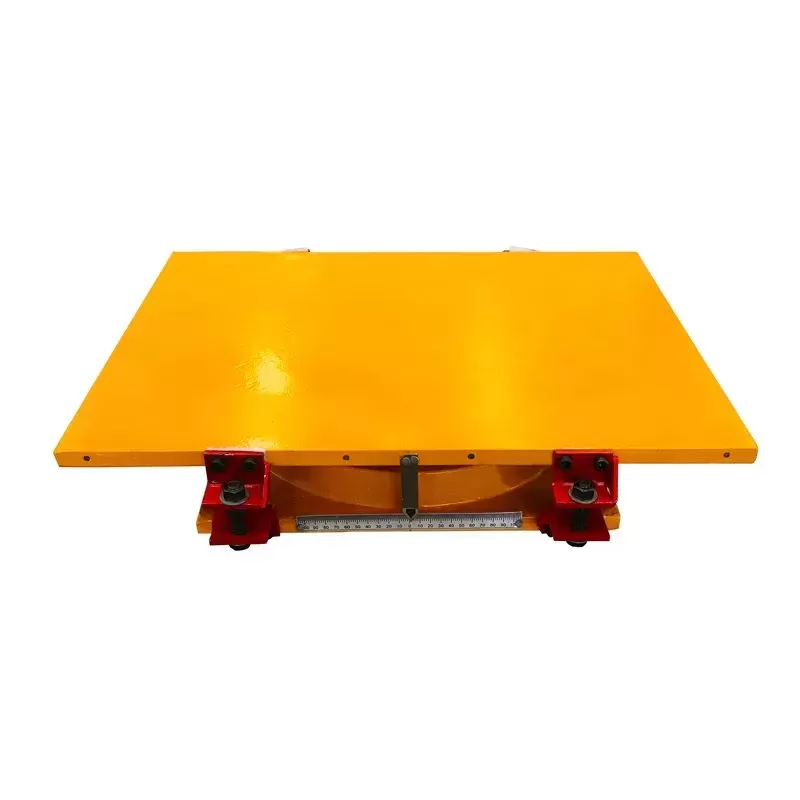
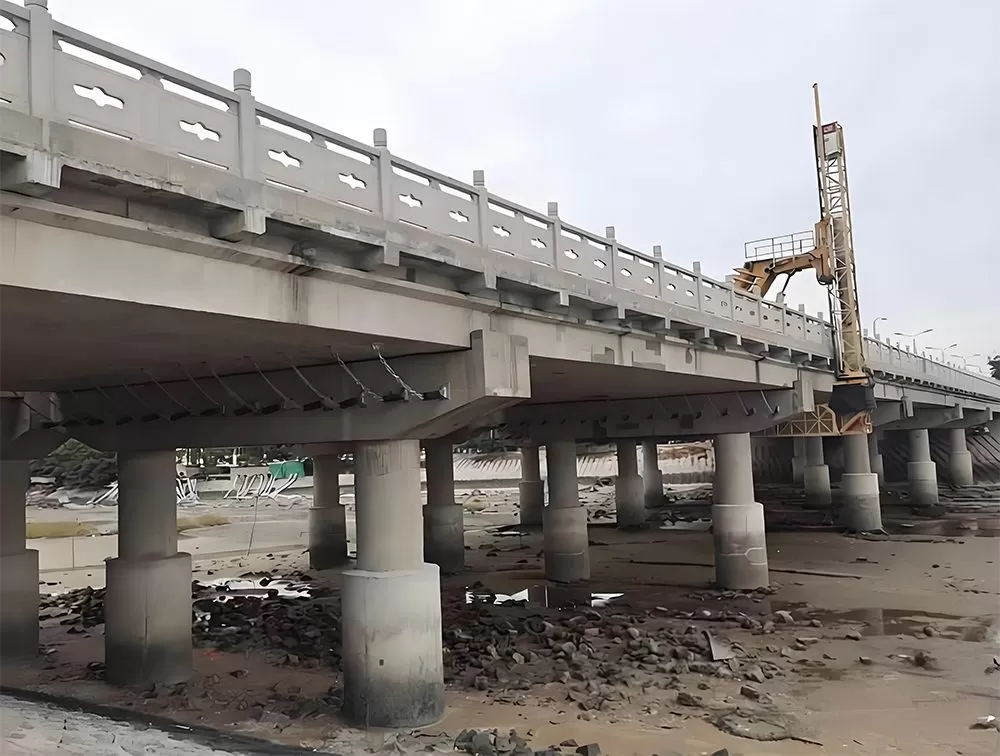
Large-scale civil infrastructure projects, such as highway viaducts, high-speed railway bridges, and heavy industrial facilities, must accommodate structural displacements caused by temperature variations, concrete shrinkage, creep, and seismic events. Without appropriate structural interfaces, these natural movements generate severe internal stresses that can compromise the structural integrity of the entire system. Designing structural connections that permit controlled movement while supporting immense vertical loads is a primary challenge in modern civil engineering.
The pot bearing is a highly reliable component developed to resolve these load transmission and rotational challenges. This mechanical assembly uses a confined elastomeric pad within a rigid steel cylinder to transmit high vertical loads while allowing multi-axial rotation. By combining structural steel and elastomeric components, these bearings offer a compact design with a high load-bearing capacity, making them suitable for long-span structures and complex bridge geometries.
The Mechanical Principle of the Confined Elastomer
The operational efficiency of a pot bearing is based on the physical behavior of elastomer materials under high pressure. When natural rubber or chloroprene is confined within a rigid steel cylinder, its mechanical properties change. Under triaxial compression, the elastomer behaves like a high-viscosity, incompressible fluid. This characteristic allows the elastomer to transmit massive vertical loads uniformly across the entire base of the steel pot while allowing rotational displacement without structural distress.
During rotation, the piston presses down on one side of the elastomeric pad. Because the elastomer is completely enclosed within the steel pot, it deforms shear-wise and flows internally to accommodate the tilt of the piston. Once the rotational force is removed, the hydrostatic pressure within the pad redistributes, returning the bearing to its neutral state. This mechanism separates the vertical load-bearing function from the rotational function, allowing engineers to design compact support systems for projects with restricted spatial envelopes.
Anatomy of a High-Performance Pot Bearing
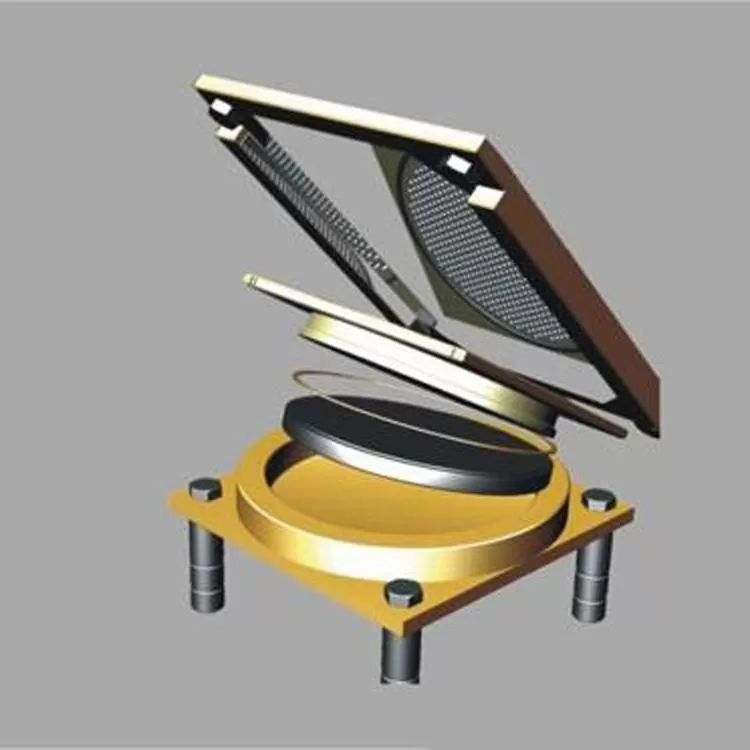
A standard pot bearing consists of several precisely machined components that work together to manage structural loads and movements. The quality of each component directly influences the long-term durability of the assembly. [KINGWORK] structural bearings are manufactured with high-grade materials and strict tolerances to meet international design requirements.
The Steel Pot: The base plate of the bearing is machined from a solid steel block, creating a shallow cylinder or "pot." This component contains the elastomeric pad and resists the lateral forces generated by the hydrostatic pressure of the compressed rubber.
The Piston: A rigid steel plate that fits into the pot cavity. The piston transmits the vertical load from the superstructure to the elastomeric pad and seals the top of the pot to prevent the elastomer from escaping under load.
The Elastomeric Pad: A vulcanized disc made from natural rubber or chloroprene. The pad is lubricated with special silicone grease to minimize internal friction and wear during rotational cycles.
The Sealing Ring System: Internal pressure inside the pot can exceed 30 MPa under maximum load. To prevent the elastomer from extruding through the clearance gap between the piston and the pot wall, multiple brass, POM, or stainless steel sealing rings are installed in recesses around the top perimeter of the elastomeric pad.
The Sliding Assembly: For bearings designed to allow horizontal translation, a polished stainless steel sheet is welded to the upper plate, which slides against a polytetrafluoroethylene (PTFE) or ultra-high-molecular-weight polyethylene (UHMWPE) disc recessed into the top of the piston.
Structural Configurations for Diverse Movement Requirements
Different parts of a bridge or building structure experience different movement patterns. To address these variations, structural bearing systems are designed in three primary configurations, each serving a specific kinematic purpose.
Fixed Pot Bearings
In a fixed structural configuration, the bearing allows rotational movement in any horizontal axis but restricts translation in all directions. The piston is securely contained within the pot walls, and the entire assembly is anchored to the substructure and superstructure. This configuration acts as a restraint point, transferring longitudinal and transverse horizontal forces, such as wind, braking, and centrifugal forces, down to the bridge piers.
Guided Sliding Pot Bearings
When a structure must expand in one direction while remaining stable in the perpendicular direction, guided sliding bearings are used. These assemblies feature a sliding plate combined with physical guide bars or a central keyway. The guide bars restrict movement along one horizontal axis while allowing free movement along the other, which is useful for curved bridges or long-span viaducts where lateral thermal movement must be controlled.
Free Sliding Pot Bearings
For columns or piers that must accommodate displacement in both longitudinal and transverse directions, free sliding bearings are specified. This configuration features a flat PTFE sliding surface sliding against a wide stainless steel sheet, allowing unrestricted horizontal movement in all horizontal directions. The internal elastomer continues to handle structural rotation, separating rotation from horizontal translation.
Addressing Structural Degradation and Engineering Pain Points
Despite their durability, structural bearings can experience degradation over decades of service. Identifying potential failure modes is important for maintaining infrastructure. [KINGWORK] addresses these engineering challenges through material selection and precision manufacturing.
One common issue is elastomer extrusion, which occurs when sealing rings wear down or are improperly installed. When the elastomer escapes through the gap between the piston and the pot, the bearing loses its hydrostatic pressure, leading to uneven load distribution, structural tilting, and concrete cracking at the support zone. Using multi-layered brass sealing rings with stepped joints provides a reliable seal even under high rotational angles.
Another issue is the deterioration of the sliding surface. Dirt and moisture ingress can scratch the polished stainless steel sliding plate, increasing the friction coefficient. This increased friction translates to higher horizontal forces on the bridge piers, which can cause cracking and structural fatigue. To prevent this, protective rubber dust skirts are installed around the sliding interfaces, and grease-dimpled PTFE plates are used to ensure continuous lubrication.
Corrosion is also a major factor in harsh marine or industrial environments. Standard paint systems can peel, exposing the steel components to moisture and salt. Applying thermal sprayed zinc-aluminum coatings (metallization) or multi-coat epoxy paint systems compliant with ISO 12944 C5-M specifications provides long-term protection against atmospheric corrosion.
Engineering Standards and Quality Assurance Protocols
Designing and manufacturing structural bearings requires strict adherence to international engineering standards. These codes define the material properties, manufacturing tolerances, design calculations, and testing procedures required for structural components.
EN 1337-5 (European Standard): This standard specifies the design requirements, materials, and testing protocols for pot bearings used in bridges and general structures. It governs parameters like allowable design pressures, piston clearances, and wear testing.
AASHTO LRFD Bridge Design Specifications: Widely used in North America, this standard defines load and resistance factors, serviceability limits, and testing methods for elastomeric and pot bearing systems.
BS 5400-9 (British Standard): Outlines the code of practice for design and materials of bridge bearings, detailing requirements for testing under extreme structural rotations and vertical loads.
Quality control during manufacturing is necessary to ensure compliance with these codes. Raw steel plates undergo ultrasonic testing to detect internal laminations or defects. Welding of stainless steel sliding sheets to backing plates requires continuous welding processes to prevent warping. After assembly, representative samples undergo compression and rotational testing to verify their structural performance under simulated field conditions.
Guidelines for Field Installation and Inspection
The long-term performance of a pot bearing depends on correct installation. Even small alignment errors during installation can lead to high localized stresses and premature component failure.
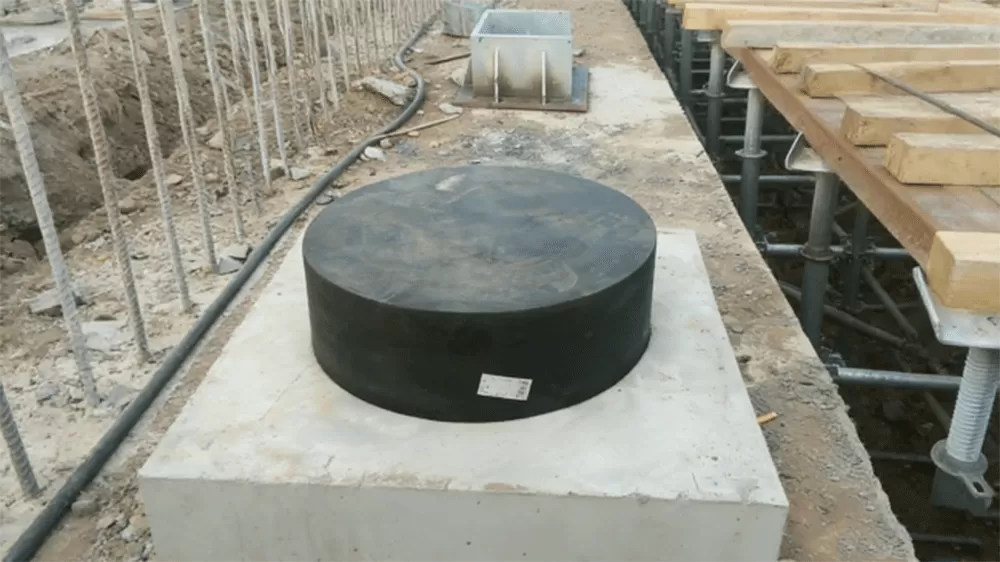
Prior to installation, the concrete pedestal must be level and cured to the required compressive strength. Epoxy or non-shrink cementitious grout is typically used to create a level bedding pad beneath the bearing. During installation, the bearing must be aligned with the bridge deck's longitudinal axis. Temporary shipping bolts or transit straps keep the bearing components aligned during transport and concrete placement; these straps must be removed once the superstructure is cast and the bearing is secured to allow structural movement.
Regular maintenance inspections are key to extending the service life of these components. Inspectors should check for: 1. Cracking or deformation of the concrete pedestals. 2. Accumulation of dust, salt, or debris near sliding surfaces. 3. Tears or damage to the protective dust skirts. 4. Correct movement alignment relative to current ambient temperatures. 5. Signs of corrosion on steel parts or grease leaks around the piston base.
Structural Parameters for Project Engineering
Selecting the correct bearing assembly for a project requires evaluating several structural parameters. Consulting engineers must provide detailed load and movement combinations to ensure the chosen design meets the project requirements. [KINGWORK] engineers work closely with design firms to analyze these variables and manufacture customized bearing solutions.
The primary design inputs include: - Maximum and minimum vertical design loads (Ultimate Limit State and Serviceability Limit State). - Co-existing horizontal loads in longitudinal and transverse directions. - Maximum structural rotation about transverse and longitudinal axes (typically expressed in radians, up to 0.03 rad). - Total displacement capacity required for sliding configurations (e.g., +/- 100 mm). - Environmental exposure conditions, including temperature ranges and salt exposure. - Installation method and anchoring preferences (e.g., anchor bolts or steel socket plates).
Structural Engineering Inquiry for Global Projects
Selecting and designing structural bearings requires precise coordination between structural engineers and manufacturers. [KINGWORK] provides engineering support, custom design services, and manufacturing capabilities to deliver compliant pot bearing systems for complex infrastructure projects worldwide.
For custom load calculations, technical drawings, or material certificates, please contact our engineering department. Our team can assist in choosing the right configurations, materials, and anchor designs to match your project specifications.
Please send your project specifications, drawing files, and design code requirements to our technical sales team to receive a detailed engineering proposal and quotation.
Frequently Asked Questions
Q1: What is the maximum load capacity of a standard pot bearing?
A1: Standard designs can support vertical loads ranging from 1,000 kN to over 50,000 kN. For specialized high-load applications, [KINGWORK] can design and manufacture custom assemblies to accommodate even higher vertical forces based on the project's structural requirements.
Q2: Why are brass sealing rings used in pot bearing assemblies?
A2: Brass sealing rings are used because of their ductility and low friction against steel. Under high pressure, the brass ring deforms slightly to seal the clearance gap between the steel piston and the pot wall, preventing the elastomeric pad from extruding under heavy structural loads.
Q3: How does temperature affect the choice of sliding materials in these bearings?
A3: Standard PTFE sliding sheets work well in temperate and warm climates. However, in regions with cold winters where temperatures fall below -35°C, standard PTFE can become brittle and experience increased friction. In these environments, UHMWPE is often specified because it maintains impact strength and low friction at temperatures as low as -50°C.
Q4: What is the typical service life of a pot bearing on a highway bridge?
A4: A properly designed, manufactured, and installed assembly has a service life of 30 to 50 years or more. This lifespan depends on regular maintenance, the use of high-durability corrosion coatings, and ensuring the sliding interfaces are kept clean and free of debris.
Q5: Can pot bearings accommodate seismic forces?
A5: Fixed and guided configurations can transmit horizontal seismic shear loads from the superstructure to the piers. However, for high-seismic zones, they are typically paired with dampening systems, or the bearing assemblies are designed with shear pins that shear off at a predetermined force to allow the bridge to slide and dissipate energy.
![Bridge Joint Types: The Complete Engineering Guide [2026 Edition]](https://www.kwbridgebearing.com/storage/non_theme/202606/024.webp)