
How Do Elastomeric Bearing Pads in Bridges Accommodate Thermal and Structural Movement?
Article content and related resources
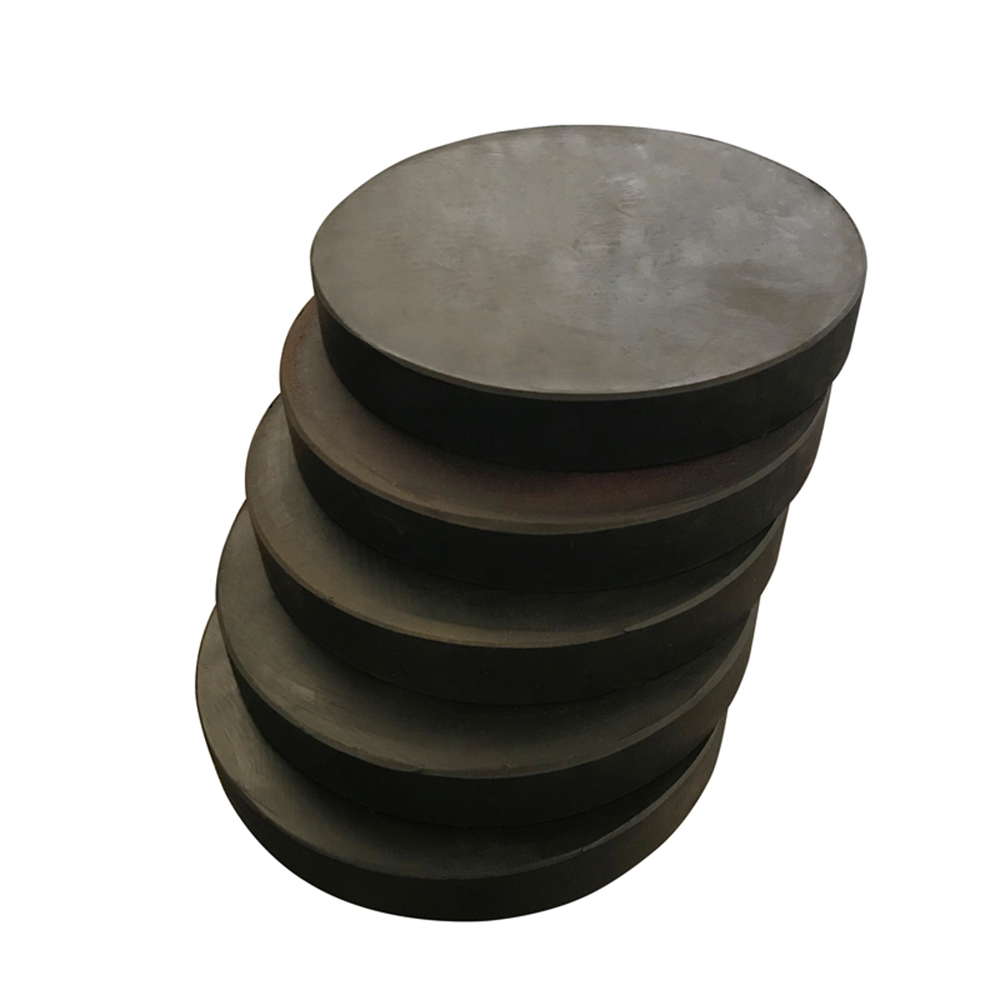
Bridge structures are subjected to continuous dynamic loads, thermal fluctuations, concrete shrinkage, and seismic forces. These movements require a structural interface that can accommodate horizontal translation, vertical load transfer, and angular rotation. Within civil engineering, the deployment of resilient elastomers serves as a primary method to manage these structural demands. The bearing pads bridge components utilize must perform reliably over decades, balancing high compressive stiffness with low shear resistance to prevent structural distress in the piers and abutments.
For decades, structural designers have focused on optimizing the interface between the bridge superstructure and substructure. Manufacturers such as KINGWORK design and manufacture these elastomeric components to meet stringent design criteria, ensuring that structural displacements do not induce excessive stress concentrations. This analysis examines the material science, mechanical design parameters, and physical performance of elastomer-based bearing systems used in modern bridge design.
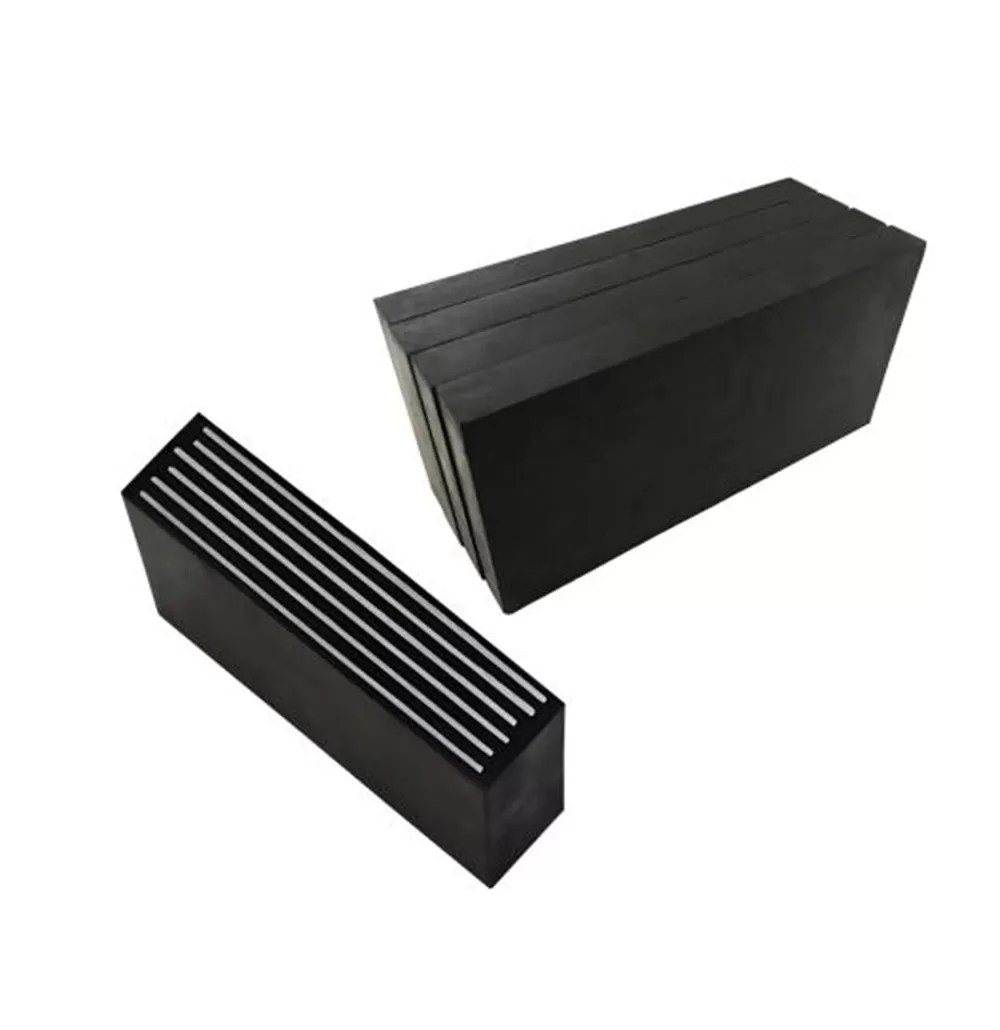
1. Mechanics of Load Transfer and Displacement Accommodation
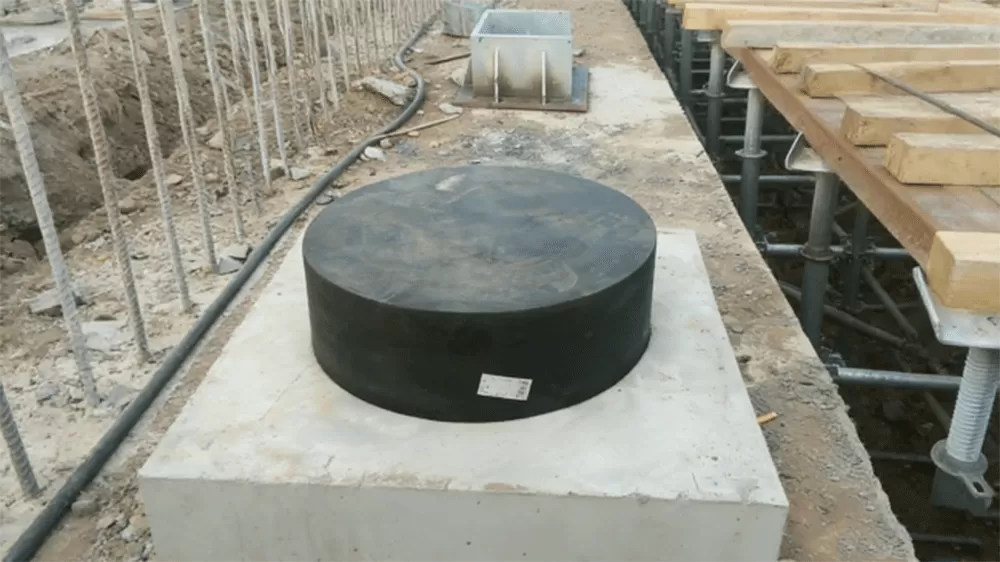
The primary function of bearing pads bridge systems is to act as a dynamic link between the bridge deck and its supporting piers. This connection must handle three primary movements:
Vertical Loads: Supporting the dead load of the superstructure and the transient live loads of traffic.
Horizontal Translation: Accommodating the expansion and contraction of girders caused by temperature variations, concrete creep, and shrinkage.
Angular Rotation: Allowing for the flexing of girders under live load bending without causing point-loading on the concrete supports.
Under vertical compression, elastomer compounds experience lateral expansion. If an unreinforced elastomeric pad is compressed, it bulges significantly at the sides, which leads to large vertical deflections. To control this lateral deformation, internal steel reinforcement plates are integrated into the elastomer matrix, transforming a basic pad into a laminated assembly.
When horizontal forces act on the bridge deck, the elastomer accommodates this movement through shear deformation. The shear strain within the pad is directly proportional to the displacement and inversely proportional to the total thickness of the elastomer. By adjusting the total elastomer thickness, structural designers can configure the shear stiffness to match the calculated thermal expansion values of the bridge span.
2. Material Science: Compounding and Durability
The performance of bearing pads bridge units depends on the formulation of the polymer matrix. The two primary elastomeric materials utilized in civil engineering are natural rubber (polyisoprene) and neoprene (polychloroprene). Both materials possess distinct physical profiles that suit different environmental conditions.
Natural Rubber (Polyisoprene)
Natural rubber is highly resilient and performs exceptionally well in low-temperature environments. It resists crystallization under extreme cold, maintaining its elasticity and preventing sudden increases in shear stiffness. However, natural rubber is susceptible to degradation from atmospheric ozone and ultraviolet radiation. To mitigate this degradation, protective chemical anti-ozonants are integrated into the formulation, and outer protective layers of rubber are molded over the steel shims during vulcanization.
Neoprene (Polychloroprene)
Neoprene is a synthetic elastomer characterized by high resistance to ozone, oil, weathering, and environmental aging. It offers moderate flame resistance and maintains stable mechanical characteristics over a broad temperature range. In moderate climates, neoprene is often preferred due to its inherent resistance to environmental degradation. In colder regions, specific low-temperature neoprene grades must be specified to prevent the material from stiffening and transmitting elevated horizontal shear forces to the bridge substructure.
The mechanical properties of these elastomers are quantified by shore hardness and shear modulus. Typically, a durometer hardness rating of 50 to 60 Shore A is specified for bridge applications, corresponding to a shear modulus ($G$) ranging between 0.8 MPa and 1.2 MPa. This range provides a balanced profile: high vertical load capacity alongside sufficient horizontal flexibility.
3. Lamination Dynamics and the Shape Factor
Laminated bearing pads bridge designs incorporate thin steel plates alternating with elastomer layers, bonded under high pressure and temperature during the vulcanization process. This configuration increases the vertical stiffness of the pad by a factor of one hundred or more compared to an unreinforced pad of the same dimensions, while leaving the horizontal shear stiffness unchanged.
The design metric that defines this performance is the shape factor ($S$), which is calculated as the ratio of the plan area of one elastomer layer to the perimeter area free to bulge:
$$S = \frac{L \times W}{2 \cdot t \cdot (L + W)}$$
Where:
L: Length of the bearing pad
W: Width of the bearing pad
t: Thickness of an individual elastomer layer
A higher shape factor indicates a thinner elastomer layer relative to its plan area. Consequently, the layer experiences less lateral bulging under compression, yielding a higher compressive modulus. The steel shims, typically made from carbon steel conforming to ASTM A1011 or equivalent structural standards, must be sufficiently thick to resist the tensile forces generated by the laterally expanding elastomer. The integrity of the vulcanized bond between the elastomer and the steel plates is foundational; any delamination can lead to uneven stress distribution and premature structural degradation.
4. Comparison of Bearing Pad Configurations
Different bridge configurations require distinct structural support systems. The table below compares common elastomer-based bearing designs used in highway and railway infrastructure.
| Bearing Type | Reinforcement | Movement Capability | Primary Application |
|---|---|---|---|
| Plain Elastomeric Pad (PEP) | None (pure elastomer) | Minimal translation and rotation | Short-span bridges, precast concrete slab supports, low-load structures. |
| Laminated Elastomeric Bearing | Internal steel plates (shims) | Moderate translation, multi-directional rotation | Medium-span highway bridges, precast concrete girder systems, overpasses. |
| PTFE Sliding Elastomeric Bearing | Steel plates with a PTFE top sheet sliding on stainless steel | High translation, moderate rotation | Long-span bridges, continuous steel girder bridges with significant thermal displacement. |
| Pot Bearing | Elastomer confined within a steel piston/cylinder assembly | High load capacity, multi-directional rotation, optional sliding | Heavy railway bridges, major highway interchanges, high vertical load structures. |
Selecting the appropriate configuration requires balancing cost, expected displacement, and vertical load limits. For standard overpasses, laminated bearing pads bridge systems provide a highly reliable, maintenance-free solution. For major long-span bridges, combining laminated elastomers with low-friction sliding surfaces such as PTFE allows for much greater displacement without increasing the physical profile of the bearing.
5. Mitigation of Common Structural Performance Anomalies
To ensure long service lives, bridge engineers must design for common structural and environmental challenges. Understanding these degradation pathways helps in formulating preventative measures during the design and manufacturing stages.
Slippage and Migration
Unanchored bearing pads bridge installations rely on friction between the elastomer and the concrete or steel contact surfaces to remain in position. If the vertical dead load is too low, or if the coefficient of friction is reduced by oil or dirt, the pad can migrate out of position over time under cyclic shear movements. To mitigate this migration, engineers can specify external steel plates with shear dowels, or use sole plates vulcanized directly to the bearing pad to secure the assembly to the structure.
Edge Delamination and Cracking
Delamination between the internal steel shims and the elastomer layers typically occurs due to poor manufacturing preparation or extreme cyclic shear stress. If the steel shims are not adequately cleaned, blasted, and primed with high-performance bonding agents prior to vulcanization, the bond may fail. KINGWORK employs automated surface treatment systems and precise temperature control during curing to ensure the bond strength exceeds the tear strength of the elastomer itself, preventing localized peeling and splitting at the edges.
Excessive Shear Strain and Roll-Over
If a bridge span undergoes thermal movement beyond the design limits, the bearing pad will experience excessive shear strain. Under extreme strain, the top and bottom edges of the pad can lift off their supporting surfaces, a phenomenon known as roll-over. This behavior concentrates compressive stress on a smaller surface area, accelerating material fatigue. Accurate forecasting of thermal expansion and proper selection of overall elastomer thickness are necessary to prevent roll-over.
6. Quality Inspection Standards and Testing Methodologies
Bridge components must conform to structural design codes such as AASHTO M251, EN 1337-3, or ISO 6446 to ensure field reliability. These standards require a rigorous testing regimen for both the raw elastomeric materials and the finished bearing assemblies.
Standard quality evaluation procedures include:
Compression Proof Load Testing: The completed bearing pad is loaded to 150% of its maximum design load. The pad is inspected while loaded for irregular bulging patterns, surface cracks, or signs of internal bond failure.
Shear Modulus Verification: Finished bearings are subjected to shear deformation in a specialized test rig to calculate the actual shear modulus ($G$). This ensures the physical stiffness of the elastomer matches the design values used in the bridge structural model.
Low-Temperature Crystallization Testing: Samples are exposed to freezing temperatures for extended durations to measure any increase in stiffness, ensuring the bearing will perform in cold winter conditions.
Bond Strength (Peel) Testing: Strips of rubber are peeled from the internal steel plates to verify that the adhesive bond meets the required peel force thresholds.
Continuous quality monitoring during the manufacturing process ensures that structural engineers can integrate these components with confidence that they will perform predictably throughout the lifetime of the bridge structure.
7. B2B Procurement and Engineering Cooperation
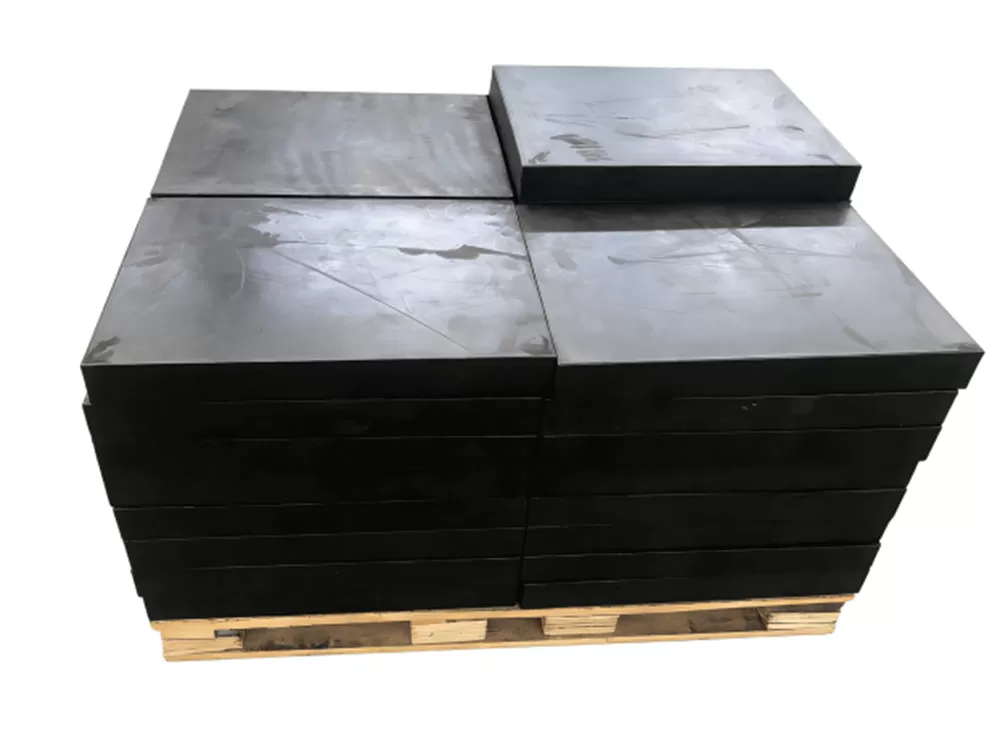
Procuring structural components for large-scale infrastructure projects requires deep coordination between engineering designers, main contractors, and manufacturing specialists. Because every bridge features unique structural loads, span lengths, and environmental variables, off-the-shelf solutions are rarely sufficient. High-performance bearing pads bridge systems must be tailored to the exact specifications of each project.
To assist in the design and production phase, procurement and engineering teams should compile the following data points:
Maximum dead, live, and wind vertical forces at serviceability and ultimate limit states.
Calculated horizontal movements in both longitudinal and transverse directions.
Required rotational capability around the horizontal axes.
Dimensional limitations of the concrete pedestals and girder flanges.
Environmental exposure conditions, including minimum and maximum regional design temperatures.
The engineering department at KINGWORK collaborates closely with project consultants and contractors to review design schedules, perform structural capacity checks, and recommend optimized compounding and layer configurations. If your project requires custom elastomeric bearings, laminated assemblies, or sliding PTFE configurations, please contact our engineering sales team to submit your specifications, schedule a design review, or request a detailed production estimate.
8. Frequently Asked Questions
Q1: What is the estimated operational lifespan of a laminated elastomeric bearing pad on a bridge?
A1: High-quality elastomeric bearing pads designed and manufactured in compliance with international standards typically have a service life of 30 to 50 years. Their longevity is influenced by the environmental exposure, structural loading conditions, and the quality of the vulcanization bond between the elastomer and the steel shims.
Q2: How does temperature affect the performance of neoprene bearing pads bridge systems?
A2: Neoprene stiffens as temperatures drop, with a marked increase in shear modulus under extreme cold. In regions where temperatures fall below -20 degrees Celsius, standard neoprene can undergo crystallization. In these environments, specialized low-temperature neoprene grades or natural rubber compounds must be specified to maintain adequate flexibility and protect structural supports.
Q3: Why are steel plates vulcanized inside elastomeric bearing pads?
A3: The steel reinforcing plates (shims) restrict the lateral bulging of the elastomer under vertical compression. This constraint increases the vertical compressive stiffness of the bearing pad, allowing it to support high vertical loads with minimal deflection, while preserving the low shear stiffness required to accommodate horizontal structural movement.
Q4: What causes a bridge bearing pad to slip or shift out of position?
A4: Shifting, or migration, is typically caused by insufficient dead load relative to the horizontal shear force, or by contamination (such as grease, oil, or concrete dust) at the contact surfaces. If the sliding force exceeds the static friction force at the interface, the pad can migrate over time. This can be resolved by using vulcanized sole plates or physical anchor pins.
Q5: How do PTFE sliding bearings differ from standard laminated elastomeric bearings?
A5: Standard laminated elastomeric bearings rely entirely on the shear deformation of the elastomer to accommodate horizontal translation, which limits their displacement capacity. PTFE sliding bearings incorporate a low-friction polytetrafluoroethylene sheet sliding against a polished stainless steel plate, allowing for much larger horizontal movements without increasing the thickness of the elastomer.
![Bridge Joint Types: The Complete Engineering Guide [2026 Edition]](https://www.kwbridgebearing.com/storage/non_theme/202606/024.webp)