
How Do Different Types of Bearings for Bridges Manage Thermal Expansion?
Article content and related resources
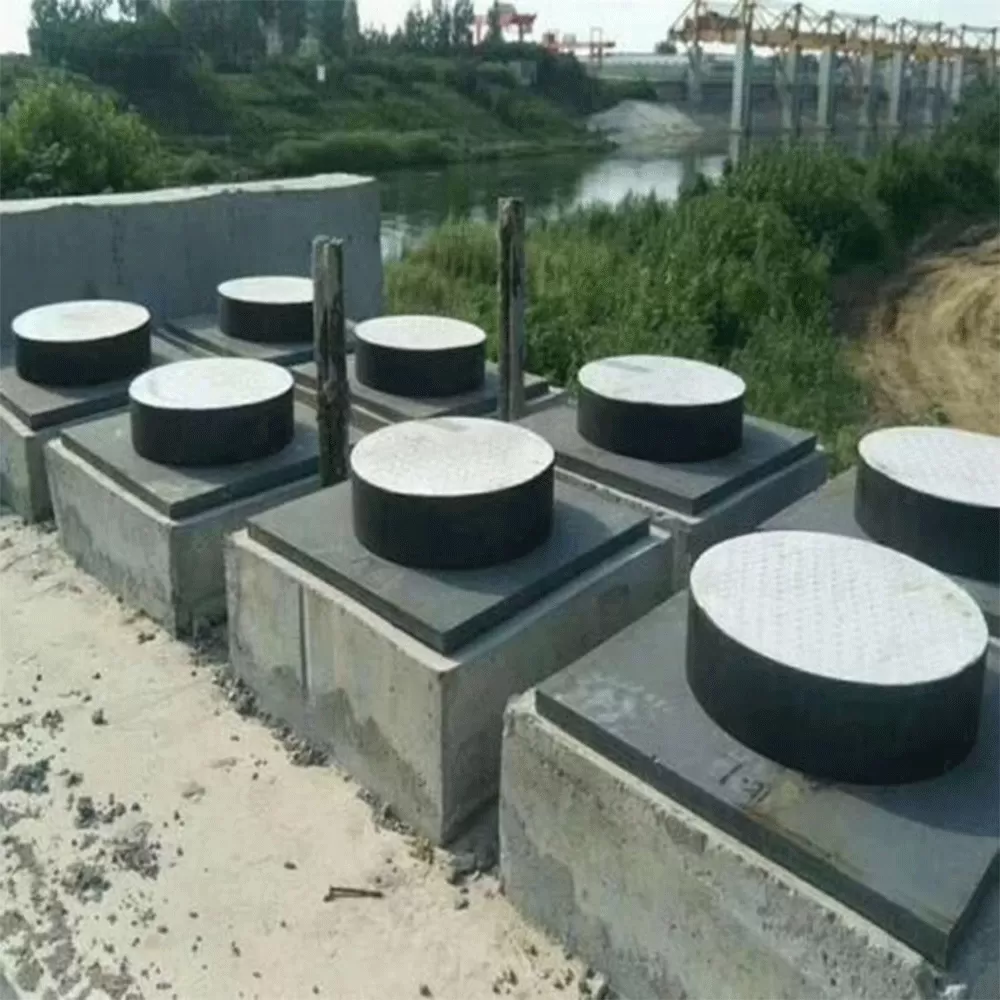
Bridge structures are subjected to continuous dynamic forces and environmental fluctuations. Temperature variations cause continuous thermal expansion and contraction. Live loads from heavy traffic introduce structural deflections, rotations, and shear forces. Without a reliable mechanism to transfer these forces from the superstructure down to the substructure, internal stresses would accumulate, leading to localized structural failure. Incorporating appropriate types of bearings for bridges allows engineers to facilitate controlled movement while safely transmitting vertical and horizontal loads to the piers and abutments.
Structural designers must evaluate the movement requirements, load-bearing capacities, and environmental exposure of a project before specifying structural components. Choosing the incorrect system can result in premature concrete spalling, deck cracking, or bearing failure. This comprehensive analysis evaluates the primary types of bearings for bridges, their specific engineering properties, and their applications in modern infrastructure development.
Structural Dynamics and the Function of Bridge Bearings
Before examining specific component designs, it is necessary to analyze the forces that act upon a bridge deck. A bridge is not a static object; it is a dynamic system that responds to several key factors:
Thermal Expansion and Contraction: Daily and seasonal temperature changes cause concrete and steel girders to expand and contract. This linear movement must be accommodated to prevent compressive buckling or tensile cracking.
Live Load Deflection: When heavy vehicles cross a span, the deck deflects downward. This deflection causes rotation at the support points, requiring bearings that can accommodate angular movement.
Seismic and Wind Loads: Lateral forces from wind pressure or ground acceleration require bearings to either resist lateral displacement or dissipate energy through controlled deformation.
Concrete Creep and Shrinkage: Over decades, concrete elements undergo long-term deformations that alter the original positioning of the structural elements.
By installing specialized structural interfaces, these complex multi-directional movements are controlled. The bearing acts as a mechanical hinge and slider, isolating the substructure from excessive bending moments while ensuring a uniform distribution of vertical dead and live loads.
Primary Types of Bearings for Bridges
Modern structural engineering utilizes several distinct categories of bearings. Each design offers specific advantages based on load capacity, rotational flexibility, and displacement limits. Industry manufacturers, such as KINGWORK, supply these components to meet global standards including AASHTO LRFD and EN 1337.
1. Elastomeric Bearings
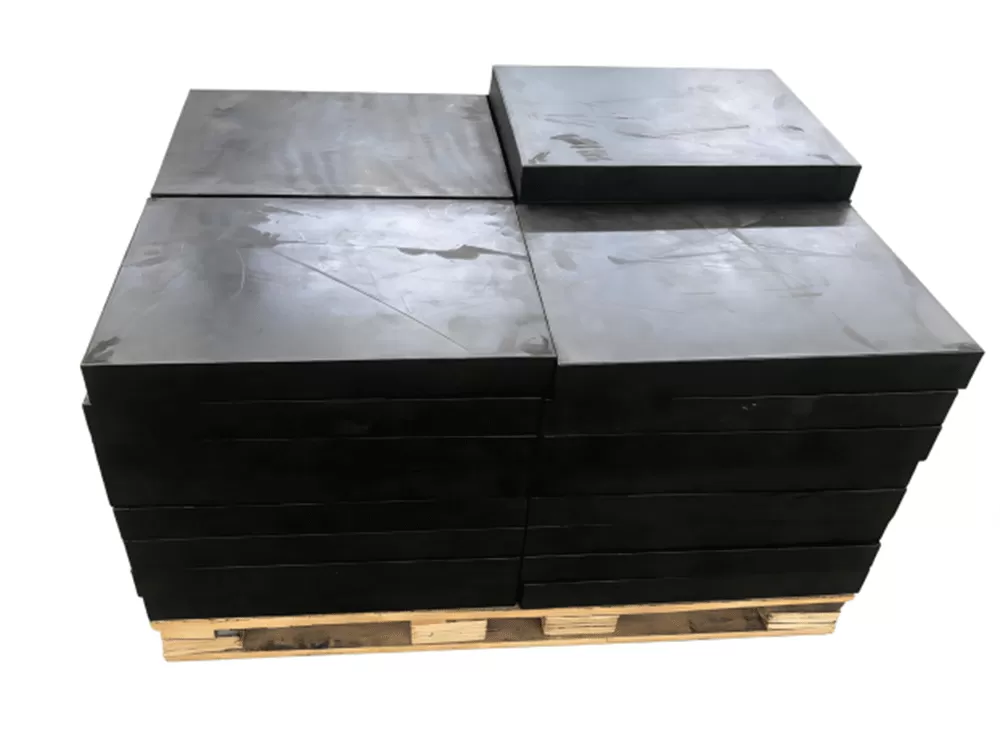
Elastomeric bearing pads are widely specified due to their mechanical simplicity and cost-efficiency. They are broadly divided into plain elastomeric pads and laminated (steel-reinforced) elastomeric bearings.
Plain elastomeric pads are composed of solid natural rubber or chloroprene (neoprene). They are typically utilized in shorter spans with lower load requirements. For larger spans, steel-reinforced laminated elastomeric bearings are required. These consist of alternating layers of elastomer and structural steel plates, vulcanized together under high pressure. The internal steel shims restrict the lateral bulging of the elastomer under vertical loads, significantly increasing the compressive stiffness while allowing for smooth shear deformation to accommodate horizontal movements.
For seismic applications, Lead Rubber Bearings (LRB) are utilized. These components incorporate a central lead core within a laminated elastomeric bearing. Under seismic excitation, the lead plug undergoes plastic deformation, absorbing and dissipating energy, which isolates the bridge deck from the destructive forces of ground acceleration.
2. Pot Bearings
When vertical loads exceed the capacity of standard elastomeric pads, pot bearings are frequently selected. A pot bearing consists of a shallow steel cylinder (the pot) containing a fully enclosed elastomeric disc. A steel piston fits closely into the pot, compressing the elastomer.
Under high compressive pressure, the confined elastomer behaves like a high-density fluid, distributing the vertical load uniformly across the base plate. Rotation is accommodated through the deformation of the elastomeric disc inside the sealed chamber. To prevent the elastomer from extruding through the clearance between the piston and the pot wall, specialized brass or carbon-filled PTFE sealing rings are installed.
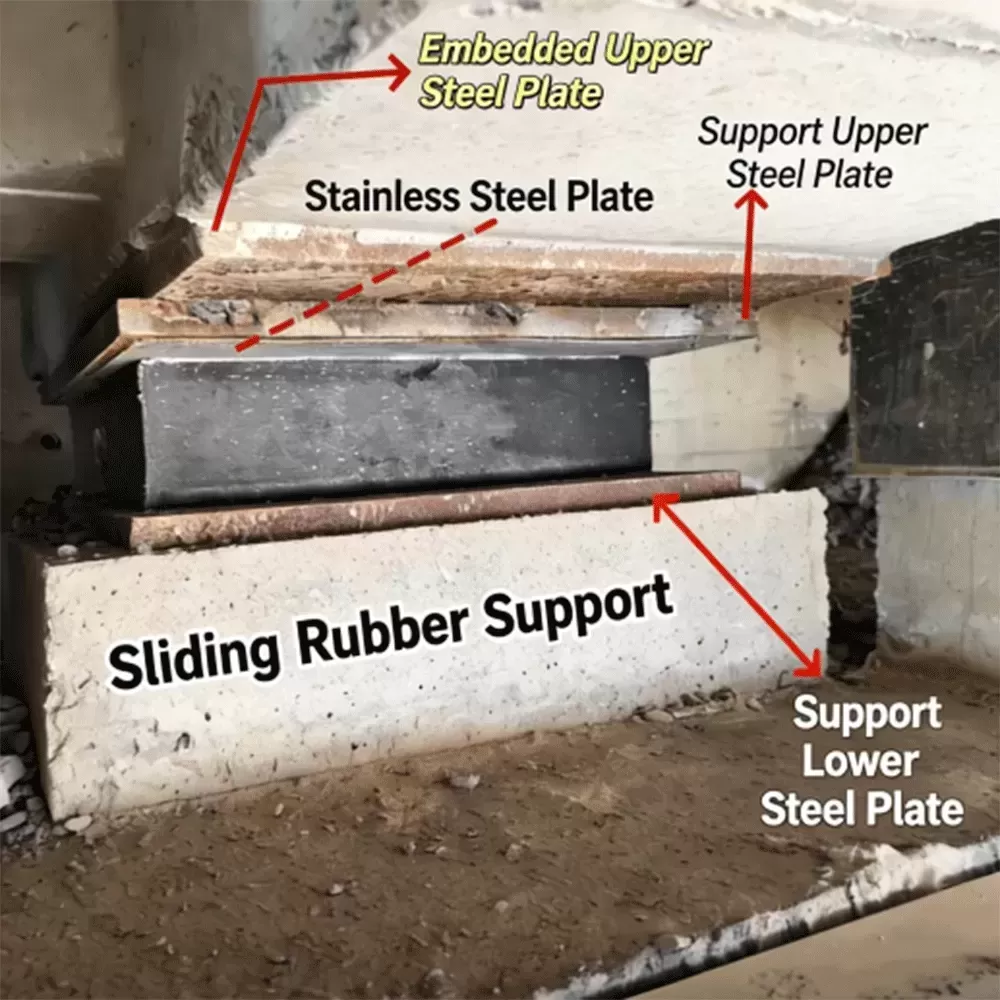
To facilitate horizontal movement, a sliding arrangement consisting of a polytetrafluoroethylene (PTFE) sheet mating with a highly polished stainless steel plate is integrated on top of the piston. This configuration is known as a guided or free-sliding pot bearing, offering low-friction translation under massive structural loads.
3. Spherical Bearings
For structures requiring high rotational capacity in multiple directions, spherical bearings represent the industry standard. These components do not rely on rubber components to accommodate rotation. Instead, they utilize mating curved steel surfaces.
A typical spherical bearing features a concave steel base plate lined with a low-friction sliding material, such as PTFE or modified ultra-high-molecular-weight polyethylene (UHMWPE), which interfaces with a convex steel piston. The sliding action between these curved surfaces allows for high-degree angular rotation about any horizontal axis. Because they contain no elastomeric parts, spherical bearings are highly resistant to material aging, UV exposure, and ozone degradation, making them suitable for long-life infrastructure projects in extreme climates.
4. Disc Bearings
Disc bearings accommodate rotation through the deformation of a high-strength, polyether urethane structural disc. A shear restriction device, typically a central steel pin or ring, prevents lateral movement while allowing the disc to deform under vertical and rotational forces.
The polyurethane material utilized in disc bearings offers higher resistance to chemical exposure and temperature extremes than standard natural rubber. This type of bearing provides a lower profile compared to pot bearings and is often specified in modern concrete highway bridges where space and vertical clearance are restricted.
5. Rocker and Roller Bearings
Rocker and roller bearings represent traditional structural solutions, commonly found in historic steel truss bridges. Rocker bearings accommodate rotation through a curved steel rocker resting on a flat masonry plate. Roller bearings facilitate horizontal expansion by rolling on a series of cylindrical steel bars.
While effective for long-span steel bridges built in the mid-to-late 20th century, these mechanical bearings are highly susceptible to dust accumulation, moisture retention, and corrosion. Over time, lack of maintenance can cause roller configurations to lock up, transferring unexpected bending moments to the concrete piers. Consequently, modern infrastructure design generally favors low-maintenance elastomeric, pot, or spherical bearings, while older roller configurations are systematically replaced during rehabilitation projects.
Engineering Selection Criteria for Bridge Design
Selecting the appropriate types of bearings for bridges requires a detailed evaluation of structural and environmental parameters. Engineers must analyze several primary variables during the design phase:
The first consideration is the maximum and minimum vertical loads, including dead load, live load, and dynamic impact factors. Elastomeric bearings are typically specified for light to moderate loads, whereas pot and spherical bearings are selected for high-capacity applications such as multi-level highway interchanges and long-span rail bridges.
The second factor involves displacement and rotation demands. Longitudinal movement dictates the sliding capacity required on PTFE interfaces. Simultaneously, the rotation caused by girder deflection under live loads determines whether an elastomeric, pot, or spherical interface is needed. Spherical bearings are particularly advantageous when high rotations occur concurrently with low vertical loads, where pot bearings might experience uneven wear on their sealing rings.
Environmental durability is another decisive factor. Bridges located in coastal areas or industrial zones are exposed to airborne chlorides and corrosive gases. In such environments, the steel components of pot or spherical bearings must be protected using advanced coating systems, such as hot-dip galvanizing, zinc-rich epoxy primers, or stainless steel cladding. Elastomeric bearings used in cold climates must utilize compound formulations that resist stiffening at low temperatures, ensuring that the shear stiffness does not increase beyond design limits.
Lifespan, Durability, and Maintenance Considerations
A primary challenge in bridge engineering is managing the aging process of structural components. While a bridge structure may be designed for a service life of 75 to 100 years, structural bearings typically have a shorter design life, often ranging from 30 to 50 years. Therefore, planning for future replacement is an important aspect of bridge design.
Common failure modes of bridge bearings include:
Elastomeric Degradation: Prolonged exposure to UV radiation and ozone can cause surface cracking, while continuous compression can lead to excessive permanent deformation (creep).
PTFE Wear: In sliding bearings, the PTFE sheet can wear down over millions of movement cycles, increasing the coefficient of friction and transferring higher lateral forces to the piers.
Corrosion of Steel Plates: Damaged paint or galvanized coatings allow moisture to corrode the steel components, leading to seized sliding surfaces and structural distress.
Debris Accumulation: Road salt, dust, and debris can accumulate around the bearing seat, clogging sliding planes and accelerating wear on elastomeric materials.
To mitigate these issues, designers must ensure that bridge abutments and pier caps are designed with sufficient space to accommodate hydraulic jacks. This allows the superstructure to be lifted slightly (often only a few millimeters) to facilitate the inspection, maintenance, or complete replacement of the bearings without disrupting traffic flow. KINGWORK designs structural components with serviceability in mind, providing robust assemblies that withstand field wear and simplify routine maintenance inspections.
B2B Procurement and Manufacturing Quality
For infrastructure projects, sourcing high-performance structural components requires strict compliance with international manufacturing codes. Quality assurance starts with raw material verification. The elastomer compounds must undergo physical testing for tensile strength, elongation at break, ozone resistance, and low-temperature stiffness.
Structural steel backing plates must be free of laminations and defects, with sliding surfaces polished to a mirror finish to minimize friction. During fabrication, modern CNC machining ensures that tolerances for pot walls and pistons are maintained to prevent elastomeric extrusion. For international projects, manufacturers must provide extensive documentation, including material test certificates, welding procedure specifications, and load test reports from independent accredited laboratories.
As an established manufacturer of structural components, KINGWORK provides engineered bearing systems designed to meet project-specific load cases and displacement criteria. Our engineering team assists consultants and contractors throughout the design, drawing review, and manufacturing phases, ensuring that each delivered component complies with project specifications.
Request a Technical Consultation
Designing and selecting structural components for complex bridge projects requires specialized engineering input. If you are preparing design documentation, reviewing tender specifications, or coordinating a bridge rehabilitation project, our engineering team is available to assist. Please contact KINGWORK to submit your structural drawings, load combinations, and movement parameters. We will collaborate with your team to deliver reliable, code-compliant solutions tailored to your project requirements.
Frequently Asked Questions (FAQ)
Q1: How do environmental factors affect the performance of elastomeric bearings?
A1: Temperature fluctuations and ozone exposure affect elastomer properties. In cold regions, elastomers can undergo crystallization, which increases their shear stiffness and limits translation capacity. Conversely, high heat and UV exposure can accelerate the aging of natural rubber or neoprene, causing surface cracking and reduced elasticity over time. Specifying compounds that meet ASTM or EN standards for cold-temperature performance and ozone resistance helps mitigate these issues.
Q2: Why is the friction coefficient of PTFE sliding surfaces so important in bridge design?
A2: The coefficient of friction determines how much lateral force is transferred from the expanding bridge deck to the supporting piers. A low friction coefficient (typically under 3% under design loads) ensures minimal horizontal force transfer. If the PTFE sliding surface degrades or becomes contaminated with dirt, the friction increases, subjecting the concrete substructure to unexpected bending stresses that can cause structural damage.
Q3: What is the main difference between neoprene and natural rubber in elastomeric bearing pads?
A3: Neoprene (chloroprene) generally exhibits better resistance to oil, chemical exposure, ozone, and atmospheric aging, making it suitable for industrial or coastal areas. Natural rubber typically offers superior low-temperature flexibility and lower shear stiffness in extreme cold, reducing the risk of thermal-induced stresses on the bridge piers during winter months.
Q4: How often should different types of bearings for bridges be inspected?
A4: Routine visual inspections should be conducted every two years, with detailed inspections performed every five to six years depending on local municipal regulations. Inspectors look for signs of excessive bulging in elastomeric pads, cracks in concrete surrounding the bearing seat, corrosion on steel components, and the accumulation of dirt or debris that could restrict sliding movements.
Q5: Can pot bearings and spherical bearings handle uplift forces?
A5: Standard configurations of pot and spherical bearings are designed primarily for compressive loads. However, for structures subject to high wind uplift or seismic forces, specialized uplift restraint configurations can be designed. These modifications incorporate internal steel mechanical keys or external clamping bars that prevent vertical separation while still allowing the required rotational and horizontal movements.
![Bridge Joint Types: The Complete Engineering Guide [2026 Edition]](https://www.kwbridgebearing.com/storage/non_theme/202606/024.webp)