
Five Engineering Factors Defining High-Performance Elastomeric Pads in Infrastructure
Article content and related resources
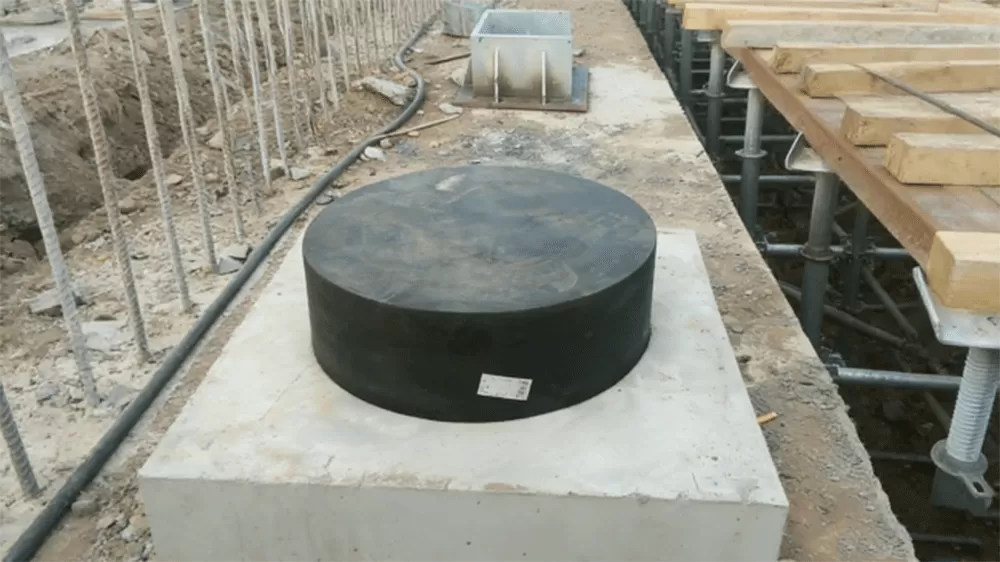
Bridge engineering demands precise management of forces generated by environmental fluctuations, traffic dynamics, and seismic events. Temperature variations, concrete creep, and shrinkage generate substantial horizontal and rotational movements within bridge decks. Left unmanaged, these displacements induce high stresses at the contact interfaces between the superstructure and substructure, leading to localized concrete spalling, cracking, and eventual structural failure. To accommodate these multi-directional movements while transferring vertical loads safely to the piers and abutments, modern design standards utilize elastomeric pads. These components act as flexible interfaces, absorbing expansion, contraction, and rotation. KINGWORK designs and supplies high-performance bearing assemblies to meet these demanding structural requirements.
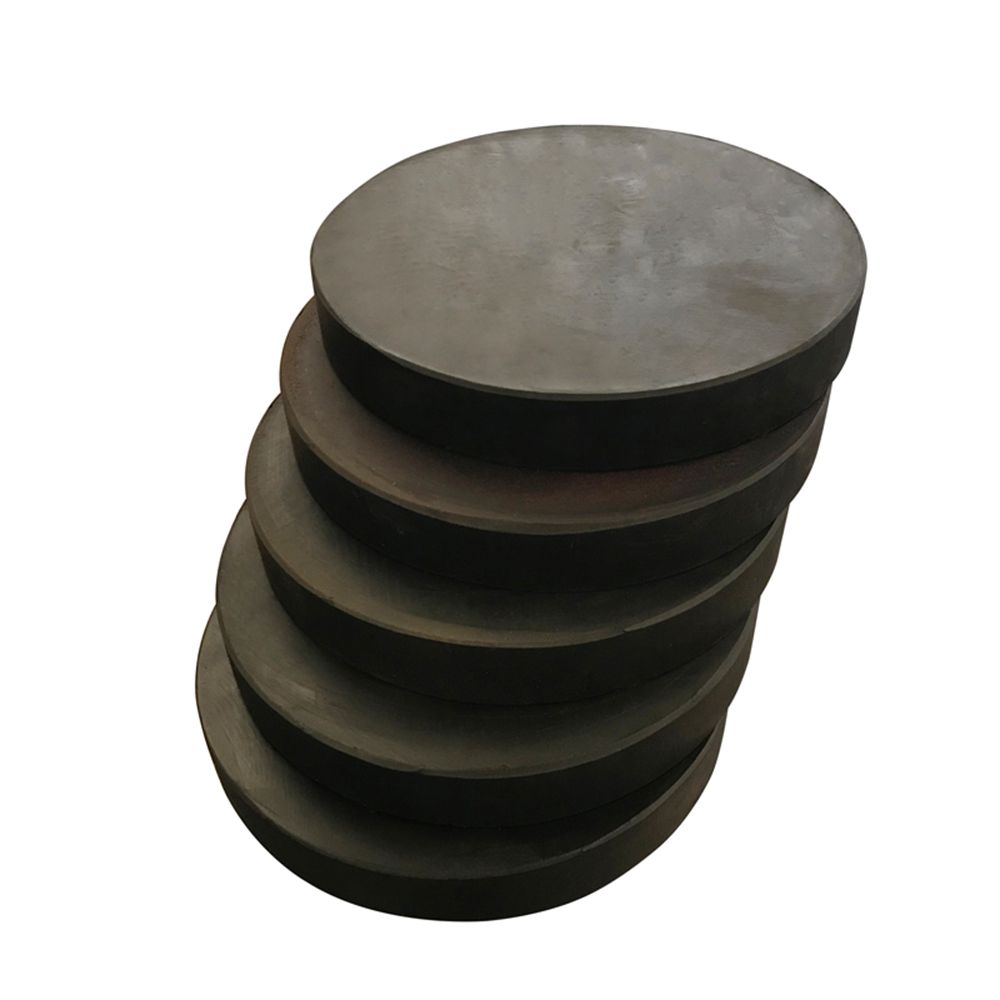
Understanding the Mechanics of Elastomeric Pads
The primary function of elastomeric pads relies on the physical properties of elastomer materials, which combine high compressive stiffness with low shear resistance. When a vertical load is applied by the weight of the bridge deck and live traffic, the pad must support this massive force with minimal vertical deflection. Conversely, when the bridge deck expands or contracts due to temperature variations, the pad must deform horizontally with relatively low resistance. This behavior minimizes the horizontal forces transmitted to the concrete piers, protecting the substructure from excessive bending moments.
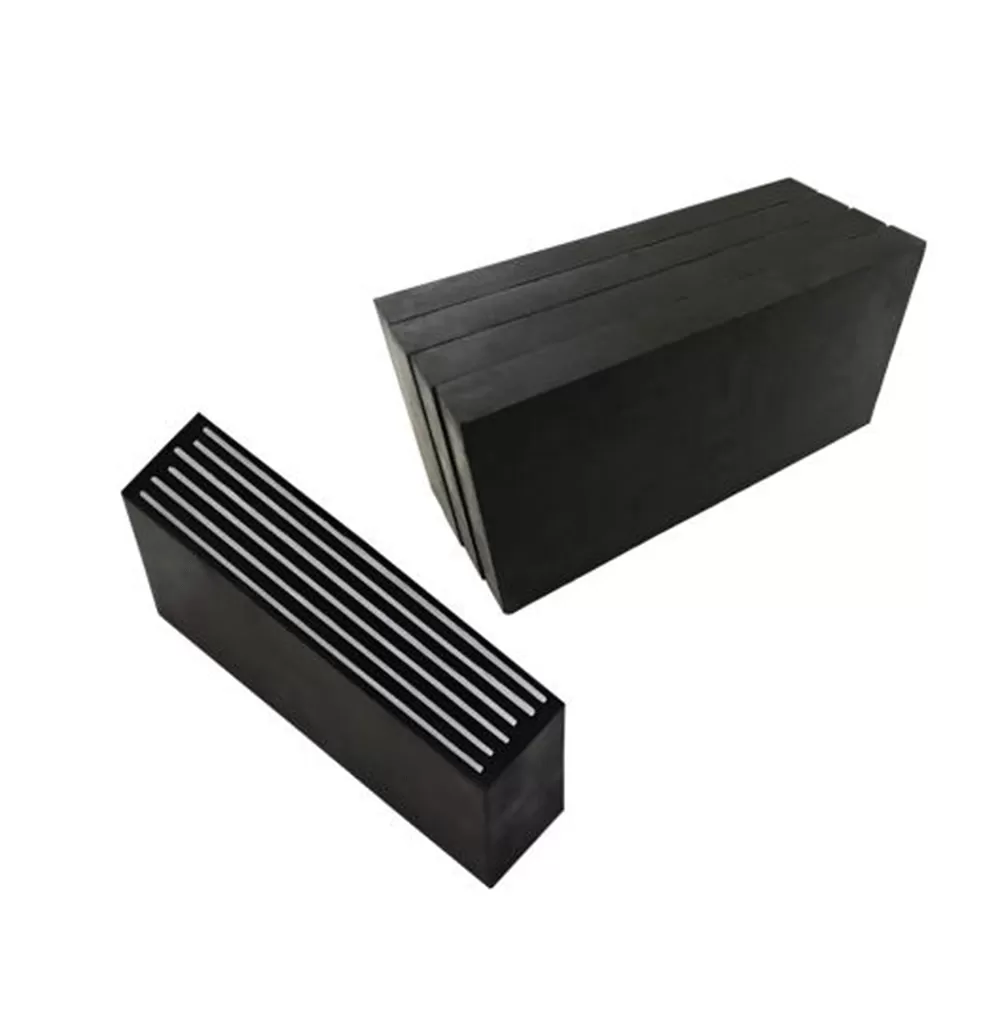
This dual mechanical behavior is accomplished through laminated configurations. While plain elastomer pads can be used for smaller structures with low loading requirements, larger spans require laminated elastomeric bearings. These assemblies consist of alternating layers of elastomer and thin steel reinforcement plates, which are vulcanized together under high pressure and temperature. The steel plates restrict the lateral bulging of the elastomer under compressive loads, thereby increasing the compressive stiffness of the assembly. Because the steel plates do not restrict shear deformation, the horizontal flexibility of the pad remains unchanged, allowing it to accommodate thermal movements freely.
The Significance of the Shape Factor
The performance of these bearing components is governed by the shape factor, which is defined as the ratio of the loaded area of a single elastomer layer to the area of the perimeter that is free to bulge. Mathematically, for a rectangular bearing pad, the shape factor (S) is calculated as:
S = (L × W) / (2 · t · (L + W))
Where L is the length, W is the width, and t is the thickness of an individual elastomer layer. A higher shape factor indicates a thinner elastomer layer relative to its surface area, resulting in greater compressive stiffness and a higher load-bearing capacity. Engineers must balance the shape factor to ensure sufficient compressive load support while maintaining adequate total elastomer thickness to accommodate the calculated shear displacements without instability.
Shear Modulus and Hardness Profiles
The shear modulus (G) is the key material property determining the horizontal stiffness of elastomeric pads. Standard formulations typically specify a shear modulus ranging from 0.9 MPa to 1.2 MPa at standard temperatures. This property is closely related to the Durometer hardness of the rubber, which generally ranges between 50 and 60 Shore A. A hardness value that is too high can lead to brittle behavior at low temperatures, whereas a value that is too low may result in excessive compressive creep over long periods. Design specifications, such as AASHTO M251 and European Standard EN 1337-3, dictate strict tolerances for these material properties to ensure consistent behavior across varied environmental conditions.
Material Formulation: Natural Rubber vs. Neoprene (Polychloroprene)
Selecting the appropriate polymer formulation is a primary decision in the design of elastomeric pads. The two primary elastomers used in civil engineering are natural rubber (polyisoprene) and neoprene (polychloroprene). Each material possesses distinct chemical and physical characteristics that make it suitable for specific environmental conditions and loading regimes.
Natural rubber exhibits excellent mechanical properties, including high tensile strength, outstanding tear resistance, and superior elasticity at extremely low temperatures. It performs well in cold climates where synthetic elastomers might undergo low-temperature crystallization, a process that significantly increases shear stiffness and can lead to structural overload of the bridge piers. Natural rubber also displays lower compressive creep over long periods, preserving the elevation of the bridge deck.
Neoprene offers superior resistance to environmental degradation. It is highly resistant to ozone attack, UV radiation, and chemical exposure, making it suitable for industrial zones or coastal areas with high salt concentrations. Neoprene also has self-extinguishing fire properties and greater resistance to oils and greases. However, standard neoprene formulations are susceptible to stiffening in sustained cold temperatures. To mitigate this, manufacturers use specific low-temperature resistance grades of neoprene, containing plasticizers and crystallizing inhibitors, to maintain flexible performance down to sub-zero temperatures.
The physical properties of both materials under standard test methods include:
Tensile Strength: Minimum 15.5 MPa for natural rubber and 15.0 MPa for neoprene under ASTM D412 standards.
Ultimate Elongation: Minimum 400% for natural rubber and 350% for neoprene, ensuring the material can deform without tearing.
Ozone Resistance: Tested under ASTM D1149, where neoprene must show zero cracking under higher ozone concentrations compared to natural rubber.
Compression Set: Maximum allowable deformation after sustained loading, typically restricted to less than 25% or 35% depending on the applicable standard.
Addressing Key Structural Challenges in Bridge Design
Civil infrastructure is subject to a complex matrix of forces and displacements. Elastomeric pads serve as passive mitigation devices that address several engineering challenges simultaneously.
Mitigating Rotational Displacements
When live loads cross a bridge deck, the girders deflect, causing rotational movement at the support points. If the bearing device is too rigid, this rotation shifts the vertical reaction force toward the edge of the bearing area, creating high stress concentrations. This uneven load distribution can damage both the girder flange and the concrete pedestal. Elastomeric pads accommodate this rotation by compressing unevenly across their surface, maintaining a relatively uniform distribution of pressure and preventing edge-loading damage.
Seismic Isolation and Vibration Damping
During seismic events, structures are subjected to rapid horizontal accelerations. Elastomeric bearings can act as simple base isolation systems by shifting the natural period of the structure. By introducing a flexible horizontal element, the fundamental period of the bridge increases, which generally reduces the seismic forces transmitted to the substructure. Additionally, the internal damping properties of the elastomer dissipate a portion of the kinetic energy, reducing the overall dynamic response of the bridge. For high-seismic zones, lead-rubber bearings (LRB)—which feature a solid lead plug inserted into the center of laminated elastomeric pads—are often specified to provide higher damping ratios.
Manufacturing Quality Standards and Testing Protocols
The reliability of elastomeric pads depends on the quality of raw materials and precision during the manufacturing process. Poor compounding, inadequate vulcanization, or misaligned steel shims can lead to premature failure of the bearing assembly. Consequently, strict quality control and verification testing are standard project requirements.
Manufacturing begins with compounding the raw elastomer with vulcanizing agents, antioxidants, and carbon black to achieve the required physical properties. The elastomer is then calendered into precise sheets. Steel shims, which must be sandblasted and coated with a high-strength bonding agent, are interleaved with the rubber sheets. The entire assembly is placed into a high-pressure mold and heated. Under these conditions, vulcanization occurs, cross-linking the polymer chains and creating a high-strength chemical bond between the elastomer and the steel shims.
To verify the integrity of the finished products, several testing protocols are conducted in accordance with international specifications:
Compressive Load Test: The bearing is subjected to a compressive load (typically 1.5 times the design load) to check for visible defects, such as surface cracks, uneven bulging, or bonding failure.
Shear Stiffness Test: Two pads are tested simultaneously under a constant compressive load while a horizontal shear force is applied. This measures the actual shear modulus (G) to ensure it falls within the specified tolerances.
Adhesion Bond Test: This destructive or non-destructive test evaluates the bond strength between the steel plates and the elastomer. A failure at the interface indicates poor manufacturing quality or inadequate surface preparation of the steel shims.
KINGWORK subjects its bearing systems to systematic quality inspections to ensure full compliance with AASHTO, EN, and ISO requirements, providing engineers with documented performance data for every production run.
Practical Considerations for Installation and Maintenance
The performance of elastomeric pads over their design life is highly dependent on proper installation techniques and regular maintenance inspections.
During installation, the supporting concrete surface must be level, smooth, and clean. Any surface roughness or slope mismatch can cause high stress concentrations and uneven wear on the pad. Concrete pedestals are typically finished with a high-strength, non-shrink epoxy grout bed to provide a flat, level surface. The bearing pad must be positioned precisely according to the design drawings, ensuring that the centerline of the bearing aligns with the neutral axis of the structural reaction forces. Care must be taken to prevent direct exposure of the pad to temperatures exceeding vulcanization limits during nearby welding operations on steel girders.
While elastomeric pads are low-maintenance compared to mechanical roller bearings, routine visual inspections should be performed every few years. Inspectors should look for:
Excessive Bulging: Bulging that appears uneven or significantly exceeds design predictions may indicate internal shim delamination or overload.
Splitting and Cracking: Deep cracks, particularly near the edges of the steel shims, can allow moisture to penetrate, leading to corrosion of the internal steel plates.
Slippage or Walking: If the compressive load is too low or the surface friction is insufficient, the bearing pad may slip out of its designated position, requiring realignment or the installation of external keeper plates.
Engineered Bearing Solutions from KINGWORK
For decades, KINGWORK has served the global civil engineering sector by supplying engineered structural components designed to withstand challenging environmental and mechanical conditions. Our range of elastomeric pads is manufactured using advanced polymer formulations, ensuring high durability, consistent shear stiffness, and excellent aging characteristics.
Our engineering team works closely with designers, contractors, and project managers to select, analyze, and produce customized elastomeric bearings that match specific structural requirements. Whether your project involves short-span highway bridges, complex multi-level interchanges, or heavy industrial buildings, our technical support team provides the necessary structural calculations, material certifications, and testing reports to streamline your procurement and installation processes.
For custom structural design requirements, material data sheets, or to request a project quotation, please submit your technical drawings and specification criteria via our inquiry form.
Frequently Asked Questions
Q1: What is the typical design life of an elastomeric bearing pad?
A1: High-quality elastomeric pads, when properly compounded and installed, typically have a service life of 30 to 50 years. This lifespan depends on environmental exposure, load cycles, and ozone concentrations at the project site.
Q2: Can elastomeric pads be used on steel girder bridges as well as concrete bridges?
A2: Yes, they are widely used on both steel and concrete bridges. For steel girders, sole plates are often vulcanized to the top of the pad or secured mechanically to distribute the load and facilitate connection to the flange.
Q3: How does temperature affect the performance of these bearing components?
A3: Low temperatures increase the shear stiffness of elastomers, particularly synthetic neoprene. If temperatures fall below the crystallization threshold, the pad becomes significantly stiffer, transmitting higher forces to the substructure. Choosing the correct low-temperature grade minimizes this effect.
Q4: Why do some elastomeric pads have Teflon (PTFE) surfaces?
A4: For structures with very large expansion requirements, standard shear deformation may not be sufficient. In such cases, a PTFE layer is bonded to the top of the elastomeric pad, sliding against a stainless steel plate to accommodate larger displacements while the elastomer handles rotation and vibration.
Q5: What is the difference between a plain elastomeric pad and a laminated bearing?
A5: Plain elastomeric pads do not contain steel reinforcement plates. They are thinner and used for lower vertical loads and smaller movements. Laminated bearings contain internal steel shims vulcanized between elastomer layers, allowing them to support significantly higher compressive loads without excessive bulging.
![Bridge Joint Types: The Complete Engineering Guide [2026 Edition]](https://www.kwbridgebearing.com/storage/non_theme/202606/024.webp)