
Engineering Rubber Bearing Pads for Bridge Infrastructure & Heavy Civil Works
Article content and related resources
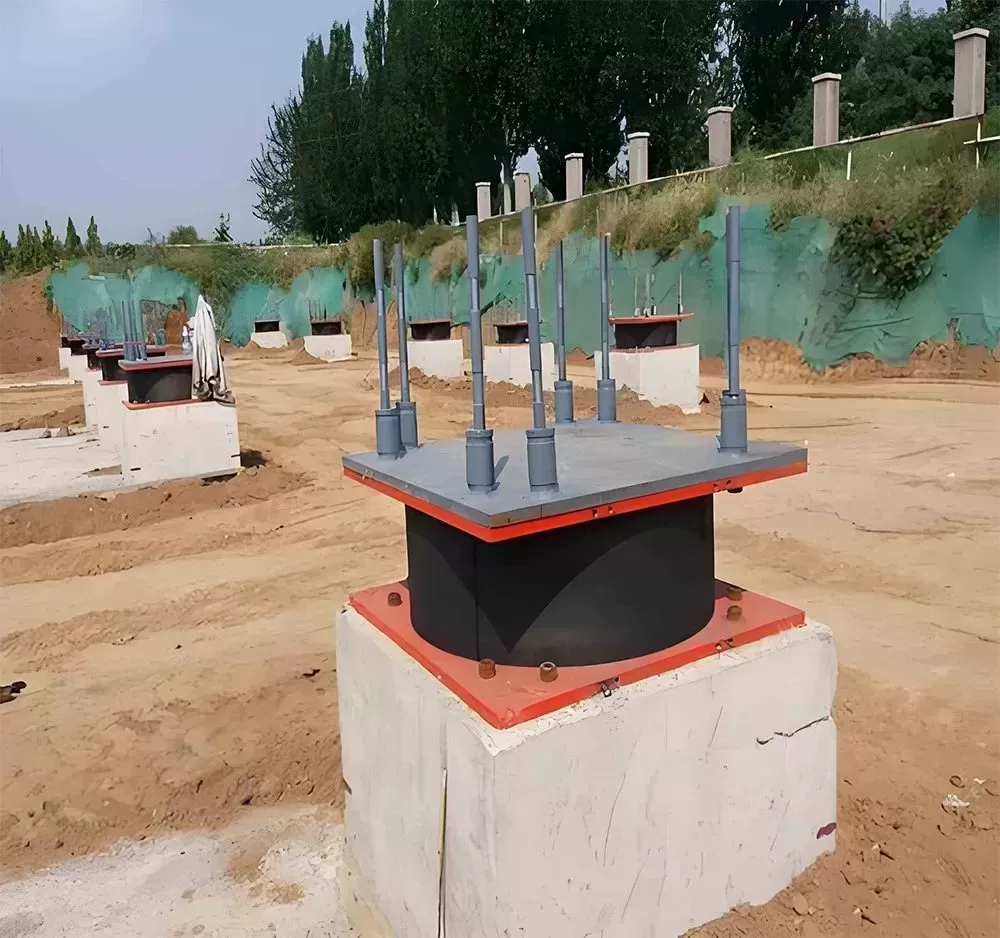
Bridge superstructures undergo continuous dimensional variations generated by thermal expansion, contraction, concrete creep, shrinkage, and dynamic traffic loads. Without a dedicated load-bearing interface, these continuous displacements impose secondary bending moments and severe shear stresses on supporting piers and abutments. Structural rubber bearing pads function as elastomeric isolators positioned between the superstructure and substructure. Their core function is to transmit high vertical reactions while simultaneously allowing horizontal translations and beam rotations through controlled, uniform shear deformation.
Civil engineers and bridge authorities must understand the internal mechanics, elastomeric material behavior, and regulatory testing standards governing these components. Choosing the correct structural interface directly influences structural integrity, longevity, and maintenance schedules throughout the projected service life of a structure.
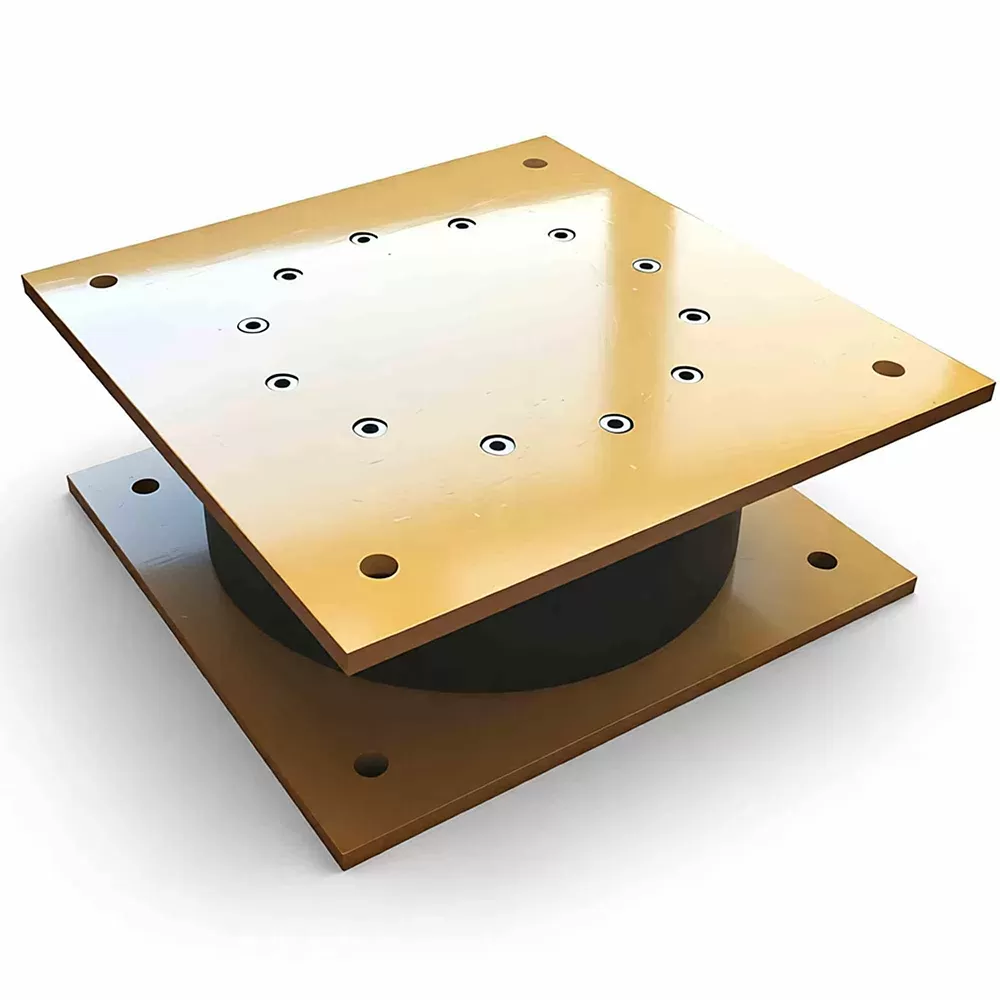
Mechanics of Load Transfer and Internal Kinematics
The operational performance of elastomeric bearings relies on the incompressibility of rubber paired with its low shear stiffness. When subjected to vertical compressive loads, an unreinforced block of elastomer tends to bulge laterally. Restricting this lateral expansion increases the vertical stiffness of the pad dramatically without altering its capacity to deform horizontally under lateral shear forces.
The Role of Shape Factor in Compressive Resistance
Vertical load capacity depends heavily on the Shape Factor (S), defined as the ratio of the loaded plan area to the total force-free perimeter area available to bulge freely. For a rectangular pad of length a, width b, and individual elastomer layer thickness t:
S = (a × b) / (2 × t × (a + b))
Higher shape factors yield higher compressive modulus values, preventing excessive vertical deflection under dead and live loads. Unreinforced plain pads possess lower shape factors and are primarily limited to precast concrete buildings, short spans, or low-load applications. Laminated configurations integrate internal steel reinforcing plates to achieve shape factors exceeding 10 to 15, permitting them to support thousands of kilonewtons of vertical reaction.
Shear Strain and Horizontal Displacement
Horizontal translation occurs through pure shear deformation across the entire thickness of the elastomer. The horizontal force H required to induce a displacement Δ is governed by the shear modulus (G), the effective cross-sectional area (A), and the total effective elastomer thickness (Te):
H = (G × A × Δ) / Te
To avoid internal tensile rupture or permanent bonding breakdown, structural codes typically limit the maximum horizontal design strain (γ = Δ / Te) to 0.50 or 0.70 under serviceability limit states. This controlled flexibility mitigates lateral shear forces transferred directly to the substructure columns.
Rotational Compliance
Beam deflection under live load or initial construction camber produces angular rotations at girder seats. Elastomeric bearings accommodate these rotations through non-uniform compressive strain across the pad width. The thickness of individual rubber layers must be sized adequately so that under maximum anticipated rotation, no portion of the bearing experiences zero or negative compressive stress, which could lead to pad lift-off and accelerated edge degradation.
Elastomer Compound Science: Natural Rubber vs. Chloroprene
Raw elastomer formulation dictates long-term performance under environmental exposure and continuous cyclic loading. Bridge engineering specifications primarily recognize two distinct polymers for the vulcanization of rubber bearing pads: Natural Rubber (NR, polyisoprene) and Polychloroprene (CR, commonly known as Neoprene).
Natural Rubber (NR): Exhibits exceptional tear resistance, high tensile strength, and superior mechanical performance at low temperatures. It resists low-temperature crystallization more effectively in sub-zero environments, making it a standard choice in northern geographic zones. NR requires precise chemical additives, including antiozonants and antioxidants, to improve resistance against atmospheric oxidation.
Polychloroprene (CR): Offers superior innate resistance to ozone, ultraviolet degradation, chemical exposure, and oil contamination. While slightly more expensive than natural polyisoprene, chloroprene maintains consistent physical properties across moderate temperature variations and is widely specified in coastal, marine, and industrial environments.
The standard hardness range for bridge bearings spans 50 to 60 on the Shore A durometer scale, corresponding to a nominal shear modulus (G) between 0.7 MPa and 1.2 MPa. Deviations outside this range compromise either the rotational flexibility or the vertical stability of the bearing assembly.
Internal Reinforcement and Fabrication Integrity
Steel-laminated rubber bearing pads rely on internal structural steel plates, generally ranging from 1.5 mm to 4.0 mm in thickness, embedded between vulcanized elastomer layers. The manufacturing process demands strict quality controls to ensure performance longevity.
During the vulcanization process, raw uncured elastomer sheets and chemically primed steel plates are placed inside precision steel molds under high pressure and temperature. The chemical adhesive system bonds the rubber to the metal substrate at the molecular level. This vulcanization bonding must achieve a peel strength higher than the tensile tear strength of the rubber itself; failure during peel testing must occur entirely within the elastomer matrix, not at the bond interface.
Manufacturers like KINGWORK enforce strict tolerances on layer parallelism, edge cover thickness, and total compound homogeneity. External elastomer edge covers (typically 4 mm to 6 mm) provide an impermeable barrier that shields the internal steel laminates from water penetration, atmospheric moisture, and corrosion.
Design Standards and Regulatory Testing Protocols
Structural components must conform strictly to established regional and international engineering standards. The two predominant benchmark frameworks across international infrastructure projects are AASHTO and European Standards.
AASHTO M 251 and LRFD Specifications
In the United States and regions adopting American standards, elastomeric pads are governed by AASHTO LRFD Bridge Design Specifications (Section 14) and AASHTO M 251. Key testing mandates include:
Compressive Load Test: Bearings must withstand 150% of the maximum design compressive load for a specified hold duration without surface blistering, bond delamination, or edge cracks.
Shear Modulus Determination: Quad-shear or dual-shear testing confirms that the elastomer's actual modulus sits within ±15% of the specified design value at 23°C.
Low-Temperature Brittleness: Material specimens must pass ASTM D746 or ASTM D2137 impact tests at low temperatures without brittle fracture.
EN 1337-3 Compliance
Within European jurisdictions and international projects aligned with Eurocodes, EN 1337-3 governs elastomeric bearings. The standard classifies products into Type A (plain), Type B (laminated), Type C (laminated with outer steel plates), and composite configurations. Compliance verification requires strict shear modulus verification ($G_g$), ozone degradation resistance testing under dynamic strain, and compressive stiffness verification.
Comparative Overview of Common Structural Bearing Configurations
| Bearing Type | Primary Load Range | Horizontal Displacement Capacity | Rotational Capacity | Typical Construction Application |
|---|---|---|---|---|
| Plain Rubber Pads | Low (< 500 kN) | Low (± 5 mm to 15 mm) | Moderate (< 0.015 rad) | Precast concrete slabs, short spans, industrial flooring |
| Steel-Laminated Rubber Pads | High (500 kN to 15,000+ kN) | Moderate to High (± 20 mm to 70 mm) | Standard (< 0.010 to 0.020 rad) | Highway overpasses, railway bridges, major civil structures |
| PTFE-Sliding Elastomeric Bearings | Medium to High | Very High (± 100 mm to 300+ mm) | Standard (< 0.010 rad) | Long-span bridges, structures with extensive thermal movement |
| Pot Bearings | Very High (> 10,000 kN) | High (when paired with sliding surfaces) | High (> 0.030 rad) | Cable-stayed bridges, heavy rail spans, curved structures |
Structural Longevity Factors and Degradation Mechanisms
High-quality elastomeric components typically achieve operating life spans exceeding 40 to 60 years. However, structural degradation can manifest prematurely if installation conditions or material formulations are substandard.
Uneven Stress Distribution and Splitting
If bearing seats are not cast perfectly level, or if girder deflections induce angular misalignments beyond the pad's rotational tolerance, localized stress concentrations develop along the edges. This dynamic can cause localized crushing, horizontal tearing, and uneven shear deformation across the cross-section.
Elastomer-Steel Delamination
Inadequate surface preparation, improper priming, or contaminated steel plates prior to vulcanization lead to bond failure. Under cyclic dynamic shear and high vertical compression, unbonded sections propagate across the plane of the laminate, leading to structural flattening, loss of shape factor, and permanent destruction of the bearing's kinematic properties.
Ozone Cracking and Surface Hardening
Ambient ozone reacts with unsaturated polymer backbones under mechanical stress, generating microscopic cracks oriented perpendicular to the direction of strain. Over decades, this atmospheric oxidation deepens, causing surface hardening and a loss of elastomeric flexibility. Precision formulation with dedicated microcrystalline waxes and chemical antiozonants prevents ozone propagation into the load-bearing core.
Dimensioning and Specification Workflow for Bridge Engineers
Selecting and sizing elastomeric supports requires a structured engineering procedure. Designers must calculate multiple load combinations under Serviceability Limit States (SLS) and Ultimate Limit States (ULS).
Determine Compressive Loads: Establish maximum dead load ($P_{DL}$) and live load ($P_{LL}$) reactions. Calculate the minimum vertical reaction to confirm that the pad will not slip under maximum horizontal shear forces without requiring external mechanical anchor dowels.
Calculate Total Horizontal Movement: Aggregate all expansion and contraction contributors, including thermal variation ($\Delta L = \alpha \cdot L \cdot \Delta T$), long-term concrete shrinkage, post-tensioning shortening, and concrete creep.
Compute Maximum Angular Rotation: Determine the total expected girder slope resulting from dead-load deflection, construction tolerances (typically a minimum allowance of 0.005 radians), and live-load passage.
Select Pad Thickness and Plan Area: Size the plan dimensions (length and width) to keep average compressive stress below the allowable standard threshold (typically 7 MPa to 12 MPa depending on the governing standard). Establish total elastomer thickness ($T_e$) such that maximum shear strain ($\gamma$) remains well within code allowances.
Stability and Anti-Roll Checks: Verify the total bearing height against stability criteria to prevent rollover or elastomeric instability under concurrent high shear and minimum compression.
Engineered structural components manufactured by KINGWORK are fabricated strictly to meet project-specific schedules, integrating customized plan dimensions, precise layer thicknesses, and specialized attachment accessories such as vulcanized outer sole plates and anchor bolts.
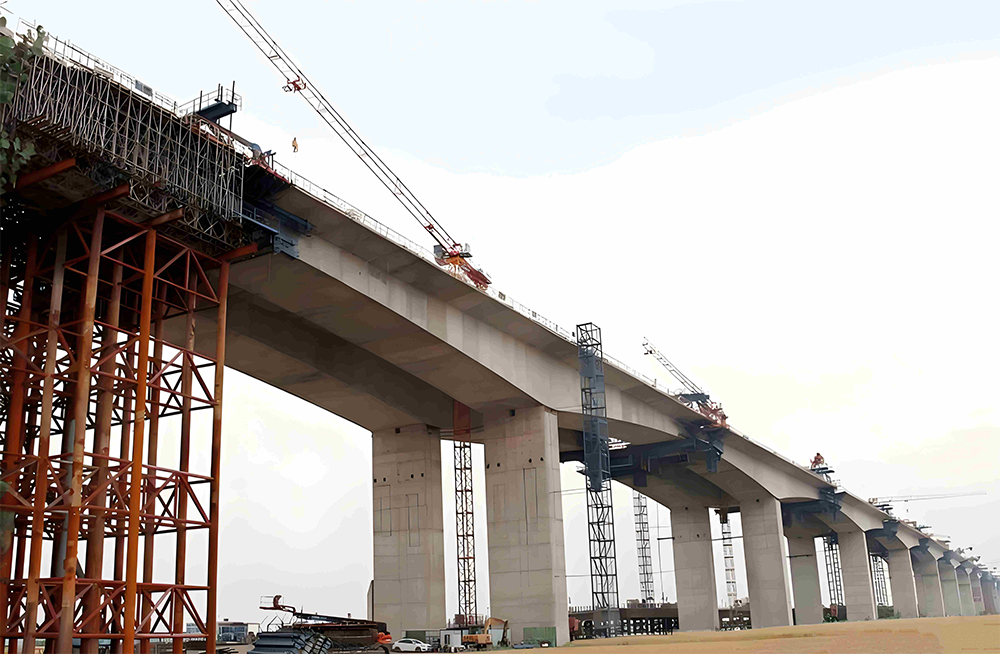
Installation Best Practices and Inspection Standards
Proper job site execution is just as decisive as correct factory fabrication. Structural bearings should be installed on flat, horizontal, and cured concrete bearing seats. Mortar beddings or self-leveling epoxy grouts provide a smooth interface, eliminating surface irregularities that create localized stress concentrations.
Routine maintenance programs should incorporate annual visual inspections. Inspectors should assess:
Uniformity of horizontal shear displacement across all bearings on a single pier cap.
Presence of deep ozone cracking, surface splitting, or local bulging.
Relative position of the bearing to ensure no permanent walking or creep displacement has occurred over time.
Condition of adjacent concrete seats for signs of spalling, water accumulation, or chemical contamination.
Frequently Asked Questions
What is the typical design life of laminated rubber bearing pads in bridge structures?
Properly formulated and correctly installed elastomeric bearings routinely achieve an operational service life of 40 to 50 years. Longevity depends on material compliance with international standards (such as AASHTO M 251 or EN 1337-3), protection from continuous direct oil contact, and precise leveling of the bearing seat during installation.
How do plain elastomeric pads differ from steel-laminated elastomeric pads?
Plain pads consist entirely of an unreinforced rubber sheet, providing limited vertical load capacity because the elastomer is free to bulge laterally across its entire height. Steel-laminated pads incorporate bonded internal steel plates that restrain lateral bulging, multiplying vertical load capacity by more than tenfold while preserving flexible horizontal shear deformation.
Can rubber bearing pads compensate for construction leveling errors?
While elastomeric bearings accommodate structural rotations induced by beam deflections, they should not be used to compensate for unlevel bridge seats. Substructure mounting surfaces must be cast flat within strict tolerances (typically within 1% to 2% slope maximum, corrected using beveled sole plates or leveling grouts) to avoid permanent shear deformation and localized overstress.
What causes elastomeric bearing walking or slip?
Bearing walking occurs when minimum compressive loads are insufficient to generate adequate frictional restraint during maximum horizontal girder movement. Under dynamic cyclic traffic vibrations, the pad gradually shifts out of position. This is resolved by ensuring proper minimum load verification during design or incorporating mechanical anchor dowels and restraint plates.
How does ambient temperature affect the performance of elastomeric bearings?
Low temperatures cause polymers to stiffen, increasing their shear modulus and resisting horizontal movement more rigidly. In sub-zero regions, materials must pass low-temperature crystallization tests to guarantee that excessive horizontal shear forces are not transferred into the bridge substructure during winter contractions.
When should PTFE sliding surfaces be integrated with elastomeric pads?
When long span lengths produce horizontal thermal movements exceeding the allowable shear strain of standard pad thicknesses (generally movements greater than ±50 mm), a PTFE (Teflon) sheet is bonded to the top elastomeric layer and paired with a mirror-polished stainless steel slider plate to facilitate unlimited horizontal translations.
Project Specification and Technical Consultation
Infrastructure longevity begins with accurate engineering calculations and certified manufacturing standards. When sourcing rubber bearing pads for highway bridges, rail viaducts, or industrial facilities, engineering teams must partner with manufacturers capable of delivering traceable material testing and compliance documentation.
Reach out to the structural engineering department at KINGWORK today to submit your bridge schedule, request detailed load-displacement calculations, or obtain a comprehensive quotation for standard and custom elastomeric bearing assemblies.
![Bridge Joint Types: The Complete Engineering Guide [2026 Edition]](https://www.kwbridgebearing.com/storage/non_theme/202606/024.webp)