
Elastomeric Bearings vs. Pot Bearings for Bridges: Which Solution Fits Your Project?
Article content and related resources
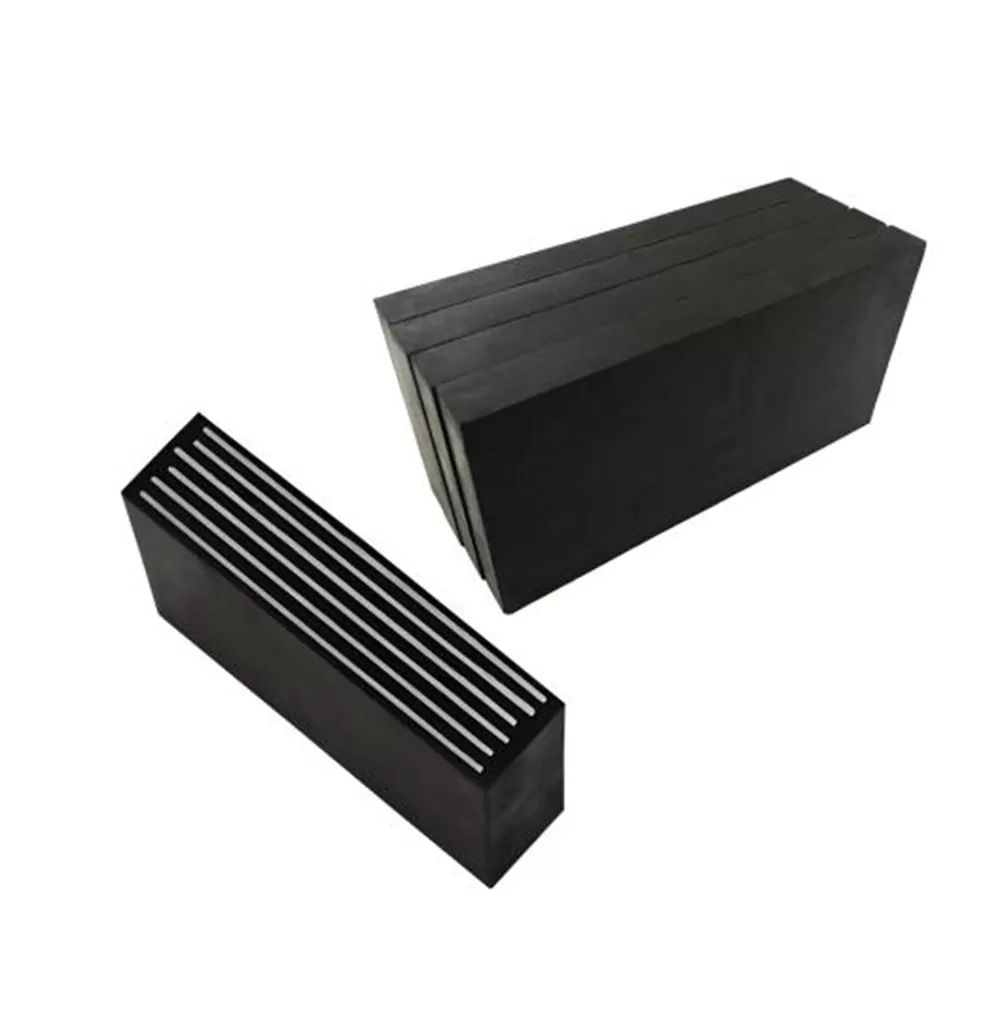
Bridge superstructures endure continuous thermal expansion, dynamic traffic loads, and seismic shocks. Safely transferring these forces to the substructure requires carefully engineered support components. Choosing the incorrect structural bearing can lead to concrete spalling, excessive structural stress, or catastrophic failure.
Structural engineers, EPC contractors, and procurement managers often debate between two primary solutions: elastomeric bearings for bridges and pot bearings. While both manage structural movement and load transfer, their internal mechanics, performance limits, and economic profiles differ significantly.
Since 2012, KINGWORK has supplied high-performance bridge bearings to major infrastructure projects worldwide. This guide provides a detailed technical comparison to help you select the optimal bearing system for your bridge design.
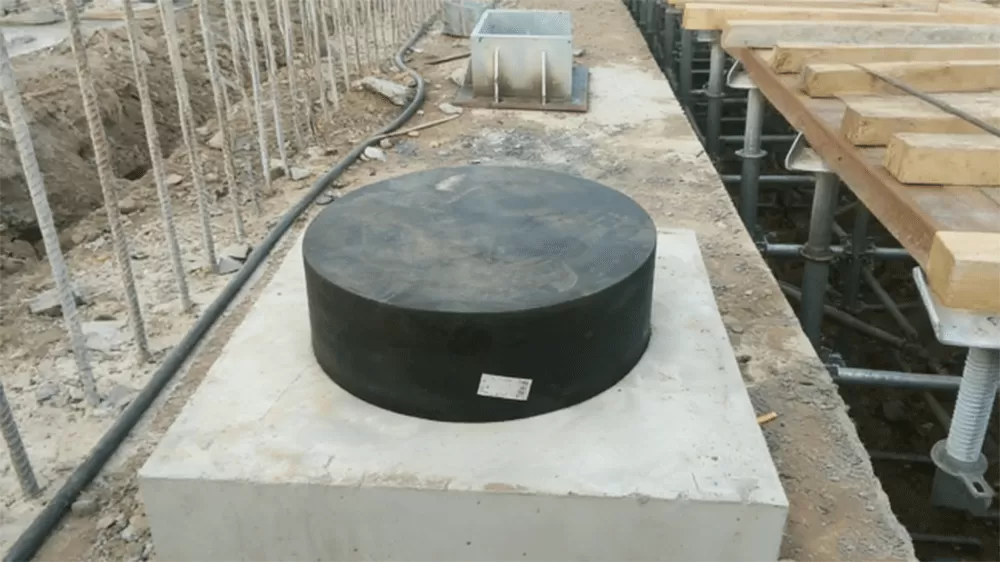
Deep Dive into Elastomeric Bearings for Bridges
Elastomeric bearings rely on the natural flexibility of rubber compound matrices to accommodate bridge deck movements. They provide an elegant, passive solution for structural articulation without requiring complex mechanical joints.
Working Principle and Technical Design
An elastomeric bearing consists of vulcanized elastomeric layers bonded to internal steel reinforcing plates. The rubber material—either natural rubber (NR) or chloroprene rubber (CR)—handles shear deformation to allow horizontal displacement and rotation.
The thin internal steel shims prevent the rubber from bulging excessively under vertical pressure. This increases the vertical stiffness of the bearing while maintaining horizontal flexibility.
Common Types of Elastomeric Bearings
Plain Elastomeric Pads: Unreinforced rubber pads suitable for low-load applications and short-span bridges.
Laminated Elastomeric Bearings: Steel-reinforced pads engineered for medium-span highway structures requiring higher compressive resistance.
Lead Rubber Bearings (LRB): Advanced seismic isolation bearings featuring a central lead core. The lead core deforms plastically under lateral force, absorbing earthquake energy and protecting the main bridge structure.
Key Advantages
Elastomeric bearings offer a simple structural profile with no sliding mechanical parts. This eliminates mechanical friction wear and removes the need for ongoing lubrication or routine internal maintenance.
They also provide excellent multi-directional deflection capabilities and natural shock absorption. In regions with moderate to high seismic activity, elastomeric bearings—specifically LRBs—deliver reliable damping performance.
Design Limitations
Because these bearings rely on shear strain within the rubber itself, large horizontal movements require thicker rubber layers. Under extremely heavy vertical loads, elastomeric bearings become exceptionally large, making them impractical for tight pier top spaces.
Deep Dive into Pot Bearings
Pot bearings are high-capacity mechanical bearings designed to support extreme vertical forces while allowing controlled rotational and horizontal displacement.
Working Principle and Technical Design
A pot bearing features an elastomeric pad completely enclosed inside a rigid steel pot structure. A tight-fitting steel piston sits on top of the elastomeric disc, sealed with internal brass or polymer sealing rings.
When subjected to vertical loads, the trapped rubber behaves like a non-compressible fluid under hydraulic pressure. This allows the top piston to tilt smoothly, giving the bridge deck complete rotational freedom.
To accommodate horizontal translation, pot bearings incorporate a PTFE (Polytetrafluoroethylene) or stainless steel sliding interface above the top piston plate.
Key Advantages
Pot bearings provide exceptionally high load capacity within a compact physical envelope. They withstand heavy vertical forces without experiencing excessive vertical deformation.
The separation of functions—where the trapped elastomer handles rotation and the sliding interface handles horizontal movement—allows engineers to customize displacement capacity over long distances.
Design Limitations
Pot bearings feature multiple precision-machined mechanical parts. This complexity leads to higher initial manufacturing costs compared to standard elastomeric options.
Mechanical seals and sliding interfaces can wear down over decades of service. Consequently, pot bearings require routine engineering inspections to verify seal integrity and slide surface lubrication.
Head-to-Head Technical Comparison
Selecting the correct support component requires evaluating critical performance metrics against project constraints. The table below outlines the core differences between elastomeric bearings for bridges and pot bearings.
| Performance Metric | Elastomeric Bearings | Pot Bearings |
|---|---|---|
| Vertical Load Capacity | Low to Medium (up to ~10,000 kN) | Very High (exceeding 50,000 kN) |
| Horizontal Displacement | Moderate (limited by rubber thickness) | Large (controlled by PTFE sliding plate) |
| Rotational Capacity | Moderate (flexible rubber compression) | High (fluid-like action of trapped rubber) |
| Seismic Isolation | Excellent (especially Lead Rubber Bearings) | Limited (requires external dampers/shear keys) |
| Maintenance Needs | Virtually zero maintenance | Periodic inspection of seals and sliding faces |
| Initial Material Cost | Economical | Higher due to precision machining |
Load Capacity and Structural Geometry
Pot bearings dominate applications involving extreme vertical forces. For example, long-span continuous girders transfer enormous concentrated loads to bridge piers. A pot bearing carries these forces within a small surface area, reducing pier size and concrete material costs.
Conversely, elastomeric bearings for bridges suit medium load scenarios. They distribute vertical stresses evenly across the substructure surface, making them ideal for standard precast concrete girder bridges.
Displacement and Rotational Mechanics
Horizontal translation in elastomeric bearings occurs entirely through internal rubber shear. This movement generates a proportional restoring force that pulls the structure back toward its center point.
Pot bearings separate rotation from displacement. The upper sliding assembly glides on low-friction PTFE sheets, allowing long continuous expansion movements without increasing shear forces on the bridge piers.
Seismic Energy Dissipation
In earthquake-prone regions, elastomeric bearings—specifically Lead Rubber Bearings (LRBs)—offer significant safety advantages. The internal lead core deforms during strong ground motion, absorbing kinetic energy and lengthening the structure's natural vibration period.
Pot bearings act as rigid load-transfer points during earthquakes. Unless combined with secondary fluid viscous dampers or seismic isolation units, pot bearings transfer raw earthquake forces directly into the substructure.
Lifecycle and Maintenance Costs
Elastomeric bearings feature no moving parts, non-corrosive rubber layers, and encapsulated steel shims. They operate quietly for decades without requiring maintenance intervention.
Pot bearings require higher initial capital investment and ongoing inspection. However, for massive long-span bridges, the ability to replace internal sliding plates during major retrofits extends total bridge life significantly.
Decision Matrix: Which Solution Fits Your Project?
Choosing between these two structural solutions depends on specific bridge engineering parameters. Use this simple decision matrix to align your design requirements with the appropriate bearing technology.
Select Elastomeric Bearings When:
Your bridge features short to medium span lengths (typically under 40 meters per span).
The project budget prioritizes low initial material costs and minimal maintenance expenditure.
The bridge sits in an active seismic zone requiring integrated energy dissipation via Lead Rubber Bearings.
The structural deck requires multi-directional micro-movements rather than massive longitudinal sliding.
Fast project delivery requires simple installation without complex alignment procedures.
Select Pot Bearings When:
The structure is a long-span cable-stayed bridge, suspension bridge, or heavy rail bridge.
Vertical reactions at the pier tops exceed the load limits of standard elastomeric pads.
Thermal expansion creates long sliding displacement requirements exceeding 100 mm.
Space on top of the bridge piers is strictly limited by architectural or spatial constraints.
The design calls for precise fixed, guided, or multi-directional sliding constraints.
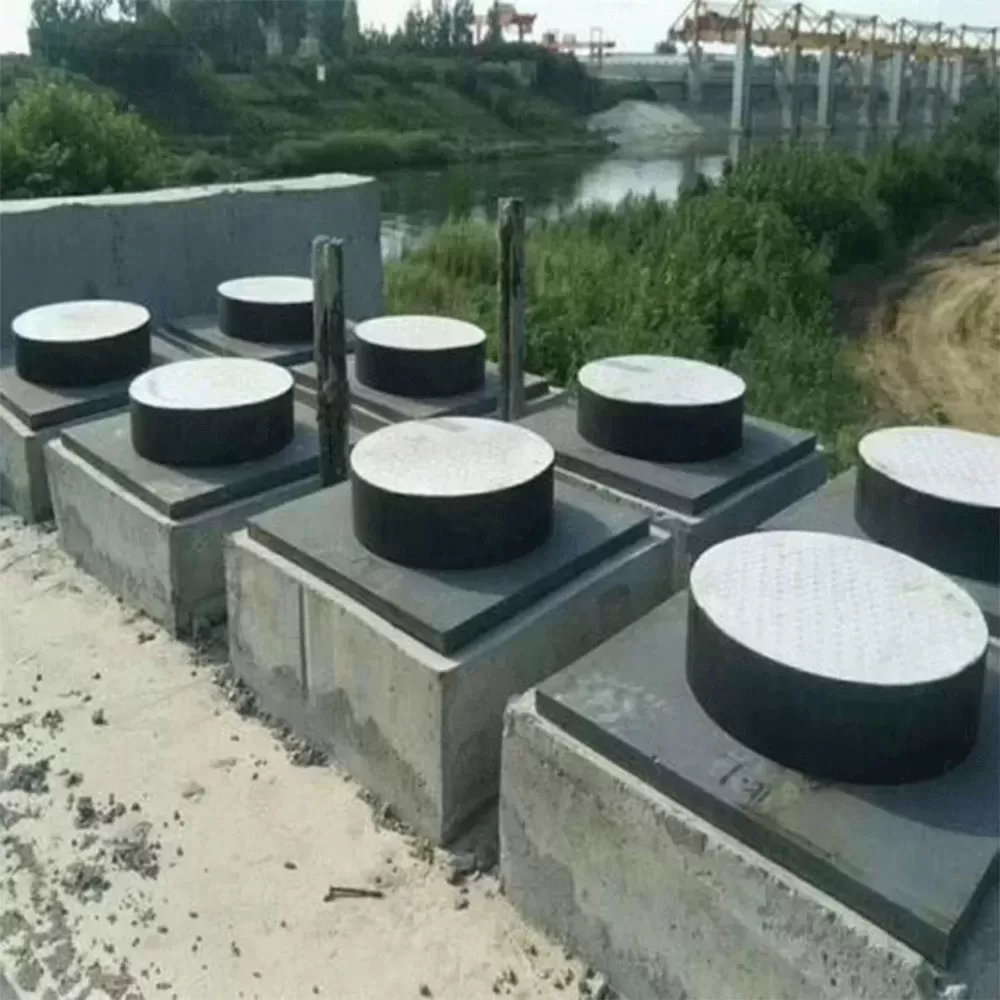
The KINGWORK Advantage: Engineered for Global Infrastructure
Specifying bridge bearings requires reliable manufacturing quality, precise material testing, and strict compliance with international standards. KINGWORK provides specialized engineering support and custom manufacturing for critical infrastructure projects worldwide.
Proven Structural Engineering Expertise
KINGWORK integrates polymer material science with structural mechanics. Our engineering team designs custom structural bearings that match precise load matrices, thermal ranges, and movement profiles specified by bridge design consultants.
EU CPR CE Certification Compliance
Compliance with global building standards is non-negotiable. KINGWORK elastomeric bearings for bridges and Lead Rubber Bearings hold full CE Certification under the European Construction Products Regulation (EU CPR).
This independent third-party certification confirms that our structural bearings comply with EN 1337 standards for mechanical resistance, stability, and long-term durability in severe environments.
Engineer-to-Order (ETO) Customization
Infrastructure projects rarely rely on standard catalog products. KINGWORK operates an Engineer-to-Order (ETO) production line. We customize rubber formulations, internal steel plate dimensions, corrosion-resistant coatings, and external fixing plates to fit your exact bridge deck geometry.
Uncompromising Quality and Global Track Record
Since 2012, KINGWORK products have supported highway networks, rail corridors, and municipal overpasses across six continents. Every production batch undergoes rigorous QA/QC protocols, including compression testing, shear modulus verification, and ozone resistance checks.
Frequently Asked Questions (FAQ)
Q1: What is the main structural difference between elastomeric bearings and pot bearings?
A1: Elastomeric bearings use internal rubber shear to accommodate horizontal movement and rotation without mechanical sliding. Pot bearings restrict an elastomeric disc inside a rigid steel pot to handle high vertical loads, relying on top PTFE sliding plates for horizontal movement.
Q2: How do Lead Rubber Bearings (LRB) improve bridge seismic safety?
A2: Lead Rubber Bearings incorporate a solid lead center core inside a laminated elastomeric bearing. Under earthquake loads, the lead core deforms plastically, absorbing kinetic energy and reducing lateral seismic forces transmitted to the bridge piers.
Q3: What international manufacturing standards apply to elastomeric bearings for bridges?
A3: Key global standards include EN 1337 (European Standard), AASHTO LRFD Bridge Design Specifications (USA), and ISO 22762 for seismic isolation bearings. KINGWORK manufactures bearings compliant with all major international design codes.
Q4: What is the average service life of high-quality elastomeric bearings?
A4: Properly engineered elastomeric bearings manufactured with high-grade rubber compounds last 30 to 50 years. Their maintenance-free design eliminates mechanical wear, making them exceptionally durable over the bridge design life.
Q5: Can KINGWORK manufacture custom bridge bearings to specific project requirements?
A5: Yes. KINGWORK specializes in Engineer-to-Order (ETO) manufacturing. We design and produce customized elastomeric bearings, LRB isolators, and pot bearings based on your project's load, movement, and environmental specs.
Selecting the Right Bridge Support Partner
Neither bearing type is universally superior; successful bridge design depends on choosing the correct solution for your load profiles, seismic exposure, and project budget. Elastomeric bearings for bridges offer simple, maintenance-free performance for light to medium spans, while pot bearings provide high load capacity for large-scale structural spans.
Working with an experienced bearing manufacturer ensures your structural calculations translate into safe, long-lasting performance on site.
Are you evaluating structural bearing options for an upcoming bridge project? Contact the structural engineering specialists at KINGWORK today to discuss your technical drawings, request CE-certified test documentation, or receive a competitive factory quote.
![Bridge Joint Types: The Complete Engineering Guide [2026 Edition]](https://www.kwbridgebearing.com/storage/non_theme/202606/024.webp)