
Design, Selection, and Installation of Bridge Spherical Bearing Assemblies
Article content and related resources
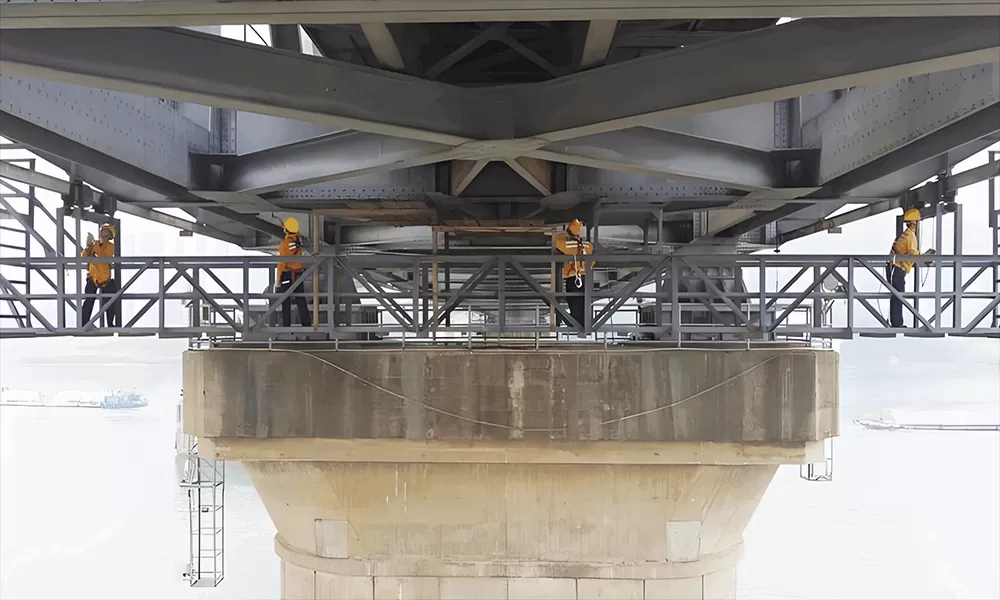
Large-span structures, heavy transport corridors, and industrial plant foundations undergo continuous dimensional shifts. Thermal expansion, concrete shrinkage, live load deflection, and seismic events generate complex multidirectional displacements. Without proper mechanical joints between the superstructure and supporting substructure, these movements induce destructive secondary stresses, leading to structural cracking, anchor shear failure, or foundation distress.
An appropriately specified bridge spherical bearing addresses these force transfers by decoupling rotational displacement from horizontal sliding. Unlike traditional elastomeric pads or pot bearings, spherical articulation relies on a matching convex lower plate and concave upper race. This geometric interface allows multiaxial rotation around any horizontal axis with constant contact area, maintaining uniform pressure distribution across sliding surfaces.
Engineering teams and structural component manufacturers like KINGWORK design these support assemblies to manage vertical forces exceeding 100,000 kN while maintaining low frictional resistance over multi-decade service lifetimes. Achieving long-term performance requires understanding tribological behavior, material limits under sustained compressive stress, precise field installation, and lifecycle maintenance strategies.
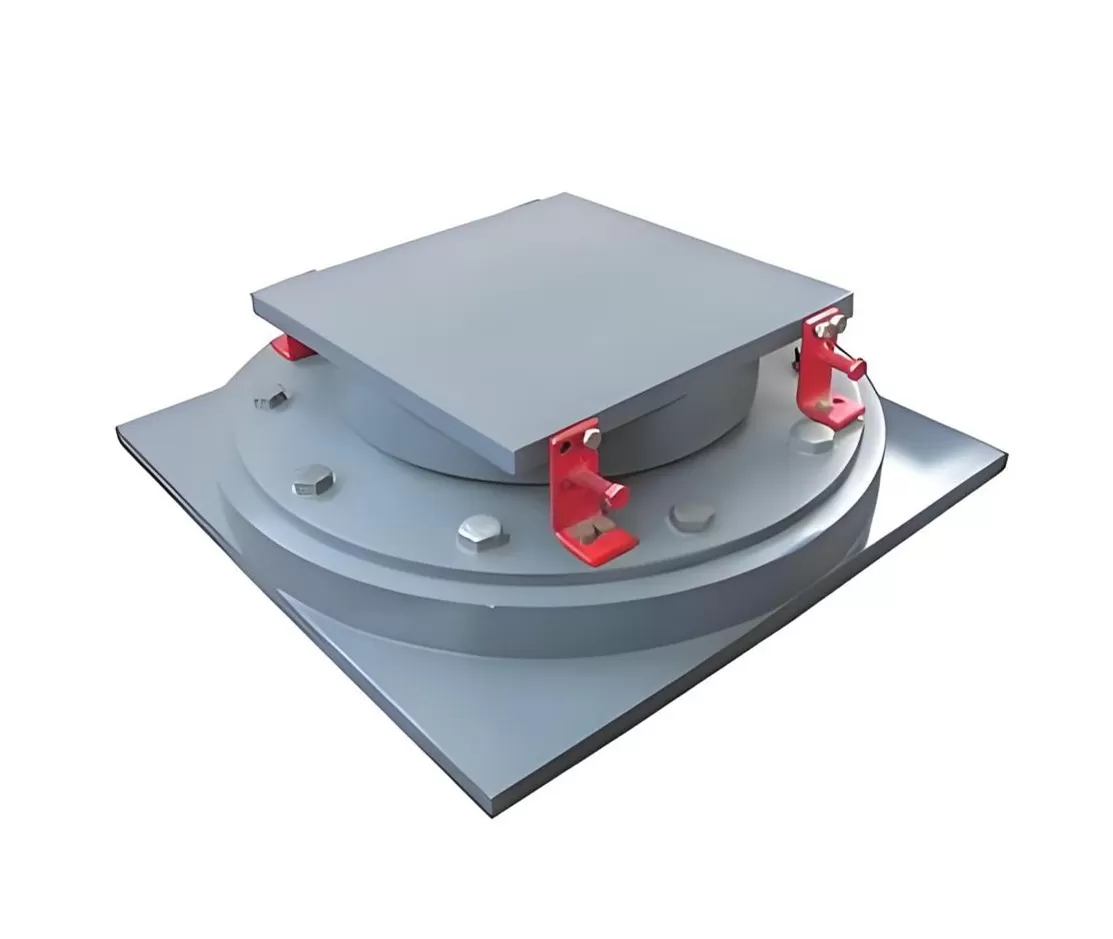
Mechanics and Tribology at Articulation Interfaces
The primary function of spherical articulation is accommodating structural rotation without transferring bending moments into piers or abutments. This motion occurs along the curved contact surface between the internal convex plate and the concave backing plate.
Rotational Displacements and Contact Pressure Distribution
In standard pot bearings, rotation relies on the elastic deformation of a confined rubber pad. At high rotation angles, localized edge pressure rises sharply, leading to non-uniform strain and potential elastomer extrusion. Spherical geometry avoids this limitation. As the upper structure rotates, the concave plate glides smoothly over the convex spherical segment, preserving a constant geometric center of rotation.
Internal stress distribution depends on contact radius and surface geometry. Under pure vertical load, contact pressure reaches its peak at the apex of the spherical segment and decreases toward the perimeter. When rotational displacement occurs, friction along the curved interface generates a small resisting torque. Controlling this torque requires maintaining low sliding friction coefficients across all operating temperatures.
Tribological Dynamics and Friction Mechanics
Most modern sliding bearings utilize a dual-interface layout:
Curved Interface: Handles rotational degrees of freedom through a combination of a polished stainless steel convex surface and a recessed polymer or bronze alloy lining.
Flat Upper Interface: Handles horizontal translational displacement (longitudinal and transverse) using a polished sheet of austenitic stainless steel sliding against a dimpled polymer liner filled with silicone grease.
Friction along these interfaces follows non-Coulombic principles. At high contact pressures, the coefficient of friction drops significantly. For standard polytetrafluoroethylene (PTFE) sliding against mirror-polished stainless steel (roughness $Ra \le 0.1 \mu m$), the dynamic friction coefficient can decrease from 0.08 at low loads down to 0.02 under contact pressures exceeding 30 MPa.
Continuous micro-vibrations from live traffic or wind loads create conditions ripe for fretting wear. If the lubricating film breaks down or particulates enter the interface, friction rises rapidly. This leads to stick-slip motion, where micro-stiction generates acoustic noise and transfers impulse forces into structural anchorages.
Sliding Interface Materials and Life-Cycle Economics
Selecting sliding materials directly governs the footprint, load capacity, and operational life of structural support bearings.
Material Comparison for High-Load Sliding Interfaces
Standard PTFE has served as the default sliding interface material for decades. However, under high sustained pressures, unreinforced PTFE experiences cold flow (plastic creep), causing the material to extrude from its retaining recess. Modified ultra-high-molecular-weight polyethylene (UHMWPE) and self-lubricating metallic alloys provide higher load margins and broader thermal operating limits.
| Performance Parameter | Standard PTFE | Modified UHMWPE (e.g., MSM) | Self-Lubricating Alloy (e.g., MSA) | Spherical Roller Bearing |
|---|---|---|---|---|
| Permissible Contact Stress | 30 MPa | 60 to 90 MPa | ≥ 100 MPa | High (Line Contact) |
| Operating Temperature Range | -25°C to +60°C | -50°C to +100°C | -50°C to +250°C | -40°C to +150°C |
| Design Coefficient of Friction | 0.03 - 0.05 | < 0.02 | 0.05 - 0.08 (Dry) | 0.0015 - 0.002 (Rolling) |
| Resistance to Creep and Wear | Moderate | Very High | Extreme | Subject to Fatigue Flaking |
| Maintenance Interval | 10-15 Years (Regreasing) | 50+ Years (Low Maintenance) | Maintenance-Free | Frequent Relubrication |
Upgrading from standard PTFE to advanced polymers doubles the allowable static design pressure from 30 MPa to 60 MPa or more. This increase reduces the required contact surface area by roughly 50%, enabling smaller steel housings, lighter structural weight, and lower total project capital expenditure.
In highly corrosive marine zones or heavy industrial facilities where regreasing is impractical, metal-to-metal self-lubricating alloys (such as bronze matrices embedded with solid graphite plugs) remove the dependency on elastomeric seals and grease reservoirs entirely.
Types of Structural Spherical Assemblies
Applying a bridge spherical bearing requires matching structural movement specifications with the correct mechanical restraint configuration. Structural designs classify these assemblies into three functional categories:
Fixed Assemblies: Restrain all horizontal movement while permitting free rotational displacement around all horizontal axes. Vertical forces pass directly through the central convex-concave core into the substrate.
Guided (Unidirectional) Assemblies: Feature side guide bars or a central keyway lined with sliding material. These allow horizontal translation along a single axis (typically parallel to the longitudinal bridge centerline) while resisting transverse forces and permitting full multiaxial rotation.
Free-Sliding (Multidirectional) Assemblies: Feature an unconstrained flat upper sliding surface. They allow translation across both longitudinal and transverse axes simultaneously, accommodating radial expansion in wide or curved bridge decks while handling thermal shifts.
Field Execution and Construction Hazards
The structural integrity of a high-capacity articulation assembly relies heavily on site execution. A major portion of early component damage traces back to installation errors rather than manufacturing defects.
Pre-setting and Thermal Offset Calculation
When installing a bridge spherical bearing, the upper sliding plate rarely sits at its exact geometric center. The installation ambient temperature usually differs from the structural neutral temperature assumed in design calculations. Failing to adjust for this offset restricts the effective sliding capacity in one direction, risking premature guide-bar impact during winter contraction or summer expansion.
The required pre-setting offset ($\Delta e$) is calculated using thermal expansion principles:
$$\Delta e = \alpha \cdot L \cdot (T_{install} - T_{neutral})$$
Where:
$\alpha$ represents the coefficient of thermal expansion of the superstructure material.
$L$ is the expansion length from the structural fixed point to the bearing location.
$T_{install}$ is the measured structure temperature during final fixing.
$T_{neutral}$ is the mid-range design temperature.
Setting this offset requires releasing temporary shipping clamps, sliding the top plate to the calculated coordinate, and securing the assembly before pouring the concrete connection or tightening anchor bolts.
Subplate Leveling and Bedding Grout Integrity
An uneven concrete pedestal creates bending stresses across the lower steel housing. If a bearing sits on an unlevel surface exceeding a 1:1000 slope tolerance, contact pressure shifts toward the perimeter of the sliding sheet. This edge pinch increases local pressure beyond material yield limits, accelerating polymer wear and causing local deformation of the stainless steel slide plate.
High-strength, non-shrink epoxy or cementitious grout must completely fill the void between the lower anchor plate and the supporting concrete pier cap. Air pockets within the grout bed act as structural voids under heavy live loading. Precision hardware manufactured by KINGWORK incorporates leveling screws and grout injection ports to ensure void-free support bases under field conditions.
De-rigging Temporary Transport Hardware
Manufacturers supply bearing assemblies with bright-colored transit straps or steel plates to hold components aligned during shipping and positioning. Leaving these transit fixtures locked after structural erection prevents natural movement. As pre-stressing forces are applied or temperatures shift, these temporary restraints absorb unintended horizontal shear, leading to sheared anchor bolts or damaged pier tops.

In-Service Inspection, Diagnostics, and Hydraulic Replacement
Structural support components experience millions of dynamic loading cycles. Asset managers need regular inspection protocols to track degradation before structural distress occurs.
Inspection Metrics
Field maintenance inspections focus on four key indicators:
Sliding Sheet Thickness Loss: Measured using depth gauges along the perimeter gap between the upper and lower plates. A vertical height drop exceeding 3 mm signals advanced polymer wear or cold flow extrusion, requiring planned intervention.
Dust Seal Continuity: Checking elastomeric lip seals for ozone cracking, tearing, or displacement. Damaged seals allow ambient grit, deicing salts, and moisture into the lubricating dimples, converting the grease layer into an abrasive compound.
Anchor Bolt and Guide Shear Deformation: Visualizing surrounding concrete for spalling or radial cracking near anchor pockets, indicating excessive horizontal friction or lock-up.
Base Plate Corrosion: Inspecting protective coatings on non-sliding exposed steel surfaces to prevent rust undercutting near the stainless steel sliding sheet.
Synchronous Hydraulic Jacking Procedures
When an assembly reaches the end of its service life, replacement requires lifting the superstructure. This work demands synchronized hydraulic systems to prevent damaging structural elements above.
Hydraulic cylinders sit on dedicated jacking pedestals around the pier head. Computer-controlled pumps monitor both pressure and displacement at each jack location, keeping relative lift differentials between adjacent points below 0.5 mm. Exceeding this lift limit risks cracking continuous concrete decks or overstressing expansion joints nearby.
Once lifted, temporary mechanical locking collars hold the span load while workers remove anchor nuts, slide out the worn support unit, refurbish the grout pad, and position the new bearing. Partnering with experienced structural component fabricators like KINGWORK ensures replacement units match existing hole patterns and structural height profiles, minimizing traffic or operational interruptions.
Frequently Asked Questions
Q1: What separates a fixed spherical bearing from guided and free-sliding variants?
A1: A fixed spherical bearing permits rotational movement around any axis but restrains horizontal displacement in all directions. Guided variants allow horizontal sliding along a single defined axis using edge guides or central keyways. Free-sliding assemblies permit horizontal movement in both longitudinal and transverse directions while supporting rotational degrees of freedom.
Q2: Why does standard PTFE experience cold flow under high static loads?
A2: Unreinforced PTFE exhibits viscoelastic properties. When sustained compressive stress exceeds roughly 30 MPa, its molecular chains slide past one another, causing the material to creep laterally out of its retaining recess. Specifying modified UHMWPE or recessed high-density polymers prevents this extrusion under higher static design pressures.
Q3: How does ambient temperature during installation impact thermal pre-setting?
A3: Structural materials expand and contract with temperature shifts. If installation occurs above or below the baseline design temperature, the top sliding plate must be physically offset from its center position prior to fixing. This pre-setting adjustment ensures the bearing retains sufficient sliding clearance to accommodate extreme seasonal contraction and expansion cycles.
Q4: What causes edge pinching in concave sliding plates?
A4: Edge pinching happens when structural rotation angles exceed design limits, or when the underlying grout bed is not perfectly level. The resulting slope shifts the load away from the center of the spherical surface toward the rim, generating localized peak stresses that damage sliding sheets and score stainless steel surfaces.
Q5: What are the primary indicators that a support assembly requires replacement?
A5: Replacement becomes necessary when the sliding sheet exhibits structural height loss greater than 3 mm, when internal stainless steel surfaces show severe scoring or corrosion, when elastomeric dust seals fail completely, or when unmitigated horizontal forces cause concrete cracking around anchor points.
Project Inquiries and Engineering Specifications
Selecting structural articulation assemblies requires balancing load capacities, movement ranges, material longevity, and installation tolerances. Engineering teams working on long-span bridge projects, heavy transit links, or structural load modifications can contact KINGWORK directly. Our engineering specialists assist with custom finite element analysis, material optimization sheets, sales inquiries, and tailored manufacturing specifications for structural projects worldwide.
![Bridge Joint Types: The Complete Engineering Guide [2026 Edition]](https://www.kwbridgebearing.com/storage/non_theme/202606/024.webp)