Comprehensive Guide to Bridge Expansion Joint Types: Design, Selection & Applications
Article content and related resources
Bridges expand, contract, and flex continuously. Temperature shifts, dynamic traffic loads, concrete shrinkage, and seismic forces demand structural room to move. Without a reliable mechanism to absorb these actions, severe structural distress occurs quickly.
Bridge expansion joints act as the breathing system of modern bridge infrastructure. Choosing the wrong joint system creates recurring maintenance headaches, structural deck deterioration, and safety hazards for vehicles. At KINGWORK, our structural engineering team brings over 13 years of field experience across 50 countries to help engineers select, design, and implement durable joint solutions.
1. What is a Bridge Expansion Joint & Why is Proper Selection Vital?
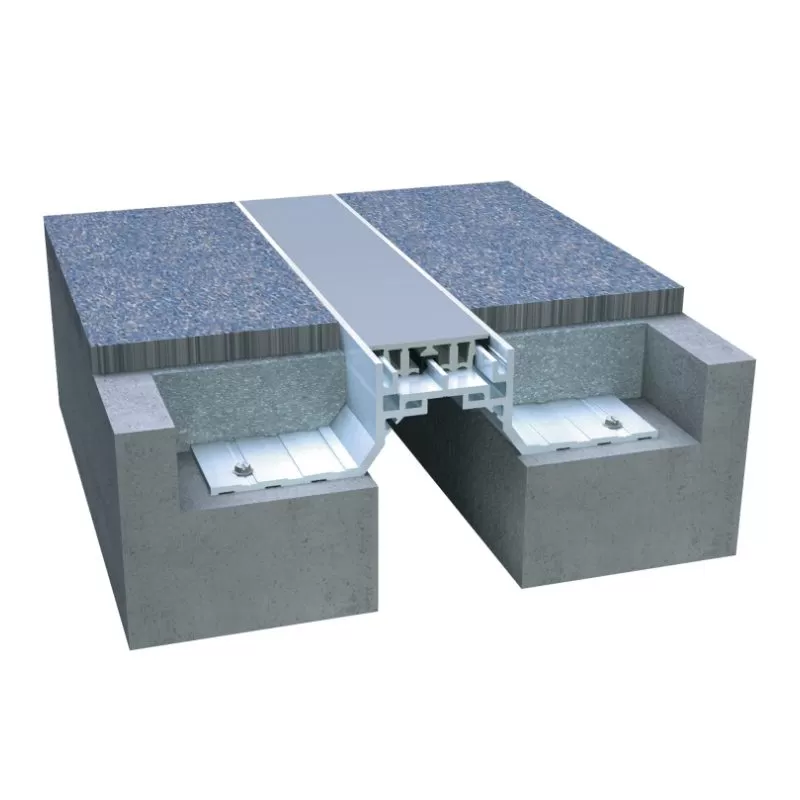
A bridge expansion joint is a specialized structural assembly placed across deck gaps. It accommodates longitudinal, transverse, and rotational movements between adjacent bridge segments or between the deck and abutment.
Beyond accommodating displacement, these assemblies must protect the underlying substructure. A high-performance expansion joint serves several vital structural functions:
Movement Accommodation: It absorbs thermal expansion, shrinkage, creep, and live-load deflections.
Watertight Deck Sealing: It stops water, deicing salts, and debris from corroding the bridge bearings and substructure below.
Load Transfer & Ride Quality: It supports heavy wheel loads smoothly across structural gaps with minimal vibration and noise.
Fatigue Resistance: It withstands hundreds of millions of cyclic loading events across decades of service.
Engineers evaluate life-cycle cost (LCC) rather than initial material price alone. A cheap joint that fails prematurely causes costly deck rehabilitation, bridge deck leakage, and disruptive traffic closures.
2. Complete Classification of Bridge Expansion Joint Types
Bridge engineering requires matching structural conditions to the proper assembly. Here is an in-depth breakdown of the primary bridge expansion joint types used in modern transport infrastructure.
Type 1: Strip Seal Expansion Joints
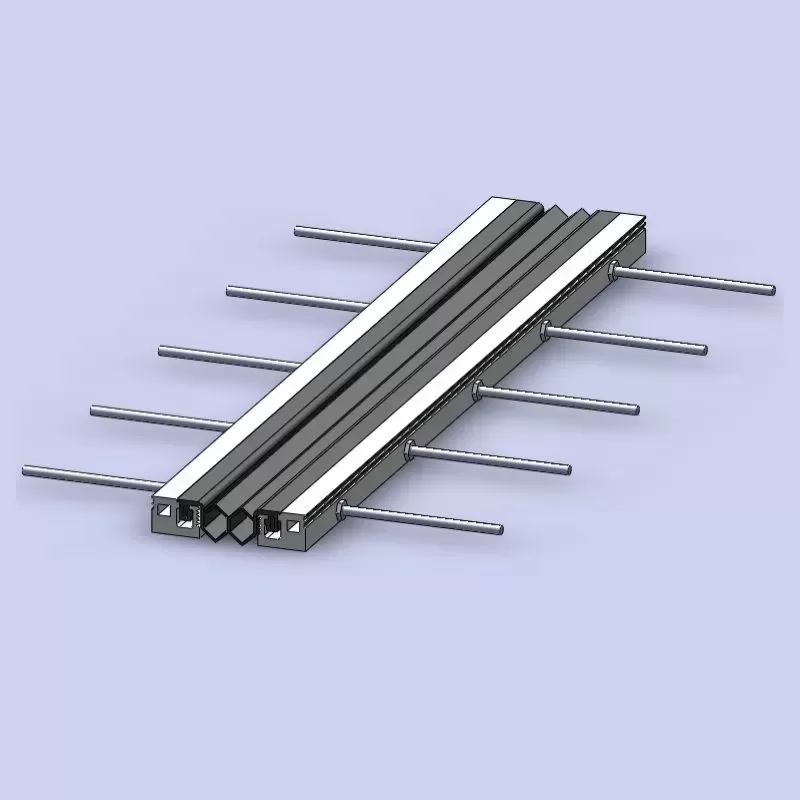
Single gap strip seal joints are widely specified worldwide for small to medium-span bridges. The system features two heavy-duty steel edge beams anchored into the concrete deck with an elastomeric sealing element locked between them.
Movement Capacity: 0 to 100 mm (0 to 4 inches).
Key Components: Hot-rolled or extruded steel edge profiles, heavy anchor studs, and a continuous neoprene or EPDM elastomeric gland.
Primary Advantages: 100% watertight seal, compact geometry, easy seal replacement without deck excavation, and economical initial cost.
Recommended Applications: Urban overpasses, standard highway overpasses, and medium-span prestressed concrete bridges.
Type 2: Modular Bridge Expansion Joints
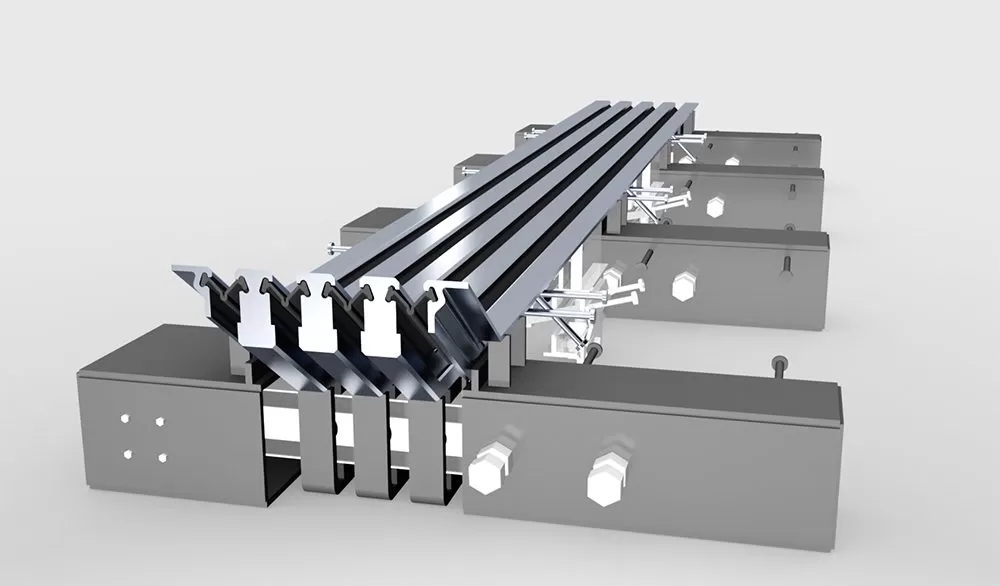
Modular bridge expansion joints handle massive, multi-directional structural displacements. These advanced systems divide total movement into smaller individual gaps using transverse center beams supported by longitudinal load-bearing joists.
KINGWORK manufactures custom modular bridge expansion joints using precision-machined steel components, polyurethane control springs, and elastomeric seals. Every assembly undergoes finite element analysis (FEA) and dynamic fatigue validation to comply with strict international criteria.
Movement Capacity: 80 mm up to 2,000+ mm (3 to 80+ inches).
Key Components: Steel edge beams, intermediate center beams, transverse support bars, urethane springs, and watertight neoprene profiles.
Primary Advantages: Large multidirectional displacement absorption, excellent fatigue resistance under heavy freight traffic, and modular serviceability.
Recommended Applications: Long-span suspension bridges, cable-stayed spans, and cross-sea viaducts.
Type 3: Finger Expansion Joints
Finger joints (or toothed joints) provide a continuous, cantilevered steel surface across medium-to-large expansion gaps. The interlocking steel plates bridge the deck gap while allowing longitudinal movement as the fingers mesh together.
Movement Capacity: 100 mm to 400+ mm.
Key Components: High-strength structural steel finger plates, precision anchor bolts, and a sub-deck drainage trough.
Primary Advantages: Extremely smooth driving surface, low vehicle noise, superior impact resistance under heavy axle loads, and no elastomeric elements directly exposed to wheel friction.
Recommended Applications: Heavily trafficked freight corridors, expressways, and combined highway-railway bridges.
Type 4: Elastomeric / Reinforced Cushion Joints
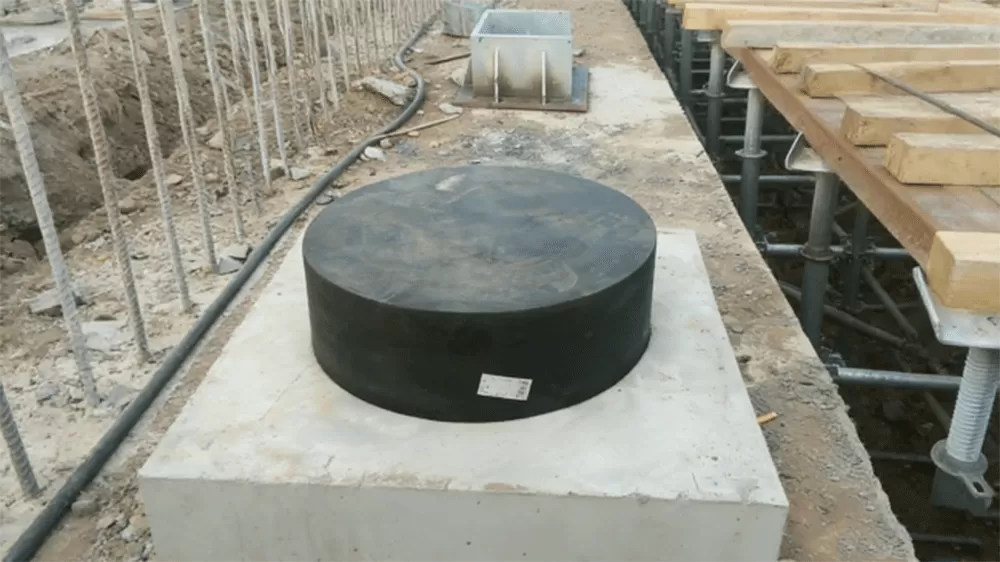
Reinforced elastomeric joints consist of vulcanized synthetic rubber molded around structural steel reinforcement plates. The rubber deforms in shear to absorb deck movements while the embedded steel plates support wheel loads.
Movement Capacity: 30 mm to 120 mm.
Key Components: High-grade chloroprene rubber body, embedded internal steel plates, and mechanical anchor bolts.
Primary Advantages: Excellent damping properties, reduced noise, corrosion-resistant outer body, and simple installation steps.
Recommended Applications: Medium-span highway bridges, approach ramps, and bridge rehabilitation projects.
Type 5: Asphaltic Plug Joints (APJ)
Asphaltic plug joints are flexible, seamless in-situ systems. Contractors install a special blend of polymer-modified bitumen, graded aggregate, and a steel bridging plate over the expansion gap.
Movement Capacity: Small movements, typically under 50 mm.
Key Components: Polymer-modified asphalt binder, selected basalt aggregates, backer rod, and a steel bridging plate.
Primary Advantages: Truly jointless transition, zero impact vibration for motorists, low installation cost, and fast installation overnight.
Recommended Applications: Short-span bridges, bridge culverts, and urban road maintenance overlays.
Quick Selection Matrix
The matrix below compares the structural features of each joint system to speed up preliminary selection:
| Joint Type | Movement Capacity | Watertightness | Heavy Load Rating | Initial Cost | Primary Application |
|---|---|---|---|---|---|
| Strip Seal Joint | 0 – 100 mm | High (Sealed) | High | Medium-Low | Highway bridges, urban viaducts |
| Modular Joint | 80 – 2,000+ mm | High (Sealed) | Very High | High | Cable-stayed & long-span bridges |
| Finger Joint | 100 – 400+ mm | Requires Drainage Pan | Extreme | Medium-High | Heavy freight routes, main arteries |
| Elastomeric Cushion | 30 – 120 mm | Moderate-High | Medium | Medium | Deck retrofits, medium spans |
| Asphaltic Plug (APJ) | < 50 mm | Continuous Surface | Moderate | Low | Short spans, small culverts |
3. Engineering Design & Selection Criteria
Selecting from various bridge expansion joint types requires precise engineering calculations. Field failures occur when designers consider only longitudinal thermal movements while neglecting complex physical variables.
Total Movement Calculation: Determine thermal variation ranges (ΔT), long-term concrete shrinkage, creep coefficients, and dynamic live-load rotations.
Skew & Curvature Factors: Curved and skewed bridges generate complex transverse shears and racking forces. Standard joints may bind unless configured with multi-directional movement capabilities.
Traffic Demands & Fatigue: High-speed truck lanes subject joints to millions of cyclic impact loads. Ensure steel anchors and welded connections comply with fatigue threshold limits.
Environmental Exposure: Coastal installations require marine-grade hot-dip galvanizing, stainless steel claddings, or advanced epoxy coatings to resist salt-fog corrosion. Cold regions require elastomeric seals formulated for sub-zero flexibility.
Maintenance Access & Drainage: Specify joints that allow seal replacement from the deck surface without demolishing structural concrete. Plan secondary drainage gutters to capture accidental runoff.
4. International Standards & Quality Assurance
Bridge safety relies on absolute manufacturing discipline. Standard-compliant bridge expansion joint types must satisfy stringent international engineering frameworks before installation:
AASHTO LRFD Bridge Design Specifications: Sets rigorous guidelines for vehicular impact, dynamic load allowance, and structural fatigue testing.
EN 1337 / ETAG 032: European technical guidelines covering performance categories, watertightness verification, and life-span evaluation of structural joints.
ISO 9001 Quality Management: Governs traceability of structural steel plates, robotic welding consistency, and elastomeric polymer purity.
At KINGWORK, production runs incorporate ultrasonic weld inspection, material tensile validation, and full-scale factory water testing. This ensures each assembly performs reliably under challenging operating conditions.
.webp?t=1787799847991 "bridge expansion joint types")
5. Why Engineers & Contractors Partner with KINGWORK
Supplying global infrastructure projects demands technical precision, dependable supply chains, and dedicated engineering support. KINGWORK supports contractors and structural designers at every phase of construction.
13+ Years of Global Experience: We have delivered structural bridge bearings, seismic isolation systems, and expansion joints to major transport networks in over 50 countries.
Tailored Engineer-to-Order Capabilities: Our technical team assists during early planning phases to design bespoke joint systems for severe skews, heavy axle loads, or seismic movement requirements.
Complete Bridge Component Integration: Beyond expansion joints, KINGWORK supplies pot bearings, spherical bearings, elastomeric pads, and damping devices for fully coordinated structural behavior.
Rigorous Testing and Support: We supply certified mill test reports, comprehensive installation manuals, flexible minimum orders, and on-site technical guidance to keep your project on schedule.
6. Frequently Asked Questions (FAQ)
Q1: What is the average service life of modern bridge expansion joint
types?
A1: Service life depends on joint type, traffic volume, and
maintenance. Steel components in modular and finger joints typically last 30 to
50 years. Replaceable elastomeric seals and glands usually require renewal every
10 to 15 years. Asphaltic plug joints generally last 5 to 8 years depending on
rutting resistance.
Q2: How do engineers prevent water leakage around expansion
joints?
A2: Effective waterproofing requires durable elastomeric
seals, continuous clamping systems, and proper elastomeric block-out sealants.
Designers also specify continuous sub-deck secondary drainage troughs beneath
the joint assembly to safely channel away water if an upper seal gets
damaged.
Q3: Which expansion joint is best suited for skewed or curved
bridges?
A3: Modular expansion joints and multi-directional strip
seal joints work best for skewed bridges. They accommodate transverse racking
and longitudinal expansion simultaneously. Highly skewed bridges may require
custom finger configurations or specialized slide-guided modular systems.
Q4: What causes early expansion joint failure on highway
bridges?
A4: Common causes include poor concrete consolidation in
the block-out area, incorrect gap settings during installation, debris buildup
that locks joint movement, and inadequate corrosion protection on steel
elements.
Q5: Can KINGWORK manufacture custom bridge expansion joints to match
existing bridge retrofits?
A5: Yes. KINGWORK specializes in custom
engineer-to-order manufacturing. We fabricate replacement joints matching exact
block-out dimensions, skew angles, and movement capacities for bridge
rehabilitation and widening projects.
Get an Engineering Consultation and Quote
Selecting the right bridge expansion joint determines the longevity and safety of your bridge project. Contact the technical engineering team at KINGWORK today to discuss project specifications, request CAD drawings, or receive a competitive quote for your next infrastructure tender.