
7 Technical Considerations for Specifying Reinforced Elastomeric Expansion Joint Systems in Bridge Engineering
Article content and related resources
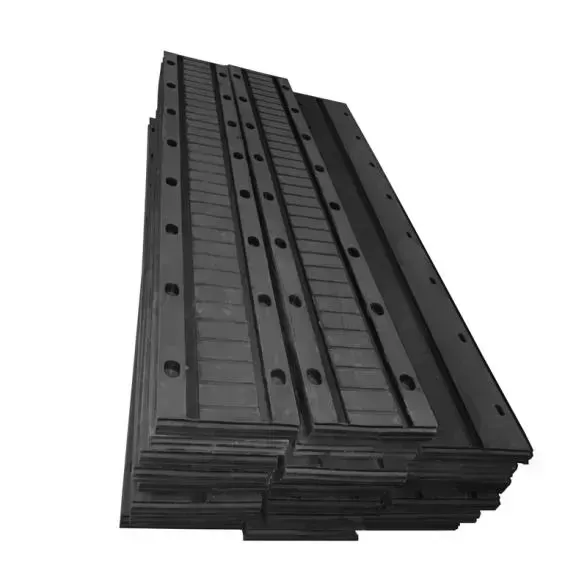
In the field of bridge engineering, managing structural movement is a fundamental requirement for ensuring the longevity and safety of transportation networks. As bridge decks expand and contract due to thermal fluctuations, concrete shrinkage, and seismic activity, the selection of an appropriate movement control system becomes a pivotal decision for civil engineers. Among the various solutions available, the reinforced elastomeric expansion joint stands out as a versatile and robust option for small-to-medium movement ranges. These components are designed to provide a continuous, smooth surface for vehicular traffic while simultaneously protecting the underlying substructure from environmental degradation.
By integrating high-quality rubber with internal steel reinforcement, these joints accommodate multi-directional displacements and rotations. For global infrastructure projects, companies like KINGWORK provide specialized solutions that meet international standards, ensuring that every bridge deck remains resilient under varying climatic conditions and heavy axle loads. Understanding the nuances of these systems is necessary for any professional involved in the design, procurement, or maintenance of modern highways and overpasses.
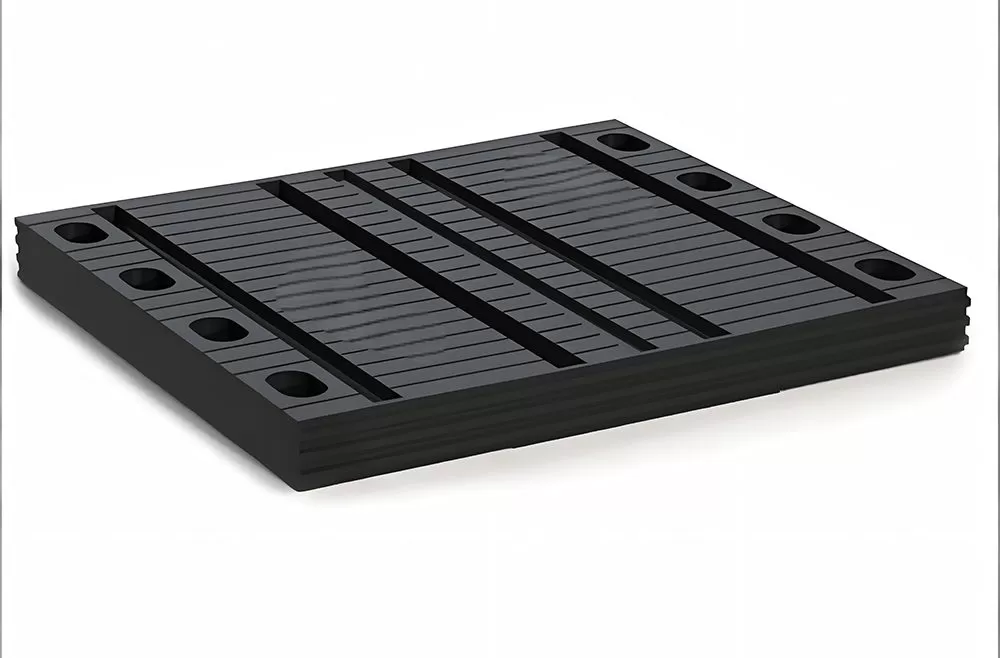
The Anatomy and Functionality of Reinforced Elastomeric Systems
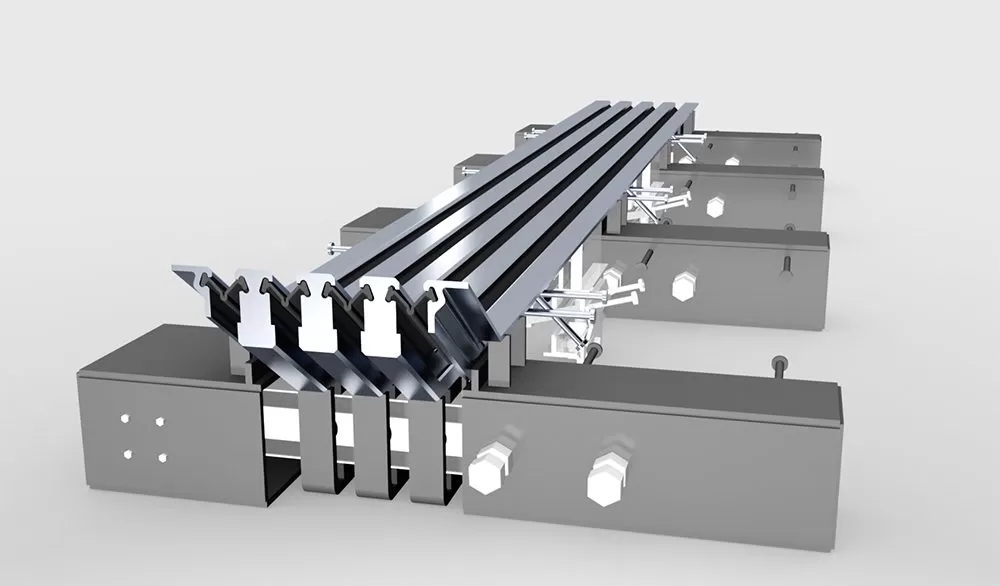
A reinforced elastomeric expansion joint is a composite structure typically consisting of a vulcanized elastomer—such as chloroprene (neoprene) or natural rubber—and embedded steel plates. Unlike simple strip seals or compression seals, the reinforced variant relies on the shear deformation of the elastomer or the mechanical interaction of its internal plates to facilitate movement. This design allows the joint to span wider gaps while maintaining the structural rigidity required to support traffic weight.
Internal Steel Reinforcement
The core strength of the joint comes from its internal steel plates. These plates are not merely embedded but are chemically bonded to the rubber during the vulcanization process. The steel provides the necessary load-bearing capacity to bridge the expansion gap, preventing the rubber from sagging under the weight of heavy vehicles. This reinforcement ensures that the vertical deflection is kept to a minimum, which significantly reduces the impact forces transmitted to the bridge abutments and piers.
Elastomeric Matrix Characteristics
The choice of elastomer is a deciding factor in the performance of the joint. High-grade chloroprene is frequently preferred due to its resistance to ozone, ultraviolet radiation, and chemical spills (such as fuel or de-icing salts). The elastomer serves two primary roles: it provides the flexible medium for movement and acts as a waterproof seal, preventing moisture and corrosive agents from reaching the bridge bearings and support structures below. KINGWORK emphasizes the use of premium-grade compounds to extend the service life of these components in harsh environments.
Technical Performance Metrics: Beyond Basic Displacement
When specifying a reinforced elastomeric expansion joint, engineers must look beyond the maximum movement capacity. Several technical parameters dictate the long-term success of the installation:
Shear Modulus: This measures the stiffness of the elastomer. A balanced shear modulus is required to allow for easy movement (low resistance) while maintaining enough stability to resist permanent deformation under load.
Shore A Hardness: Typically ranging between 50 and 70, the hardness of the rubber impacts its resistance to abrasion and indentation by sharp objects or debris on the roadway.
Fatigue Resistance: Bridges undergo millions of load cycles. The bonding strength between the steel plates and the rubber must be sufficient to prevent delamination over decades of operation.
Compression Set: This refers to the ability of the elastomer to return to its original shape after being compressed. A low compression set is vital for maintaining a tight seal over the years.
For large-scale projects, these metrics are tested against standards such as AASHTO M251 or EN 1337-3. Meeting these benchmarks ensures that the infrastructure can withstand the dynamic stresses of modern traffic without premature failure.
Strategic Installation Practices for Structural Integrity
The failure of an expansion joint is rarely due to the material alone; improper installation is the leading cause of premature replacement. Achieving a flush transition between the bridge deck and the joint surface is a precision task that requires careful planning. A properly installed reinforced elastomeric expansion joint must account for the ambient temperature at the time of setting, as this determines the initial gap width.
Substrate Preparation and Anchoring
The concrete blockout—the recessed area where the joint is placed—must be clean, dry, and structurally sound. High-strength, non-shrink grout or epoxy mortar is typically used to bed the joint. The anchoring system, consisting of heavy-duty bolts or studs, must be secured into the bridge deck with sufficient embedment depth to resist the tension and shear forces generated by braking trucks and thermal contraction.
Levelling and Alignment
If the joint is set even a few millimeters too high or too low, it becomes a point of impact. This not only causes noise pollution in urban areas but also accelerates the wear of the rubber and the fatigue of the anchoring bolts. Engineers must use precision levelling tools to ensure the joint follows the exact profile of the roadway, including any cross-slopes or longitudinal gradients.
Addressing Industry Pain Points: Durability and Leakage
One of the most significant challenges in bridge maintenance is water leakage through expansion joints. When a reinforced elastomeric expansion joint loses its watertight seal, runoff containing chlorides penetrates the structure, leading to the corrosion of reinforcement bars and the degradation of concrete. This can lead to massive repair costs that far exceed the price of the joint itself.
To mitigate this, modern designs incorporate secondary drainage systems or continuous sealing membranes. Furthermore, the use of high-performance adhesives at the interface between the joint and the concrete blockout is a common strategy to prevent bypass leakage. KINGWORK focuses on these integrated sealing solutions to provide infrastructure managers with peace of mind regarding long-term structural protection.
Material Science: Why Neoprene and Steel Matter
The synergy between steel and rubber in a reinforced elastomeric expansion joint is a marvel of material science. The steel plates are usually treated with anti-corrosion coatings, such as galvanization or epoxy painting, before being encased in rubber. This "encapsulation" protects the steel from oxygen and moisture, effectively eliminating the risk of rust.
The vulcanization process itself is a high-pressure, high-temperature chemical reaction that creates cross-links between polymer chains. When performed correctly, the bond between the elastomer and the steel becomes stronger than the elastomer itself. This ensures that even under extreme seismic movements, the joint maintains its integrity without the components separating. This level of engineering is why these joints are favored for highway overpasses where reliability is non-negotiable.
Maintenance and Life-Cycle Cost Analysis
While the initial cost of a reinforced system may be higher than a simple poured sealant, the life-cycle cost is significantly lower. A well-maintained expansion joint can last 15 to 25 years. Routine inspections should focus on:
Debris Accumulation: Stones and sand can get trapped in the movement gaps, causing "point loading" that can tear the rubber. Regular cleaning is a simple yet effective maintenance task.
Anchor Tightness: Periodic checks of the anchoring bolts ensure that the joint remains firmly fixed to the deck. Loose anchors lead to vibration and rapid joint destruction.
Surface Wear: While the rubber is abrasion-resistant, heavy traffic will eventually wear down the surface. Monitoring the thickness of the top cover helps in planning for timely replacements.
By investing in quality components from reputable suppliers, bridge authorities can reduce the frequency of lane closures and emergency repairs, which are both costly and disruptive to the public.
Global Standards and Quality Control
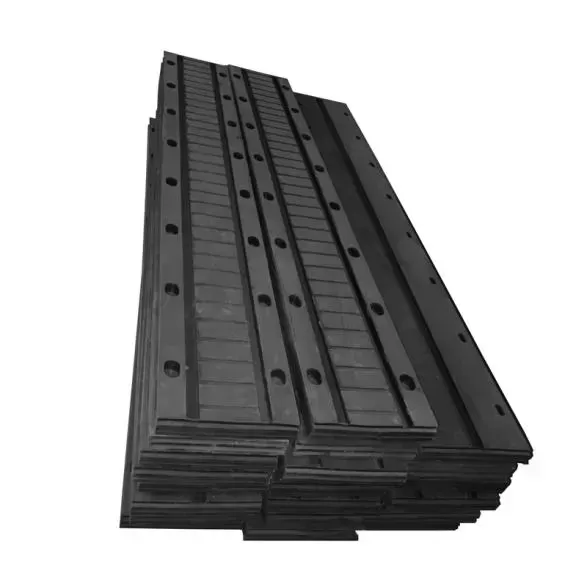
International bridge projects require adherence to rigorous quality control protocols. Manufacturing facilities must implement ISO 9001 management systems to ensure consistency across batches. Every reinforced elastomeric expansion joint should undergo testing for tensile strength, elongation at break, and accelerated aging. These tests simulate years of environmental exposure in a matter of weeks, providing data-driven assurance that the product will perform as expected in the field.
As urban centers expand and the demand for more resilient infrastructure grows, the role of specialized manufacturers becomes more prominent. Providing tailored solutions for specific bridge geometries—such as skewed joints or curved bridge decks—requires deep technical expertise and advanced manufacturing capabilities.
Summary of Engineering Benefits
In conclusion, the reinforced elastomeric system provides a balanced solution for modern bridge design. It offers a smooth riding surface, protects the structure from water damage, and accommodates the inevitable movements of large-scale engineering works. Its success lies in the marriage of high-grade polymers and structural steel, a combination that has proven its worth across global highway networks. For engineers and contractors, choosing a partner who understands these technical complexities is the first step toward building safer, more durable bridges.
Frequently Asked Questions (FAQ)
Q1: What is the typical movement range for a reinforced elastomeric expansion joint?
A1: These joints are generally designed for movement ranges between 30mm and 330mm. For movements exceeding this range, modular expansion joints or finger joints are usually recommended, though the specific design can be adapted for moderate seismic requirements.
Q2: How does temperature affect the installation of these joints?
A2: Temperature is a primary factor. The joint must be "pre-set" to a specific width based on the bridge deck's temperature at the time of installation. Failure to adjust for temperature can result in the joint being over-compressed in summer or over-extended in winter, leading to structural failure.
Q3: Can these joints be used in bridges with a significant skew angle?
A3: Yes, reinforced elastomeric joints are highly adaptable to skewed bridges. The internal steel plates can be oriented to accommodate the specific direction of movement, though the installation process requires more precise alignment to ensure smooth traffic transition.
Q4: How do you prevent the "clunking" noise often associated with bridge joints?
A4: Noise is usually caused by a height mismatch between the joint and the road or by loose anchoring. Ensuring a perfectly flush installation and using high-strength bedding mortars will minimize impact noise and vibration.
Q5: Are these joints resistant to oil and chemical spills?
A5: When manufactured using high-quality chloroprene (neoprene), the joints exhibit excellent resistance to oils, fuels, and common road chemicals. This resistance is a standard requirement for highway applications to prevent the elastomer from softening or swelling.
Q6: How does the internal steel reinforcement prevent the rubber from "creeping"?
A6: The steel plates act as a rigid skeleton that distributes the vertical load from vehicle tires across a larger area of the elastomer. This prevents the rubber from undergoing excessive plastic deformation or "creep" over time under constant traffic pressure.
Inquiry for Professional Infrastructure Solutions
Are you looking for high-performance expansion joint solutions for your next bridge project? Our technical team at KINGWORK specializes in the design and manufacture of durable, international-standard bridge components. Whether you require standard specifications or custom-engineered solutions for complex geometries, we provide the expertise needed to ensure structural longevity.
Contact us today to receive a detailed technical consultation, project-specific drawings, or a competitive quotation for your infrastructure needs. Let us help you build bridges that stand the test of time.
![Bridge Joint Types: The Complete Engineering Guide [2026 Edition]](https://www.kwbridgebearing.com/storage/non_theme/202606/024.webp)