
7 Factors Influencing Elastomeric Bearing in Bridges: Structural Performance Analysis
Article content and related resources
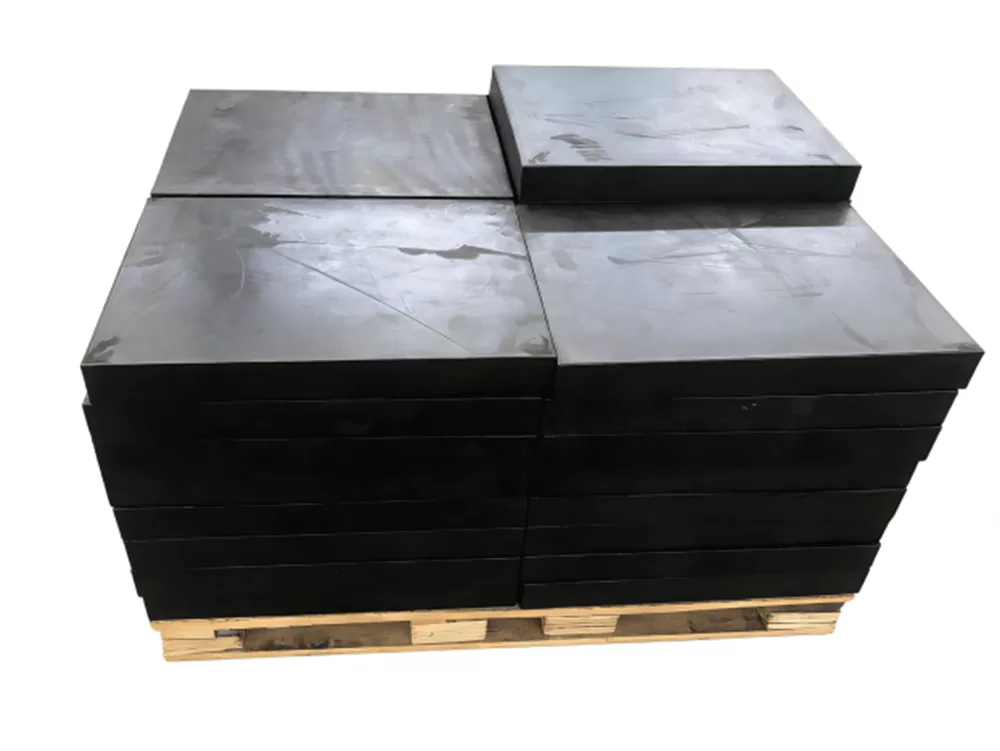
Bridge superstructures undergo continuous movement caused by temperature fluctuations, concrete creep, vehicle acceleration, braking forces, and structural deflections. Managing these dynamic forces requires precise interface components between the deck and the supporting piers or abutments. Integrating an elastomeric bearing in bridges provides an effective mechanism to transfer high vertical loads while permitting controlled horizontal translation and rotational flexibility. By isolating structural vibrations and absorbing longitudinal and transverse displacements, these components protect the substructure from localized stress concentrations that lead to early structural fatigue.
Modern highway and railway bridge design relies on elastomeric bearings due to their maintenance-free operation, structural simplicity, and economic efficiency. Selecting the correct bearing type requires an understanding of elastomer material response under compression, shear strain limits, and long-term environmental degradation. High-performance manufacturing from specialized engineering firms like KINGWORK ensures that these rubber-metal composite devices meet rigorous mechanical expectations over multi-decade service lives.
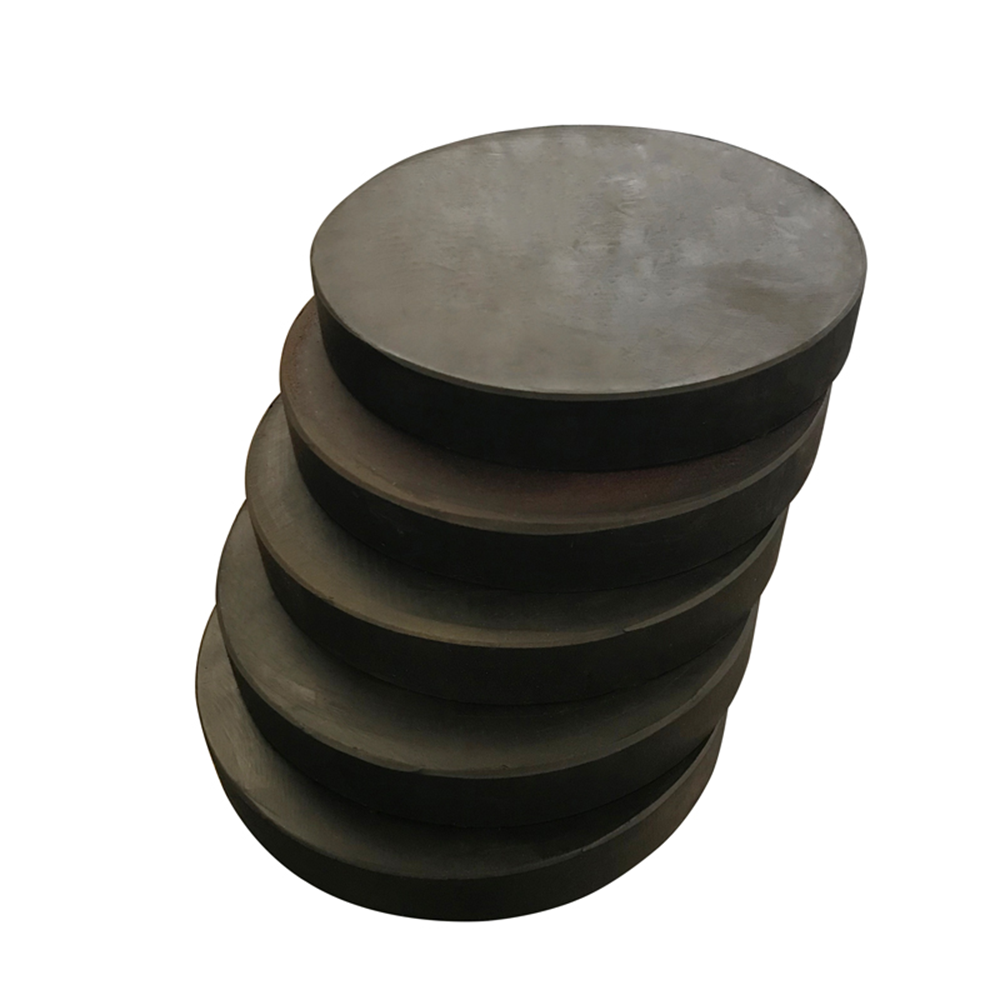
Mechanical Architecture of Steel-Reinforced Elastomeric Bearings
An elastomeric bearing pad relies on the viscoelastic properties of rubber to absorb translational and rotational movements. Simple plain elastomeric pads, consisting solely of unreinforced rubber, bulge laterally under compressive loads. This lateral expansion causes significant vertical deflection, limiting plain pads to low-load, short-span structures.
To withstand the intense vertical loads of heavy civil engineering projects, steel-reinforced elastomeric bearings incorporate internal steel plates vulcanized directly to alternating layers of elastomer. These internal steel shims restrict lateral bulging of the elastomer layers through surface friction and chemical bonding. This constraint alters the stress state within the rubber from simple compression to triaxial compression, dramatically increasing the vertical compressive stiffness while leaving horizontal shear stiffness virtually unchanged.
The Role of Shape Factor in Compressive Behavior
The mechanical performance of an elastomeric bearing in bridges depends heavily on its shape factor ($S$). The shape factor is defined as the ratio of the load-bearing area to the total perimeter area free to bulge. Mathematically, for a rectangular bearing with plan dimensions $a$ and $b$, and an individual elastomer layer thickness of $t_i$:
$$S = \frac{a \times b}{2 \times t_i \times (a + b)}$$
Higher shape factors reduce internal shear stresses within the elastomer matrix, enabling the bearing to support massive vertical loads without suffering permanent structural distortion. Decreasing individual elastomer layer thickness while increasing the number of steel shims increases the overall shape factor without altering the total height of the bearing, allowing bridge designers to fine-tune vertical load capacity independent of structural movement limits.
Shear Deformation and Horizontal Movement Capabilities
Horizontal translation of the bridge superstructure—caused by thermal expansion, thermal contraction, and seismic action—is accommodated entirely through shear deformation of the elastomeric layers. The horizontal force ($F_h$) required to displace a bearing by a distance ($d_h$) is directly proportional to its total elastomer height ($T_r$), plan area ($A$), and shear modulus ($G$):
$$F_h = \frac{G \times A \times d_h}{T_r}$$
Engineers limit maximum horizontal shear strain ($\gamma$) to values below 0.7 or 1.0 depending on the governing design code (such as AASHTO or EN 1337) to prevent structural damage to the elastomer matrix or debonding at the rubber-to-steel interface. When calculated displacement demands exceed the shear capability of standard elastomeric layers, PTFE (Polytetrafluoroethylene) sliding plates are bonded to the top elastomeric surface, interfacing with a smooth stainless steel sheet to accommodate indefinite longitudinal movement.
Material Properties and Compound Formulations
The physical composition of the elastomer compound directly governs bearing longevity, damping capacity, and environmental resilience. Structural specifications typically require either Natural Rubber (Polyisoprene) or Synthetic Rubber (Chloroprene / Neoprene) based on regional environmental conditions.
Natural Rubber (NR): Demonstrates low-temperature flexibility, high tensile strength, and dynamic tear resistance. Natural rubber formulations exhibit minimal stiffness increases under severe cold conditions, making them ideal for northern bridge locations.
Chloroprene Rubber (CR): Offers resistance to ozone, atmospheric weathering, oil exposure, and chemical attack. Chloroprene features low creep rates and fire-retardant properties suitable for urban elevated highways and industrial bridge installations.
To guarantee long-term operational performance, manufacturers like KINGWORK formulate elastomer compounds with structural-grade carbon black, anti-aging additives, and specialized vulcanization packages. The shear modulus ($G$) is tightly controlled within standard nominal ranges (typically 0.9 MPa to 1.1 MPa at ambient temperature) to maintain predictable dynamic response across fluctuating thermal conditions.
Design Standards and Structural Analysis Criteria
Proper integration of an elastomeric bearing in bridges requires evaluating multiple loading combinations, rotational limits, and stability constraints as mandated by international design specifications such as AASHTO LRFD, EN 1337-3, or ISO 22762.
Rotational Performance and Strain Limits
Bridge girders deflect under live traffic loading, dead load accumulation, and thermal gradients, causing angular rotation at the bearing seat. The elastomeric bearing must accommodate this rotation without lifting off the support plate or experiencing local uplift. Angular rotation induces non-uniform compressive strain across the surface of the bearing, creating peak compression along one edge and strain relaxation along the opposite edge.
Design codes enforce combined strain limits to prevent internal elastomer damage:
$$\gamma_{total} = \gamma_c + \gamma_s + \gamma_r \le \gamma_{allowable}$$
Where $\gamma_c$ represents strain from vertical compression, $\gamma_s$ is horizontal shear strain, and $\gamma_r$ is strain induced by angular rotation. Restricting total combined strain prevents micro-tearing within the polymer matrix and protects the chemical bond between the steel shims and rubber layers.
Stability Against Slip and Tilting
Under low vertical load conditions combined with high horizontal forces, an unanchored elastomeric pad can slide across the concrete bridge seat. Minimum vertical load checks ensure sufficient friction force exists at the interface. When minimum friction requirements cannot be met, structural engineers specify vulcanized external steel top and bottom plates that anchor directly into the substructure and superstructure through anchor bolts or sole plates.
Manufacturing Excellence and Quality Assurance
The operational lifespan of a reinforced elastomeric bearing in bridges correlates directly with precision during the manufacturing process. Poor quality control during steel plate preparation or vulcanization leads to premature structural degradation.
Key quality control stages include:
Steel Shim Preparation: Internal steel plates must undergo grit-blasting to remove mill scale, rust, and surface contaminants, achieving a precise surface roughness profile before adhesive application.
Adhesive Bonding: Dual-coat chemical bonding agents are applied under controlled temperature and humidity conditions to form irreversible chemical bonds during heating.
High-Pressure Vulcanization: The elastomer layers and steel shims are placed inside high-precision compression molds. Temperature, pressure, and cure duration are continuously monitored to ensure consistent cross-linking density throughout the component thickness.
Standard testing protocols require routine factory production checks, including proof-load compression testing, shear modulus verification, and full-scale bond strength evaluations. Advanced manufacturing facilities maintained by KINGWORK utilize automated vulcanization presses and non-destructive ultrasonic testing to confirm complete internal alignment and bonding integrity across every production batch.
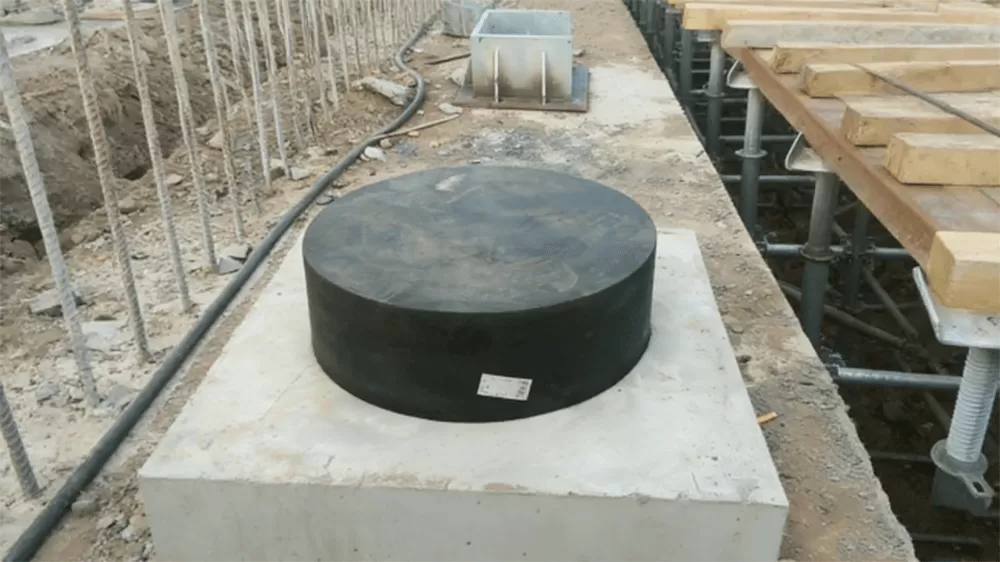
In-Service Inspection, Aging, and Replacement Engineering
Despite their durable construction, bridge bearings require regular visual and structural assessments over their design life. Bridge inspection programs identify physical distress signs early to plan scheduled structural maintenance before substructure damage develops.
Common Visual Indicators of Distress
Excessive Bulging: Uneven or excessive lateral bulging indicates internal steel shim delamination, local elastomer shear failure, or severe eccentric loading.
Surface Cracking (Ozone Damage): Micro-cracks forming along exposed outer edges point to atmospheric ozone attack or UV degradation, penetrating deep into non-reinforced outer rubber covers.
Shear Distortion Exceeding Limits: Permanent horizontal shear displacement beyond allowable design angles indicates unexpected foundation movement, thermal expansion lockup, or incorrect original installation.
Split Edge Lines: Tearing along the perimeter edge suggests excessive rotational strain or poor edge rubber bonding during original manufacturing.
Bearing Replacement Protocols
Modern bridge engineering incorporates jacking points into pier cap designs to allow for bearing maintenance. When replacement becomes necessary, hydraulic jacks elevate the bridge superstructure by a few millimeters, transferring dead loads off the worn bearings. The old unit is removed, concrete bridge seats are restored, and high-performance replacement units are installed without disrupting long-term bridge alignment.
Frequently Asked Questions
Q1: What is the primary functional role of an elastomeric bearing in
bridges?
A1: An elastomeric bearing transfers vertical loads from
the bridge deck down to the piers and substructure while simultaneously
accommodating horizontal movements caused by thermal changes and angular
rotations caused by girder flexure under dynamic traffic loads.
Q2: How do internal steel shims increase the load capacity of rubber
bearings?
A2: Internal steel shims bonded to alternating elastomer
layers prevent the rubber from bulging freely to the sides under vertical
compression. Restraining lateral expansion creates high compressive stiffness
while preserving the horizontal flexibility of the rubber matrix.
Q3: What causes shear strain failure in elastomeric bridge
pads?
A3: Shear strain failure occurs when horizontal displacement
demands exceed design thresholds, leading to delamination between the elastomer
and internal steel shims, excessive permanent tilt, or structural tearing along
the outer rubber perimeter.
Q4: How does Natural Rubber compare to Chloroprene in bridge bearing
applications?
A4: Natural Rubber exhibits low-temperature
performance and resistance to cold crystallization, making it suited for cold
climates. Chloroprene Rubber offers high resistance to ozone, atmospheric
weathering, oil exposure, and aging under extreme environmental conditions.
Q5: What mechanical criteria determine the inspection interval for
elastomeric bearings?
A5: Structural visual inspections occur every
two to five years, focusing on lateral bulging profiles, alignment angles,
cracking along outer rubber surfaces, anchorage conditions, and movement gaps
around sole plates.
Procurement and Engineering Technical Inquiries
Selecting the precise elastomeric bearing configuration requires detailed calculations involving dead loads, live load rotations, dynamic forces, and expected displacement range. Engineering teams require comprehensive project parameters—such as span lengths, girder types, ambient temperature ranges, and maximum reaction forces—to custom-design structural bearing solutions compliant with local structural codes.
For detailed engineering consultations, structural load calculations, or technical proposals regarding elastomeric bearing in bridges, submit your project specifications and performance requirements to the technical sales division at KINGWORK today.
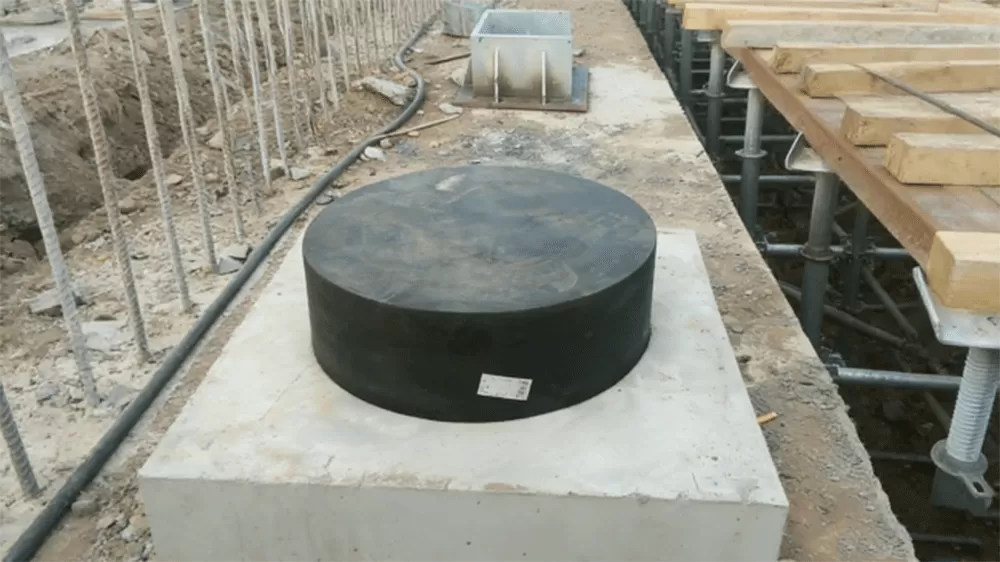
![Bridge Joint Types: The Complete Engineering Guide [2026 Edition]](https://www.kwbridgebearing.com/storage/non_theme/202606/024.webp)