
5 Structural Parameters for Designing Bridge Bearing Pads in Modern Infrastructure
Article content and related resources
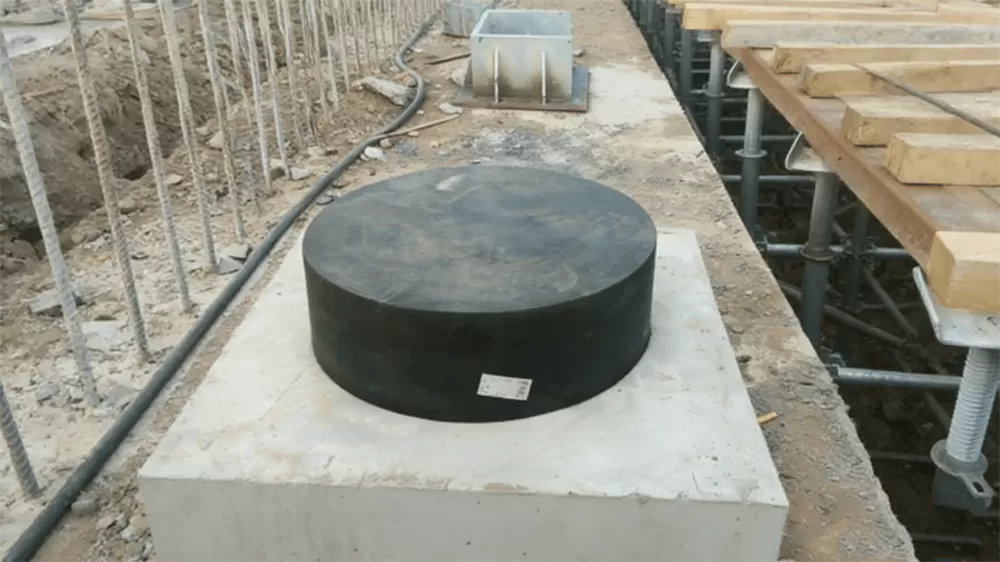
In high-capacity civil engineering, structures must accommodate continuous dynamic forces, thermal variations, and structural deflections. Bridges are not rigid monolithic systems; they are dynamic structures that expand, contract, rotate, and displace under the influence of environmental changes and traffic loads. At the junction where the superstructure meets the substructure, bridge bearing pads serve as the primary mechanism to transfer vertical loads while allowing controlled horizontal movements and rotational displacements. Without these structural components, the high stresses generated by thermal expansion, concrete shrinkage, and vehicle braking would lead to severe structural distress, concrete spalling, and eventual compromise of both piers and abutments.
For civil engineers, bridge designers, and asset owners, selecting the appropriate elastomer formulation and structural configuration is a primary design decision. Manufacturers like KINGWORK provide specialized engineering solutions designed to meet the rigorous demands of modern infrastructure. This analysis examines the mechanics, material characteristics, design standards, and selection criteria required to ensure structural performance and long-term durability in bridge construction.
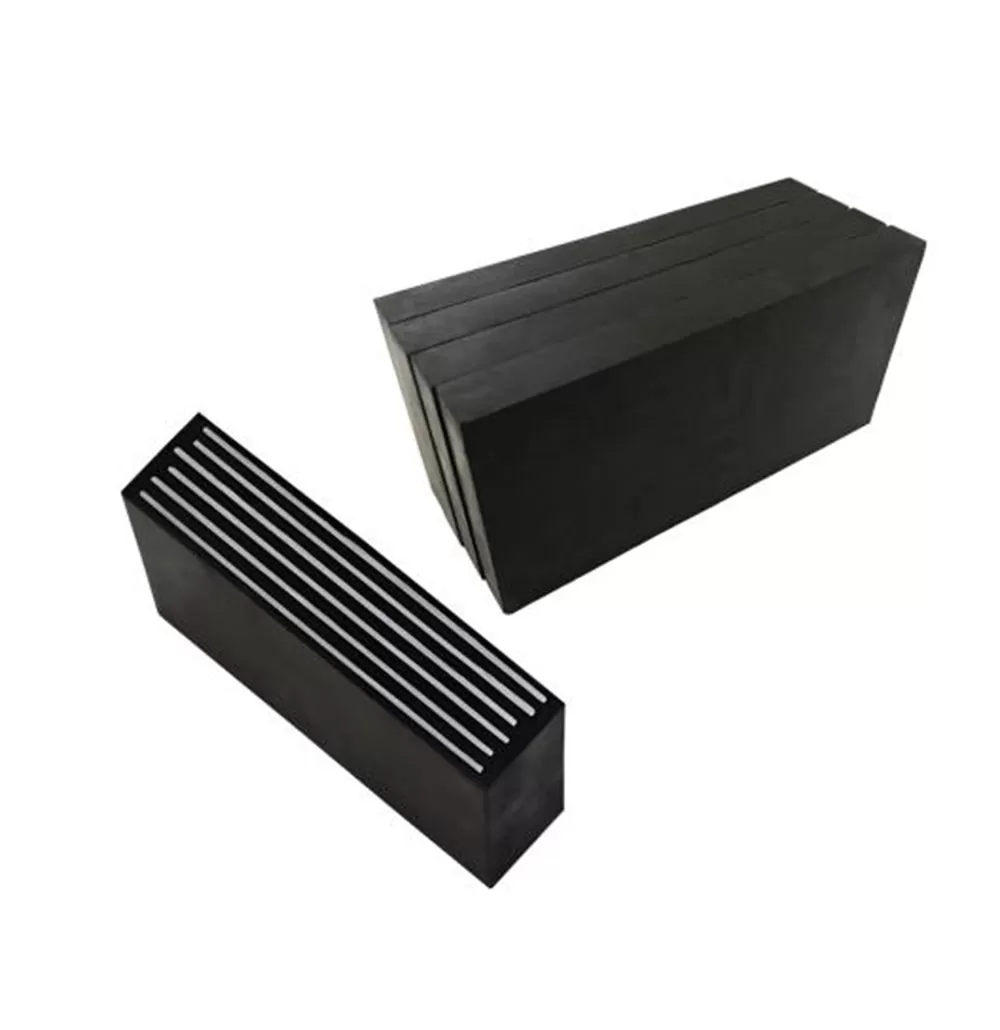
The Structural Role of Bridge Bearings in Load Path Management
The primary function of bridge bearing pads is to regulate the load path of a structure. When a vehicle crosses a bridge span, the resulting forces are directed through the girders down to the substructure elements, such as piers and abutments. However, this vertical load transfer is only one aspect of their operational requirement. Modern infrastructure must accommodate three distinct types of structural movements:
Translational Movements: Caused primarily by thermal expansion and contraction, concrete creep, and shrinkage. These movements occur along the longitudinal and transverse axes of the bridge deck.
Rotational Movements: Induced by live load deflections when heavy traffic forces the bridge girders to flex. Rotation also occurs during the construction phase due to girder camber and dead load deflection.
Seismic and Dynamic Displacements: Sudden lateral displacements caused by seismic activity, wind loads, or rapid braking forces from heavy vehicles.
By providing a flexible interface, bridge bearing pads allow these movements to occur with minimal resistance, thereby preventing the build-up of destructive internal forces within the concrete or steel members. The elastic nature of the elastomer deforms horizontally under shear strain while maintaining high compressive stiffness to support vertical dead and live loads. This dual capability ensures that the substructure is shielded from high bending moments that could lead to cracking and structural instability.
Material Science: Elastomeric Formulations and Reinforcement
The performance of bridge bearing pads relies heavily on the engineering properties of the materials used in their construction. High-performance bearings are primarily manufactured from either Natural Rubber (polyisoprene) or Neoprene (polychloroprene). Both compounds exhibit unique physical attributes suitable for specific environmental conditions and design requirements.
Natural Rubber vs. Neoprene
Natural rubber displays exceptional low-temperature flexibility and high elasticity, making it highly effective in regions subject to extreme cold. It maintains its shear modulus and resists crystallization even at sub-zero temperatures. Neoprene, on the other hand, offers superior resistance to environmental degradation, including ozone attack, ultraviolet radiation, oil, and chemical exposure. When designing infrastructure in coastal or highly industrialized areas, neoprene is often the preferred material due to its chemical stability and resistance to weathering over decades of service.
The Physics of Steel Shimming
Plain elastomeric pads are subject to bulging under high vertical loads. When an elastomer bulges laterally, its vertical deflection increases, which reduces its overall load-carrying capacity. To overcome this limitation, laminated bridge bearing pads are reinforced with internal steel shims. These steel plates are chemically bonded to the elastomer layers through a high-pressure vulcanization process.
This structural arrangement restricts lateral bulging of the rubber layers, transforming the horizontal compressive stresses into tensile stresses within the steel shims. Consequently, the vertical compressive stiffness of the bearing is increased exponentially, while the horizontal shear stiffness remains unaffected. This allows the component to support massive vertical loads while remaining highly flexible in the horizontal direction, allowing the bridge deck to expand and contract naturally.
Classifications of Bearing Systems and Their Engineering Applications
Different bridge designs and span lengths require specific bearing configurations to match their kinematic profiles. Selecting the correct type of bearing is imperative to balance performance, maintenance requirements, and budget constraints.
Laminated Elastomeric Bearings
Laminated bearings are the standard choice for short to medium-span bridges. Composed of alternating layers of elastomer and steel shims, they accommodate horizontal translation through shear deformation of the rubber and rotation through differential compression across the bearing surface. KINGWORK designs these components to comply with rigorous international standards, ensuring that the shear modulus ($G$) remains consistent across the entire operating temperature range.
Sliding Elastomeric Bearings
When the anticipated thermal expansion exceeds the shear capacity of a standard laminated pad, a sliding mechanism is integrated. These bearings feature a low-friction sliding interface consisting of a Polytetrafluoroethylene (PTFE) sheet bonded to the top elastomer layer, sliding against a highly polished stainless steel plate attached to the sole plate of the girder. This configuration allows virtually unlimited horizontal displacement while still accommodating structural rotation through the underlying elastomeric base.
Pot Bearings
For high-load applications, such as long-span bridges, curved flyovers, or cable-stayed structures, standard elastomeric units may reach their structural limits. In such scenarios, pot bearings are employed. A pot bearing consists of a shallow steel cylinder (the pot) enclosing a solid elastomeric disc, with a tight-fitting brass seal and a steel piston placed on top. Under high vertical pressure, the elastomer behaves like a high-viscosity fluid, allowing multidirectional rotation with minimal resistance. Horizontal translation can be achieved by adding a sliding PTFE surface to the top of the piston.
Structural Challenges and Design Parameters
Designing an effective bearing system requires a comprehensive understanding of the structural challenges and boundary conditions of the project. Engineers must evaluate several parameters to prevent premature degradation and ensure structural integrity over the design life of the bridge.
The Shape Factor
The shape factor ($S$) is a fundamental geometric parameter that dictates the compressive behavior of an elastomeric layer. It is defined as the ratio of the plan area of the bearing to the perimeter area free to bulge. For a rectangular bearing pad, the shape factor is calculated using the following formula:
$$S = \frac{L \times W}{2 \cdot t \cdot (L + W)}$$
Where:
- $L$ = Length of the bearing pad
- $W$ = Width of the bearing
pad
- $t$ = Thickness of a single elastomer layer
A higher shape factor indicates a thinner elastomer layer relative to its surface area, which restricts lateral bulging more effectively and results in higher compressive stiffness. Properly calibrating the shape factor is necessary to control vertical deformation under maximum dead and live loads.
Shear Strain Limits and Stability
The maximum horizontal displacement ($\Delta$) that a bearing can safely accommodate is directly related to the total elastomer thickness ($T_r$). To prevent shear instability or delamination of the elastomer-to-steel bond, design codes such as AASHTO and EN 1337 specify that the shear strain ($\gamma$) induced by horizontal translation should not exceed a set percentage of the total rubber thickness, typically expressed as:
$$\gamma = \frac{\Delta}{T_r} \le 0.50 \text{ (or } 50\% \text{ under continuous service conditions)}$$
Additionally, engineers must verify the stability of the bearing against instability, especially in taller bearings with multiple laminates. If the bearing is too tall relative to its plan dimensions, it may undergo buckling under high vertical compressive loads.
Environmental Degradation and Durability Management
Bridge bearing pads are exposed to harsh atmospheric conditions throughout their operational life. Over decades, environmental factors can alter the physical properties of the elastomer, leading to increased stiffness and potential structural distress.
Ozonolysis and Oxidation: Ozone in the atmosphere attacks the double bonds in elastomer chains, causing micro-cracks along the surfaces of tensioned rubber. Over time, these cracks can propagate inward, reducing the effective shear area. Neoprene formulations are highly resistant to this type of degradation compared to standard rubber compounds.
Thermal Crystallization: Prolonged exposure to extremely low temperatures can cause elastomers to crystallize, which significantly increases their shear stiffness. This stiffening prevents the bearing from shearing smoothly, transferring higher horizontal forces to the bridge piers. Selecting natural rubber compounds with low-temperature crystallization resistance is necessary for high-latitude applications.
Moisture and Corrosive Environments: In coastal areas, salt spray can penetrate the edges of the bearing, leading to corrosion of the internal steel shims. If the steel plates rust, the bond between the rubber and steel is compromised, leading to delamination. To prevent this, quality manufacturers ensure complete encapsulation of the steel shims within a protective outer vulcanized rubber cover.
Quality Verification and International Standards
Given the pivotal role of these components in supporting heavy civil infrastructure, rigorous quality control and testing protocols are mandatory. Structural engineers must specify components that comply with global standards to ensure material consistency and structural reliability.
Common standards include AASHTO M251 (United States), EN 1337-3 (Europe), and ISO 22762. Testing protocols typically involve:
Compressive Stiffness Testing: Verifying that the vertical deformation under design loads falls within allowable limits.
Shear Modulus Verification: Testing full-size bearing specimens to ensure the shear modulus ($G$) matches the design assumptions (typically ranging between 0.9 MPa and 1.1 MPa).
Adhesion Strength Tests: Confirming the integrity of the chemical bond between the elastomer and the steel shims through destructive peel tests.
Low-Temperature Brittleness Tests: Ensuring the material retains its elastomeric properties at extreme low temperatures without cracking.
At KINGWORK, manufacturing processes are monitored to ensure every batch of raw elastomer and finished bearing pad undergoes rigorous verification. This detailed approach ensures that our components maintain structural integrity under severe environmental and dynamic loading conditions.
Engineering Collaboration and Project Specifications
Selecting the correct bridge bearing pads requires close collaboration between the structural design team and the manufacturer. Every infrastructure project presents unique challenges, from high skew angles and complex curved alignments to extreme seismic displacement demands. Standard off-the-shelf solutions are rarely sufficient for complex bridges, making customized design verification a necessity.
Engineers are encouraged to provide comprehensive load and movement tables during the early phases of design. These data sheets should specify maximum and minimum vertical loads (including dead load, live load, and impact factors), maximum horizontal movements in both longitudinal and transverse directions, and design rotation angles. Armed with these parameters, the engineering team at KINGWORK can assist in calculating the exact elastomer thickness, plan dimensions, shim spacing, and elastomer formulation needed to ensure optimal performance.
We invite design firms, contractors, and municipal authorities to submit their structural drawings and loading requirements. Our engineering department is ready to review your project specifications and provide detailed structural proposals, material certifications, and pricing options to support your construction timeline.
Frequently Asked Questions
Q1: What is the average service life of high-quality elastomeric bridge bearing pads?
A1: High-quality elastomeric bearings designed and manufactured according to international standards like AASHTO or EN 1337 typically have an operational service life of 30 to 50 years. The actual lifespan depends heavily on the environmental conditions, load frequencies, and the quality of the raw elastomer formulation used during manufacturing.
Q2: Why are steel plates integrated into laminated elastomeric bearings?
A2: Internal steel plates, or shims, are integrated to restrict the lateral bulging of the elastomer layers when subjected to vertical compressive loads. This restriction increases the vertical compressive stiffness of the bearing pad, allowing it to carry substantial structural loads while preserving the horizontal flexibility necessary to accommodate thermal movements.
Q3: How does temperature affect the performance of neoprene and natural rubber bearings?
A3: Low temperatures cause elastomers to stiffen, which increases their shear modulus. Natural rubber retains its flexibility at lower temperatures compared to standard neoprene, making it suitable for cold climates. At high temperatures, elastomers soften slightly, though premium formulations are stabilized to maintain consistent properties across typical seasonal temperature ranges.
Q4: Can bridge bearing pads be replaced after the bridge is constructed?
A4: Yes, bridge bearings are designed as replaceable structural components. Modern bridges are designed with specific jacking points on the substructure. During maintenance, specialized hydraulic jacks lift the bridge deck by a few millimeters, allowing technicians to remove worn bearing pads and install new units without disrupting the structural integrity of the bridge.
Q5: What are the primary signs of degradation or wear in elastomeric bearings?
A5: Common signs of wear include excessive cracking along the edges (caused by ozone or UV exposure), severe bulging patterns indicating internal shim displacement, delamination of the rubber-to-metal bond, and visual shearing deformation that exceeds the design limit. Regular inspections are required to identify these signs before they affect adjacent structural elements.
![Bridge Joint Types: The Complete Engineering Guide [2026 Edition]](https://www.kwbridgebearing.com/storage/non_theme/202606/024.webp)