
5 Key Technical Advantages of DS Brown Modular Expansion Joints for Large-Scale Bridges
Article content and related resources
Bridge engineering requires precise management of thermal expansion, seismic shifts, and dynamic loading. As spans grow longer and structural designs become more complex, the demand for high-performance movement control systems has intensified. Among the most trusted solutions in the global market are ds brown modular expansion joints, which provide the necessary flexibility for bridges requiring movements exceeding 100mm. These systems are designed to maintain structural integrity while ensuring a smooth transition for vehicular traffic across the expansion gap.
In the high-stakes environment of international civil engineering, technical reliability is paramount. Organizations like KINGWORK recognize that the selection of expansion systems dictates the long-term maintenance requirements and safety of the bridge deck. By examining the mechanical composition and performance metrics of modular systems, engineers can better understand how these components mitigate the stresses caused by environmental variables and heavy traffic volumes.
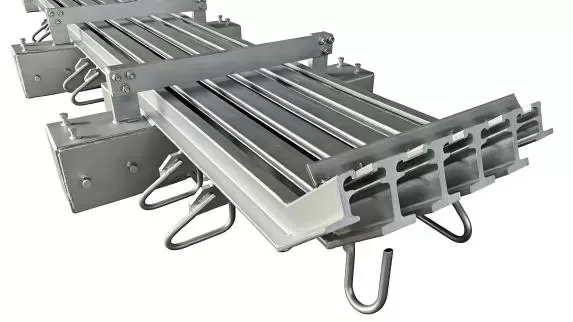
The Structural Composition of Modular Expansion Systems
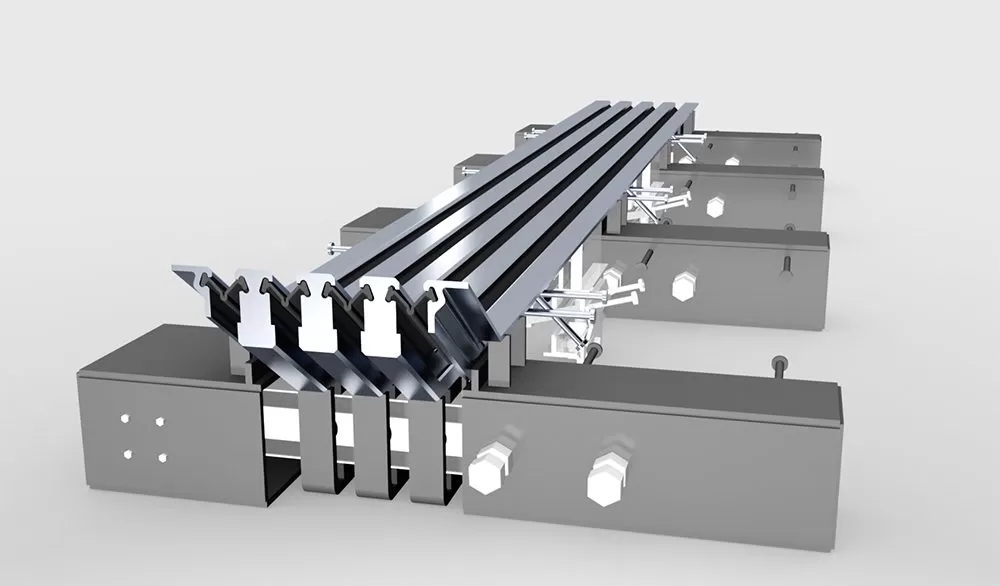
Standard expansion joints often reach their physical limits when faced with large-scale longitudinal movements. The modular approach solves this by dividing the total movement requirement into several smaller gaps, each managed by a series of center beams and seals. The engineering behind ds brown modular expansion joints relies on a sophisticated internal mechanism that ensures these gaps remain equidistant during expansion and contraction cycles.
Center Beams and Edge Beams
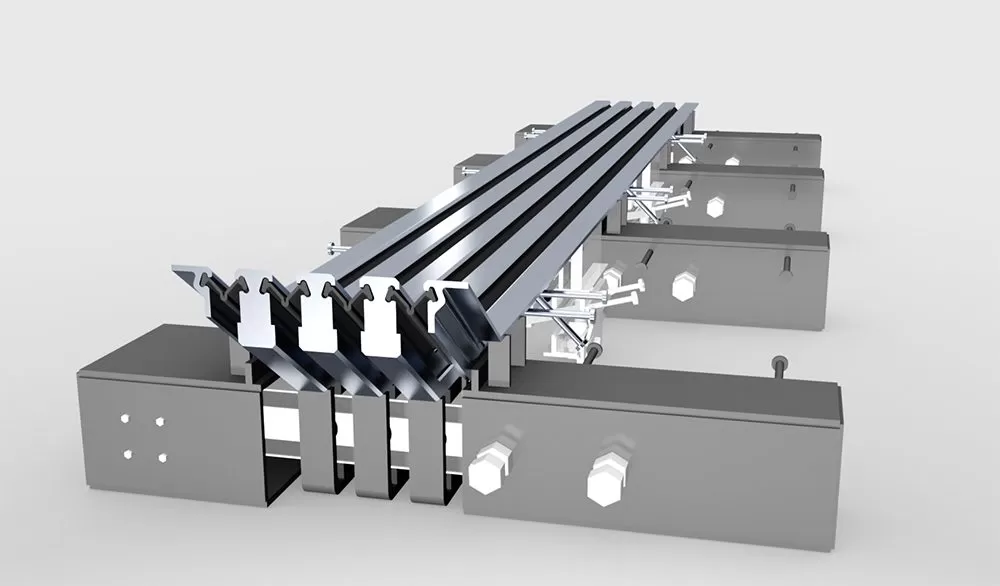
The primary structural components consist of heavy-duty steel sections. Edge beams are anchored directly into the bridge abutment or deck, while center beams span the gap. These beams are manufactured from high-strength steel to resist the impact of heavy axle loads. The profile of these beams is optimized to hold the sealing elements securely, preventing debris infiltration and water leakage.
Support Bar Systems
To provide stability and load distribution, support bars run perpendicular to the joint. These bars slide within housings equipped with specialized bearings and springs. This allows the joint to accommodate not only longitudinal movement but also transverse and vertical rotations. The coordination between the support bars and the center beams determines the overall fatigue life of the system.
Equidistant Control Mechanisms
One of the most complex aspects of modular design is ensuring that the individual seals open and close at the same rate. This is achieved through a control system—often utilizing springs and buffers—that regulates the spacing between beams. This prevents any single seal from being overstretched or over-compressed, which is a primary cause of premature failure in lower-quality alternatives.
Addressing Fatigue and Dynamic Load Resistance
Bridges are subject to millions of load cycles over their lifespan. Modular joints, being positioned at the surface of the deck, bear the direct brunt of these forces. The design of ds brown modular expansion joints prioritizes fatigue resistance, adhering to stringent international standards such as AASHTO (American Association of State Highway and Transportation Officials) requirements.
Fatigue failure in bridge components typically occurs at the welded connections between the center beams and the support bars. To counter this, advanced manufacturing techniques such as full-penetration welding and rigorous non-destructive testing are employed. By focusing on the "Fatigue Limit State," designers ensure that the joint can withstand the repetitive impact of heavy trucks without developing structural cracks.
KINGWORK emphasizes that material quality is the foundation of fatigue performance. The use of high-grade polychloroprene (neoprene) for the seals ensures that they remain elastic across a wide temperature range. If a seal loses its elasticity, it can become brittle and fail, allowing salt-laden water to reach the bridge bearings and substructure, leading to accelerated corrosion.
Waterproofing and Environmental Protection
The primary function of an expansion joint, beyond accommodating movement, is to protect the bridge structure from environmental damage. Water is the most significant enemy of bridge longevity. When water penetrates the expansion gap, it carries de-icing salts and chemicals that corrode steel reinforcement and degrade concrete piers.
The sealing system within ds brown modular expansion joints is designed as a continuous, watertight barrier. Unlike older finger joint designs that allow water to pass through to a drainage trough, modular systems utilize "strip seals" that are mechanically locked into the steel beams. This "cell" structure creates a watertight environment that is easy to inspect and maintain.
High-performance neoprene seals resist UV degradation and ozone exposure.
Mechanically locked profiles prevent the seal from "popping out" under high-speed traffic.
The continuous nature of the seal from curb to curb eliminates potential leak points at the gutters.
Installation Precision and Maintenance Protocols
The longevity of a modular joint is heavily dependent on the quality of its installation. Precision is required to ensure that the joint is set at the correct gap width, taking into account the ambient temperature of the bridge at the time of the pour. If the joint is installed too "open" or too "closed," its movement capacity will be compromised before the bridge even opens to traffic.
During the installation process, the joint is typically pre-set in the factory based on the project's specific temperature data. Once on-site, the assembly is lowered into the prepared blockout. It is then leveled and welded to the main structural reinforcement before the final high-strength concrete is poured. Any misalignment during this phase can lead to increased vibration and noise, which further accelerates wear on the internal sliding components.
Maintenance of ds brown modular expansion joints is generally focused on the replacement of seals and the inspection of the sliding surfaces. Because the steel structure is designed for the life of the bridge, only the wear components—such as the PTFE (Polytetrafluoroethylene) sliding bearings and the neoprene seals—require periodic attention. This modularity allows for the replacement of individual parts without the need for full structural demolition.
Technical Considerations for Seismic Resilience
In regions prone to seismic activity, expansion joints must do more than manage thermal changes; they must survive significant ground accelerations. Modular joints can be engineered with "seismic buffers" or "fuse" systems. In the event of a major earthquake, these components allow the joint to move beyond its standard range or fail in a controlled manner that protects the primary bridge girders from catastrophic damage.
The versatility of these systems means they can be adapted for skewed bridges or structures with complex horizontal curves. The internal sliding arrangement allows for multi-axis rotation, ensuring that the bridge can sway and twist without shearing the joint's anchoring system. KINGWORK facilitates the integration of these advanced seismic features into infrastructure projects to enhance regional connectivity and safety.
Reducing Acoustic Impact in Urban Environments
A frequent complaint regarding modular joints in urban areas is the noise generated when vehicles pass over the gaps. The "clunk" of tires hitting the steel beams can be disruptive to nearby residents. To address this, modern ds brown modular expansion joints can be fitted with sinus plates or noise-reduction "teeth" on the surface.
These plates create a continuous surface for the tire to roll over, significantly reducing the impact noise and vibration. This not only improves the comfort of the driver and nearby inhabitants but also reduces the dynamic impact load on the joint itself, further extending its service life. These acoustic solutions are becoming a standard requirement in dense metropolitan bridge projects.
Conclusion
The engineering behind ds brown modular expansion joints represents a pinnacle of structural movement technology. By combining high-strength steel, advanced polymers, and sophisticated mechanical control systems, these joints provide a reliable solution for the world’s most demanding bridge projects. For engineers and stakeholders, the focus remains on durability, fatigue resistance, and the total protection of the bridge structure from the elements.
Selecting the right expansion system requires an understanding of the specific movement demands and environmental conditions of the site. With the support of technical experts and high-quality manufacturers like KINGWORK, modern infrastructure can achieve the longevity and safety required for 21st-century transport networks.
Frequently Asked Questions
Q1: What is the maximum movement range for ds brown modular expansion joints?
A1: These systems are highly scalable. While they are commonly used for movements starting at 80mm to 100mm, they can be designed to accommodate longitudinal movements exceeding 1,000mm by adding more center beams and seal modules.
Q2: Can the seals in a modular joint be replaced without removing the steel structure?
A2: Yes, one of the primary advantages of the modular design is that the neoprene strip seals are considered wear parts. They can be removed and replaced from the deck surface using specialized tools, provided the joint is cleaned and the steel recesses are in good condition.
Q3: How do modular expansion joints handle snowplow operations?
A3: The steel beams are designed to be flush with the bridge deck. In regions with heavy snowfall, the joints can be equipped with snowplow guards or specific edge profiles that prevent plow blades from catching on the steel components.
Q4: Why is fatigue testing important for modular joints?
A4: Because these joints are located at the bridge surface, they experience high-frequency impact from every passing vehicle. Fatigue testing ensures the welded joints and connection points can survive millions of cycles without cracking, which is vital for the safety of the bridge.
Q5: Are these joints suitable for curved or skewed bridges?
A5: Absolutely. The internal support bar and swivel mechanisms allow the system to handle multi-directional movements, making them suitable for bridges with complex geometries where movement is not strictly longitudinal.
Are you seeking high-performance bridge components for your next infrastructure project?
Contact our technical team today to discuss your specific requirements for expansion systems and seismic protection. We provide expert consultations and high-quality manufacturing solutions tailored to international engineering standards. Submit your inquiry now to receive a technical proposal.
![Bridge Joint Types: The Complete Engineering Guide [2026 Edition]](https://www.kwbridgebearing.com/storage/non_theme/202606/024.webp)