
4 Structural Advantages of Integrating Lead Rubber Bearings in Bridge Design
Article content and related resources

Modern structural design demands robust strategies to mitigate environmental forces, particularly those arising from seismic events. Bridge structures and large-scale buildings must withstand dynamic lateral forces while supporting substantial vertical dead and live loads. To address this balance, civil engineers rely on advanced seismic isolation technologies. Among these, the lead rubber bearing has emerged as a widely adopted component globally, providing a predictable and stable method for protecting infrastructure from structural failures.
As a specialized manufacturer of bridge components, KINGWORK focuses on producing high-durability displacement control systems. Understanding the engineering principles, material science, and mechanical behavior of these isolators is vital for procurement specialists, structural designers, and project managers who select safety components for long-term service life.
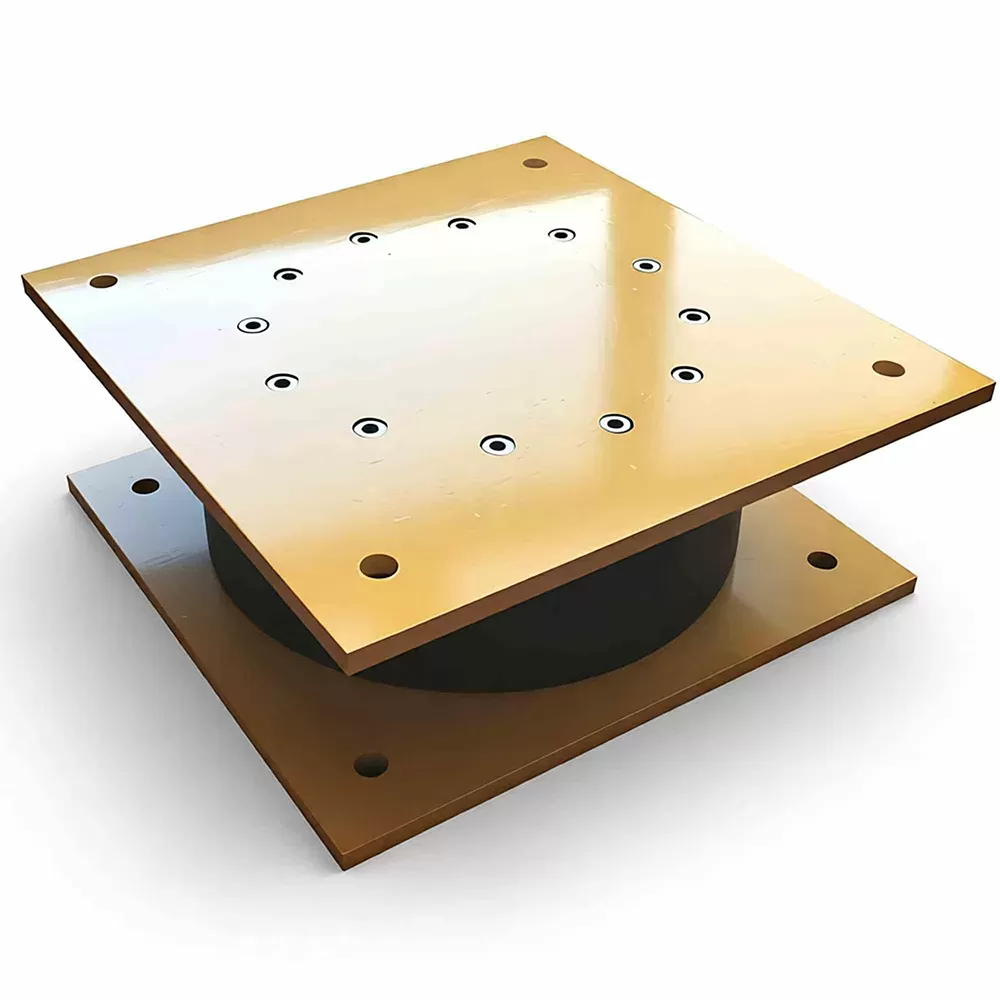
The Fundamental Mechanics of Seismic Isolation
Seismic isolation systems work by shifting the natural period of a structure away from the dominant frequencies of earthquake ground motions. By inserting a highly flexible layer between the foundation and the superstructure, the accelerations transmitted to the upper portion of the structure are significantly lowered. This reduction in acceleration decreases the internal forces and displacements experienced by the columns, piers, and deck elements.
A lead rubber bearing achieves this isolation through three primary mechanical processes:
Vertical Load Support: High vertical stiffness is maintained to prevent excessive settlement or buckling under the heavy gravity loads of the bridge or building.
Horizontal Flexibility: Low horizontal shear stiffness allows the structure to undergo controlled lateral displacements during ground movement, thereby decoupling the superstructure from ground motion.
Energy Dissipation (Damping): The system absorbs and dissipates the kinetic energy transmitted by the earthquake, preventing resonance and reducing the amplitude of structural oscillations.
By combining these three functions into a single unit, these isolators simplify the overall structural response, allowing designers to predict displacements and shear forces with a higher degree of accuracy.
Anatomy and Component Composition of a Lead Rubber Bearing
The internal architecture of a lead rubber bearing is a sophisticated composite of alternating elastomeric sheets and steel plates, with a solid lead core inserted into the center. Each component plays a distinct role in the overall performance of the bearing under dynamic and static loading conditions.
1. Laminated Elastomeric Layers
The elastomer, which can be either high-grade natural rubber or synthetic chloroprene, is divided into thin, horizontal sheets. These rubber layers are responsible for providing the lateral flexibility that characterizes the isolation system. Natural rubber exhibits excellent elasticity and resilience over long service periods. The thickness and shear modulus of the rubber layers directly dictate the lateral stiffness of the bearing, allowing engineers to customize the isolation period based on site-specific seismic hazards.
2. Steel Reinforcing Plates (Shims)
Alternating with the elastomeric layers are thin sheets of high-strength structural steel. During the vulcanization process, these steel shims are bonded under high pressure and temperature directly to the rubber. The steel plates restrict the lateral expansion (bulging) of the rubber when subjected to vertical loads. This constraint increases the vertical stiffness of the bearing by several hundred times compared to its horizontal stiffness, enabling it to support massive structural loads without excessive compression.
3. The Central Lead Plug
At the center of the bearing lies one or more high-purity lead cores. Lead possesses a unique mechanical property known as plastic deformation at relatively low shear stresses. When lateral forces exceed a specific threshold during an earthquake, the lead plug yields plastically, absorbing energy through hysteretic damping. As the lead deforms, it converts kinetic energy into thermal energy. Once the ground motion ceases, the elastic energy stored in the surrounding rubber layers forces the lead plug back to its original position, providing a self-centering capability that minimizes permanent residual displacement.
| Component | Primary Material | Engineering Function |
|---|---|---|
| Elastomeric Layers | Natural Rubber / Neoprene | Provides lateral flexibility and facilitates horizontal displacement. |
| Steel Shims | Structural Carbon Steel | Restricts rubber bulging to provide high vertical load capacity. |
| Lead Plug | 99.9% Pure Lead | Dissipates energy through plastic shear deformation (hysteretic damping). |
| Top & Bottom Plates | Thick Anchor Steel | Secures the bearing to the superstructure and foundation via dowels or bolts. |
Performance Characteristics and Damping Capabilities
The mechanical behavior of a lead rubber bearing is characterized by its bilinear force-displacement relationship. Under small lateral loads, such as wind forces or minor thermal expansions, the lead plug remains elastic, and the bearing exhibits high initial stiffness. This prevents unnecessary sway or movement during everyday operational conditions.
Once the lateral force exceeds the yield strength of the lead core, the lead yields, and the lateral stiffness drops to the post-yield stiffness, which is governed primarily by the shear modulus of the elastomer. This transition allows the bearing to deform horizontally under large earthquake forces, limiting the shear force transmitted to the bridge piers or building columns. The area enclosed by the resulting hysteretic loop represents the amount of seismic energy dissipated by the bearing per cycle. Typically, these systems can achieve equivalent damping ratios ranging from 15% to 30%, which significantly reduces the structural demand during strong ground shaking.
The vulcanization bond between the rubber and the steel plates is a major determinant of the bearing's reliability. If the bond fails under high shear strains, the bearing can experience delamination, leading to a sudden loss of both vertical and horizontal load capacity. For this reason, manufacturers like KINGWORK employ rigorous raw material selection and curing monitoring systems to ensure uniform adhesion across all laminate layers.
Application Scenarios in Transport Infrastructure
Bridges and elevated highways are highly susceptible to seismic damage due to their elevated masses and reliance on relatively slender support piers. Incorporating a lead rubber bearing system into these structures offers targeted protection across several scenarios:
High-Speed Railway Bridges
Railway bridges require exceptional vertical rigidity to maintain track alignment under high-speed train traffic, yet they must remain flexible enough during an earthquake to prevent derailment and structural collapse. Laminated elastomeric bearings with lead cores offer the required vertical stiffness to handle dynamic train loads while providing reliable seismic isolation to protect the support towers.
Urban Overpasses and Viaducts
In densely populated metropolitan areas, viaducts often traverse complex geological zones. Space limitations make it difficult to construct massive, rigid foundations. By utilizing high-performance isolation bearings, structural designers can reduce the forces acting on the substructure, allowing for more slender pier designs, saving construction space, and reducing overall project material costs.
Retrofitting of Existing Structures
Many older bridges constructed before the implementation of modern seismic codes lack sufficient ductile reinforcement in their columns. Retrofitting these structures by replacing traditional steel or plain elastomeric bearings with lead rubber bearing units is a cost-effective method to upgrade their seismic performance without requiring major structural reconstruction of the piers or foundations.
Procurement Standards and Quality Assurance Metrics
For engineering procurement professionals, selecting the correct isolation bearing involves checking compliance with established international standards. Because these components are vital for life safety, their performance must be verified through rigorous physical testing rather than relying solely on analytical calculations.
Key standards governing the design and testing of elastomeric isolators include:
EN 1337 / EN 15129: The European standards regulating structural bearings and anti-seismic devices, which define strict testing protocols for shear properties, compression stiffness, and aging characteristics.
AASHTO Guide Specifications: Used widely in North American highway projects to specify the design, fabrication, and testing requirements of seismic isolation bearings.
ISO 22762: The international standard specifying requirements for elastomeric seismic protection isolators for both buildings and bridges.
Quality assurance during production involves both non-destructive and destructive testing. Every batch of elastomeric compounds must be tested for tensile strength, elongation at break, ozone resistance, and accelerated aging behavior. Prototype bearings undergo full-scale dynamic shear testing to verify their horizontal stiffness, damping ratio, and ultimate displacement capacity under maximum design earthquakes. Production bearings also undergo compression and shear stiffness tests to confirm that variation from the design specifications remains within allowable limits (typically +/- 15%).
Sustained Durability and Environmental Aging
A primary consideration in bridge design is the long-term durability of components, as bridges are expected to have service lives exceeding 50 to 100 years. Elastomeric bearings are continuously exposed to environmental degradation factors such as oxygen, ozone, ultraviolet light, and temperature fluctuations.
Over decades of exposure, rubber compounds tend to undergo post-vulcanization aging, which can increase the shear modulus of the material, resulting in a stiffer bearing with reduced displacement capacity. To counter this, high-quality manufacturers use specialized anti-ozonants and antioxidants in the rubber compound formulation. Encasing the internal steel plates completely within a thick outer protective rubber layer prevents moisture ingress and eliminates the potential for steel corrosion, which could otherwise compromise the laminated structure.
Additionally, the lead core is sealed within the rubber matrix, protected from contact with air and moisture. Because lead undergoes recrystallization at room temperature, it does not experience fatigue failure during multiple cycles of deformation, allowing it to retain its energy-dissipating properties throughout the operational life of the structure.
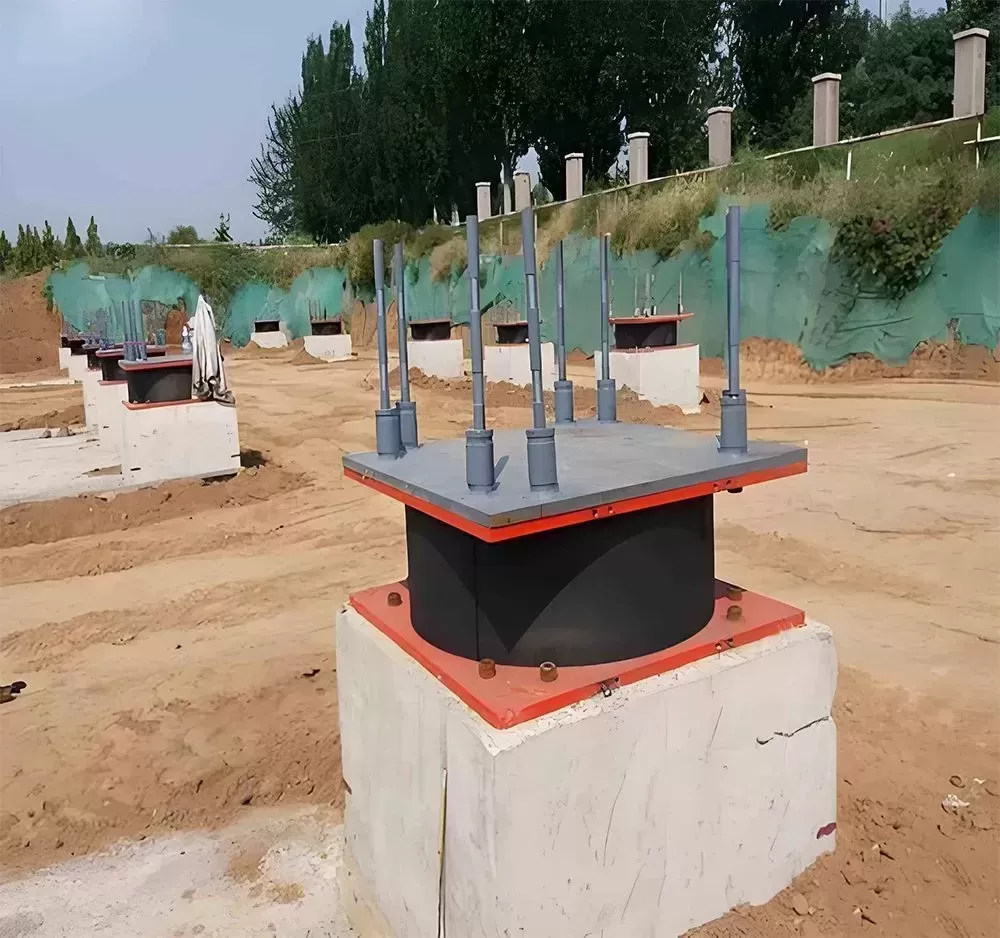
Project Engineering Collaboration
Successful implementation of seismic isolation systems requires close collaboration between structural designers and component manufacturers from the early stages of a project. Because each bridge or building has unique natural frequencies, load configurations, and target displacements, isolation bearings are rarely off-the-shelf items. They must be tailored to the specific demands of the project site.
KINGWORK provides comprehensive engineering support, assisting in translating structural load cases and movement requirements into optimized bearing designs. Our manufacturing processes conform strictly to international testing standards, ensuring that every delivered unit matches the exact mechanical parameters modeled in the structural analysis software.
For detailed technical specifications, structural calculations, or to discuss customized configurations for your upcoming bridge or building project, please contact our engineering team to submit an inquiry.
Frequently Asked Questions
Q1: What is the primary difference between a standard elastomeric bearing and a lead rubber bearing?
A1: A standard elastomeric bearing provides vertical support and allows for horizontal movements caused by thermal expansion or minor live loads but offers very low damping. A lead rubber bearing includes a central lead core that plastically deforms under higher lateral loads, providing high energy dissipation (damping) to protect structures during earthquakes.
Q2: How does temperature affect the performance of these isolation bearings?
A2: Elastomeric compounds can stiffen at very low temperatures, which increases the horizontal stiffness of the bearing and alters the design isolation period. High-quality rubber formulations are engineered to minimize this temperature sensitivity, maintaining consistent mechanical properties across a wide temperature spectrum.
Q3: Can a lead rubber bearing recover its shape after a major seismic event?
A3: Yes. The laminated rubber layers surrounding the lead core store elastic strain energy during horizontal deformation. When the ground motion stops, this stored energy acts as a restoring force, pulling the bearing and the superstructure back to their pre-earthquake positions, reducing residual displacements.
Q4: What maintenance is required for these seismic isolators during their service life?
A4: Under normal conditions, these bearings are virtually maintenance-free due to the protective outer rubber layer sealing the internal steel plates and lead core. Regular visual inspections are recommended to check for unusual deformation, surface cracking, or debris accumulation that might restrict movement.
Q5: How is the service life of the lead core ensured if lead is subject to fatigue?
A5: Lead has a low recrystallization temperature (below room temperature). When it undergoes plastic shear deformation during an earthquake, it continuously self-anneals and heals itself, meaning it does not accumulate fatigue damage over time like other structural metals.
![Bridge Joint Types: The Complete Engineering Guide [2026 Edition]](https://www.kwbridgebearing.com/storage/non_theme/202606/024.webp)