
Design Considerations for Bearing on Bridge Selection in Long-Span Structures
Article content and related resources
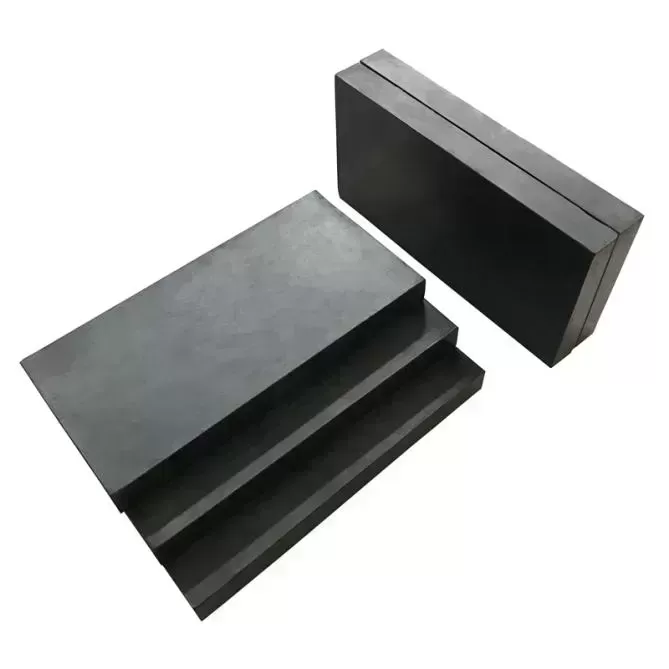
Modern civil infrastructure demands structural systems capable of withstanding massive loads while accommodating dynamic movements. Bridges are not static entities; they expand, contract, rotate, and displace under the influence of temperature fluctuations, concrete shrinkage, creep, traffic loads, and seismic activities. Managing these dynamic forces requires a deep understanding of load transfer mechanics and structural articulation. The selection and installation of an appropriate bearing on bridge is a primary factor in ensuring the long-term viability and structural integrity of the entire transportation asset.
By acting as the functional interface between the superstructure and the substructure, these components distribute reactions to the piers and abutments while mitigating stress concentrations. A failure to correctly specify, install, or maintain these systems can lead to localized concrete spalling, structural misalignment, or catastrophic failure of structural elements. This document provides an engineering-focused examination of structural bearing systems, addressing selection parameters, design codes, operational challenges, and maintenance protocols.
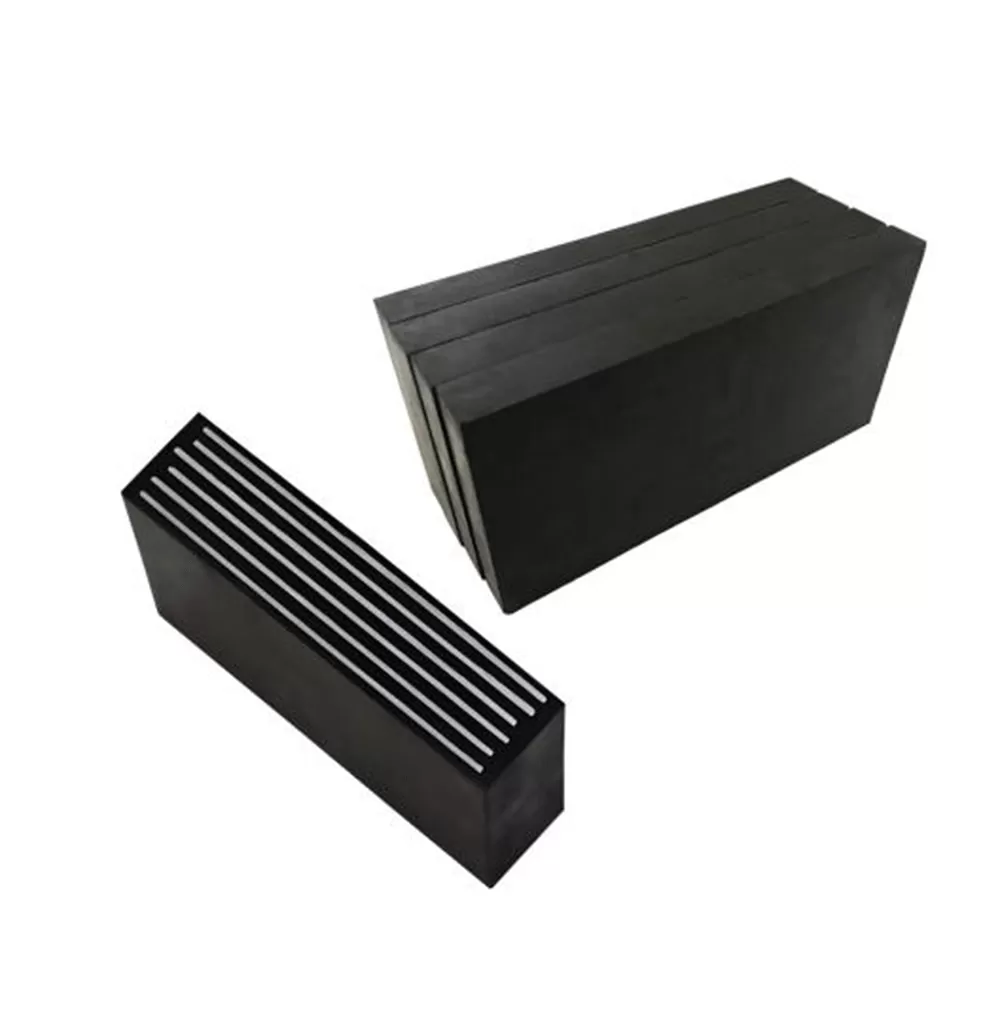
Classification and Mechanical Principles of Bridge Bearings
Structural bearings are classified based on their kinematic capabilities and load-bearing mechanisms. The choice of bearing type is dictated by the magnitude of vertical and horizontal forces, the required rotational capacity, and the translational displacement demands of the structural design.
1. Elastomeric Bearings
Elastomeric systems are widely used due to their simplicity, lack of moving parts, and cost-efficiency. They are categorized into two primary types:
Plain Elastomeric Pads: Suitable for structures with low load requirements and minor translation demands. They rely entirely on the shear deformation of the elastomer to accommodate movement.
Laminated (Reinforced) Elastomeric Bearings: These feature alternating layers of elastomer (either natural rubber or chloroprene) and thin steel plates, bonded together under high pressure and temperature during vulcanization. The steel reinforcement constrains the lateral bulging of the elastomer, significantly increasing the vertical stiffness while maintaining lateral flexibility. This allows the system to support substantial vertical loads while permitting shear-induced horizontal displacement.
The engineering of an elastomeric bearing on bridge designs in modern infrastructure relies heavily on the shear modulus (G) of the elastomer, typically ranging from 0.9 MPa to 1.15 MPa. The maximum shear strain is governed by structural design codes to prevent delamination of the steel-elastomer interfaces under dynamic loading conditions.
2. Pot Bearings
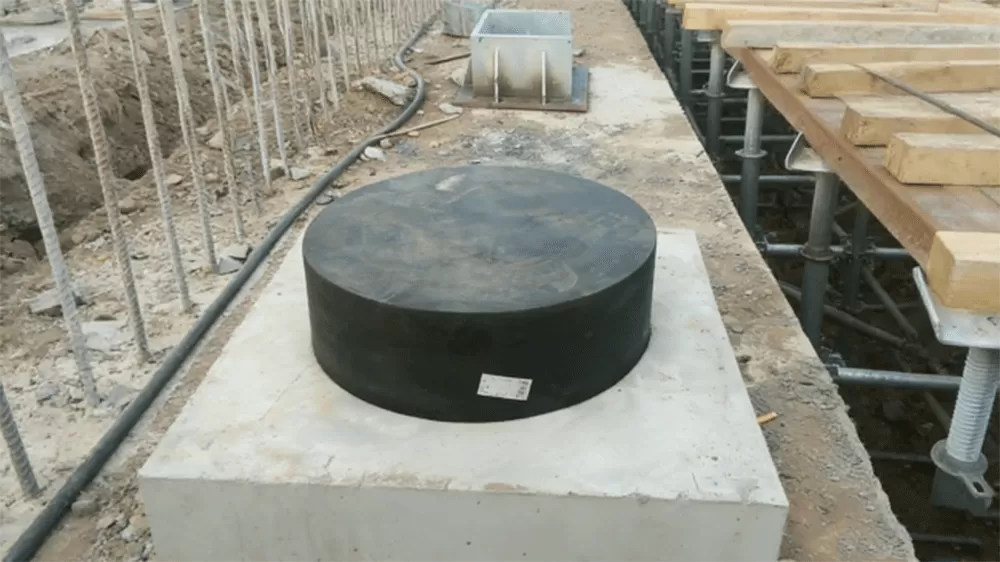
When vertical loads exceed the capacity of standard elastomeric systems, pot bearings offer a robust solution. A pot bearing consists of a shallow steel cylinder (the pot) enclosing a elastomeric disc, a tight-fitting brass seal ring, and a steel piston. under high compressive force, the confined elastomer acts like a high-viscosity fluid, allowing multidirectional rotation with minimal resistance. To facilitate horizontal sliding, a polytetrafluoroethylene (PTFE) or modified ultra-high-molecular-weight polyethylene (UHMWPE) sliding plate is combined with a polished stainless steel sheet attached to the upper piston surface.
3. Spherical Bearings
For structures experiencing large rotational demands alongside high vertical loads—such as curved, skewed, or continuous multi-span structures—a spherical bearing on bridge installation is often the preferred choice. These systems utilize curved sliding surfaces made of hard-anodized aluminum alloys or stainless steel mating with self-lubricating composite materials or low-friction polymer sheets. Unlike pot bearings, spherical bearings accommodate rotation without relying on elastomeric deformation, meaning their rotational capacity is independent of the applied vertical load and temperature-induced stiffness variations.
Engineering Challenges and Material Selection
The environment in which a structural bearing operates plays a major role in its degradation over time. Civil engineers must account for several physical and chemical challenges during the design phase.
Friction and Sliding Materials
In sliding bearings, minimizing the coefficient of friction is vital to prevent the transmission of unwanted horizontal forces to the substructure. Dimpled, lubricated PTFE sliding sheets paired with mirror-polished stainless steel (typically Grade 316 with a surface roughness Ra < 0.9 μm) are standard. Under high contact pressures (30 MPa to 60 MPa), the coefficient of friction of PTFE decreases, often reaching values as low as 0.03 at room temperature. However, sub-zero temperatures can significantly increase this friction coefficient, a factor that must be calculated during the thermal analysis of the structure.
Elastomeric Durability
Elastomers are susceptible to environmental aging, including ozone degradation, UV exposure, and thermal oxidation. Natural rubber exhibits excellent low-temperature performance and fatigue resistance but is more vulnerable to ozone cracking than chloroprene (neoprene). In highly corrosive marine environments, or areas subjected to extensive deicing salt application, the corrosion of structural steel plates within laminated bearings or the steel housings of pot bearings is a major concern. Manufacturers like KINGWORK provide rigorous testing to ensure these steel components are protected via advanced hot-dip galvanizing, thermal spraying, or multi-layer epoxy coating systems designed to meet ISO 12944 C5-M specifications.
Structural Distortion and Misalignment
During the construction phase, misalignments in the casting of concrete girder soffits or pier caps can result in non-parallel mating surfaces. This introduces eccentric loading on the bearing, leading to highly localized stress concentrations. In elastomeric bearings, this can cause uneven shear deformation and accelerated fatigue. In sliding bearings, edge loading can damage the sliding interfaces, causing rapid wear of the low-friction liners and potential lock-up of the sliding mechanism.
Design Standards and Selection Criteria
The design of structural bearings is governed by international standards, primarily the AASHTO LRFD Bridge Design Specifications in North America and EN 1337 in Europe. These standards outline rigorous design procedures, including limit state designs, strain limits, and testing regimes.
| Bearing Type | Typical Vertical Load Capacity (kN) | Rotational Capacity (radians) | Horizontal Displacement (mm) | Primary Application Areas | |
|---|---|---|---|---|---|
| Laminated Elastomeric | Up to 5,000 | Up to 0.015 | ± 100 | Short to medium span concrete and steel bridges | KINGWORK Standard Series |
| Pot Bearings | 5,000 to 50,000+ | Up to 0.030 | Unlimited (via sliding plate) | Medium to long span structures, highly loaded piers | KINGWORK High-Load Series |
| Spherical Bearings | 5,000 to 80,000+ | Up to 0.050+ | Unlimited (via sliding plate) | Curved, skewed, or long-span continuous girders | KINGWORK Premium Spherical |
When selecting a system, the structural designer must collect specific data points:
Serviceability Limit State (SLS) and Ultimate Limit State (ULS) Loads: Including dead loads, live traffic loads, wind forces, and seismic loads.
Coexisting Rotations: Calculated around both transverse and longitudinal axes.
Displacement Demands: Both irreversible (concrete shrinkage, creep) and reversible (thermal expansion).
Environmental Factors: Temperature range, atmospheric corrosivity, and seismic zone classification.
Selecting from the KINGWORK structural bearing product line offers designers access to engineered solutions verified through rigorous displacement and load testing, ensuring compliance with both AASHTO and EN standards.
Inspection, Maintenance, and Replacement Protocols
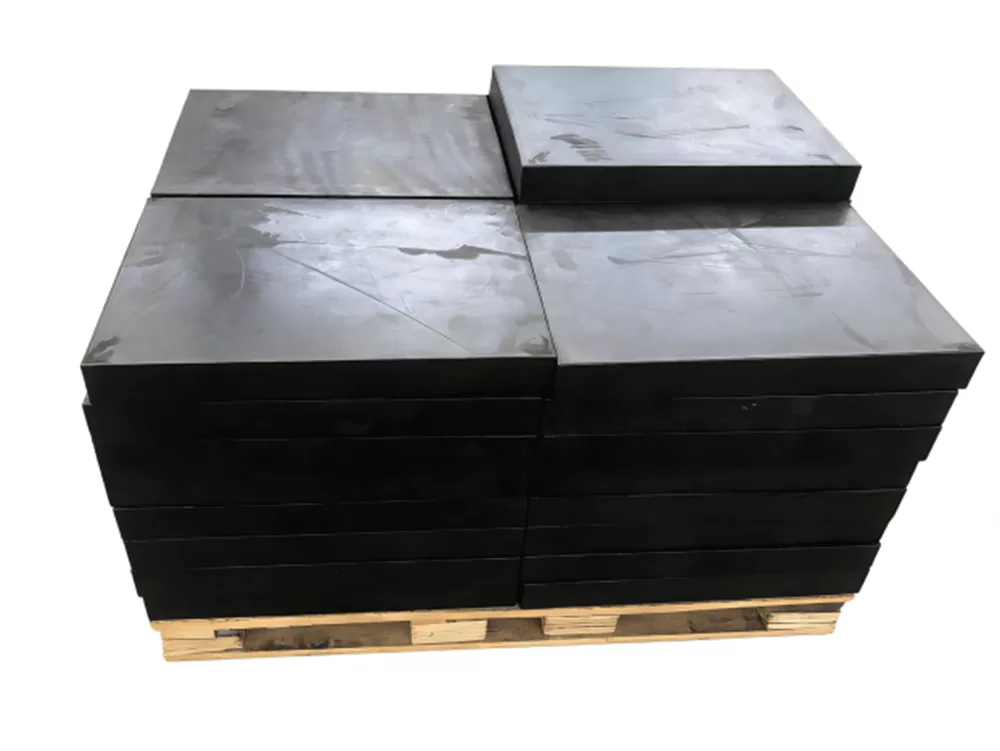
Structural bearings are designed to perform over several decades, yet their service life is often shorter than that of the bridge superstructure. Consequently, systematic inspection and maintenance schedules are necessary to prevent localized structural failures.
Common Failure Modes
During routine inspections, engineering inspectors search for specific indicators of distress:
Elastomeric Bulging and Splitting: Excessive or non-uniform bulging can indicate internal steel plate delamination or overloading. Deep surface cracking suggests ozone or chemical degradation.
PTFE Wear and Extrusion: In sliding bearings, the extrusion of the low-friction liner from its recess indicates excess pressure, poor containment design, or cumulative wear.
Structural Corrosion: Rusting of steel plates, pitting of sliding surfaces, and accumulation of debris in sliding channels can increase friction, leading to structural lock-up. When sliding is restricted, the thermal expansion forces are transferred directly to the piers, which may cause structural cracking.
Addressing maintenance issues associated with a bearing on bridge can lead to minor repair work or, in severe cases, require complete replacement of the bearing unit.
Replacement Procedures (Jacking)
The replacement of a structural bearing is a complex procedure that must be planned for during the initial design phase of the bridge. The process typically involves:
Designing a temporary support structure or selecting suitable jacking locations on the pier cap.
Utilizing synchronized hydraulic jacks to lift the bridge superstructure by a fraction of an inch (typically 5mm to 10mm) under controlled traffic conditions or temporary lane closures.
Removing the old bearing assembly and preparing the concrete substrate. Bedding mortars must be completely level and reach required compressive strengths before loading.
Installing the new bearing unit, aligning it precisely with the superstructure's thermal neutral point, and lowering the deck back onto the bearing pads.
Frequently Asked Questions
Q1: What are the main differences between natural rubber and chloroprene (neoprene) in elastomeric bearing construction?
A1: Natural rubber typically exhibits superior low-temperature flexibility and lower shear stiffness at sub-zero temperatures, making it highly effective in extremely cold climates. It also has excellent tensile strength and resistance to fatigue. Chloroprene, on the other hand, provides superior resistance to ozone, oil, chemical attack, and atmospheric aging, making it highly suited for marine environments or industrialized regions where chemical exposure is a factor.
Q2: Why is the sliding surface of a bridge bearing dimpled?
A2: The sliding surface of the PTFE sheet is manufactured with small, shallow dimples designed to act as reservoirs for silicone lubricant. This lubrication system ensures a consistently low coefficient of friction over many decades of sliding motion, reducing wear on the sliding interface and minimizing the horizontal forces transferred to the support piers.
Q3: How does concrete creep affect the initial installation alignment of sliding bearings?
A3: Concrete creep and shrinkage cause permanent, irreversible shortening of concrete girders over the first few years of a bridge's life. To ensure the sliding plate does not run out of travel capacity, engineers often offset the upper sliding plate relative to the lower bearing guide during installation. This offset is calculated based on the estimated concrete shrinkage and creep at the time of construction.
Q4: Under what conditions should a spherical bearing be selected over a pot bearing?
A4: A spherical bearing should be chosen when the structure requires large rotations (greater than 0.03 radians) or when the rotation occurs around multiple axes simultaneously, such as in highly curved or skewed structures. Spherical bearings are also selected when rotational resistance must remain low and constant across all temperature ranges, as they do not rely on the physical deformation of confined elastomers, which stiffen in cold climates.
Q5: Can a damaged elastomeric bearing be repaired in place without lifting the bridge deck?
A5: Generally, structural repairs to the elastomeric core or internal steel laminates cannot be performed in place. If the elastomer has suffered deep cracking, severe bulging, or delamination, the bearing must be replaced. However, minor surface cleaning, painting of exposed steel plates, or the installation of protective skirts to shield the bearing from debris and UV exposure can be executed without lifting the deck.
Inquiry and Custom Engineering Solutions
Selecting and designing structural bearings requires precise engineering, accurate load calculations, and adherence to regional design codes. A correctly designed structural support system prevents structural distress and reduces long-term maintenance costs. For complex bridge configurations, standard catalog solutions may not meet specific displacement, thermal, or seismic requirements.
Whether you require assistance with load calculations, material selection, or seismic isolation designs, our team is equipped to support your project. We provide custom bearing on bridge solutions designed to meet your project specifications, ensuring compliance with international quality standards. To discuss your project parameters, request technical data sheets, or obtain a comprehensive quotation for your structural design needs, please contact the KINGWORK engineering department through our inquiry portal.

![Bridge Joint Types: The Complete Engineering Guide [2026 Edition]](https://www.kwbridgebearing.com/storage/non_theme/202606/024.webp)