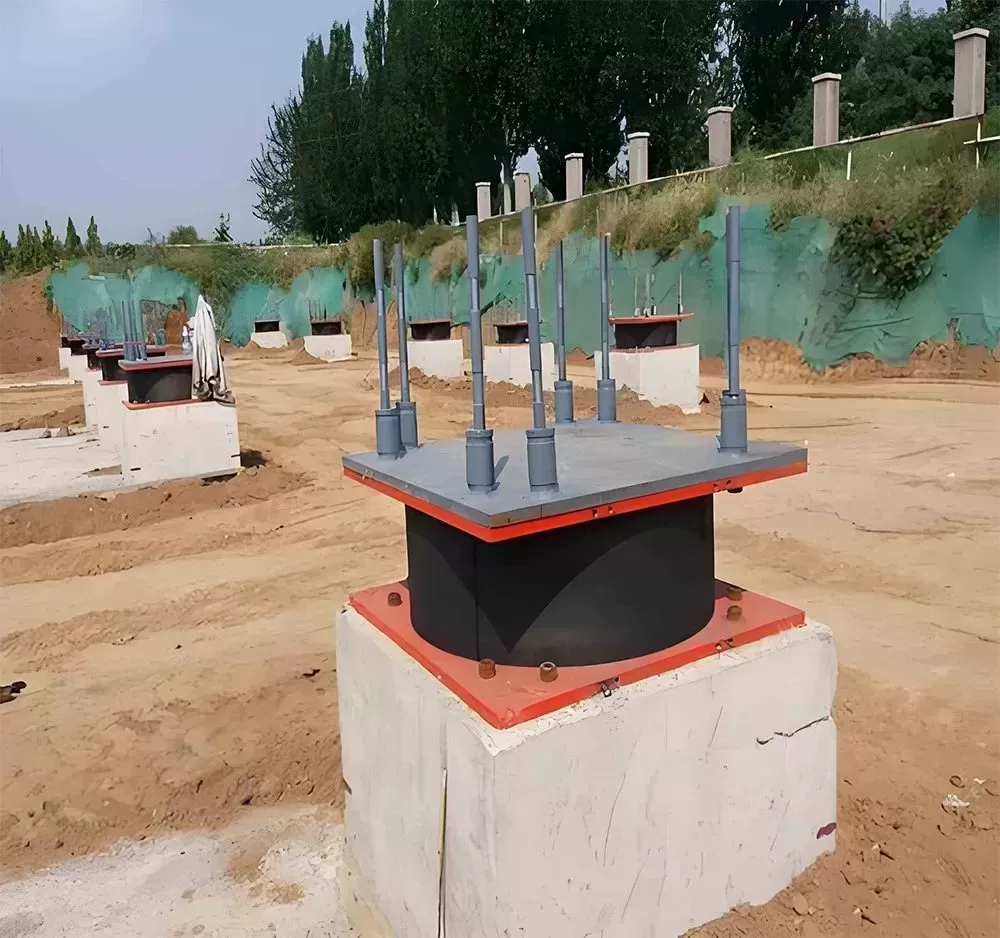
What Are Laminated Elastomeric Bridge Bearings? (And Why Modern Bridges Rely on Them)
Article content and related resources
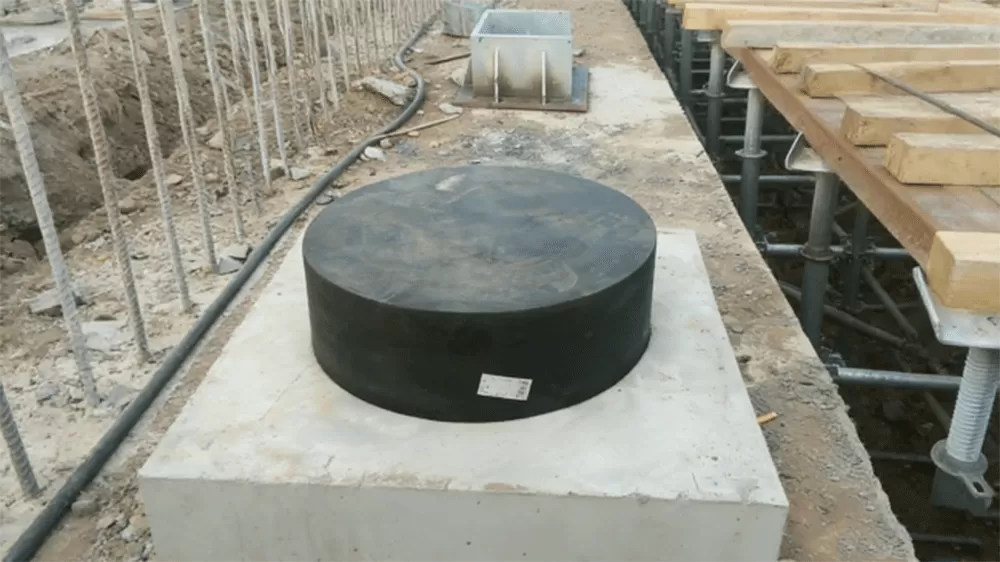
Civil structures appear rigid to the casual eye. Yet civil engineers know bridges are dynamic mechanisms that continuously expand, contract, tilt, and sway.
Temperature shifts force highway spans to expand and contract daily. Heavy freight traffic creates continuous dynamic deflections, and seismic activity produces sharp horizontal displacements. Without a flexible interface to absorb these movements, the forces would crack concrete piers and tear apart abutments.
That is where laminated elastomeric bridge bearings perform their vital role. As a critical structural interface, these components decouple the bridge deck from its supporting substructure.
Infrastructure contractors and state transportation agencies trust manufacturers like KINGWORK to design and produce high-performance bearing assemblies. Selecting the correct bearing design ensures continuous service life and prevents structural cracking across highway networks worldwide.
Anatomy and Engineering: What Makes Up an Elastomeric Bearing?
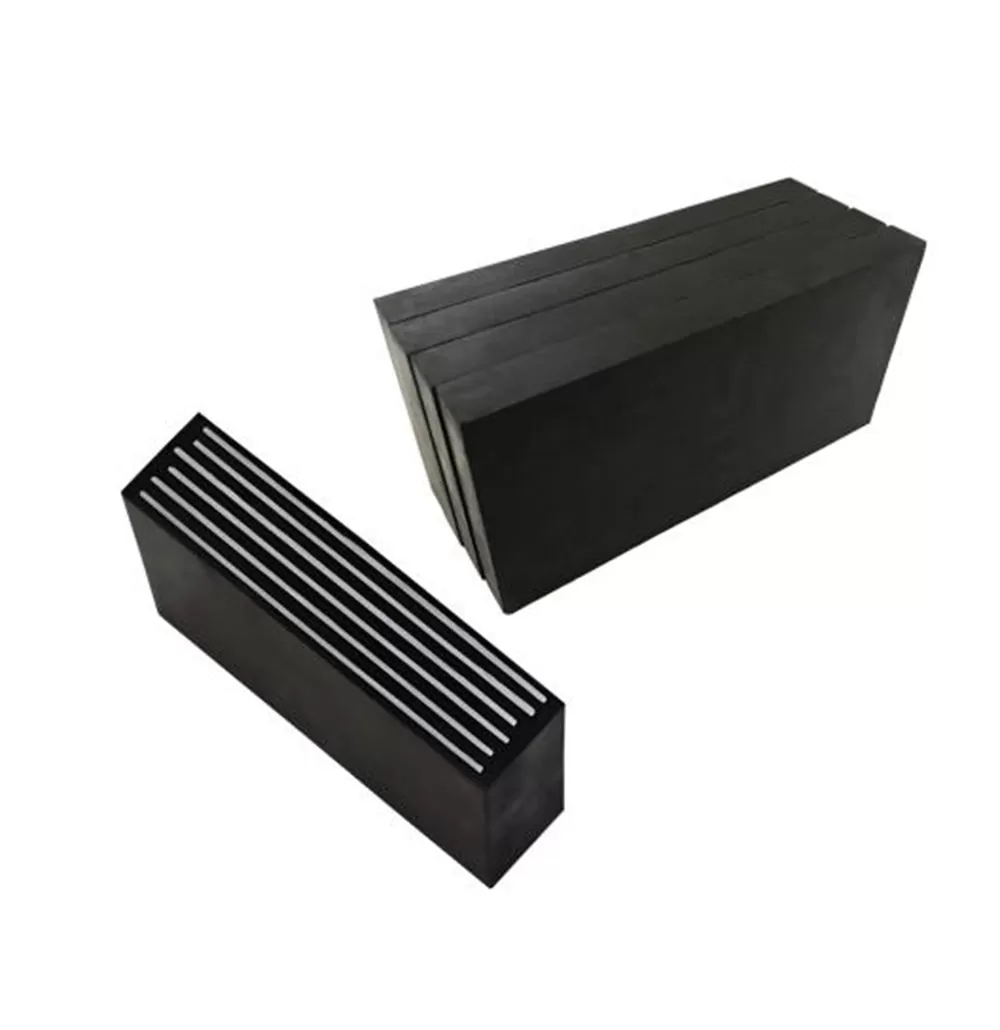
A laminated elastomeric bridge bearing is an engineered composite device. It consists of alternating layers of vulcanized elastomer and internal steel shims, bonded under high pressure and heat.
While it looks like a simple block of rubber, its internal layout solves a fundamental problem in structural mechanics.
The Problem with Plain Rubber Pads
An unreinforced rubber block cannot support massive bridge spans. When placed under compressive stress, unreinforced rubber bulges drastically outward at its sides.
This uncontrolled bulging causes excessive vertical deflection. The pad rapidly flattens, loses its elasticity, and fails to maintain the correct deck elevation.
The Reinforcement Mechanism: Steel Shims
Engineers solve this lateral bulging by introducing thin, high-strength carbon steel plates into the elastomer matrix. These plates are called steel shims or laminates.
Vertical Restraint: The steel plates restrain the rubber from expanding horizontally through surface friction and chemical bonding. This constraint drastically stiffens the bearing in the vertical direction.
Shear Flexibility: The steel plates do not alter the elastomer's horizontal shear stiffness. The rubber layers can still deform sideways, allowing horizontal deck movement.
Rotational Freedom: The alternating layers accommodate end-rotation caused by bridge girder live-load deflections. The bearing compresses more on one side while slightly relaxing on the other.
This design creates an anisotropic component: exceptionally stiff under vertical gravity loads, yet flexible under horizontal thermal expansions and girder rotations.
Why Modern Infrastructure Relies on Laminated Elastomeric Bearings
Decades ago, bridge engineers specified mechanical steel roller and rocker bearings. While functional, those mechanical assemblies had moving metal components that corroded, seized, and required continuous lubrication.
Today, laminated elastomeric bridge bearings dominate bridge design for several distinct reasons.
1. Low Life-Cycle Cost (LCC)
Laminated bearings contain zero moving mechanical parts. There are no rollers to freeze, no pins to lubricate, and no sliding surfaces that grind down over time.
Once installed properly beneath precast concrete girders or structural steel spans, their maintenance demand is minimal. Routine visual inspections replace expensive disassembly and lubrication regimes.
2. Multi-Directional Displacement and Vibration Damping
Unlike unidirectional mechanical steel rockers, elastomeric pads yield in all horizontal directions simultaneously. This isotropic shear capacity handles longitudinal thermal expansion alongside transverse wind loads.
Furthermore, elastomer provides natural dampening. It absorbs high-frequency traffic vibrations and dampens shock waves during seismic events, protecting substructure pier caps.
3. High Tolerance for Installation Imperfections
Cast-in-place concrete and structural steel work contain dimensional variations. Mechanical bearings require tight tolerances to prevent point loading and binding.
In contrast, elastomeric bearings absorb minor angular misalignments without distress. Their elastic deformation spreads loads evenly over the substructure, preventing localized stress concentrations.
Comparison: Elastomeric Bearings vs. Alternative Systems
| Bearing Type | Vertical Load Capacity | Horizontal Movement | Maintenance Need | Initial Cost |
|---|---|---|---|---|
| Laminated Elastomeric | Moderate to High (up to ~15,000 kN) | Moderate (±10 mm to ±75 mm) | Virtually Zero | Low to Moderate |
| Pot Bearings | Very High (up to 50,000+ kN) | Large (with PTFE slider sheet) | Periodic Inspection & Seal Check | Moderate to High |
| Steel Rockers / Rollers | High | High (Unidirectional only) | High (Lubrication & Anti-corrosion) | High |
Material Selection and International Testing Standards
Procuring laminated elastomeric bridge bearings requires strict adherence to engineering standards. Rubber formulation directly affects performance under harsh environmental exposure.
Natural Rubber (NR) vs. Polychloroprene (Neoprene / CR)
Design codes typically allow two basic compounds for bridge pads:
Natural Rubber (Polyisoprene): Natural rubber offers superior tear resistance and remains flexible in sub-zero temperatures. It is often the preferred choice for bridges in freezing climates.
Neoprene (Polychloroprene): Neoprene provides superior resistance to ozone, ultraviolet rays, oil spills, and coastal salt spray. Engineers prefer neoprene for marine environments and industrial highway corridors.
Leading manufacturers like KINGWORK work directly with project managers to verify that compounds comply with specific project climates, using certified additive packages to prevent premature hardening.
Compliance Standards
Highways and rail networks require bearing compliance with major structural codes:
AASHTO M251 / AASHTO LRFD: The primary North American standard governing plain and laminated elastomeric bridge bearings. It defines strict limits for shear modulus, compressive strain, and peel strength.
EN 1337-3: The European standard that sets requirements for elastomeric bearings used in road and rail bridges.
ISO 22762: Standard governing elastomeric seismic isolators for infrastructure resilience.
Engineers evaluate shear modulus ($G$) as a primary design parameter. AASHTO usually sets $G$ between 0.6 MPa to 1.2 MPa. If the elastomer tests too stiff, it transmits excessive horizontal forces into the piers. If it is too soft, the bridge shifts excessively under braking traffic loads.
Engineering Challenges: Preventing Premature Bearing Failure
Bridge owners expect bearings to last 30 to 50 years. However, sub-standard manufacturing or poor installation practices cause early failures in the field.
Delamination (Bond Failure)
Internal steel shims must chemically bond to the elastomer during vulcanization. If the steel plates are contaminated with oil, scale, or moisture during manufacturing, the rubber will peel away from the plate over time.
This delamination destroys the confinement mechanism. The bearing begins to bulge unevenly, leading to rapid shear failure under heavy truck traffic.
Ozone Cracking and Weathering
Low-grade rubber formulations without adequate antiozonant additives degrade under sunlight and ozone exposure. Deep surface cracks form along the flexed edges of the pad.
While minor surface cracks rarely compromise structural capacity immediately, deep fissures expose the internal steel shims to moisture, sparking hidden corrosion.
Excessive Shear Strain and Walking
When the actual thermal movement of a bridge exceeds the design calculation, the bearing deforms beyond its elastic shear limit. Over time, recurring over-strain causes the bearing to permanently distort or "walk" out of its seat.
Preventing these issues requires sourcing bearings from experienced fabricators who test bond strength, ensure full edge encapsulation of steel shims, and run strict batch-testing procedures.
Frequently Asked Questions (FAQ)
Q1: What is the lifespan of a properly manufactured laminated elastomeric bridge bearing?
A1: A properly compounded and vulcanized elastomeric bearing typically lasts between 30 and 50 years. Its working life depends heavily on raw material quality, correct load calculations, and protection from chemical or diesel fuel exposure.
Q2: How does an elastomeric bearing pad accommodate bridge deck rotation?
A2: Rotation occurs through differential compression across the elastomer layers. When a girder deflects under live load, one edge of the bearing compresses slightly more than the opposite edge, absorbing the angular change without binding mechanical joints.
Q3: Can laminated elastomeric bridge bearings handle horizontal expansion on very long bridge spans?
A3: For spans with massive thermal movement exceeding the shear deformation limits of standard rubber pads, engineers install a PTFE (Teflon) sliding surface on top of the bearing. This sliding elastomeric bearing accommodates massive displacements across a polished stainless steel mating plate.
Q4: Why must the internal steel shims be fully encapsulated by rubber?
A4: Encapsulation keeps atmospheric oxygen, rain, road salt, and coastal moisture from reaching the carbon steel shims. If the steel edges are exposed, corrosion can expand between the layers, causing delamination and catastrophic failure.
Q5: What is the main difference between AASHTO Method A and Method B design?
A5: AASHTO Method A is a simplified design process with conservative stress limits, best suited for smaller, standard bridge pads. Method B allows higher compressive stresses and optimized bearing dimensions, but requires rigorous testing and tighter manufacturing quality control under AASHTO M251.
Conclusion: Source Certified Structural Bearings for Your Next Project
Laminated elastomeric bridge bearings are reliable, cost-effective structural components. By combining vertical load resistance with horizontal flexibility, they protect highway and railway networks from continuous movement, thermal stress, and seismic forces.
Achieving a reliable 50-year service life requires certified materials, vulcanization control, and adherence to international design codes. KINGWORK delivers premium laminated elastomeric bridge bearings engineered to meet demanding AASHTO and EN standards.
Do you need technical assistance for your next bridge project? Contact the KINGWORK engineering team today to submit your RFQ, request certified CAD/BIM drawing reviews, or receive complete product specification sheets.