Laminated Elastomeric Bearings: Specifications, Material Science, and Performance
Article content and related resources
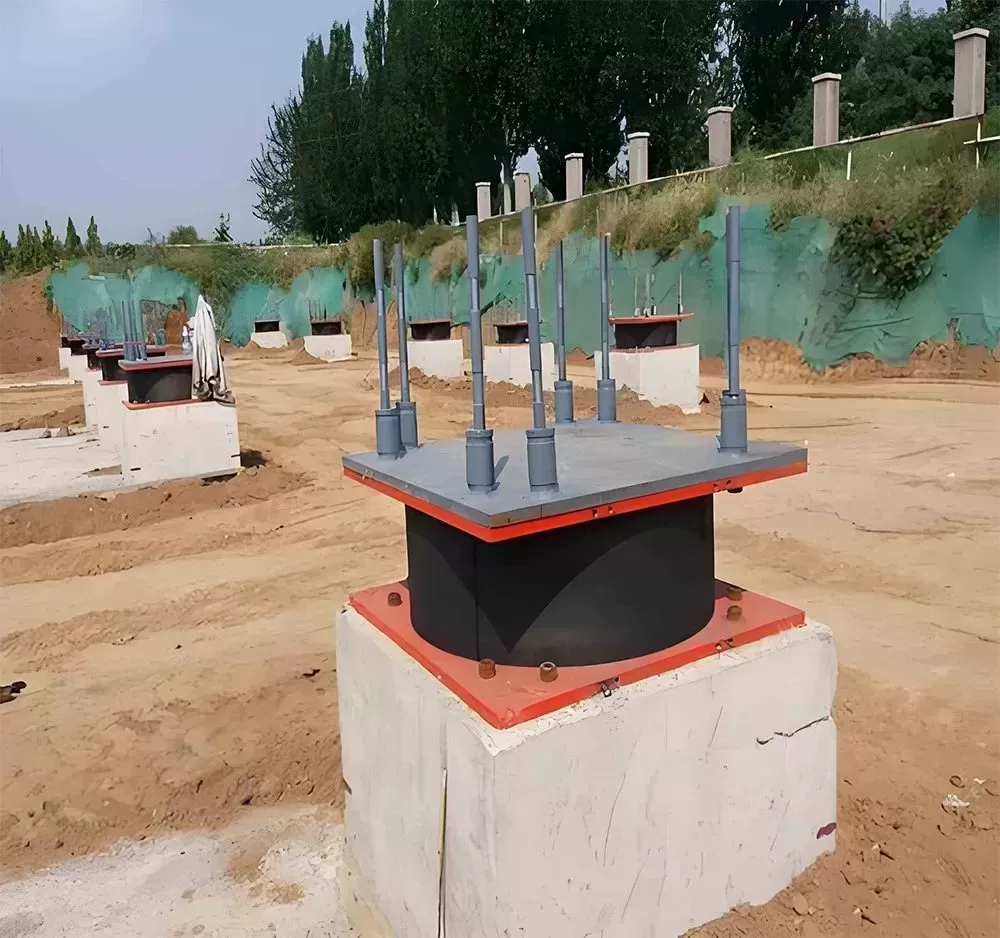
Bridge superstructures and heavy civil frameworks undergo continuous spatial transformations. Daily temperature fluctuations, dynamic vehicle braking, continuous live loads, concrete shrinkage, and long-term creep generate a complex matrix of displacements and angular rotations. Left unrestrained or improperly transferred, these kinematic responses induce destructive internal stresses within substructure elements such as abutments, cap beams, and piers. Among the array of structural support systems developed to mediate these forces, the laminated elastomeric bearing functions as a foundational solution in modern bridge engineering. By balancing substantial vertical load capacity with controlled horizontal flexibility and rotational freedom, these elastomeric systems protect primary structural components from fatigue and premature structural failure.
Anatomy and Mechanics of the Laminated Elastomeric Bearing
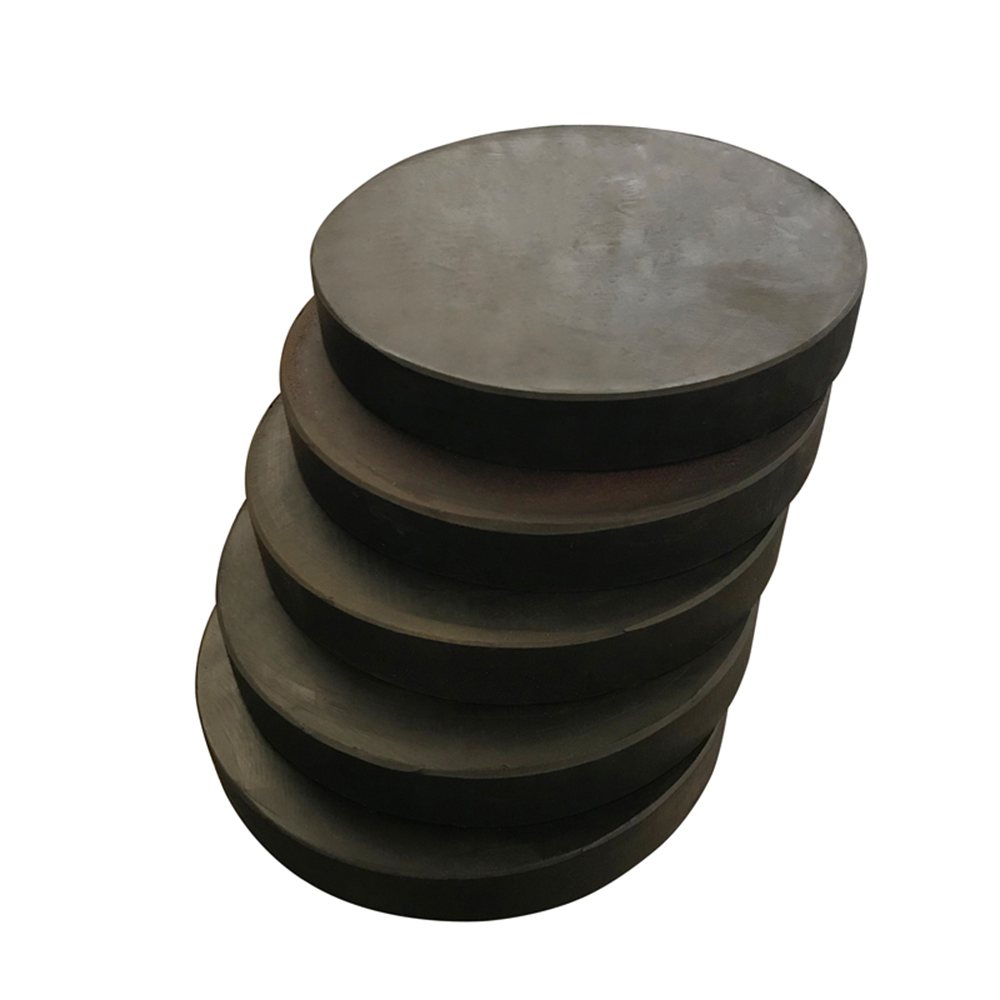
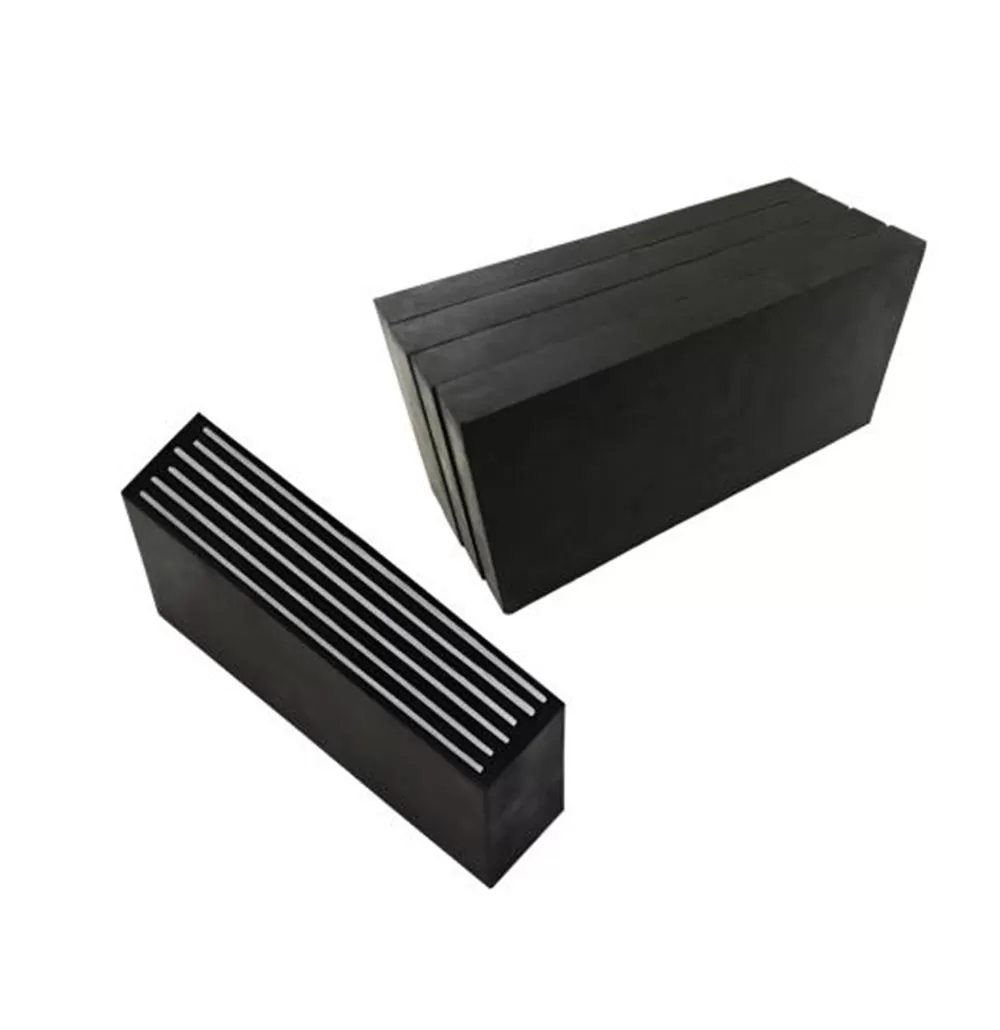
At its core, a laminated elastomeric bearing consists of alternating layers of elastomeric compound vulcanized under precise temperature and pressure to intervening carbon or high-strength steel reinforcement plates. The mechanical rationale behind this composite construction lies in the divergent mechanical properties of unbound elastomers versus laterally restrained elastomeric layers.
An unreinforced elastomer pad exhibits high lateral bulging under compressive loads, resulting in significant vertical deflection and low axial stiffness. When steel shims are chemically bonded to the compound through a high-pressure molding cycle, the transverse strain of the rubber adjacent to the steel is physically arrested by interfacial shear friction. Bulging is strictly confined to the perimeter edges between the shims.
This restraint directly alters the apparent compressive modulus of the bearing without degrading its low shear modulus. Consequently, the bearing provides:
High vertical stiffness capable of sustaining millions of Newtons of dead and live vertical service loads.
Predictable horizontal flexibility to accommodate thermal expansion, contraction, and low-frequency seismic movements without inducing severe reaction forces on substructure supports.
Multiaxial rotational compliance across longitudinal and transverse axes through localized differential compression of the elastomer layers.
The primary geometric metric dictating this mechanical balance is the shape factor ($S$). Defined as the plan area of the bearing divided by the total perimeter surface area free to bulge for an individual elastomer layer, the shape factor establishes the compressive capacity and bulging stress distribution across the structural interface.
Material Science: Elastomeric Compounds and Shim Substrates
Long-term performance hinges upon the physical chemistry of the raw vulcanized elastomer. Standard bridge designs specify either natural rubber (polyisoprene) or synthetic chloroprene (neoprene) as the baseline polymer base.
Natural Rubber vs. Polychloroprene
Natural rubber displays exceptional tensile strength, tear resistance, and fatigue life. It preserves dynamic elasticity in cold-weather regions, showing minimal crystallization at sustained sub-zero temperatures. In contrast, polychloroprene demonstrates high resistance to atmospheric degradation, ozone exposure, chemical contamination, and direct ultraviolet contact. The choice between these two polymers rests on regional environmental demands, ambient temperature profiles, and applicable bridge codes.
The vulcanization matrix incorporates sulfur or metal-oxide curing agents, antioxidant systems, and high-structure carbon black reinforcement. These additives tailor the raw polymer to precise hardness and shear modulus parameters, typically categorized under a nominal durometer hardness between 50 and 60 Shore A. Modulus properties are held to strict tolerances to ensure uniform deflection across multiple units installed beneath a single bridge girder line.
Steel Reinforcement Mechanics
The internal steel shims, typically ASTM A1011 or EN 10025 structural steel plates, must be prepared to accept chemical adhesive bonding agents. The manufacturing process demands grit-blasting to achieve an anchor profile free of mill scale, rust, and oils, followed by automated application of specialized silane- or phenolic-based adhesive primers. During the hydraulic pressing cycle executed by manufacturers such as KINGWORK, cross-linking reactions occur simultaneously within the rubber and at the rubber-to-metal interface, achieving an inseparable bond that exceeds the tear strength of the parent elastomer.
Analytical Frameworks: Design Standards and Load Paths
The structural calculation of an elastomeric bearing unit requires simultaneous verification of compressive stress, shear strain, rotational capacity, and geometric stability against rollover or lift-off conditions.
AASHTO LRFD Bridge Design Specifications (Method A and Method B)
Under AASHTO specifications, laminated bearings are evaluated through either Method A (simplified empirical equations for standard applications) or Method B (refined analytical framework for high-demand, optimized units). Method B requires comprehensive stress calculations where the total combined shear strain ($\gamma$) from all internal mechanisms must remain within prescribed limits:
$\gamma_c$: Shear strain induced by axial compressive loading.
$\gamma_s$: Shear strain caused by cyclic and permanent horizontal displacements.
$\gamma_r$: Shear strain generated by angular rotations around horizontal axes.
The governing design criterion enforces that the sum of these strains satisfies the limit:
$\gamma_c + \gamma_s + \gamma_r \le \gamma_{total}$
By constraining the combined shear strain envelope (typically capped at 5.0 in non-dimensional units), the standard ensures that cyclic strain fatigue does not generate internal micro-voids or initiate delamination at the elastomer-shim boundary.
EN 1337-3 Specifications
In jurisdictions governed by the European Committee for Standardization, EN 1337-3 dictates design requirements. This standard approaches design via the maximum shear strain criterion, incorporating partial safety factors for actions and materials. It accounts explicitly for internal shear stress concentrations, shape factor coefficients, and non-linear compressive strain curves. Rotational verifications check that no zero-pressure condition (lift-off) appears across any point of the bearing surface under the combined application of minimum dead loads and maximum design rotations.
Performance Under Thermal, Dynamic, and Dynamic Displacement Conditions
Bridge spans undergo repetitive movement patterns driven by ambient thermal cycles. As the bridge deck expands during thermal peaks, the bearing displaces horizontally in pure shear. The shear reaction force ($H$) exerted on the bridge pier follows the constitutive relationship:
$H = \frac{G \cdot A \cdot \Delta}{h_{rt}}$
Where $G$ represents the shear modulus of the elastomer, $A$ represents the effective plan area, $\Delta$ signifies the imposed horizontal displacement, and $h_{rt}$ denotes the total net thickness of the elastomeric material (excluding internal steel plates). Controlling this reaction force protects slender columns and existing pier caps from high bending moments.
Dynamic vehicle braking triggers transient horizontal loads that shift bearings into dynamic shear response states. At rapid strain rates, the dynamic shear modulus of elastomers increases modestly relative to quasi-static states. This stiffening phenomenon dampens horizontal movement, absorbing dynamic energy before it reaches the sub-structure foundations.
In low-level dynamic ground disturbances, standard elastomeric configurations offer passive base attenuation. While dedicated elastomeric isolators with high-damping compounds or internal lead cores are explicitly used for heavy seismic events, a standard laminated elastomeric bearing provides baseline lateral decoupling. It lengthens the natural fundamental vibration period of the bridge system, shifting the superstructure away from the destructive resonant spectrum of seismic energy.
Testing Protocols and Quality Verification
Because structural bearings are buried under heavily loaded structural superstructures, field replacement involves complex jacking operations. Ensuring long-term integrity requires rigorous factory qualification and production release tests.
Short-Term and Long-Term Compression Testing
Production units are subjected to compressive loads equal to 1.5 times the maximum rated design service capacity. The test load is sustained for a prescribed period while the perimeter is inspected under high magnification. Visual anomalies—such as irregular bulge shapes, localized depressions, or parting lines—indicate shim misalignments or internal voids within the rubber matrix. Units displaying non-uniform bulging are rejected immediately.
Shear Modulus Determination
Accurate determination of the shear modulus ($G$) is essential for validating engineering displacement models. Testing facilities subject pairs of identical bearings to continuous shear strain cycles under a steady vertical compressive load. The secant modulus is derived over the strain range from 20% to 70% deformation. Verified manufacturing practices at KINGWORK maintain tight standard deviation bounds on compounding formulations, ensuring the delivered products match the exact stiffness values specified by the structural design engineer.
Elastomer-to-Steel Adhesion and Durability Tests
Sample coupons and full-scale units undergo destructive peel tests to demonstrate that the interfacial chemical bond outlasts the elastomer matrix itself. Material durability verification includes accelerated aging chambers where compound samples face elevated thermal exposure, high-concentration ozone chambers, and aggressive tensile fatigue cycles. These standardized tests ensure compliance with low-temperature crystallization limits and resistance to hydrocarbon degradation.
Field Installation Mechanics and Common Structural Degradations
Even a well-manufactured laminated elastomeric bearing can experience reduced service life if field placement violates fundamental installation parameters. Bridge engineers and construction inspectors regularly encounter several chronic installation defects.
Non-Parallel Mating Surfaces and Localized Crushing
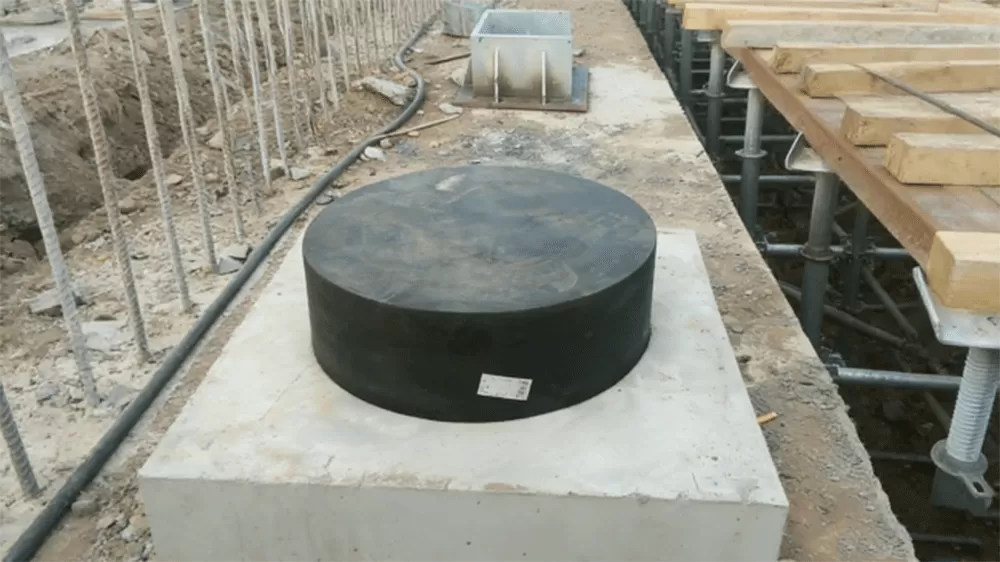
Prestressed concrete or steel girders frequently exhibit camber, construction tolerances, or longitudinal track grades that produce non-parallel interfaces between the girder bottom flange and the bridge seat. Placing a flat elastomeric unit directly under a sloped girder concentrates compressive stresses on one edge of the pad. This concentration induces localized yielding of the shims and uneven internal bulging. To correct these geometric deviations, contractors must install custom-machined steel beveled sole plates or precision-leveled high-strength epoxy bedding mortars to achieve uniform contact.
Bearing Walking and Creeping
Bearings installed directly onto smooth concrete pedestals without mechanical restraint, anchor dowels, or adequate normal dead loads may walk or drift over time. This condition stems from dynamic cyclic shear displacements combined with micro-vibrations from live vehicle loads. If the contact friction drops below the lateral restoration force, the bearing walks out from beneath the girder line, leaving the structural beam unsupported.
Chemical Contamination and Physical Ozone Cracking
Bridge expansion joints positioned directly above bearing shelves are historically vulnerable to failure. Leaking water laden with deicing salts, engine oils, and industrial chemicals washes over the bearing seats. In natural rubber units lacking protective chloroprene cover layers, chemical exposure combined with atmospheric ozone initiates surface micro-cracking. Left unchecked over decades, these cracks extend into load-bearing zones, exposing internal steel shims to corrosion.
Frequently Asked Questions
What is the typical service life of a correctly specified laminated elastomeric bearing?
Under standard operating conditions, compliant with AASHTO or EN standards and sheltered from direct chemical wash, high-grade elastomeric bearings demonstrate a continuous service life spanning 40 to 60 years. Life expectancy depends on compound quality, proper seating, and expansion joint maintenance.
How does temperature affect the performance of an elastomeric bearing?
As ambient temperatures drop, elastomers experience an increase in hardness and shear modulus. Natural rubber exhibits resilience across extended low-temperature profiles, whereas standard polychloroprene tends to stiffen and undergo slow crystallization at sustained low temperatures unless formulated with low-temperature plasticizers.
What causes edge debonding or delamination in an elastomeric unit?
Delamination originates primarily from inadequate surface blasting of steel shims prior to adhesive priming, poor temperature control during press vulcanization, or operational overload where combined shear, compression, and rotational strains exceed the bond strength between the steel and the elastomer.
Can laminated elastomeric bearings accommodate transverse expansion on wide bridges?
Yes. The elastomer possesses isotropic horizontal flexibility, accommodating both longitudinal and transverse structural thermal movement. On exceptionally wide bridge decks, designers calculate multi-directional shear strain vectors to verify that total resultant movements remain safely within maximum allowable shear strain envelopes.
What is the difference between a plain elastomeric pad (PEP) and a laminated elastomeric bearing?
A plain elastomeric pad lacks internal steel reinforcing plates, relying solely on friction and low compound thickness to resist lateral bulging under vertical pressure. As a result, its load-bearing capacity is low. The laminated unit incorporates multiple interior steel shims, enabling it to support high vertical loads with controlled horizontal flexibility and minimal axial deflection.
Procurement and Technical Engineering Support
Structural reliability across bridges and civil infrastructure begins with precise calculations and certified manufacturing controls. Whether you are executing a greenfield bridge project requiring high-capacity rotational bearings, retrofitting aging infrastructure, or drafting complex structural performance specifications, project engineers require access to verified test logs, finite element analysis verifications, and tailored compound formulations.
KINGWORK provides technical consultation, production testing data, and bespoke engineering designs configured to project-specific AASHTO, EN, or custom international standards. Submit your structural drawings, load schedule requirements, and movement matrices directly to our structural engineering department for a detailed technical evaluation, application review, or formal price quotation on your upcoming structural procurement schedule.